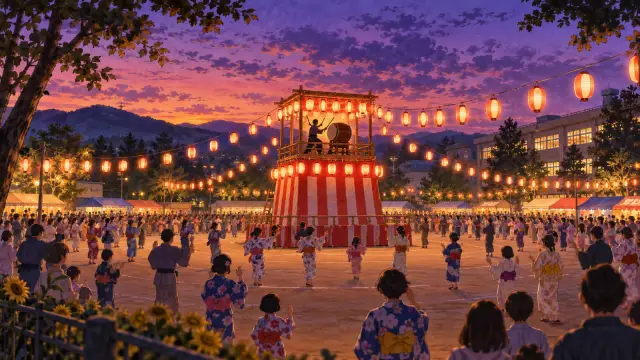
If you visit Japan in July or August, you will feel the heat right away. The air is hot and wet, and insects called semi sing loudly all day. But summer is also the season of festivals. Almost every town, big or small, has a natsu matsuri, or summer festival. And many summer nights end with one of the most beautiful sights in Japan: fireworks.
7月か8月に日本を訪れたら、すぐに暑さを感じるでしょう。空気は暑くてじめじめしていて、セミという虫が一日中やかましく鳴いています。でも夏は、祭りの季節でもあります。大きな町にも小さな町にも、ほとんどどこにでも夏祭りがあります。そして夏の夜の多くは、日本でいちばん美しい光景の一つ、花火でしめくくられます。
Most festivals are connected to a local shrine. People believe that the kami, the gods or spirits of Shinto, protect the town. During the festival, the kami is carried through the streets in a mikoshi, a portable shrine. A mikoshi is heavy and decorated with gold. Dozens of people carry it on their shoulders, shouting "Wasshoi! Wasshoi!" as they move. The shaking is said to make the kami happy and bring energy to the town.
祭りの多くは、地元の神社と結びついています。町は神さまに守られている、と人々は信じています。神さまとは、神道でいう「カミ」のことです。祭りの日には、神さまが「みこし」に乗って町を回ります。みこしとは、かついで運べる神社のようなものです。重く、金で飾られています。何十人もの人がみこしを肩にかつぎ、「わっしょい! わっしょい!」とかけ声をかけながら進みます。みこしをゆらすと神さまが喜び、町に元気がわいてくると言われています。
Some festivals are famous across Japan. The Gion Matsuri in Kyoto lasts for the whole month of July. Its highlight is a parade of huge wooden floats, some as tall as a building. Its history goes back more than a thousand years, and it began as a prayer to stop a terrible disease. In Aomori, in the north, the Nebuta Festival has giant lantern floats shaped like warriors and monsters, glowing in the dark.
全国的に有名な祭りもあります。京都の祇園祭は、7月の一か月間ずっと続きます。いちばんの見どころは、巨大な木の山車の行列です。中には建物ほどの高さのものもあります。その歴史は千年以上前にさかのぼります。おそろしい病気の流行をしずめるための祈りとして始まった祭りです。北の青森のねぶた祭では、武者や怪物の形をした巨大な灯ろうの山車が、暗やみの中で光りかがやきます。
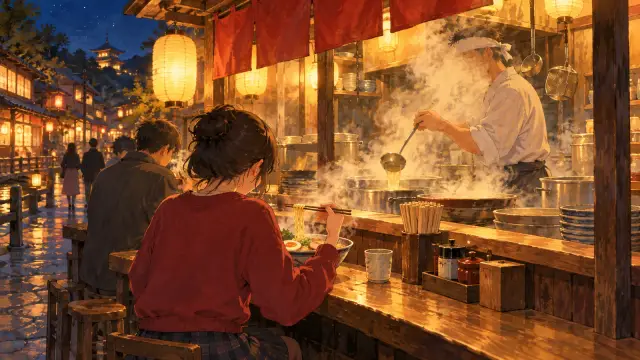
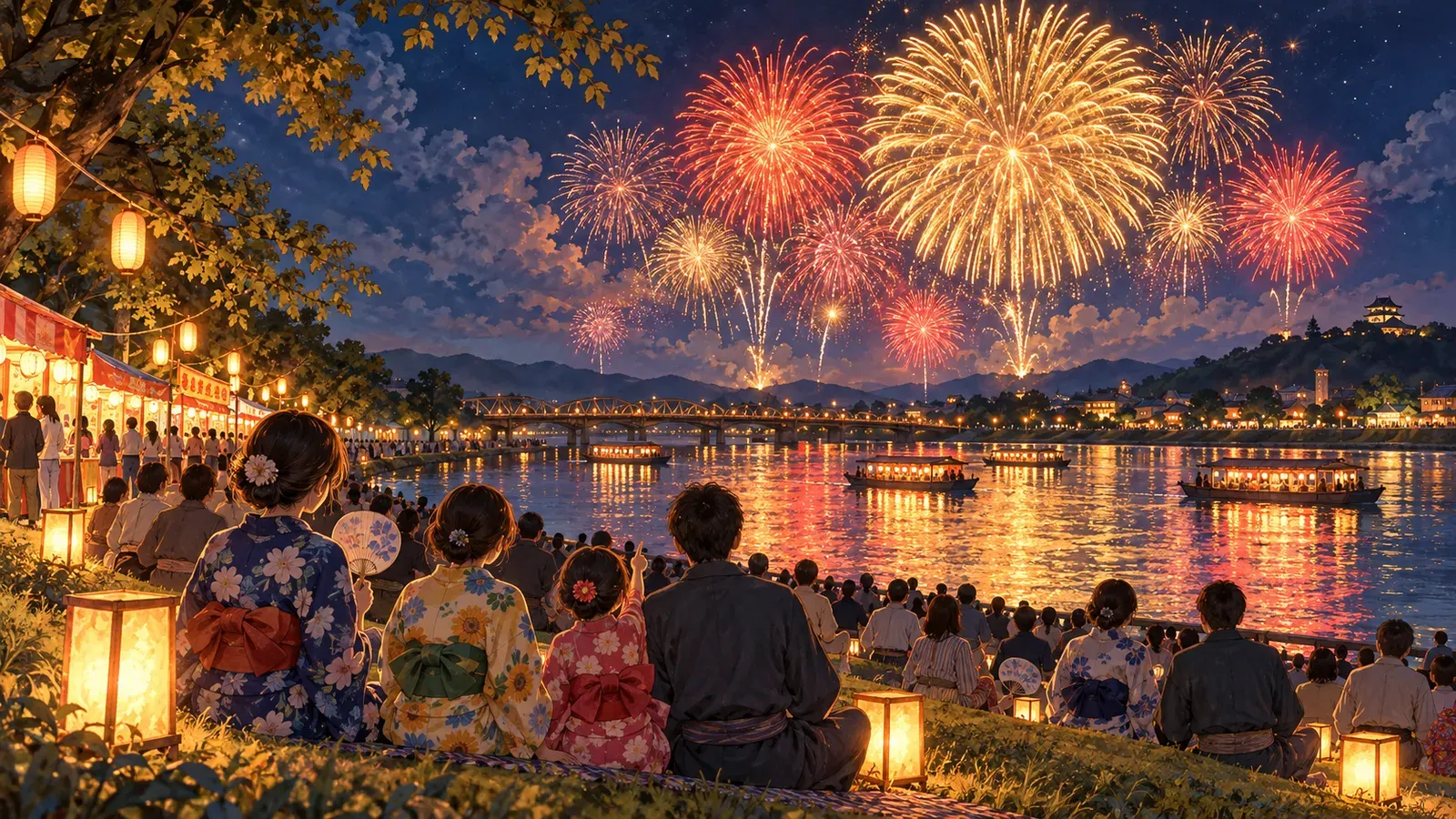
For many people, the best part of a festival is the food stalls, called yatai. They line the road to the shrine, lit by paper lanterns. You can buy takoyaki, which are balls of batter with octopus inside, and yakisoba, fried noodles with sauce. On a hot night, kakigori, or shaved ice with sweet, colorful syrup, is perfect. Children also love games like goldfish scooping. You try to catch a goldfish with a small paper scoop, but the paper breaks very easily!
多くの人にとって、祭りのいちばんの楽しみは屋台です。神社へ続く道に屋台がずらりと並び、ちょうちんの明かりに照らされています。たこ焼きは、生地を丸く焼いて中にたこを入れたもの。焼きそばは、めんをソースで炒めたものです。暑い夜には、かき氷がぴったりです。けずった氷に、色あざやかな甘いシロップをかけたものです。子どもたちは、金魚すくいのようなゲームも大好きです。小さな紙のすくい網で金魚をすくうのですが、紙はすぐにやぶれてしまいます!
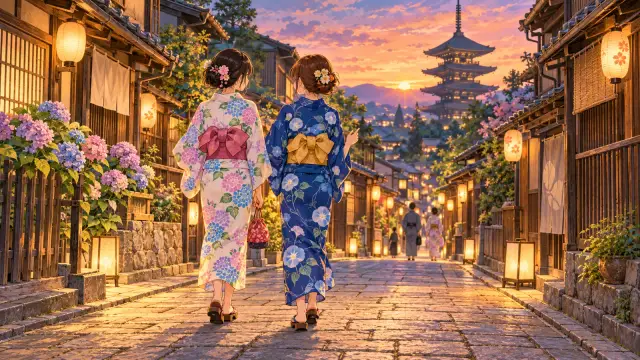
Many people wear yukata, light cotton kimono, to summer festivals. Walking through the crowd in yukata and wooden sandals called geta makes the evening feel special.
夏祭りには、軽い木綿の着物である浴衣を着ていく人がたくさんいます。浴衣を着て、下駄という木のサンダルをはいて人ごみの中を歩くと、特別な夜になった気がします。
Then there are the fireworks, or hanabi. The word means "fire flowers." Japan's fireworks have a long history. One of the oldest fireworks events, held on the Sumida River in Tokyo, has its roots in 1733. The year before, many people had died from hunger and disease, and the fireworks were part of a ceremony to remember them and to pray for better times.
そして花火です。花火とは「火の花」という意味です。日本の花火には長い歴史があります。いちばん古い花火大会の一つ、東京の隅田川の花火は、1733年にさかのぼります。その前の年、飢えと病気でたくさんの人が亡くなっていました。花火は、その人たちをとむらい、世の中がよくなるよう祈る行事の一部だったのです。
When a big firework opens, you may hear people shout "Tamaya!" or "Kagiya!" These were the names of two famous fireworks makers in Edo, the old name of Tokyo. People shouted their names to cheer them, and the custom is still alive today.
大きな花火が開くと、「たまや!」「かぎや!」と叫ぶ声が聞こえるかもしれません。これは、江戸(東京の昔の呼び名)にあった二軒の有名な花火屋の名前です。人々はその名前を叫んで、花火屋を応援したのです。その習わしは今も残っています。
Japanese fireworks makers are known for their skill. Many traditional Japanese fireworks open into a perfect ball of light. They look like a full circle from any direction. Some change color two or three times before they disappear. In big contests, such as the one in Omagari in Akita, makers from all over Japan compete to make the most beautiful fireworks.
日本の花火職人は、その腕前で知られています。伝統的な日本の花火の多くは、空できれいな光の球になって開きます。どの方向から見ても、まん丸に見えるのです。消える前に、2回、3回と色を変えるものもあります。秋田県の大曲で開かれるような大きな競技大会では、日本中の花火職人が、いちばん美しい花火を作ろうと腕を競います。
Big fireworks shows can bring hundreds of thousands of people. So go early, bring a sheet to sit on, and be ready for crowded trains on the way home. And don't forget to take your trash with you.
大きな花火大会には、何十万人もの人が集まることがあります。早めに出かけ、座るためのシートを持っていきましょう。帰りの電車が混むことも覚悟しておいてください。そして、ごみを持ち帰るのを忘れないでください。
Many families also enjoy small fireworks at home. The last one is often senko hanabi, a tiny sparkler. You hold it very still and watch a small ball of fire make little sparks. When the ball falls, summer feels a little closer to its end.
家で小さな花火を楽しむ家族もたくさんいます。最後はたいてい線香花火、小さな手持ち花火です。じっと動かさずに持って、小さな火の玉が細かい火花を散らすのを見つめます。火の玉が落ちると、夏の終わりが少し近づいたような気がします。
How to explain it in English: "In summer, most towns in Japan have festivals with food stalls, games, and people in yukata. People carry a portable shrine called a mikoshi through the streets. Many summer nights end with big fireworks shows."
英語で説明してみよう:「夏には、日本のほとんどの町で、屋台やゲームがあり、浴衣姿の人でにぎわう祭りがあります。人々は『みこし』という持ち運べる神社をかついで通りを練り歩きます。多くの夏の夜は、大きな花火大会でしめくくられます。」
 ▶