On February 11, 1990, Nelson Mandela walked out of Victor Verster Prison near Cape Town, holding his wife Winnie's hand and raising his fist. He was seventy-one years old. He had spent twenty-seven years in prison, eighteen of them on Robben Island. Millions of people around the world watched on television.
1990年2月11日、ネルソン・マンデラが、ケープタウン近くのヴィクター・ヴァースター刑務所から歩み出てきました。妻ウィニーの手を握り、こぶしを高く掲げていました。71歳でした。獄中で過ごした年月は27年。そのうち18年は、ロベン島の刑務所でした。世界中で何百万人もの人が、その姿をテレビで見守りました。
Mandela had been jailed for fighting against apartheid, a system of laws that separated South Africans by race. Under apartheid, the white minority controlled the government and most of the country's wealth. Black South Africans, the large majority, could not vote. They were forced to live in certain areas, and they were given poorer schools, hospitals, and jobs.
マンデラが投獄されたのは、アパルトヘイトと戦ったためでした。アパルトヘイトとは、南アフリカの人々を人種によって分け隔てる法律の仕組みです。そこでは、少数派の白人が政府を握り、国の富のほとんどを手にしていました。人口の大多数を占める黒人には、選挙権がありませんでした。住む場所は決められた地域にかぎられ、学校も病院も仕事も、白人より劣ったものしか与えられませんでした。
By the late 1980s, the system was in crisis. Protests inside the country were growing, and pressure from abroad, including economic sanctions, was hurting the economy. President F. W. de Klerk decided that change was necessary. In 1990, he lifted the ban on the African National Congress, the ANC, and set Mandela free.
1980年代の終わりには、この仕組みはゆきづまっていました。国内では抗議運動が広がり、経済制裁をはじめとする外国からの圧力が、経済に打撃を与えていました。F・W・デクラーク大統領は、変革が必要だと判断します。1990年、デクラークはアフリカ民族会議(ANC)の活動禁止を解き、マンデラを釈放したのです。
The next four years were extremely difficult. Mandela and de Klerk negotiated a new constitution, but violence often threatened to destroy everything. Thousands of people died in political fighting. In April 1993, Chris Hani, a popular Black leader, was murdered by a man who opposed the changes. Many feared that the country would fall into civil war. Mandela went on television and calmly asked the nation not to answer violence with violence. Later that year, Mandela and de Klerk shared the Nobel Peace Prize.
それからの4年間は、困難を極めました。マンデラとデクラークは新しい憲法づくりの交渉を進めましたが、たびたび暴力がすべてをぶち壊しそうになりました。政治がらみの争いで、何千人もの人が命を落としました。1993年4月には、人気の高い黒人指導者クリス・ハニが、変革に反対する男に殺されました。国が内戦に陥るのではないかと、多くの人が恐れました。マンデラはテレビに出て、暴力に暴力で応えないでほしいと、落ち着いた声で国民に呼びかけました。その年の後半、マンデラとデクラークはそろってノーベル平和賞を受賞しました。
Finally, in April 1994, South Africa held its first election in which people of all races could vote. For many Black South Africans, including Mandela himself, it was the first time in their lives that they had voted. Long lines of voters stretched for kilometers, and some people waited all day. The ANC won about sixty-two percent of the vote, and Mandela was chosen as president.
そして1994年4月、南アフリカで、すべての人種が投票できる初めての選挙が行われました。マンデラ自身も含め、多くの黒人にとって、それは生まれて初めての投票でした。投票所には何キロにもわたる長い列ができ、一日中待ち続けた人もいました。ANCはおよそ62パーセントの票を獲得し、マンデラが大統領に選ばれました。
Mandela cast his own vote at a school in Inanda, near the city of Durban. He chose the place because it was close to the grave of John Dube, the first president of the ANC, as if to tell him that the long struggle had finally reached its goal.
マンデラは、ダーバンの町に近いイナンダの学校で一票を投じました。この場所を選んだのは、ANCの初代議長ジョン・デューベの墓が近くにあったからです。長い闘いがついに目標にたどり着いたことを、デューベに報告するかのようでした。
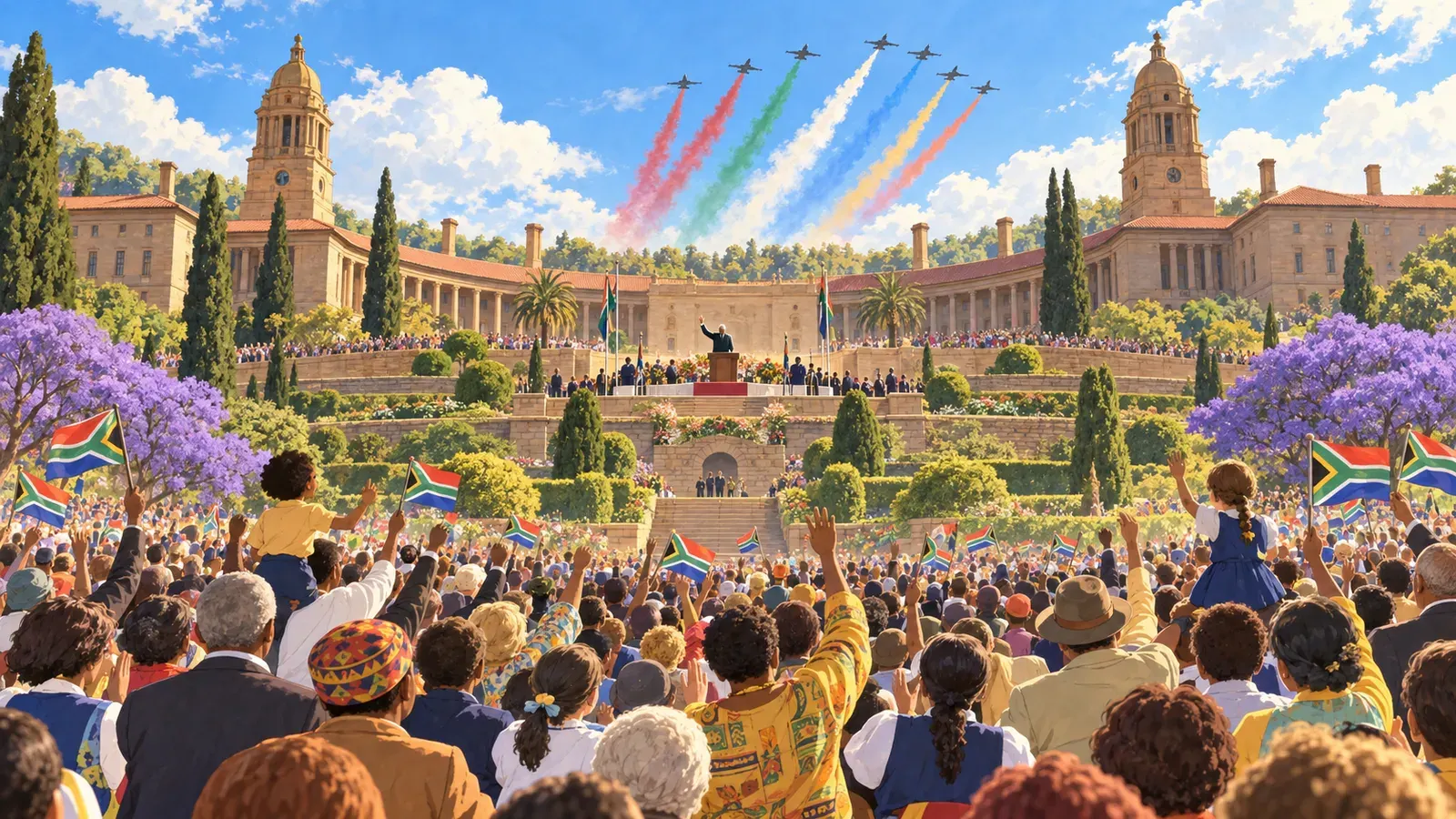
His inauguration took place on May 10, 1994, at the Union Buildings in Pretoria, the seat of the government. Leaders and guests from many countries came, including some who had been on opposite sides for decades. Tens of thousands of people filled the lawns below.
就任式は1994年5月10日、政府が置かれるプレトリアのユニオン・ビルで行われました。多くの国から指導者や来賓がかけつけました。何十年も敵味方に分かれていた人々の姿もありました。建物の下に広がる芝生は、何万人もの人で埋めつくされました。
After taking his oath, Mandela gave his speech. He described how deeply every South African, of every color, belonged to this land, as naturally as its trees and its soil. He spoke of the pain of the past, when the country had been divided and isolated from the world. Now, he said, South Africa could finally rejoin the family of nations.
宣誓を終えると、マンデラは演説をしました。どんな肌の色の南アフリカ人も、この国の木々や土と同じように、ごく自然にこの大地に深く根ざしている。マンデラはそう語りました。国が分断され、世界から孤立していた過去の痛みにもふれました。そして、南アフリカはついに国際社会の一員に戻れるのだ、と述べました。
He promised to build a society in which every person, Black or white, could live with dignity and without fear. He promised to work so that everyone would have justice, peace, work, and the most basic needs of daily life. He declared that the people of this country must never again suffer under the cruel rule of one group over another. And he ended with a short, powerful wish: "Let freedom reign."
マンデラは約束しました。黒人も白人も、すべての人が尊厳を持ち、恐れることなく生きられる社会を築く、と。すべての人が正義と平和と仕事を手にし、日々の暮らしに欠かせないものを得られるよう力をつくす、と。そして宣言しました。この国の人々が、ある集団が別の集団を残酷に支配するもとで苦しむことは、二度とあってはならない。演説は、短く力強い願いでしめくくられました。「自由よ、君臨せよ」。
After the speech, jets and helicopters of the South African Air Force flew over the crowd, trailing smoke in the colors of the new national flag. Only a few years before, the same air force had been part of the apartheid government's power. Now it was saluting a Black president. Many people in the crowd cheered and wept.
演説のあと、南アフリカ空軍のジェット機やヘリコプターが、新しい国旗の色の煙をたなびかせながら、群衆の上空を飛びました。ほんの数年前まで、この空軍はアパルトヘイト政府の力をささえる存在でした。その空軍が今、黒人の大統領に敬意を表しているのです。群衆の多くが歓声を上げ、涙を流しました。
The ceremony also included two national anthems. The old anthem, which many white South Africans loved, was sung together with Nkosi Sikelel' iAfrika, a hymn that Black South Africans had long sung during their struggle. A few years later, parts of the two songs were joined into a single national anthem, which is sung today in five different languages.
式典では、二つの国歌が歌われました。多くの白人に愛されてきた古い国歌と、「ンコシ・シケレリ・アフリカ(神よ、アフリカに祝福を)」です。こちらは、黒人が長い闘いのなかで歌い続けてきた賛美歌でした。数年後、二つの歌の一部をつなぎ合わせて一つの国歌が作られました。今では五つの言語で歌われています。
Mandela made many gestures to show that he wanted reconciliation, not revenge. De Klerk, his former opponent, became one of his two deputy presidents. It is widely reported that he invited one of his former prison guards to the ceremony as a guest. A year later, at the final of the Rugby World Cup in Johannesburg, he wore the green jersey of the national rugby team, the Springboks, which many Black South Africans had long seen as a symbol of white power. The mostly white crowd chanted his name.
マンデラは、自分が求めているのは復讐ではなく和解だということを、さまざまな形で示しました。かつての対立相手デクラークは、二人いる副大統領の一人になりました。また、かつての刑務所の看守の一人を、来賓として就任式に招いたことも広く伝えられています。1年後、ヨハネスブルグで行われたラグビー・ワールドカップの決勝では、代表チーム「スプリングボクス」の緑のジャージを着ました。このチームは長いあいだ、多くの黒人にとって白人支配の象徴だったのです。観客のほとんどは白人でしたが、その観客たちが声をそろえてマンデラの名前を呼びました。
There is also a popular myth about this speech. Many websites say that Mandela read a well-known passage about fear and our inner light in his inauguration speech. He did not. Those words come from a 1992 book by the American writer Marianne Williamson. It is a good reminder to check famous quotations before we share them.
この演説には、よく知られた思いちがいもあります。多くのウェブサイトに、マンデラが就任演説で、恐れと内なる光についての有名な一節を読み上げた、と書かれています。しかし、そんな事実はありません。その言葉は、アメリカの作家マリアン・ウィリアムソンが1992年に出した本の一節です。有名な言葉を人に伝える前には、確かめることが大切だ。そう思い出させてくれる話です。
Mandela served only one five-year term and stepped down in 1999. At a time when some leaders refused to give up power, this choice was widely admired. South Africa still faces serious problems, such as poverty, unemployment, and inequality. But the peaceful end of apartheid, which many people had believed was impossible, is remembered as one of the great events of the twentieth century.
マンデラは1期5年だけ大統領を務め、1999年に退きました。権力にしがみつく指導者もいた時代だけに、この選択は広く称賛されました。南アフリカは今も、貧困や失業、格差といった深刻な問題を抱えています。それでも、多くの人が不可能だと思っていたアパルトヘイトの平和的な終わりは、20世紀の偉大な出来事の一つとして記憶されています。
 ▶