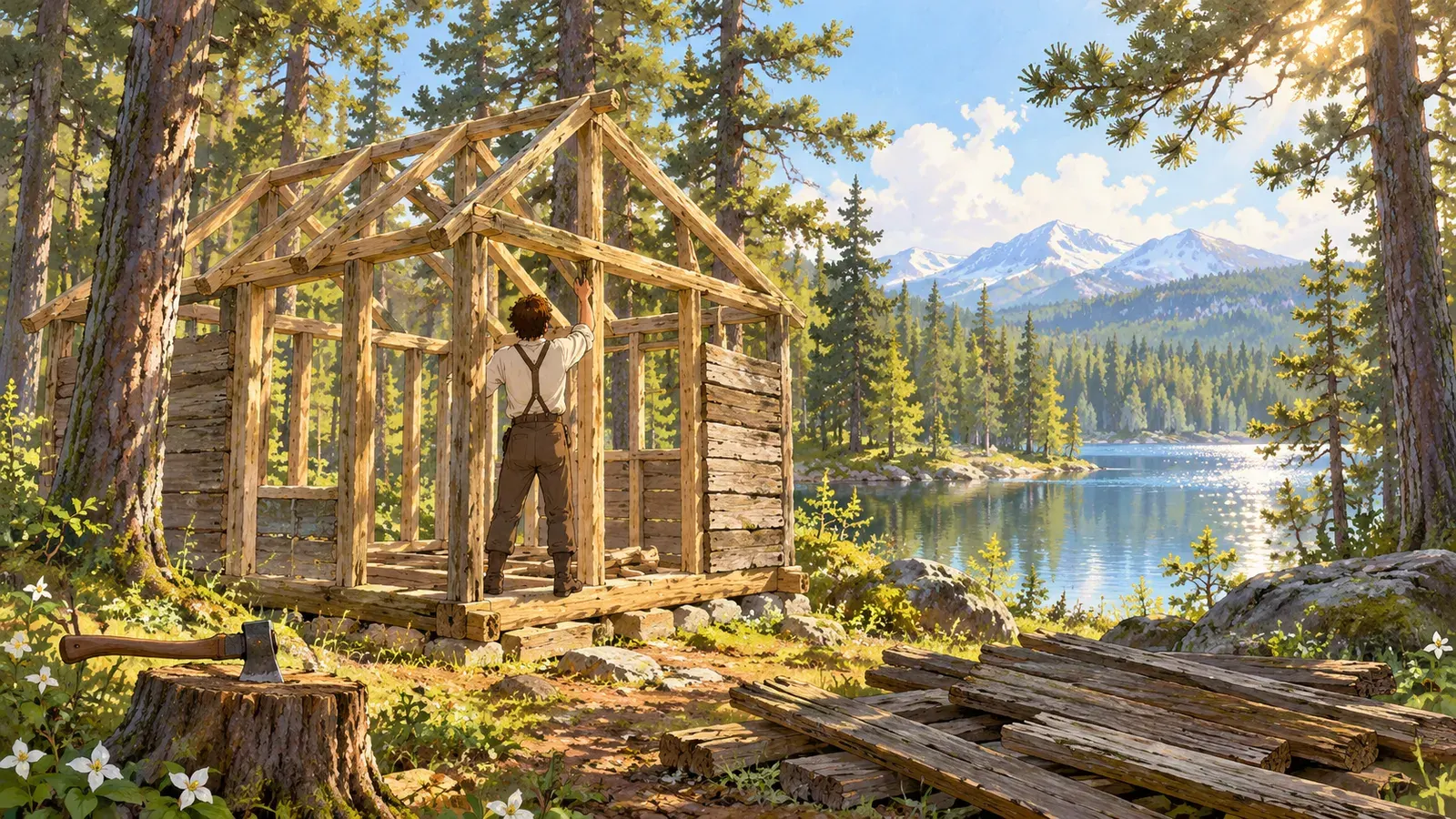
When Henry David Thoreau went to live beside Walden Pond in 1845, the people of his town were very curious. What did he eat? Wasn't he lonely? How much money did he need? The first chapter of his book Walden is called "Economy." In it, Thoreau answers these questions, and he also asks his readers some difficult questions of his own.
1845年、ヘンリー・デイヴィッド・ソローがウォールデン池のほとりで暮らし始めると、町の人々は興味しんしんでした。何を食べているのか。さびしくないのか。お金はどれくらいいるのか。ソローの本『ウォールデン』の第1章は「経済」という題です。ソローはこの章で、こうした質問に答えながら、読者にも難しい問いを投げかけています。
Thoreau looked at the people around him and felt that many of them were living in a strange way. Young men who inherited farms, houses and animals, he said, were not really lucky. They spent their whole lives working to keep and pay for these things, pushing them along the road of life like a heavy load. Most people, he wrote, live lives of quiet desperation.
ソローは、まわりの人々を見て、その多くがおかしな暮らし方をしていると感じました。農場や家や家畜を受けついだ若者たちは、決して幸運ではない、とソローは言います。一生かけて、それらを守り、その代金を払うために働き、まるで重い荷物を押すようにして人生の道を進んでいくのだから。たいていの人は、静かな絶望の生活を送っている、とソローは書いています。
Then he offered a new way of thinking about price. The cost of a thing, he said, is the amount of life that you must exchange for it, now or later. In other words, do not only ask how many dollars something costs. Ask how many hours, days or years of your life you will have to work to pay for it.
そしてソローは、値段について新しい考え方を示しました。物の値段とは、それと引きかえに、今すぐ、あるいはいずれ差し出さなければならない人生の量のことだ、というのです。つまり、それが何ドルするかだけを考えるのではなく、その代金を払うために、人生の何時間、何日、何年を働かなければならないかを考えなさい、ということです。
He did the math for a house. An ordinary house near Concord cost about eight hundred dollars. A worker in those days earned about one dollar a day. So, Thoreau calculated, it would take a worker ten to fifteen years of his life to save enough money, even if he had no family to feed. Many people, he said, spent more than half of their lives before their house was paid for.
ソローは、家を例に計算してみました。コンコードの近くのふつうの家は、800ドルほどしました。当時の労働者の稼ぎは、一日1ドルほどです。ソローの計算では、たとえ養う家族がいなくても、それだけのお金をためるのに、労働者は人生のうち10年から15年をついやすことになります。多くの人は、家の代金を払い終えるまでに、人生の半分以上を使ってしまっている、とソローは言いました。
So Thoreau tried an experiment. He borrowed an axe, cut tall pine trees near the pond, and built a small house himself. He bought the boards of an old shanty from a poor railroad worker and used them again. Friends helped him raise the frame. The finished house was ten feet wide and fifteen feet long, with a fireplace, a closet, a large window on each side and a door at one end.
そこでソローは、一つの実験をしました。斧を借りて、池の近くの背の高い松を切りたおし、自分で小さな家を建てたのです。板は、貧しい鉄道労働者から古い小屋の板を買い取って使いました。骨組みを立てるときには、友人たちが手を貸してくれました。できあがった家は幅10フィート(約3メートル)、奥行き15フィート(約4.5メートル)。暖炉と物置があり、両側の壁に大きな窓が一つずつ、そして一方の端に戸口がありました。
He wrote down the exact cost of every material: boards, nails, bricks, glass, hinges and so on. The total came to twenty-eight dollars and twelve and a half cents. He proudly pointed out that a student could have a house like this for life for no more than the rent he paid for his room at college in one year.
ソローは、板、くぎ、れんが、ガラス、ちょうつがいなど、材料の一つ一つの値段を正確に書き留めました。合計は28ドル12セント半。大学生が寮の部屋に一年間はらう家賃より安いお金で、こんな家を一生持てるのだ、とソローは誇らしげに書いています。
He also grew beans and potatoes, and did some work for others when he needed money. Later he wrote that by working about six weeks a year, he could pay for everything he needed to live. The rest of his time, all of his winters and most of his summers, was free for reading, writing, walking and thinking. He had tried teaching school, but he found that it cost him too much of his time and freedom, and that he had to dress and even think as others expected.
ソローは、豆やじゃがいもも育てました。お金が必要になると、人に頼まれた仕事もしました。のちにソローは、一年に6週間ほど働けば、暮らしに必要なものはすべてまかなえた、と書いています。残りの時間、つまり冬はまるごと、夏もほとんどは、読むこと、書くこと、歩くこと、考えることに自由に使えたのです。学校の教師をしてみたこともありましたが、それでは時間と自由を失いすぎる、と気づきました。服装も、考え方さえも、人の期待に合わせなければならなかったのです。
That was Thoreau's real point. He was not saying that everyone should live in a tiny cabin. He was saying that every time we buy something, we are paying with our life. If we want fewer things, we need to work fewer hours to pay for them, and we have more time for what we truly love.
ここにこそ、ソローの本当に言いたいことがありました。だれもが小さな小屋に住むべきだ、と言っていたのではありません。何かを買うたびに、私たちは自分の人生の時間を代金として払っているのだ、と言っていたのです。欲しいものが少なければ、その代金のために働く時間も少なくてすむ。そうすれば、本当に愛することのための時間が増えるのです。
He also warned about the things we own. One day, he had three pieces of limestone on his desk. He was shocked to find that they needed dusting every day, while the furniture of his mind was still not dusted at all. So he threw them out of the window. He would rather sit outside, he said, because no dust gathers on the grass.
ソローは、持ち物についても注意をうながしています。あるとき、ソローの机の上には石灰石のかけらが三つありました。ところが、その石は毎日ほこりを払わなければなりません。心の中の家具は、まだまったくほこりを払っていないというのに。そう気づいたソローはぞっとして、石を窓から放り捨ててしまいました。草の上にはほこりが積もらないから、外に座っているほうがいい、とソローは言っています。
Thoreau also noticed how much people worried about clothes and fashion. Be careful, he said, of any plan that requires new clothes, instead of a new person to wear the clothes.
ソローはまた、人々が服や流行をどれほど気にしているかにも目をとめていました。新しい服を必要とするような計画には気をつけなさい、とソローは言います。必要なのは新しい服ではなく、それを着る新しい人間のほうなのだから。
Of course, Thoreau's life was not completely independent. His house stood on land owned by his friend Emerson, and he often walked into town to visit his family. Some critics like to point out that he sometimes ate meals at his mother's house. Still, his experiment showed something important: much of what we think we need is not really necessary.
もちろん、ソローの暮らしが完全に自給自足だったわけではありません。家は友人エマソンの土地に建っていましたし、よく町まで歩いて家族に会いに行っていました。ときどき母親の家で食事をしていたことを、好んで指摘する批評家もいます。それでも、この実験は大切なことを示しました。私たちが必要だと思っているものの多くは、本当は必要ではない、ということです。
Thoreau's way of counting is very useful today. Imagine that you want a new game that costs six thousand yen, and you earn one thousand yen an hour at a part-time job. The game will cost you six hours of your life.
ソローの数え方は、今でもとても役に立ちます。たとえば、6000円の新しいゲームが欲しいとしましょう。あなたはアルバイトで、1時間に1000円かせいでいるとします。すると、そのゲームの値段は、あなたの人生の6時間分です。
Is it worth six hours? Sometimes the answer is yes. A book that changes your life, a trip with friends or a good tool for your work may be worth many hours. But often, when we think of the price in hours, we discover that we do not want the thing as much as we thought.
そのゲームに、6時間分の値打ちはあるでしょうか。答えがイエスのときもあります。人生を変える本、友だちとの旅行、仕事のためのよい道具なら、何時間分もの値打ちがあるかもしれません。けれども、値段を時間に置きかえてみると、思っていたほどそれが欲しくなかったと気づくことが、よくあるのです。
Try this today. Think of something you want to buy. Find out its price, and think about how many hours of work that money stands for, whether it is your own work or your family's. Then ask yourself Thoreau's question: Is this thing worth that much of my life? Whatever you decide, you will be choosing with open eyes.
今日、やってみましょう。買いたいと思っているものを一つ思いうかべてください。その値段を調べて、それが何時間分の労働にあたるのかを考えてみましょう。自分が働いたお金でも、家族が働いたお金でもかまいません。そして、ソローの問いを自分にたずねてみるのです。これは、自分の人生をそれだけ差し出す価値があるだろうか。どちらに決めるにしても、あなたはしっかり目を開いて選んだことになります。