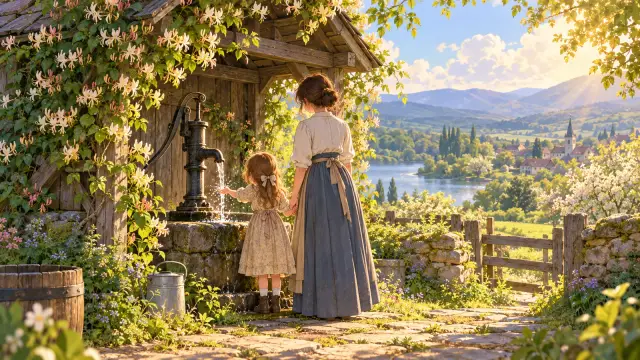
More than two hundred years ago, a boy named Kinjiro lived in a small village near Odawara, in Japan. His family were farmers. When he was young, a big river flooded and washed away their fields. Then his father died, and soon after, his mother died too. Kinjiro was still a boy, and he had to leave his home and go to live with his uncle.
二百年以上前のことです。小田原の近くの小さな村に、金次郎という男の子が住んでいました。家は農家でした。金次郎が小さいころ、大きな川があふれて、家の田や畑を流してしまいました。それから父が亡くなり、まもなく母も亡くなりました。金次郎はまだ子どもでしたが、家を出て、おじさんの家で暮らすことになりました。
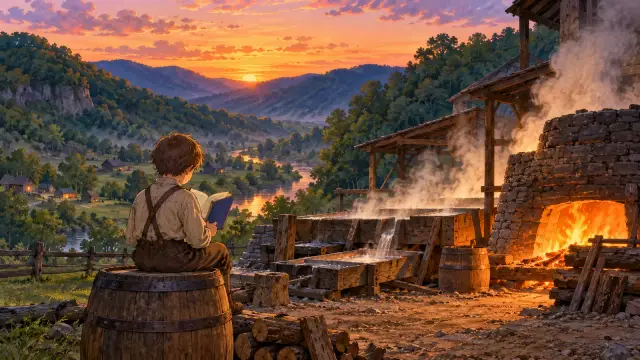
Kinjiro worked hard on his uncle's farm all day. But he also loved to learn. At night, after work, he read an old Chinese book of wisdom by the light of an oil lamp.
金次郎は、朝から晩まで、おじさんの畑でよく働きました。でも、勉強することも大好きでした。夜、仕事が終わると、油の明かりをつけて、中国の昔の知恵が書かれた本を読みました。
His uncle was not happy. "Oil costs money," he said. "Why are you wasting my oil on books? Books are no use to a farmer." Kinjiro did not argue. He thought, "He is right. It is his oil. I must find my own."
おじさんは、それが気に入りませんでした。「油はただじゃないんだぞ。どうしてわしの油を、本なんかにむだづかいするんだ。百姓に本なんか要らん」。金次郎は言い返しませんでした。「おじさんの言うとおりだ。これはおじさんの油だ。自分の油は自分で見つけよう」と考えました。
So Kinjiro found a small piece of empty land by the river. Nobody used it. He planted rapeseed there. People make oil from its seeds. He took care of it in his free time. The next year, he got a big bag of seeds. He took them to a shop and traded them for oil. Now he could read with his own light.
そこで金次郎は、川のそばに、誰も使っていない小さな空き地を見つけました。そこに菜の花を植えました。菜の花の種からは、油がとれるのです。金次郎は、空いた時間に菜の花の世話をしました。次の年、袋いっぱいの種がとれました。それを店に持っていって、油と取りかえてもらいました。これで、自分の明かりで本が読めるようになったのです。
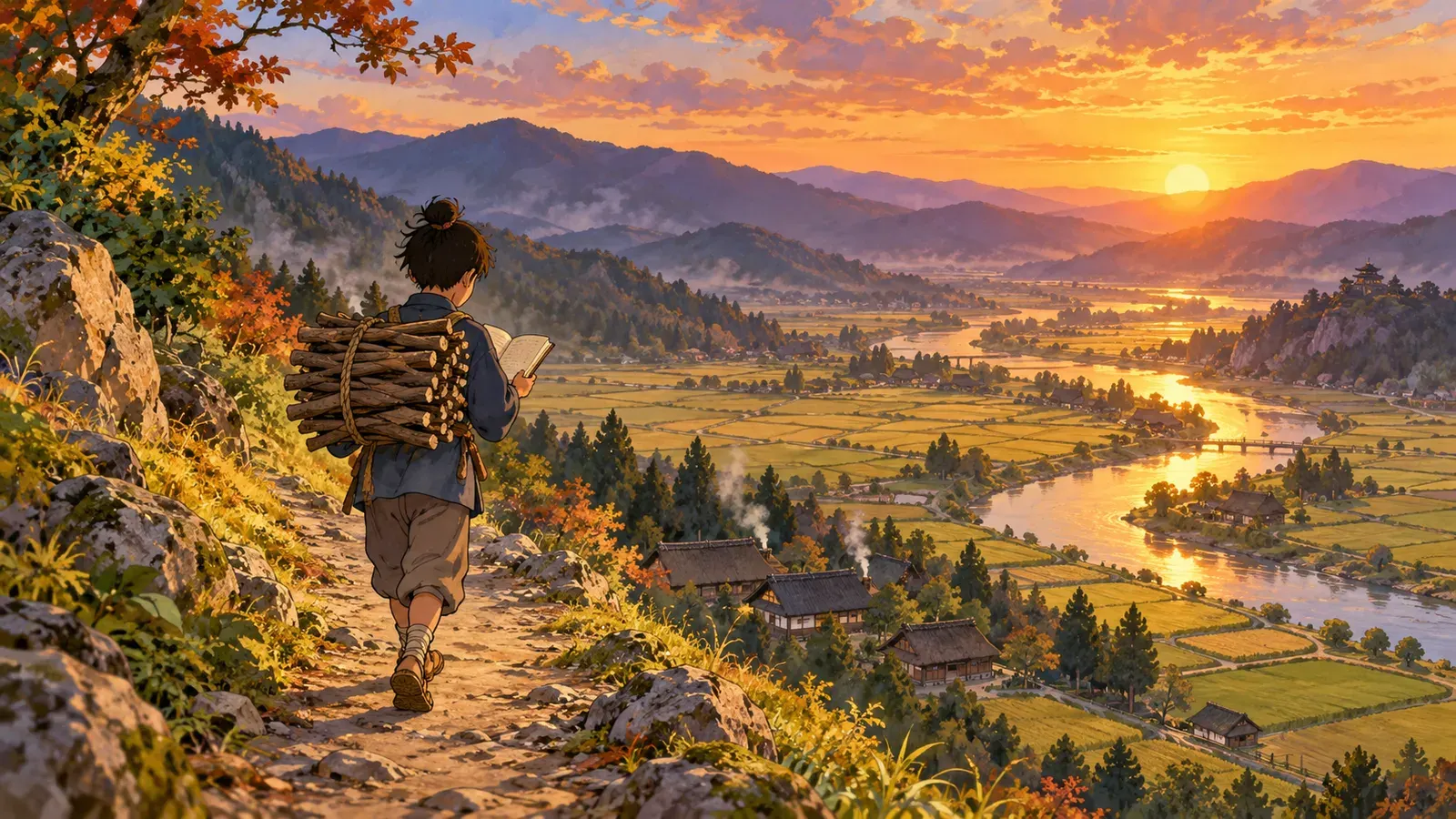
But his uncle still said, "Your time belongs to me, too." So Kinjiro did not read at night anymore. Instead, he read while he walked to the mountains to cut wood and while he carried it home on his back.
ところが、おじさんはまだ言いました。「おまえの時間だって、わしのものだ」。そこで金次郎は、夜に本を読むのはやめました。そのかわり、山へたきぎを取りに行く道や、たきぎを背負って帰る道で、歩きながら本を読みました。
Another time, Kinjiro saw some small rice plants on the ground. The farmers did not need them, so they threw them away. He picked them up and planted them in an old, forgotten piece of wet land. In the autumn, those little plants gave him a whole bag of rice.
またあるとき、金次郎は、小さな稲の苗が地面に捨ててあるのを見つけました。農家の人たちが、要らないので捨てたのです。金次郎はそれを拾って、誰も気にかけていない古いぬかるみの土地に植えました。秋になると、その小さな苗から、袋いっぱいのお米がとれました。
Kinjiro learned a big lesson from this. Nature gives back what we put in, if we work honestly. And small things, added together, become great things. Little by little, with his own hands, he saved money, bought back his family's land, and built his family home again.
金次郎は、このことから大きなことを学びました。まじめに働けば、自然は、こちらがつぎこんだものを返してくれます。そして、小さなことも積み重なれば、大きなことになるのです。金次郎は、自分の手で少しずつお金をため、家の田畑を買いもどし、家を建て直しました。
When he grew up, people called him Ninomiya Sontoku. He became famous for helping poor villages. The ruler of Odawara asked him to save some very poor villages. Sontoku sold his own house and land and moved there with his family. He worked with the villagers for many years, and slowly the fields became green again.
大人になると、人々は金次郎を二宮尊徳と呼ぶようになりました。尊徳は、貧しい村を助けた人として有名になりました。小田原の殿さまに、とても貧しい村々を立て直してほしいと頼まれると、尊徳は自分の家と土地を売り、家族と一緒にその土地へ移り住みました。そして何年も村々の人たちと一緒に働き、田畑は少しずつ緑を取り戻していきました。
In the old days, many Japanese schools had a statue of young Kinjiro carrying wood on his back and reading a book. In 1908, the writer Uchimura Kanzo wrote about him in English in his book Representative Men of Japan, so that people around the world could learn about him too.
昔は、日本の多くの学校に、たきぎを背負って本を読む金次郎少年の像がありました。1908年、作家の内村鑑三は、英語で書いた『代表的日本人』という本で、金次郎のことを紹介しました。世界中の人にも、金次郎のことを知ってもらうためです。
Try this today. Think of one small thing you can do every day, like learning one new word or reading one page. Like Kinjiro's rapeseeds, small things grow into big things.
今日、試してみましょう。新しい単語を一つ覚える、本を一ページ読む、といったふうに、毎日できる小さなことを一つ考えてみてください。金次郎の菜の花の種のように、小さなことも、やがて大きく育つのです。