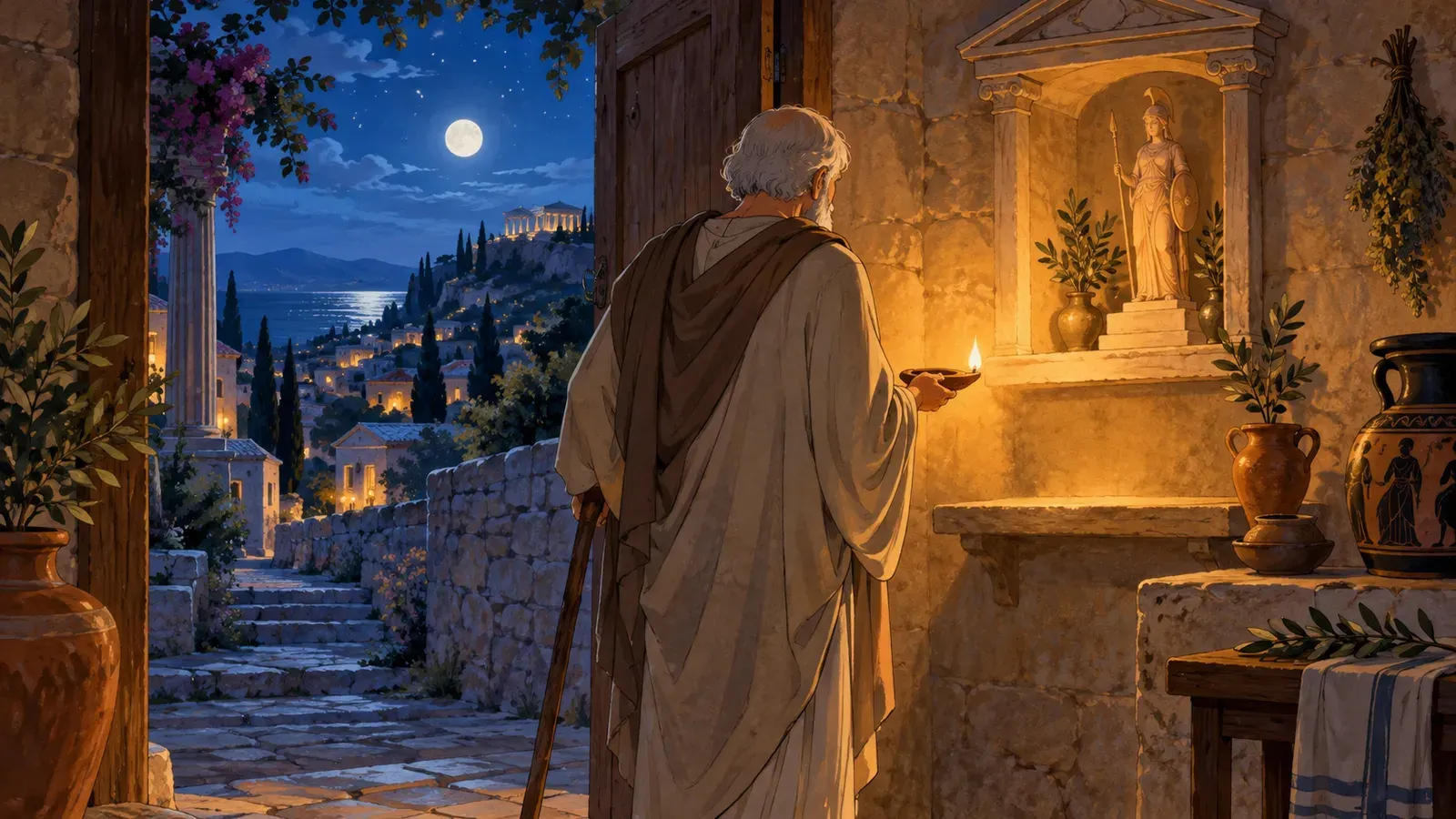
Epictetus was a famous teacher of philosophy in the days of the Roman Empire. He was born a slave, and he walked with a limp. Later he became free and opened a school in Greece. He did not write books, but his student Arrian wrote down his lessons. These lessons are called the Discourses.
エピクテトスは、ローマ帝国の時代の有名な哲学の先生でした。奴隷として生まれ、足を引きずって歩いていました。のちに自由の身となり、ギリシャで学校を開きました。エピクテトス自身は本を書きませんでしたが、弟子のアリアノスがその講義を書き留めました。この講義録は『語録』と呼ばれています。
Epictetus lived very simply and did not own much. But he did own one thing he liked: an iron lamp. He kept it beside the small shrine of his household gods. An iron lamp was better and more expensive than a common clay lamp.
エピクテトスはとても質素に暮らしていて、持ち物もわずかでした。でも、気に入っているものが一つありました。鉄のランプです。それを、家の神々をまつる小さな祭壇のそばに置いていました。鉄のランプは、ふつうの素焼きのランプよりも上等で、値段も高いものでした。
One night, he heard a noise at the door. He ran down to see what it was. The lamp was gone. A thief had taken it.
ある夜、戸口で物音がしました。何事かと、エピクテトスは急いで下りていきました。ランプがなくなっていました。泥棒が持っていったのです。
How would you feel? Most people would be angry. They would shout, call the thief bad names, and complain for days.
あなたならどう感じるでしょうか。たいていの人は腹を立てるでしょう。大声を出し、泥棒をののしり、何日も文句を言うでしょう。
But Epictetus thought about it differently. He told himself that the thief had done nothing strange. Then he said, "Tomorrow you will find a clay lamp." A person can only lose what he has, he explained. If you have a lamp, you can lose a lamp.
けれども、エピクテトスの考え方はちがいました。泥棒は、べつにおかしなことをしたわけではない、と自分に言い聞かせたのです。そして、「明日は素焼きのランプを手に入れればいい」と言いました。人は、持っているものしか失わない、とエピクテトスは説明しました。ランプを持っていれば、ランプを失うこともあるのです。
Later, he told the story to his students with a little joke. I lost my lamp, he said, because the thief was better than me at staying awake.
のちにエピクテトスは、ちょっとした冗談を交えて、この話を弟子たちに聞かせました。私がランプをなくしたのは、起きていることにかけては、泥棒のほうが私より上手だったからだ、と。
But think about the price the thief paid for it. For a lamp, he became a thief. He gave up his honesty and became like a wild animal. To him, it seemed like a good deal. Let it be so.
けれども、泥棒がランプのためにはらった代価を考えてみなさい。ランプ一つのために、その男は泥棒になった。正直さを捨てて、けだものになり下がったのだ。本人には、それがよい取り引きに思えたのだろう。それならそれでよい、と。
Epictetus was not saying that stealing is fine. He was saying that the thief had lost something much more valuable than a lamp: his good character. Epictetus had lost only a thing. The thief had lost a part of himself.
エピクテトスは、盗みをしてもかまわないと言っていたのではありません。泥棒はランプよりもずっと価値のあるもの、つまり自分のよい人格を失ったのだ、と言っていたのです。エピクテトスが失ったのは、ただの物でした。泥棒が失ったのは、自分自身の一部だったのです。
He also explained why we get so angry in moments like this. We get angry with a thief because we value the same things that he values. The thief thinks that happiness comes from having fine things, and so do we. If you love your fine clothes too much, you will be very angry with the person who steals them. So do not value your things so much, Epictetus says, and you will not be so angry.
エピクテトスは、こういうときに私たちがなぜそんなに腹を立てるのかも説明しています。私たちが泥棒に腹を立てるのは、泥棒と同じものを大切にしているからだ。泥棒は、上等な物を持つことが幸せだと思っている。私たちもそう思っている。上等な服をあまりに愛していれば、それを盗んだ人にひどく腹が立つだろう。だから、自分の持ち物をそれほど大切に思うな。そうすれば、そんなに腹は立たない、とエピクテトスは言います。
He believed that we should practice with small things first. If we can stay calm when we lose a lamp or a cup, we will be better prepared for bigger troubles later.
エピクテトスは、まず小さなことで練習するべきだと考えていました。ランプやカップをなくしても落ち着いていられれば、あとでもっと大きな困難がやって来たときにも、心の準備ができているはずです。
He also taught patience. Once a man asked him how he could stay calm and good even when his brother stayed angry with him.
エピクテトスはまた、忍耐についても教えました。あるとき、一人の男がたずねました。兄弟がいつまでも自分に腹を立てているとき、どうすれば落ち着いて、正しくふるまえるのでしょうか、と。
Epictetus answered that nothing great is made suddenly. Not even a grape or a fig is. If you want a fig, you must wait. First the tree must flower, then the fruit must grow, and then it must ripen. So how can you expect a person's mind to become wise in one hour?
エピクテトスは、偉大なものは何ひとつ突然にはできあがらない、と答えました。ぶどう一粒も、いちじくの実一つでさえそうだ。いちじくが欲しいなら、待たなければならない。まず木に花が咲き、次に実がなり、それから熟すのだ。それなのに、どうして人の心が一時間で賢くなると期待できるだろうか、と。
Try this today. The next time you lose something small, like a pen or an umbrella, try saying to yourself, "I only lost a thing. I did not lose my calm." Then remember the fig tree. Change takes time, so be patient with yourself while you practice.
今日、やってみましょう。今度、ペンやかさのような小さなものをなくしたら、「なくしたのはただの物だ。落ち着きまではなくしていない」と自分に言ってみましょう。そして、いちじくの木のことを思い出しましょう。変わるには時間がかかります。だから、練習しているあいだは、焦らずに自分を見守りましょう。