

 約60分
 32:39
 原文そのまま
 全訳つき
 ラム姉弟(シェイクスピア物語)の作品をもっと読む(7作品)→
 人の朗読
 お道具箱
 読書ラウンジ
The two chief families in Verona were the rich Capulets and the Montagues. There had been an old quarrel between these families, which was grown to such a height, and so deadly was the enmity between them, that it extended to the remotest kindred, to the followers and retainers of both sides, insomuch that a servant of the house of Montague could not meet a servant of the house of Capulet, nor a Capulet encounter with a Montague by chance, but fierce words and sometimes bloodshed ensued; and frequent were the brawls from such accidental meetings, which disturbed the happy quiet of Verona's streets.
ヴェローナで一、二を争う名家といえば、裕福なキャピュレット家とモンタギュー家でした。両家の間には昔からの争いがあり、それがひどくこじれて、命のやり取りになるほどの憎しみになっていました。憎しみは遠い親類にも、両家に仕える家来や召し使いにまで広がっていました。モンタギュー家の召し使いがキャピュレット家の召し使いに出会っても、キャピュレット家の者がモンタギュー家の者とたまたま顔を合わせても、必ず激しいののしり合いになり、ときには血が流れました。こうした偶然の出会いから起こるけんかは数えきれず、ヴェローナの町の幸せな静けさを乱していました。
Old Lord Capulet made a great supper, to which many fair ladies and many noble guests were invited. All the admired beauties of Verona were present, and all comers were made welcome if they were not of the house of Montague. At this feast of Capulets, Rosaline, beloved of Romeo, son to the old Lord Montague, was present; and though it was dangerous for a Montague to be seen in this assembly, yet Benvolio, a friend of Romeo, persuaded the young lord to go to this assembly in the disguise of a mask, that he might see his Rosaline, and seeing her, compare her with some choice beauties of Verona, who (he said) would make him think his swan a crow. Romeo had small faith in Benvolio's words; nevertheless, for the love of Rosaline, he was persuaded to go. For Romeo was a sincere and passionate lover, and one that lost his sleep for love, and fled society to be alone, thinking on Rosaline, who disdained him, and never requited his love, with the least show of courtesy or affection; and Benvolio wished to cure his friend of this love by showing him diversity of ladies and company. To this feast of Capulets then young Romeo with Benvolio and their friend Mercutio went masked. Old Capulet bid them welcome, and told them that ladies who had their toes unplagued with corns would dance with them.
年老いたキャピュレット卿が盛大な晩餐会を開き、美しい貴婦人や身分の高い客を大勢招きました。ヴェローナで評判の美人は一人残らず顔をそろえ、モンタギュー家の者でさえなければ、来る人は誰でも歓迎されました。このキャピュレット家の宴には、ロザラインも来ていました。年老いたモンタギュー卿の息子ロミオが恋い慕っている女性です。モンタギュー家の者がこの集まりで姿を見られるのは危ないことでした。それでも友人のベンヴォーリオは、仮面で顔を隠して出かけようと、若いロミオを説き伏せました。ロザラインに会い、そのうえでヴェローナえりぬきの美人たちと見比べてみるがいい、そうすれば君の白鳥もカラスに見えてくるだろう、と言うのです。ロミオはベンヴォーリオの言葉をほとんど信じませんでしたが、ロザライン恋しさに、行く気になりました。ロミオはひたむきで情熱的な恋をする若者でした。恋のために夜も眠れず、人との付き合いを避けて一人きりになっては、ロザラインのことばかり考えていました。ところがロザラインのほうはロミオを見下し、その恋に、わずかな礼儀や好意さえ見せて報いることがありませんでした。そこでベンヴォーリオは、いろいろな女性や仲間に引き合わせて、友人のこの恋の病を治してやりたいと思ったのです。こうして若いロミオは、ベンヴォーリオと、もう一人の友人マキューシオと一緒に、仮面を着けてキャピュレット家の宴に出かけました。キャピュレット老人は三人を歓迎し、足の指のうおのめに悩まされていないご婦人がたが、あなたがたと踊ってくれますよ、と言いました。
And the old man was light hearted and merry, and said that he had worn a mask when he was young, and could have told a whispering tale in a fair lady's ear. And they fell to dancing, and Romeo was suddenly struck with the exceeding beauty of a lady who danced there, who seemed to him to teach the torches to burn bright, and her beauty to show by night like a rich jewel worn by a blackamoor; beauty too rich for use, too dear for earth! like a snowy dove trooping with crows (he said), so richly did her beauty and perfections shine above the ladies her companions. While he uttered these praises, he was overheard by Tybalt, a nephew of Lord Capulet, who knew him by his voice to be Romeo. And this Tybalt, being of a fiery and passionate temper, could not endure that a Montague should come under cover of a mask, to fleer and scorn (as he said) at their solemnities. And he stormed and raged exceedingly, and would have struck young Romeo dead. But his uncle, the old Lord Capulet, would not suffer him to do any injury at that time, both out of respect to his guests, and because Romeo had borne himself like a gentleman, and all tongues in Verona bragged of him to be a virtuous and well-governed youth. Tybalt, forced to be patient against his will, restrained himself, but swore that this vile Montague should at another time dearly pay for his intrusion.
老人は陽気で上機嫌でした。わしも若いころは仮面を着けたものだ、美しいご婦人の耳もとで甘い言葉をささやくこともできたものだ、と話しました。やがてみんなが踊り始めると、ロミオは、そこで踊っていた一人の女性の並外れた美しさに、たちまち心を奪われました。ロミオには、その人がたいまつに明るく燃える方法を教えているように見えました。その美しさは、夜の闇の中で、肌の黒い人が身に着けた見事な宝石のように輝いて見えました。普段使いにするにはあまりに見事で、この地上に置くにはあまりに尊い美しさです。まるでカラスの群れに交じった雪のように白いハトだ、とロミオは言いました。それほどその人の美しさと非の打ちどころのなさは、周りの女性たちの中で際立って輝いていたのです。ロミオがこうほめたたえているのを、キャピュレット卿のおいのティボルトが耳にし、声でロミオだと気づきました。ティボルトは火のように激しい気性の男でした。モンタギュー家の者が仮面に隠れてやって来て、(ティボルトの言い方では)一族の祝いの席をあざけり笑うなど、我慢がなりません。ひどくわめき、怒り狂って、若いロミオを打ち殺そうとしました。けれども、おじのキャピュレット老卿は、その場で手出しをすることを許しませんでした。客たちへの礼儀もありましたし、ロミオは紳士らしく振る舞っていたからです。それにヴェローナでは誰もが口をそろえて、ロミオは徳があって行いの正しい若者だと自慢していました。ティボルトは心ならずも我慢させられ、怒りを抑えました。しかし、この卑しいモンタギューめには、押しかけてきた報いを、いつか別の折にたっぷり受けさせてやる、と誓いました。
The dancing being done, Romeo watched the place where the lady stood; and under favour of his masking habit, which might seem to excuse in part the liberty, he presumed in the gentlest manner to take her by the hand, calling it a shrine, which if he profaned by touching it, he was a blushing pilgrim, and would kiss it for atonement. "Good pilgrim," answered the lady, "your devotion shows by far too mannerly and too courtly: saints have hands, which pilgrims may touch, but kiss not."—"Have not saints lips, and pilgrims too?" said Romeo. "Ay," said the lady, "lips which they must use in prayer."—"O then, my dear saint," said Romeo, "hear my prayer, and grant it, lest I despair." In such like allusions and loving conceits they were engaged, when the lady was called away to her mother. And Romeo inquiring who her mother was, discovered that the lady whose peerless beauty he was so much struck with, was young Juliet, daughter and heir to the Lord Capulet, the great enemy of the Montagues; and that he had unknowingly engaged his heart to his foe. This troubled him, but it could not dissuade him from loving. As little rest had Juliet, when she found that the gentleman that she had been talking with was Romeo and a Montague, for she had been suddenly smit with the same hasty and inconsiderate passion for Romeo, which he had conceived for her; and a prodigious birth of love it seemed to her, that she must love her enemy, and that her affections should settle there, where family considerations should induce her chiefly to hate.
踊りが終わると、ロミオはその女性の立っている場所をじっと見守りました。仮装をしていれば、少々なれなれしい振る舞いも大目に見てもらえそうです。それを幸いに、ロミオは思いきって、このうえなく優しくその人の手を取りました。そしてその手を聖堂と呼び、自分が触れてこれを汚したのなら、私は顔を赤らめた巡礼ですから、償いに口づけをいたしましょう、と言いました。「巡礼さん」と女性は答えました。「あなたの信心は、あまりにもお行儀がよくて、上品すぎますわ。聖者にも手はあって、巡礼はそれに触れてもかまいません。でも、口づけはいけません」「聖者に唇はないのですか。巡礼にも」とロミオは言いました。「ありますとも」と女性は言いました。「お祈りに使わなければならない唇が」「ああ、それなら、私の聖者さま」とロミオは言いました。「私の祈りを聞いて、かなえてください。さもないと私は絶望してしまいます」二人がこんなたとえや、恋の気の利いた言葉を交わしているところへ、女性は母親に呼ばれて行ってしまいました。ロミオは、あの人の母親は誰かと尋ねました。そして、比べるものもない美しさで自分の心をこれほど打った女性が、若いジュリエットだと知りました。モンタギュー家の大敵キャピュレット卿の娘で、跡取りです。ロミオは知らないうちに、敵に心をささげてしまったのでした。ロミオは悩みましたが、だからといって恋をやめることはできませんでした。ジュリエットのほうも、心が安まらないのは同じでした。さっきまで話していた紳士がロミオで、モンタギュー家の人だと知ったからです。ロミオがジュリエットに抱いたのと同じ、性急で向こう見ずな恋心に、ジュリエットも突然とらえられていました。敵を愛さなければならないとは、なんと不吉な恋の生まれ方だろう、とジュリエットには思えました。家のことを考えれば何よりも憎むはずの相手に、心が向いてしまったのです。
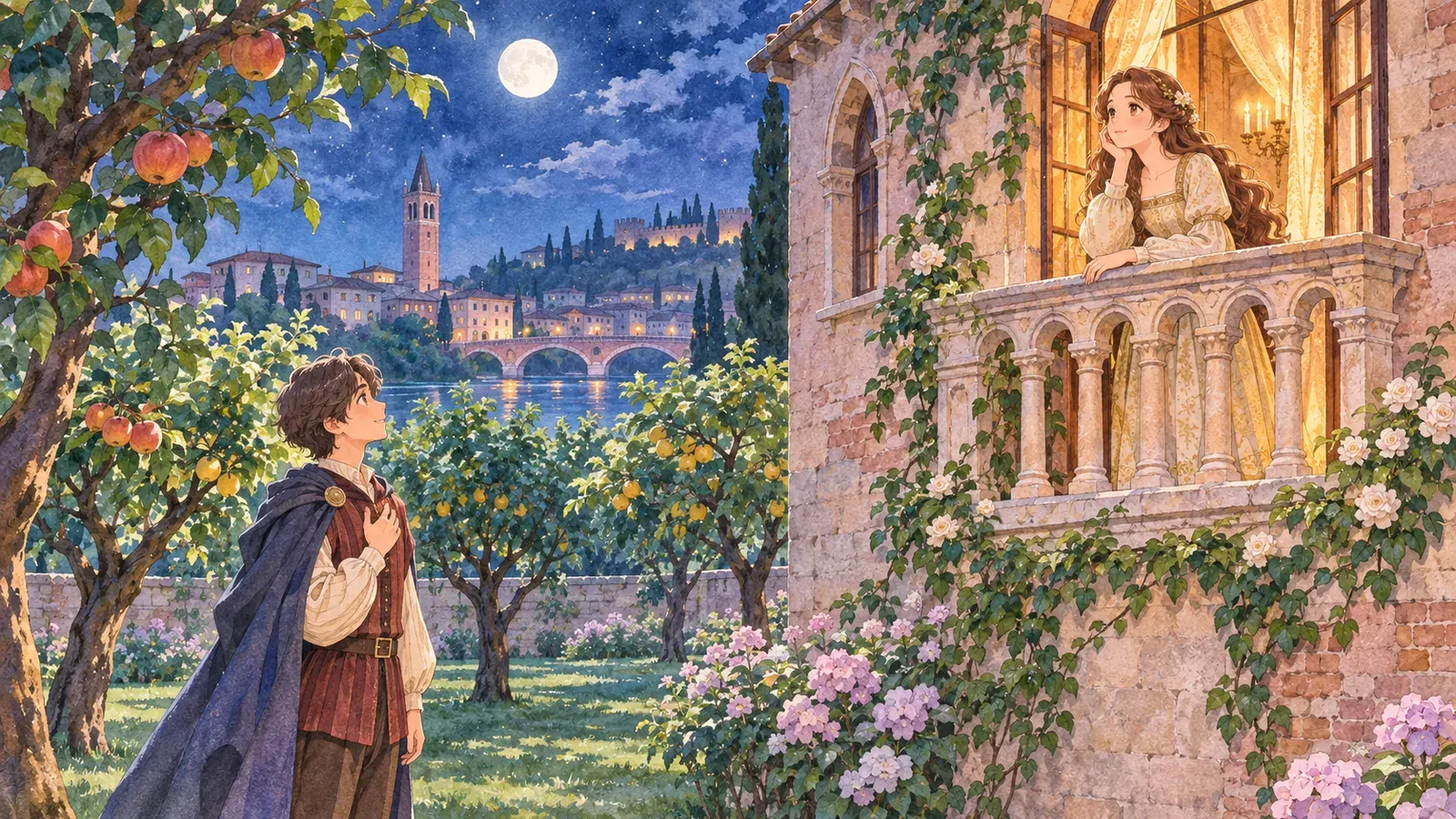
It being midnight, Romeo with his companions departed; but they soon missed him, for, unable to stay away from the house where he had left his heart, he leaped the wall of an orchard which was at the back of Juliet's house. Here he had not been long, ruminating on his new love, when Juliet appeared above at a window, through which her exceeding beauty seemed to break like the light of the sun in the east; and the moon, which shone in the orchard with a faint light, appeared to Romeo as if sick and pale with grief at the superior lustre of this new sun. And she, leaning her cheek upon her hand, he passionately wished himself a glove upon that hand, that he might touch her cheek. She all this while thinking herself alone, fetched a deep sigh, and exclaimed, "Ah me!" Romeo, enraptured to hear her speak, said softly, and unheard by her, "O speak again, bright angel, for such you appear, being over my head, like a winged messenger from heaven whom mortals fall back to gaze upon." She, unconscious of being overheard, and full of the new passion which that night's adventure had given birth to, called upon her lover by name (whom she supposed absent): "O Romeo, Romeo!" said she, "wherefore art thou Romeo? Deny thy father, and refuse thy name, for my sake; or if thou wilt not, be but my sworn love, and I no longer will be a Capulet."
真夜中になったので、ロミオは仲間と一緒に屋敷を出ました。ところが仲間はすぐにロミオを見失いました。自分の心を置いてきた家から離れていられず、ロミオはジュリエットの家の裏手にある果樹園の塀を飛び越えたのです。そこで新しい恋に思いをめぐらせていると、ほどなく上の窓にジュリエットが現れました。その並外れた美しさは、東の空に差す太陽の光のように、窓から輝き出るかと見えました。果樹園をほのかに照らしていた月は、この新しい太陽の輝きにかなわないのを悲しんで、病んで青ざめているようにロミオには見えました。ジュリエットは片手に頬を寄せていました。ロミオは、あの手にはめた手袋になって、あの頬に触れたいと、熱い思いで願いました。その間ずっと、ジュリエットは自分一人だと思い込んでいて、深いため息をつき、「ああ」と声をもらしました。その声を聞いてうっとりしたロミオは、ジュリエットには聞こえないように、そっと言いました。「ああ、もう一度話しておくれ、輝く天使よ。僕の頭の上にいるあなたは、まさに天使に見える。人間たちがのけぞって見上げる、翼のある天の使いのようだ」ジュリエットは人に聞かれているとも知らず、その夜の出来事から生まれた新しい恋で胸がいっぱいでした。そして、そこにはいないと思っている恋人の名を呼びました。「ああ、ロミオ、ロミオ。どうしてあなたはロミオなの。私のために、お父さまと縁を切り、その名を捨ててください。それがおいやなら、ただ私を愛すると誓ってください。そうすれば私は、もうキャピュレットではなくなります」
Romeo, having this encouragement, would fain have spoken, but he was desirous of hearing more; and the lady continued her passionate discourse with herself (as she thought), still chiding Romeo for being Romeo and a Montague, and wishing him some other name, or that he would put away that hated name, and for that name which was no part of himself, he should take all herself. At this loving word Romeo could no longer refrain, but taking up the dialogue as if her words had been addressed to him personally, and not merely in fancy, he bade her call him Love, or by whatever other name she pleased, for he was no longer Romeo, if that name was displeasing to her. Juliet, alarmed to hear a man's voice in the garden, did not at first know who it was, that by favour of the night and darkness had thus stumbled upon the discovery of her secret; but when he spoke again, though her ears had not yet drunk a hundred words of that tongue's uttering, yet so nice is a lover's hearing, that she immediately knew him to be young Romeo, and she expostulated with him on the danger to which he had exposed himself by climbing the orchard walls, for if any of her kinsmen should find him there, it would be death to him being a Montague.
この言葉に励まされて、ロミオは声をかけたくなりましたが、もっと聞いていたいとも思いました。ジュリエットは、独り言のつもりで、熱い思いを語り続けました。ロミオがロミオであり、モンタギューであることを、なおも責めました。ほかの名前だったらいいのに、あの憎い名前を捨ててくれたらいいのに、と願いました。名前はあの人自身のどの部分でもないのだから、その名前の代わりに私のすべてを受け取ってほしい、と言うのです。この愛の言葉を聞いて、ロミオはもうこらえきれなくなりました。ジュリエットの言葉が空想の中の相手にではなく、じかに自分に向けられたものであるかのように、話を引き取りました。そして、僕を「恋人」と呼んでください、でなければ何でも好きな名前で呼んでください、ロミオという名があなたの気に入らないのなら、僕はもうロミオではありません、と言いました。庭で男の声がしたので、ジュリエットはびっくりしました。夜の闇に助けられて自分の秘密を偶然知ってしまったのが誰なのか、初めは分かりませんでした。けれども、ロミオがもう一度口を開くと、すぐに若いロミオだと分かりました。その口から出る言葉を、ジュリエットの耳はまだ百語も聞いていなかったのですが、恋する者の耳はそれほど鋭いのです。ジュリエットは、果樹園の塀を登るなんて、なんと危ないことをなさったのですか、とロミオをいさめました。もし身内の誰かに見つかれば、モンタギュー家の者であるあなたは殺されてしまいます、と言うのです。
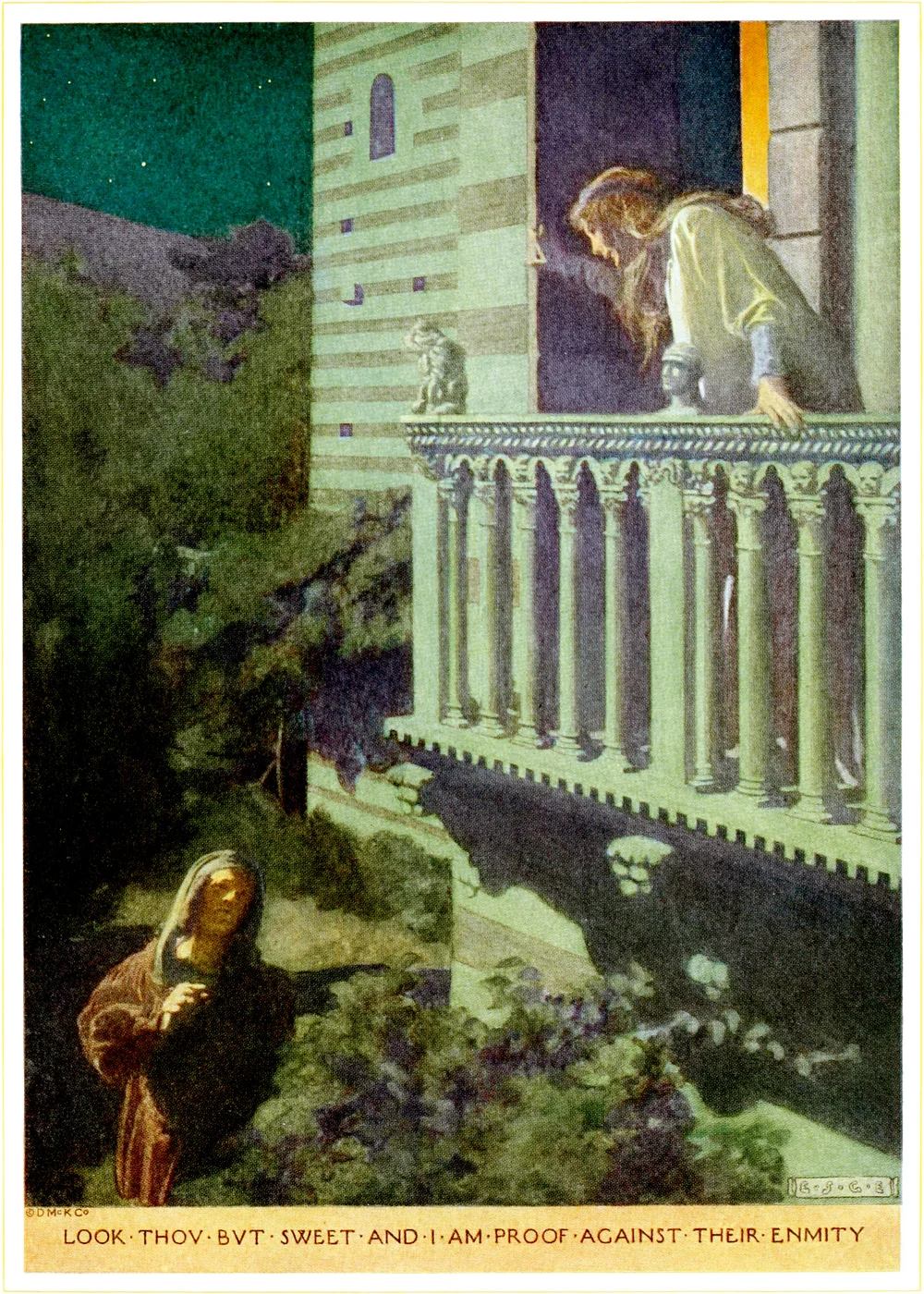
"Alack," said Romeo, "there is more peril in your eye, than in twenty of their swords. Do you but look kind upon me, lady, and I am proof against their enmity. Better my life should be ended by their hate, than that hated life should be prolonged, to live without your love."—"How came you into this place," said Juliet, "and by whose direction?"—"Love directed me," answered Romeo: "I am no pilot, yet wert thou as far apart from me, as that vast shore which is washed with the farthest sea, I should venture for such merchandise." A crimson blush came over Juliet's face, yet unseen by Romeo by reason of the night, when she reflected upon the discovery which she had made, yet not meaning to make it, of her love to Romeo. She would fain have recalled her words, but that was impossible: fain would she have stood upon form, and have kept her lover at a distance, as the custom of discreet ladies is, to frown and be perverse, and give their suitors harsh denials at first; to stand off, and affect a coyness or indifference, where they most love, that their lovers may not think them too lightly or too easily won; for the difficulty of attainment increases the value of the object.
「ああ」とロミオは言いました。「あの人たちの剣二十本よりも、あなたの目のほうがずっと危ない。あなたが優しい目で見てくださりさえすれば、僕はあの人たちの憎しみなど何ともありません。あなたの愛なしに生きて、いとわしい命を長らえるよりも、あの人たちの憎しみでこの命を絶たれるほうがましです」「どうやってここへいらしたのですか」とジュリエットは言いました。「誰の案内で」「恋が案内してくれました」とロミオは答えました。「僕は船の水先案内人ではありません。けれども、たとえあなたが、最果ての海に洗われるはるかな岸辺ほど遠く離れていても、これほどの宝のためなら、僕は危険を冒して海へ出るでしょう」ジュリエットの顔が真っ赤に染まりました。ロミオを愛していることを、そのつもりもないのに打ち明けてしまったと思い返したからです。もっとも、夜のことで、ロミオには見えませんでした。ジュリエットは、できることなら自分の言葉を取り消したいと思いましたが、それは無理でした。できることなら作法どおりに振る舞って、恋人を寄せつけずにおきたいとも思いました。慎み深い女性は、初めは顔をしかめて意地を張り、求婚者をすげなく断るのが習わしだからです。一番愛している相手にこそ、よそよそしくして、恥ずかしがったり無関心を装ったりします。あまりに軽々しく、たやすく手に入った女だと恋人に思われないためです。手に入れにくいものほど、値打ちが上がるからです。
But there was no room in her case for denials, or puttings off, or any of the customary arts of delay and protracted courtship. Romeo had heard from her own tongue, when she did not dream that he was near her, a confession of her love. So with an honest frankness, which the novelty of her situation excused, she confirmed the truth of what he had before heard, and addressing him by the name of fair Montague (love can sweeten a sour name), she begged him not to impute her easy yielding to levity or an unworthy mind, but that he must lay the fault of it (if it were a fault) upon the accident of the night which had so strangely discovered her thoughts. And she added, that though her behaviour to him might not be sufficiently prudent, measured by the custom of her sex, yet that she would prove more true than many whose prudence was dissembling, and their modesty artificial cunning.
けれどもジュリエットの場合は、断ったり、じらしたり、求愛を長引かせるお決まりの手を使ったりする余地はありませんでした。ロミオがそばにいるとは夢にも思わないときに、ジュリエット自身の口から、愛の告白を聞かれてしまっていたのです。そこでジュリエットは、さっきロミオが聞いたことは本当です、と正直に、率直に認めました。これまでにない立場に置かれたのですから、その率直さも無理のないことでした。そしてロミオを「麗しいモンタギューさま」と呼びました(恋は酸っぱい名前さえ甘くするのです)。私がたやすく心を許したのを、軽はずみな心や卑しい心のせいだと思わないでください、とジュリエットは頼みました。これが落ち度だとしても、その責めは、私の思いを不思議な形で明かしてしまった今夜の偶然に負わせてください、と言うのです。さらに、こうも言いました。女のたしなみという物差しで測れば、あなたへの私の振る舞いは慎みが足りないかもしれません。けれども、慎み深さは見せかけで、しとやかさはずるい作り物という多くの女性よりも、私のほうが誠実だと分かっていただけるでしょう、と。
Romeo was beginning to call the heavens to witness, that nothing was farther from his thoughts than to impute a shadow of dishonour to such an honoured lady, when she stopped him, begging him not to swear; for although she joyed in him, yet she had no joy of that night's contract: it was too rash, too unadvised, too sudden. But he being urgent with her to exchange a vow of love with him that night, she said that she already had given him hers before he requested it; meaning, when he overheard her confession; but she would retract what she then bestowed, for the pleasure of giving it again, for her bounty was as infinite as the sea, and her love as deep. From this loving conference she was called away by her nurse, who slept with her, and thought it time for her to be in bed, for it was near to daybreak; but hastily returning, she said three or four words more to Romeo, the purport of which was, that if his love was indeed honourable, and his purpose marriage, she would send a messenger to him to-morrow, to appoint a time for their marriage, when she would lay all her fortunes at his feet, and follow him as her lord through the world. While they were settling this point, Juliet was repeatedly called for by her nurse, and went in and returned, and went and returned again, for she seemed as jealous of Romeo going from her, as a young girl of her bird, which she will let hop a little from her hand, and pluck it back with a silken thread; and Romeo was as loath to part as she; for the sweetest music to lovers is the sound of each other's tongues at night. But at last they parted, wishing mutually sweet sleep and rest for that night.
ロミオは天を証人にして誓おうとしました。これほど尊い女性に、ほんのわずかでも不名誉なところがあるなどとは、少しも考えていない、と。するとジュリエットはそれをさえぎって、誓わないでください、と頼みました。あなたのことはうれしく思うけれど、今夜の約束はうれしくありません、あまりに無鉄砲で、あまりに無分別で、あまりに突然ですから、と言うのです。それでもロミオが、今夜のうちに愛の誓いを交わしてほしいとしきりに求めると、ジュリエットは、あなたが求める前に、私の誓いはもう差し上げました、と答えました。ロミオが告白を立ち聞きしたときのことを言ったのです。けれども、あのとき差し上げたものを取り戻したい、もう一度差し上げる喜びを味わうために、とも言いました。私の惜しみなく与える心は海のように果てしなく、私の愛も海のように深いのですから、と。こうして愛を語り合っているところへ、乳母がジュリエットを呼びました。乳母はジュリエットと一緒に寝ていて、夜明けも近いのだから、もう床に就く時間だと思ったのです。けれどもジュリエットは急いで戻ってきて、ロミオにもう三言、四言、話しました。その中身はこうでした。あなたの愛が本当に誠実なもので、結婚するおつもりなら、明日、使いの者を差し向けますから、式の時刻を決めてください。そのときには私の持つすべてをあなたの足もとにささげ、あなたを夫として、世界のどこへでもついてまいります。二人がこのことを決めている間にも、ジュリエットは何度も乳母に呼ばれました。中へ入っては戻り、また入ってはまた戻りました。ロミオが自分のそばから離れていくのが、惜しくてたまらないようでした。少女が小鳥を手から少しだけ跳ねさせては、絹の糸で引き戻すのに似ていました。ロミオも同じように別れがたい思いでした。恋人たちにとって一番甘い音楽は、夜に聞く互いの声だからです。けれども、とうとう二人は、今夜は安らかに眠れますようにと互いに祈りながら別れました。
The day was breaking when they parted, and Romeo, who was too full of thoughts of his mistress and that blessed meeting to allow him to sleep, instead of going home, bent his course to a monastery hard by, to find Friar Lawrence. The good friar was already up at his devotions, but seeing young Romeo abroad so early, he conjectured rightly that he had not been abed that night, but that some distemper of youthful affection had kept him waking. He was right in imputing the cause of Romeo's wakefulness to love, but he made a wrong guess at the object, for he thought that his love for Rosaline had kept him waking. But when Romeo revealed his new passion for Juliet, and requested the assistance of the friar to marry them that day, the holy man lifted up his eyes and hands in a sort of wonder at the sudden change in Romeo's affections, for he had been privy to all Romeo's love for Rosaline, and his many complaints of her disdain: and he said, that young men's love lay not truly in their hearts, but in their eyes. But Romeo replying, that he himself had often chidden him for doting on Rosaline, who could not love him again, whereas Juliet both loved and was beloved by him, the friar assented in some measure to his reasons; and thinking that a matrimonial alliance between young Juliet and Romeo might happily be the means of making up the long breach between the Capulets and the Montagues; which no one more lamented than this good friar, who was a friend to both the families and had often interposed his mediation to make up the quarrel without effect; partly moved by policy, and partly by his fondness for young Romeo, to whom he could deny nothing, the old man consented to join their hands in marriage.
二人が別れたとき、夜は明けかけていました。ロミオは恋人のことと、あの幸せな出会いのことで頭がいっぱいで、とても眠れそうにありません。そこで家には帰らず、すぐ近くの修道院へ足を向け、ロレンス修道士を訪ねました。善良な修道士はもう起きて、祈りをささげていました。こんな朝早くに若いロミオが出歩いているのを見て、修道士は、昨夜は床に就かなかったのだな、若者らしい恋の病で眠れなかったのだな、と正しく見抜きました。眠れなかった原因を恋と見たのは当たっていましたが、相手については見当が外れていました。ロザラインへの恋で眠れなかったのだと思ったのです。ところがロミオは、ジュリエットへの新しい恋を打ち明け、今日のうちに二人を結婚させてほしい、力を貸してほしいと頼みました。聖職にある修道士は、ロミオの心変わりのあまりの急さにあきれたように、目と両手を天に向けました。ロザラインへのロミオの恋のことも、冷たくされるとさんざんこぼしていたことも、すっかり知っていたからです。そして、若い男の恋は本当は心にあるのではなく、目にあるのだな、と言いました。けれどもロミオは言い返しました。愛を返してくれないロザラインに夢中になるなと、あなたご自身が何度も僕をしかったではありませんか。それに引きかえジュリエットは、僕を愛し、僕に愛されてもいるのです、と。修道士は、この言い分にもいくらか道理があると認めました。それに、若いジュリエットとロミオが夫婦になれば、キャピュレット家とモンタギュー家の長い不和を、うまく仲直りさせるきっかけになるかもしれない、とも考えました。この不和を誰よりも嘆いていたのが、この善良な修道士でした。両家と親しく、争いを収めようと何度も仲裁に入っては、うまくいかずにいたのです。こうして、一つにはそうした思惑から、また一つには、頼まれれば何も断れないほど若いロミオをかわいがっていたことから、老修道士は二人を結婚させることを承知しました。
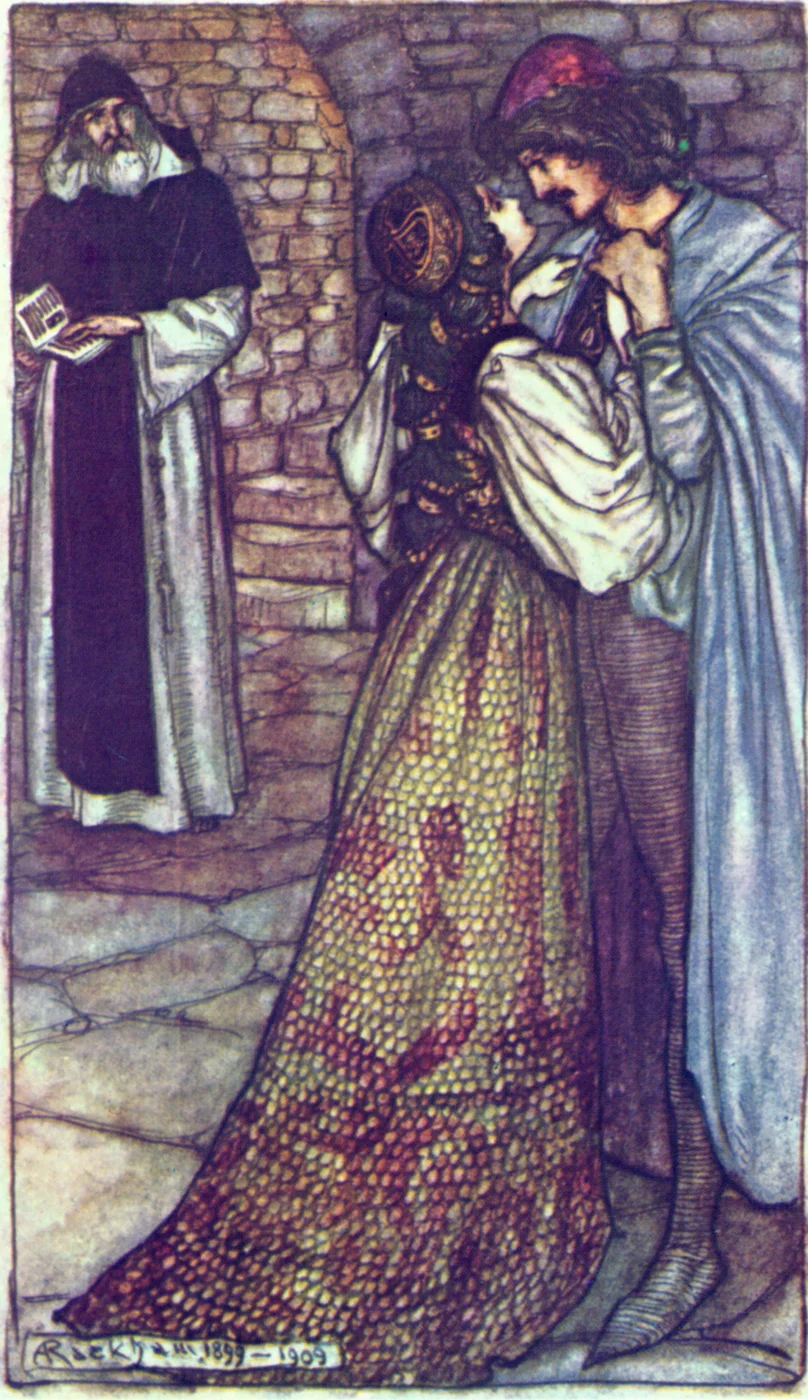
Now was Romeo blessed indeed, and Juliet, who knew his intent from a messenger which she had despatched according to promise, did not fail to be early at the cell of Friar Lawrence, where their hands were joined in holy marriage; the good friar praying the heavens to smile upon that act, and in the union of this young Montague and young Capulet to bury the old strife and long dissensions of their families.
今やロミオは本当に幸せでした。ジュリエットは約束どおりに使いを送り、その使いからロミオの考えを知ると、朝早く、間違いなくロレンス修道士の部屋にやって来ました。そこで二人は神聖な結婚の式を挙げて結ばれました。善良な修道士は祈りました。天がこの式にほほえみかけてくださいますように。そして、この若いモンタギューと若いキャピュレットが結ばれることで、両家の古い争いと長い不和が葬り去られますように、と。
The ceremony being over, Juliet hastened home, where she stayed impatient for the coming of night, at which time Romeo promised to come and meet her in the orchard, where they had met the night before; and the time between seemed as tedious to her, as the night before some great festival seems to an impatient child, that has got new finery which it may not put on till the morning.
式が終わると、ジュリエットは急いで家に帰り、夜が来るのを今か今かと待ちました。夜になれば、前の晩に会ったあの果樹園へ会いに来ると、ロミオが約束していたのです。それまでの時間は、ジュリエットにはうんざりするほど長く感じられました。新しい晴れ着をもらったのに朝まで着てはいけないと言われた子どもが、大きなお祭りの前の晩を待ちきれずに過ごす、あの長さと同じでした。
That same day, about noon, Romeo's friends, Benvolio and Mercutio, walking through the streets of Verona, were met by a party of the Capulets with the impetuous Tybalt at their head. This was the same angry Tybalt who would have fought with Romeo at old Lord Capulet's feast. He, seeing Mercutio, accused him bluntly of associating with Romeo, a Montague. Mercutio, who had as much fire and youthful blood in him as Tybalt, replied to this accusation with some sharpness; and in spite of all Benvolio could say to moderate their wrath, a quarrel was beginning, when Romeo himself passing that way, the fierce Tybalt turned from Mercutio to Romeo, and gave him the disgraceful appellation of villain. Romeo wished to avoid a quarrel with Tybalt above all men, because he was the kinsman of Juliet, and much beloved by her; besides, this young Montague had never thoroughly entered into the family quarrel, being by nature wise and gentle, and the name of a Capulet, which was his dear lady's name, was now rather a charm to allay resentment, than a watchword to excite fury. So he tried to reason with Tybalt, whom he saluted mildly by the name of good Capulet, as if he, though a Montague, had some secret pleasure in uttering that name: but Tybalt, who hated all Montagues as he hated hell, would hear no reason, but drew his weapon; and Mercutio, who knew not of Romeo's secret motive for desiring peace with Tybalt, but looked upon his present forbearance as a sort of calm dishonourable submission, with many disdainful words provoked Tybalt to the prosecution of his first quarrel with him; and Tybalt and Mercutio fought, till Mercutio fell, receiving his death's wound while Romeo and Benvolio were vainly endeavouring to part the combatants.
その同じ日の正午ごろ、ロミオの友人ベンヴォーリオとマキューシオがヴェローナの通りを歩いていると、キャピュレット家の一団に出くわしました。先頭にいたのは、血気にはやるティボルトです。キャピュレット老卿の宴でロミオと戦おうとした、あの怒りっぽいティボルトでした。ティボルトはマキューシオを見ると、モンタギュー家のロミオと付き合っているなと、ぶしつけに責めました。マキューシオもティボルトに劣らず、火のような気性と若い血のたぎる男でしたから、とげのある言葉で言い返しました。ベンヴォーリオが二人の怒りを静めようと言葉を尽くしましたが、けんかが始まりかけました。そこへ当のロミオが通りかかりました。荒々しいティボルトはマキューシオからロミオに向き直り、「悪党」という不名誉な呼び名を浴びせました。ロミオは、誰よりもティボルトとだけは争いたくありませんでした。ジュリエットの身内で、ジュリエットにたいそう慕われている人だからです。それに、この若いモンタギューは生まれつき賢く穏やかで、もともと両家の争いに深入りしたことがありませんでした。そのうえキャピュレットという名は愛する人の名ですから、今では怒りをかき立てる合い言葉どころか、むしろ恨みを和らげるまじないでした。そこでロミオは、ティボルトを道理で説き伏せようとしました。「善良なるキャピュレット殿」と穏やかに呼びかけた様子は、モンタギュー家の者でありながら、その名を口にするのがひそかにうれしいかのようでした。しかしティボルトは、モンタギュー家の者なら誰でも地獄のように憎んでいましたから、道理に耳を貸そうとせず、剣を抜きました。マキューシオは、ロミオがティボルトと仲良くしたがる秘密のわけを知りません。今のロミオの我慢を、おとなしく屈する恥ずべき態度だと見ました。そしてティボルトにさげすみの言葉をさんざん浴びせ、さっきの自分とのけんかの続きをやれと挑発しました。こうしてティボルトとマキューシオは戦いました。ロミオとベンヴォーリオが二人を引き離そうとしましたが、そのかいもなく、マキューシオは致命傷を受けて倒れました。
Mercutio being dead, Romeo kept his temper no longer, but returned the scornful appellation of villain which Tybalt had given him; and they fought till Tybalt was slain by Romeo. This deadly broil falling out in the midst of Verona at noonday, the news of it quickly brought a crowd of citizens to the spot, and among them the old Lords Capulet and Montague, with their wives; and soon after arrived the prince himself, who being related to Mercutio, whom Tybalt had slain, and having had the peace of his government often disturbed by these brawls of Montagues and Capulets, came determined to put the law in strictest force against those who should be found to be offenders. Benvolio, who had been eye-witness to the fray, was commanded by the prince to relate the origin of it; which he did, keeping as near the truth as he could without injury to Romeo, softening and excusing the part which his friends took in it. Lady Capulet, whose extreme grief for the loss of her kinsman Tybalt made her keep no bounds in her revenge, exhorted the prince to do strict justice upon his murderer, and to pay no attention to Benvolio's representation, who, being Romeo's friend and a Montague, spoke partially.
マキューシオが死ぬと、ロミオはもう怒りを抑えていられませんでした。ティボルトに浴びせられた「悪党」というさげすみの呼び名を、そのまま投げ返しました。二人は戦い、ついにティボルトはロミオに殺されました。この命にかかわる争いは、真昼のヴェローナの真ん中で起こったので、知らせはたちまち広まり、市民が大勢その場に集まってきました。その中には、キャピュレットとモンタギューの両老卿も、それぞれ夫人を連れて来ていました。まもなく大公その人も到着しました。大公は、ティボルトに殺されたマキューシオの親類でした。そのうえ、モンタギュー家とキャピュレット家のこうしたけんかで、治めている町の平和をたびたび乱されてきました。そこで、罪があると分かった者には法を最も厳しく当てはめようと、心を決めて来たのです。大公は、争いを目の前で見ていたベンヴォーリオに、事の起こりを話すよう命じました。ベンヴォーリオは、ロミオの不利にならない範囲で、できるだけ事実に沿って話し、友人たちのしたことは和らげて言い、かばいました。キャピュレット夫人は、身内のティボルトを失った悲しみがあまりに深く、仕返しを求める気持ちに歯止めがきかなくなっていました。そして大公に、ティボルトを殺した者を厳しく裁いてください、ベンヴォーリオの申し立てなど取り合わないでください、と強く訴えました。あれはロミオの友人でモンタギュー家の者ですから、一方の肩を持って話しているのです、と。
Thus she pleaded against her new son-in-law, but she knew not yet that he was her son-in-law and Juliet's husband. On the other hand was to be seen Lady Montague pleading for her child's life, and arguing with some justice that Romeo had done nothing worthy of punishment in taking the life of Tybalt, which was already forfeited to the law by his having slain Mercutio. The prince, unmoved by the passionate exclamations of these women, on a careful examination of the facts, pronounced his sentence, and by that sentence Romeo was banished from Verona.
こうして夫人は、新しい娘婿を罰するよう訴えたのでした。けれども、その若者が自分の娘婿で、ジュリエットの夫だとは、まだ知りませんでした。一方、モンタギュー夫人は、我が子の命を助けてほしいと訴えていました。ティボルトはマキューシオを殺したのだから、その命はすでに法によって奪われるべきものだった、だからティボルトの命を奪ったロミオは、罰に値することを何もしていない、と言うのです。この言い分にはいくらか道理がありました。大公は、この女性たちの激しい叫びに心を動かされることなく、事実を念入りに調べたうえで判決を言い渡しました。その判決によって、ロミオはヴェローナから追放されることになりました。
Heavy news to young Juliet, who had been but a few hours a bride, and now by this decree seemed everlastingly divorced! When the tidings reached her, she at first gave way to rage against Romeo, who had slain her dear cousin, she called him a beautiful tyrant, a fiend angelical, a ravenous dove, a lamb with a wolf's nature, a serpent-heart hid with a flowering face, and other like contradictory names, which denoted the struggles in her mind between her love and her resentment: but in the end love got the mastery, and the tears which she shed for grief that Romeo had slain her cousin, turned to drops of joy that her husband lived whom Tybalt would have slain. Then came fresh tears, and they were altogether of grief for Romeo's banishment. That word was more terrible to her than the death of many Tybalts.
若いジュリエットにとっては、つらい知らせでした。花嫁になってまだ数時間しかたっていないのに、この命令で、永遠に夫と引き裂かれてしまうように思えたのです。知らせが届くと、ジュリエットは初め、大切ないとこを殺したロミオへの怒りに身を任せました。ロミオを、美しい暴君、天使のような悪魔、貪欲なハト、オオカミの性質を持つ子羊、花の顔に隠れた蛇の心などと呼び、ほかにも同じようにつじつまの合わない名前で呼びました。それは、心の中で愛と恨みがせめぎ合っていることを表していました。けれども最後には愛が勝ちました。ロミオがいとこを殺したことを悲しんで流した涙は、ティボルトに殺されるところだった夫が生きているという喜びの涙に変わりました。それからまた新しい涙があふれましたが、それはひたすら、ロミオの追放を悲しむ涙でした。追放という言葉は、ジュリエットにとって、ティボルトが何人死ぬよりも恐ろしいものでした。
Romeo, after the fray, had taken refuge in Friar Lawrence's cell, where he was first made acquainted with the prince's sentence, which seemed to him far more terrible than death. To him it appeared there was no world out of Verona's walls, no living out of the sight of Juliet. Heaven was there where Juliet lived, and all beyond was purgatory, torture, hell. The good friar would have applied the consolation of philosophy to his griefs: but this frantic young man would hear of none, but like a madman he tore his hair, and threw himself all along upon the ground, as he said, to take the measure of his grave. From this unseemly state he was roused by a message from his dear lady, which a little revived him; and then the friar took the advantage to expostulate with him on the unmanly weakness which he had shown. He had slain Tybalt, but would he also slay himself, slay his dear lady, who lived but in his life? The noble form of man, he said, was but a shape of wax, when it wanted the courage which should keep it firm. The law had been lenient to him, that instead of death, which he had incurred, had pronounced by the prince's mouth only banishment.
争いのあと、ロミオはロレンス修道士の部屋に逃げ込んでいました。そこで初めて大公の判決を知らされましたが、ロミオにはそれが死よりもはるかに恐ろしく思えました。ヴェローナの城壁の外に世界はなく、ジュリエットの姿が見えない所では生きていけない、と思えたのです。ジュリエットの住む所こそが天国で、その外はすべて煉獄であり、拷問であり、地獄でした。善良な修道士は、哲学の教えでその悲しみを慰めようとしました。けれども、取り乱したこの若者は何も聞こうとしません。狂ったように髪をかきむしり、自分の墓の寸法を測るのだと言って、地面に長々と身を投げ出しました。この見苦しい有り様からロミオを立ち直らせたのは、愛する妻からの伝言でした。それでロミオは少し元気を取り戻しました。修道士はこの機会をとらえ、ロミオが見せた男らしくない弱さをいさめました。おまえはティボルトを殺したが、そのうえ自分まで殺すのか、おまえの命があればこそ生きている愛する妻まで殺すのか、と問いただしました。人間の気高い姿も、それをしっかり支えるはずの勇気がなければ、ろうで作った形にすぎない、とも言いました。そして、法はおまえに寛大だったのだ、死罪に当たることをしたのに、大公の口から言い渡されたのは死ではなく追放だけだったではないか、と諭しました。
He had slain Tybalt, but Tybalt would have slain him: there was a sort of happiness in that. Juliet was alive, and (beyond all hope) had become his dear wife; therein he was most happy. All these blessings, as the friar made them out to be, did Romeo put from him like a sullen misbehaved wench. And the friar bade him beware, for such as despaired (he said) died miserable. Then when Romeo was a little calmed, he counselled him that he should go that night and secretly take his leave of Juliet, and thence proceed straightways to Mantua, at which place he should sojourn, till the friar found fit occasion to publish his marriage, which might be a joyful means of reconciling their families; and then he did not doubt but the prince would be moved to pardon him, and he would return with twenty times more joy than he went forth with grief. Romeo was convinced by these wise counsels of the friar, and took his leave to go and seek his lady, proposing to stay with her that night, and by daybreak pursue his journey alone to Mantua; to which place the good friar promised to send him letters from time to time, acquainting him with the state of affairs at home.
おまえはティボルトを殺したが、ティボルトのほうこそおまえを殺そうとしていたのだから、そこに一つの幸せがある、と修道士は続けました。ジュリエットは生きていて、しかも(望むべくもなかったことに)おまえの愛する妻になったのだから、その点でおまえはこのうえなく幸せなのだ、とも言いました。修道士はこうして数々の恵みを数え上げて見せましたが、ロミオは、すねた行儀の悪い小娘のように、それをみな払いのけました。修道士は、気をつけなさい、絶望する者は惨めな死に方をするものだ、と戒めました。やがてロミオが少し落ち着くと、修道士はこう勧めました。今夜こっそりジュリエットのもとへ行って別れを告げ、そこからまっすぐマントヴァへ向かうこと。そして、修道士がよい折を見つけて二人の結婚を公にするまで、そこにとどまること。結婚を公にすれば、両家を仲直りさせる喜ばしいきっかけになるかもしれません。そうなれば大公もきっと心を動かして許してくださるはずで、ロミオは、悲しんで出ていくときの二十倍もの喜びとともに帰ってこられるに違いない、と修道士は信じていました。ロミオは修道士のこの賢い助言に納得し、妻のもとへ行くために別れを告げました。その夜は妻のそばで過ごし、夜明けには一人でマントヴァへ旅立つつもりでした。善良な修道士は、ときどきマントヴァへ手紙を送って、故郷の様子を知らせると約束しました。
That night Romeo passed with his dear wife, gaining secret admission to her chamber, from the orchard in which he had heard her confession of love the night before. That had been a night of unmixed joy and rapture; but the pleasures of this night, and the delight which these lovers took in each other's society, were sadly allayed with the prospect of parting, and the fatal adventures of the past day. The unwelcome daybreak seemed to come too soon, and when Juliet heard the morning song of the lark, she would have persuaded herself that it was the nightingale, which sings by night; but it was too truly the lark which sang, and a discordant and unpleasing note it seemed to her; and the streaks of day in the east too certainly pointed out that it was time for these lovers to part. Romeo took his leave of his dear wife with a heavy heart, promising to write to her from Mantua every hour in the day; and when he had descended from her chamber-window, as he stood below her on the ground, in that sad foreboding state of mind in which she was, he appeared to her eyes as one dead in the bottom of a tomb. Romeo's mind misgave him in like manner: but now he was forced hastily to depart, for it was death for him to be found within the walls of Verona after daybreak.
その夜、ロミオは愛する妻と過ごしました。前の晩に愛の告白を聞いたあの果樹園から、こっそり妻の部屋に入れてもらったのです。前の晩は、混じり気のない喜びと有頂天の夜でした。けれども今夜の楽しみも、恋人同士が一緒にいる喜びも、別れが迫っていることと、過ぎた一日の命にかかわる出来事のせいで、悲しく曇っていました。来てほしくない夜明けは、あまりに早く訪れたように思えました。ヒバリの朝の歌が聞こえると、ジュリエットは、あれは夜に鳴くナイチンゲールだと思い込もうとしました。けれども鳴いていたのは紛れもなくヒバリで、その声はジュリエットには調子外れの耳障りな音に聞こえました。東の空に差す幾筋もの朝の光も、恋人たちの別れの時が来たことを、あまりにはっきりと告げていました。ロミオは重い心で愛する妻に別れを告げ、マントヴァからは一日中、一時間ごとに手紙を書くと約束しました。ロミオが部屋の窓から降りて、下の地面に立ったときのことです。悲しく不吉な予感にとらわれていたジュリエットの目には、その姿が、墓の底に横たわる死人のように映りました。ロミオも同じように胸騒ぎを覚えました。けれども今は急いで立ち去らなければなりません。夜が明けてからヴェローナの城壁の中で見つかれば、死罪になるのです。
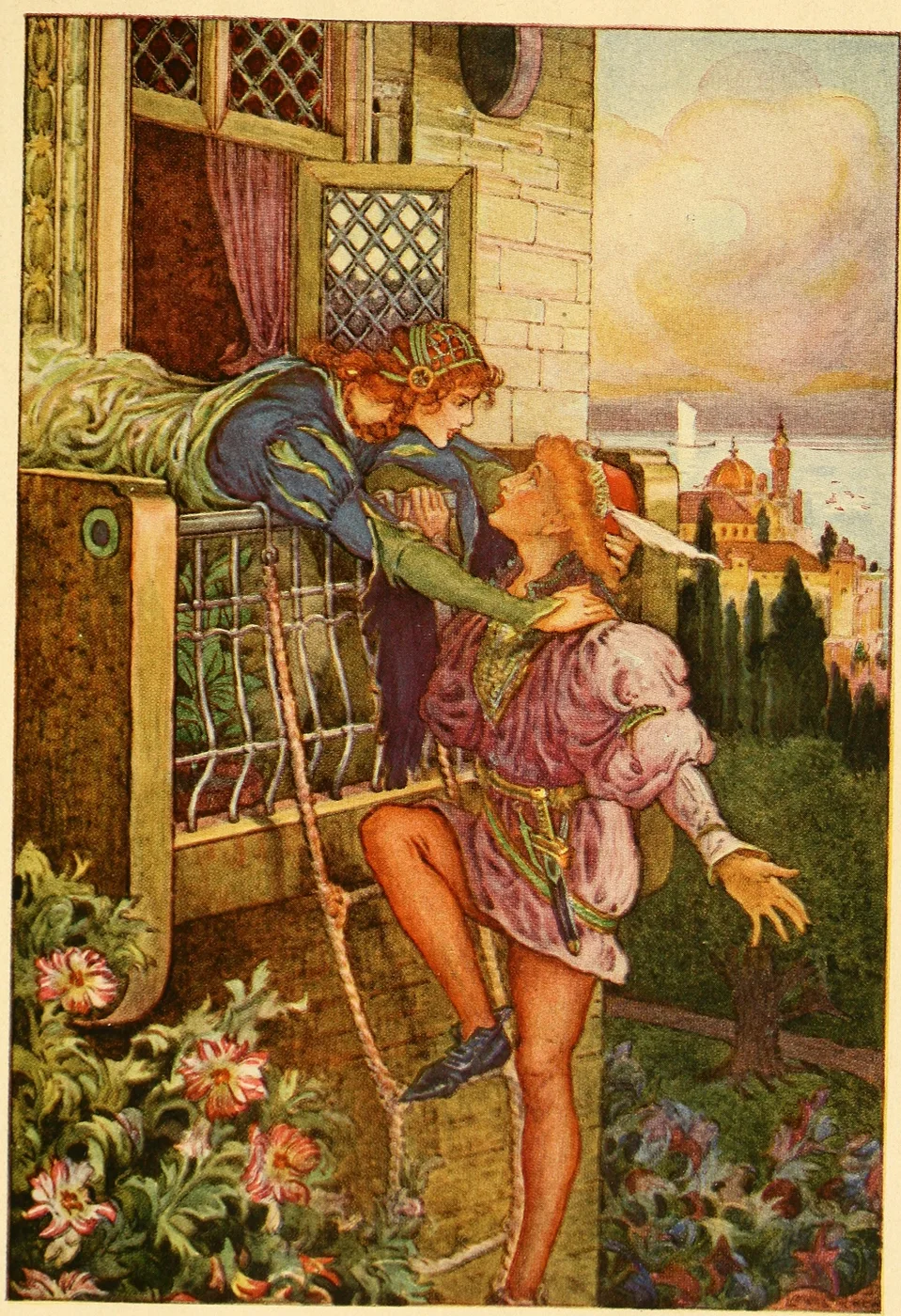
This was but the beginning of the tragedy of this pair of star-crossed lovers. Romeo had not been gone many days, before the old Lord Capulet proposed a match for Juliet. The husband he had chosen for her, not dreaming that she was married already, was Count Paris, a gallant, young, and noble gentleman, no unworthy suitor to the young Juliet, if she had never seen Romeo.
これは、不幸な星のもとに生まれたこの恋人たちの悲劇の、ほんの始まりにすぎませんでした。ロミオが去って何日もたたないうちに、キャピュレット老卿がジュリエットに縁談を持ち出したのです。娘がすでに結婚しているとは夢にも思わずに卿が選んだ夫は、パリス伯爵でした。りりしく、若く、身分の高い紳士で、もしジュリエットがロミオに出会っていなかったなら、若いジュリエットの求婚者として不足のない人でした。
The terrified Juliet was in a sad perplexity at her father's offer. She pleaded her youth unsuitable to marriage, the recent death of Tybalt, which had left her spirits too weak to meet a husband with any face of joy, and how indecorous it would show for the family of the Capulets to be celebrating a nuptial feast, when his funeral solemnities were hardly over: she pleaded every reason against the match, but the true one, namely, that she was married already. But Lord Capulet was deaf to all her excuses, and in a peremptory manner ordered her to get ready, for by the following Thursday she should be married to Paris: and having found her a husband, rich, young, and noble, such as the proudest maid in Verona might joyfully accept, he could not bear that out of an affected coyness, as he construed her denial, she should oppose obstacles to her own good fortune.
父の申し出に、ジュリエットはおびえ、すっかり途方に暮れました。そしていろいろな理由を挙げて訴えました。自分はまだ若くて結婚にはふさわしくないこと。ティボルトが亡くなったばかりで気持ちが沈んでいて、喜びの顔で夫を迎えることなどとてもできないこと。ティボルトの葬儀が済むか済まないかのうちにキャピュレット家が婚礼の宴を開くのは、どんなに不謹慎に見えるかということ。この縁談に反対する理由を何もかも並べましたが、本当の理由、つまりすでに結婚しているということだけは言いませんでした。けれどもキャピュレット卿は、どんな言い訳にも耳を貸しませんでした。そして有無を言わせぬ調子で、支度をしておけ、次の木曜日にはパリスと結婚させる、と命じました。裕福で、若く、身分の高い夫を見つけてやったのです。ヴェローナで一番誇り高い娘でも喜んで受けるような相手でした。それなのに娘がわざとらしく恥ずかしがって(卿は娘が断るのをそう受け取りました)、自分の幸運をわざわざ邪魔するとは、卿には我慢がならなかったのです。
In this extremity Juliet applied to the friendly friar, always her counsellor in distress, and he asking her if she had resolution to undertake a desperate remedy, and she answering that she would go into the grave alive rather than marry Paris, her own dear husband living; he directed her to go home, and appear merry, and give her consent to marry Paris, according to her father's desire, and on the next night, which was the night before the marriage, to drink off the contents of a phial which he then gave her, the effect of which would be that for two-and-forty hours after drinking it she should appear cold and lifeless; and when the bridegroom came to fetch her in the morning, he would find her to appearance dead; that then she would be borne, as the manner in that country was, uncovered on a bier, to be buried in the family vault; that if she could put off womanish fear, and consent to this terrible trial, in forty-two hours after swallowing the liquid (such was its certain operation) she would be sure to awake, as from a dream; and before she should awake, he would let her husband know their drift, and he should come in the night, and bear her thence to Mantua. Love, and the dread of marrying Paris, gave young Juliet strength to undertake this horrible adventure; and she took the phial of the friar, promising to observe his directions.
追い詰められたジュリエットは、困ったときにいつも相談に乗ってくれる、あの親切な修道士を頼りました。修道士は、思いきった手段を取る覚悟があるかと尋ねました。ジュリエットは、愛する夫が生きているのにパリスと結婚するくらいなら、生きたまま墓に入ります、と答えました。そこで修道士は、こう指図しました。家に帰って明るく振る舞い、父の望みどおりパリスとの結婚を承知すること。そして次の晩、つまり婚礼の前の晩に、この小瓶の中身を飲み干すこと。そう言って小瓶を渡しました。この薬を飲むと、四十二時間の間、体は冷たくなり、命がないように見えるのです。朝になって花婿が迎えに来ても、見たところ死んでいるとしか思えません。するとジュリエットは、この国の習わしどおり、覆いを掛けずに棺台に載せて運ばれ、一族の納骨堂に葬られることになります。女らしい恐れを捨てて、この恐ろしい試練を受ける気になれるなら、薬を飲んで四十二時間後には(効き目は確かにそのとおりでした)、夢から覚めるように必ず目を覚まします。そして目を覚ます前に、修道士がこの計画を夫に知らせておきます。夫は夜のうちにやって来て、ジュリエットをそこからマントヴァへ連れていくでしょう。修道士はそう説明しました。愛と、パリスとの結婚の恐ろしさが、若いジュリエットに、このぞっとするような冒険に踏みきる力を与えました。ジュリエットは修道士から小瓶を受け取り、指図に従うと約束しました。
Going from the monastery, she met the young Count Paris, and modestly dissembling, promised to become his bride. This was joyful news to the Lord Capulet and his wife. It seemed to put youth into the old man; and Juliet, who had displeased him exceedingly, by her refusal of the count, was his darling again, now she promised to be obedient. All things in the house were in a bustle against the approaching nuptials. No cost was spared to prepare such festival rejoicings as Verona had never before witnessed.
修道院からの帰り道、ジュリエットは若いパリス伯爵に出会い、しとやかに本心を隠して、花嫁になると約束しました。キャピュレット卿と夫人にとって、これはうれしい知らせでした。老人は若返ったかのようでした。伯爵を断ってひどく不興を買っていたジュリエットも、言うことを聞くと約束した今は、また卿のかわいい娘に戻りました。屋敷中が、近づく婚礼に向けて大忙しになりました。ヴェローナがかつて見たこともないような祝いの宴を用意するために、費用は少しも惜しまれませんでした。
On the Wednesday night Juliet drank off the potion. She had many misgivings lest the friar, to avoid the blame which might be imputed to him for marrying her to Romeo, had given her poison; but then he was always known for a holy man: then lest she should awake before the time that Romeo was to come for her; whether the terror of the place, a vault full of dead Capulets' bones, and where Tybalt, all bloody, lay festering in his shroud, would not be enough to drive her distracted: again she thought of all the stories she had heard of spirits haunting the places where their bodies were bestowed. But then her love for Romeo, and her aversion for Paris returned, and she desperately swallowed the draught, and became insensible.
水曜日の夜、ジュリエットは薬を飲み干しました。飲む前には、いくつもの不安が胸をよぎりました。修道士は、私をロミオと結婚させたことで責められるのを避けようとして、毒を渡したのではないでしょうか。けれども、あの方はいつも聖なる人として知られてきました。次には、ロミオが迎えに来る時刻より前に目が覚めてしまったらどうしよう、と心配になりました。あの場所は、死んだキャピュレット家の人々の骨でいっぱいの納骨堂です。血まみれのティボルトが、死に装束に包まれ、朽ちかけて横たわっています。その恐ろしさだけで、気が変になってしまうのではないでしょうか。さらに、なきがらが納められた場所には霊がさまよい出るという、これまでに聞いた話も次々に思い出されました。けれども、そのときロミオへの愛とパリスへの嫌悪がよみがえり、ジュリエットは必死の思いで薬を飲み干して、意識を失いました。
When young Paris came early in the morning with music to awaken his bride, instead of a living Juliet, her chamber presented the dreary spectacle of a lifeless corse. What death to his hopes! What confusion then reigned through the whole house! Poor Paris lamenting his bride, whom most detestable death had beguiled him of, had divorced from him even before their hands were joined. But still more piteous it was to hear the mournings of the old Lord and Lady Capulet, who having but this one, one poor loving child to rejoice and solace in, cruel death had snatched her from their sight, just as these careful parents were on the point of seeing her advanced (as they thought) by a promising and advantageous match. Now all things that were ordained for the festival were turned from their properties to do the office of a black funeral. The wedding cheer served for a sad burial feast, the bridal hymns were changed for sullen dirges, the sprightly instruments to melancholy bells, and the flowers that should have been strewed in the bride's path, now served but to strew her corse. Now, instead of a priest to marry her, a priest was needed to bury her; and she was borne to church indeed, not to augment the cheerful hopes of the living, but to swell the dreary numbers of the dead.
朝早く、若いパリスが花嫁を起こそうと、音楽を奏でさせながらやって来ました。ところが部屋にあったのは生きたジュリエットではなく、命のないなきがらという痛ましい光景でした。パリスの望みは、なんと無残に絶たれたことでしょう。屋敷中が、なんという混乱に包まれたことでしょう。哀れなパリスは花嫁を思って嘆きました。憎んでも憎みきれない死が、花嫁をだまし取り、まだ手を結び合わせもしないうちに二人を引き裂いてしまったのです。けれども、それよりさらに痛ましかったのは、キャピュレット老卿と夫人の嘆きの声でした。二人にとってジュリエットはたった一人の子で、喜びも慰めも、このかわいそうな優しい娘一人だけでした。その娘を、むごい死が目の前から奪い去ったのです。それも、娘思いの両親が、(二人の考えでは)有望で条件のよい縁組みによって娘が身を立てるのを、今まさに見届けようとしていた矢先でした。祝いのために整えられたものは何もかも、本来の役目を離れて、黒い葬式の用を務めることになりました。婚礼のごちそうは悲しい葬式の食事になり、婚礼の賛美歌は沈んだ弔いの歌に、陽気な楽器は陰気な鐘に変わりました。花嫁の歩く道にまかれるはずだった花は、今はただ、なきがらの上にまかれました。結婚させる司祭の代わりに、葬る司祭が必要になりました。ジュリエットは確かに教会へ運ばれましたが、それは生きている人々の明るい望みを増すためではなく、死者のわびしい数を増やすためでした。
Bad news, which always travels faster than good, now brought the dismal story of his Juliet's death to Romeo, at Mantua, before the messenger could arrive, who was sent from Friar Lawrence to apprise him that these were mock funerals only, and but the shadow and representation of death, and that his dear lady lay in the tomb but for a short while, expecting when Romeo would come to release her from that dreary mansion. Just before, Romeo had been unusually joyful and light-hearted. He had dreamed in the night that he was dead (a strange dream, that gave a dead man leave to think), and that his lady came and found him dead, and breathed such life with kisses in his lips, that he revived, and was an emperor! And now that a messenger came from Verona, he thought surely it was to confirm some good news which his dreams had presaged. But when the contrary to this flattering vision appeared, and that it was his lady who was dead in truth, whom he could not revive by any kisses, he ordered horses to be got ready, for he determined that night to visit Verona, and to see his lady in her tomb.
悪い知らせは、いつでも良い知らせより速く伝わるものです。ジュリエットが死んだという痛ましい話は、ロレンス修道士の使いよりも先に、マントヴァのロミオに届いてしまいました。その使いは、これは見せかけの葬式で、死の影と写し絵にすぎないこと、愛する妻が墓の中に横たわっているのはほんのしばらくの間で、ロミオがあの陰気な住まいから救い出しに来るのを待っていることを、知らせるはずだったのです。その直前まで、ロミオはいつになくうれしく、心も軽やかでした。夜、夢を見たのです。自分が死んでいる夢でした(死人にものを考えさせるとは、不思議な夢です)。そこへ妻がやって来て、死んでいる自分を見つけ、唇に何度も口づけをして命を吹き込んでくれたので、自分は生き返って皇帝になった、という夢でした。そこへヴェローナから使いが来たので、きっと夢が前もって知らせてくれた良い知らせを確かめに来たのだ、とロミオは思いました。ところが、この甘い幻とは正反対のことが明らかになりました。本当に死んだのは妻のほうで、どんなに口づけをしても生き返らせることはできないのです。ロミオは馬の用意を命じました。その夜のうちにヴェローナへ行き、墓の中の妻に会おうと決めたのです。
And as mischief is swift to enter into the thoughts of desperate men, he called to mind a poor apothecary, whose shop in Mantua he had lately passed, and from the beggarly appearance of the man, who seemed famished, and the wretched show in his show of empty boxes ranged on dirty shelves, and other tokens of extreme wretchedness, he had said at the time (perhaps having some misgivings that his own disastrous life might haply meet with a conclusion so desperate), "If a man were to need poison, which by the law of Mantua it is death to sell, here lives a poor wretch who would sell it him." These words of his now came into his mind, and he sought out the apothecary, who after some pretended scruples, Romeo offering him gold, which his poverty could not resist, sold him a poison, which, if he swallowed, he told him, if he had the strength of twenty men, would quickly despatch him.
自暴自棄になった人の心には、悪い考えがすばやく入り込むものです。ロミオは、ある貧しい薬屋のことを思い出しました。少し前にマントヴァで、その店の前を通ったのです。主人は物乞いのようなみすぼらしい姿で、飢えているように見えました。店も惨めな有り様で、汚れた棚に空の箱が並んでいるだけでした。ほかにも、ひどい貧しさを示すものがいろいろ目につきました。それを見てロミオは、そのときこう言ったのでした(自分の不幸な人生も、もしかするとそんな絶望的な終わり方をするのではないかと、うすうす不安を感じていたのかもしれません)。「マントヴァの法律では、毒を売れば死罪だ。だが、もし毒の要る人がいたら、ここに住む哀れな男なら売ってくれるだろう」その自分の言葉が、今、頭によみがえりました。ロミオは薬屋を探し出しました。薬屋は、初めは良心がとがめるようなふりをしましたが、ロミオが金貨を差し出すと、貧しさには勝てず、毒を売りました。これを飲めば、たとえ二十人分の力がある男でもたちまち死んでしまう、と薬屋は言いました。
With this poison he set out for Verona, to have a sight of his dear lady in her tomb, meaning, when he had satisfied his sight, to swallow the poison, and be buried by her side. He reached Verona at midnight, and found the churchyard, in the midst of which was situated the ancient tomb of the Capulets. He had provided a light, and a spade, and wrenching iron, and was proceeding to break open the monument, when he was interrupted by a voice, which by the name of vile Montague, bade him desist from his unlawful business. It was the young Count Paris, who had come to the tomb of Juliet at that unseasonable time of night, to strew flowers and to weep over the grave of her that should have been his bride. He knew not what an interest Romeo had in the dead, but knowing him to be a Montague, and (as he supposed) a sworn foe to all the Capulets, he judged that he was come by night to do some villanous shame to the dead bodies; therefore in an angry tone he bade him desist; and as a criminal, condemned by the laws of Verona to die if he were found within the walls of the city, he would have apprehended him.
この毒を持って、ロミオはヴェローナへ向かいました。墓の中の愛する妻を一目見て、心ゆくまで見たら毒を飲み、そのそばに葬られるつもりでした。真夜中にヴェローナに着き、教会の墓地を見つけました。その真ん中に、キャピュレット家の古い墓所がありました。ロミオは明かりと、シャベルと、鉄のてこを用意してきていて、墓所をこじ開けにかかりました。そのとき、邪魔が入りました。「卑しいモンタギューめ」と呼びかけ、そんな不法なまねはやめろと命じる声がしたのです。若いパリス伯爵でした。花嫁になるはずだった人の墓に花をまき、涙を流そうと、こんな夜更けにジュリエットの墓へ来ていたのです。パリスは、ロミオが死者とどんなに深いかかわりを持っているかを知りませんでした。ただモンタギュー家の者だと知っていて、キャピュレット家すべての宿敵だと思い込んでいました。そこで、夜にまぎれてなきがらに何か卑劣な辱めを加えに来たのだと判断し、怒った声で、やめろと命じました。そして、ヴェローナの城壁の中で見つかれば死刑と法で定められた罪人として、ロミオを捕らえようとしました。
Romeo urged Paris to leave him, and warned him by the fate of Tybalt, who lay buried there, not to provoke his anger, or draw down another sin upon his head, by forcing him to kill him. But the count in scorn refused his warning, and laid hands on him as a felon, which Romeo resisting, they fought, and Paris fell. When Romeo, by the help of a light, came to see who it was that he had slain, that it was Paris, who (he learned in his way from Mantua) should have married Juliet, he took the dead youth by the hand, as one whom misfortune had made a companion, and said that he would bury him in a triumphal grave, meaning in Juliet's grave, which he now opened: and there lay his lady, as one whom death had no power upon to change a feature or complexion, in her matchless beauty; or as if Death were amorous, and the lean abhorred monster kept her there for his delight; for she lay yet fresh and blooming, as she had fallen to sleep when she swallowed that benumbing potion; and near her lay Tybalt in his bloody shroud, whom Romeo seeing, begged pardon of his lifeless corse, and for Juliet's sake called him cousin, and said that he was about to do him a favour by putting his enemy to death.
ロミオはパリスに、どうか立ち去ってくれと強く頼みました。そして、そこに葬られているティボルトの最期を引き合いに出して警告しました。僕を怒らせないでくれ、無理にあなたを殺させて、僕の頭にもう一つ罪を負わせないでくれ、と。けれども伯爵はその警告をあざけってはねつけ、重罪人として捕らえようとロミオに手をかけました。ロミオが逆らったので、二人は戦い、パリスが倒れました。ロミオは明かりを頼りに、自分が殺した相手が誰なのかを確かめました。それはパリスでした。ジュリエットと結婚するはずだった人だと、マントヴァからの道中で聞いていました。ロミオは、不幸によって道連れとなった人として、死んだ若者の手を取りました。そして、あなたを勝利の墓に葬ってあげよう、と言いました。ジュリエットの墓のことです。ロミオは今その墓を開けました。そこに妻が横たわっていました。比べるもののない美しさのままで、死も、目鼻立ち一つ、顔色一つ変える力を持たなかったかのようでした。あるいは、死神が恋をして、あのやせこけた忌まわしい怪物が、自分の楽しみのためにジュリエットをそこにとどめているかのようでした。あのしびれ薬を飲んで眠りに落ちたときのまま、まだみずみずしく、花のように横たわっていたからです。そばには、血に染まった死に装束のティボルトが横たわっていました。ロミオはそれを見ると、命のないなきがらに許しを請い、ジュリエットに免じて「いとこよ」と呼びかけました。そして、あなたの敵を死なせることで、あなたのためになることを一つしようとしているところだ、と言いました。
Here Romeo took his last leave of his lady's lips, kissing them; and here he shook the burden of his cross stars from his weary body, swallowing that poison which the apothecary had sold him, whose operation was fatal and real, not like that dissembling potion which Juliet had swallowed, the effect of which was now nearly expiring, and she about to awake to complain that Romeo had not kept his time, or that he had come too soon.
ここでロミオは、妻の唇に口づけをして、最後の別れを告げました。そしてここで、疲れ果てた体から、不幸な星の重荷を振り落としました。薬屋から買ったあの毒を飲んだのです。その効き目は本物で、命を奪うものでした。ジュリエットが飲んだ、あの見せかけの薬とは違っていました。そちらの薬の効き目は、もうほとんど切れかけていました。ジュリエットは今にも目を覚まして、ロミオが時間を守らなかった、あるいは早く来すぎた、とこぼそうとしていたのです。
For now the hour was arrived at which the friar had promised that she should awake; and he, having learned that his letters which he had sent to Mantua, by some unlucky detention of the messenger, had never reached Romeo, came himself, provided with a pickaxe and lantern, to deliver the lady from her confinement; but he was surprised to find a light already burning in the Capulets' monument, and to see swords and blood near it, and Romeo and Paris lying breathless by the monument.
修道士が、ジュリエットの目覚めると約束した時刻が、いよいよやって来たのです。修道士は、マントヴァへ送った手紙が、運悪く使いの者が足止めされたために、ロミオに届かなかったことを知りました。そこで、ジュリエットを閉じ込められた場所から救い出そうと、つるはしとランタンを持って自らやって来ました。ところが驚いたことに、キャピュレット家の墓所にはすでに明かりがともっていました。そばには剣と血が見え、ロミオとパリスが息絶えて墓所のかたわらに横たわっていました。
Before he could entertain a conjecture, to imagine how these fatal accidents had fallen out, Juliet awoke out of her trance, and seeing the friar near her, she remembered the place where she was, and the occasion of her being there, and asked for Romeo, but the friar, hearing a noise, bade her come out of that place of death, and of unnatural sleep, for a greater power than they could contradict had thwarted their intents; and being frightened by the noise of people coming, he fled: but when Juliet saw the cup closed in her true love's hands, she guessed that poison had been the cause of his end, and she would have swallowed the dregs if any had been left, and she kissed his still warm lips to try if any poison yet did hang upon them; then hearing a nearer noise of people coming, she quickly unsheathed a dagger which she wore, and stabbing herself, died by her true Romeo's side.
この命にかかわる出来事がどうして起こったのか、修道士が見当をつける間もなく、ジュリエットが深い眠りから覚めました。そばに修道士がいるのを見て、自分がどこにいるのか、なぜここにいるのかを思い出し、ロミオはどこですかと尋ねました。けれども修道士は物音を聞きつけ、この死の場所、自然に背いた眠りの場所から出なさい、と言いました。我々には逆らえない大きな力が、我々のもくろみをくじいてしまったのだ、と言うのです。そして、人々のやって来る物音におびえて、逃げてしまいました。しかしジュリエットは、誠実な恋人の手に握られた杯を見て、毒で命を絶ったのだと察しました。もし残りがあれば飲み干したことでしょう。唇にまだ毒が残っていないかと、まだ温かいその唇に口づけもしました。やがて人々の物音がいっそう近くに聞こえると、ジュリエットは身に着けていた短剣をすばやく抜いて自分を刺し、誠実なロミオのかたわらで息絶えました。
The watch by this time had come up to the place. A page belonging to Count Paris, who had witnessed the fight between his master and Romeo, had given the alarm, which had spread among the citizens, who went up and down the streets of Verona confusedly exclaiming, A Paris! a Romeo! a Juliet! as the rumour had imperfectly reached them, till the uproar brought Lord Montague and Lord Capulet out of their beds, with the prince, to inquire into the causes of the disturbance. The friar had been apprehended by some of the watch, coming from the churchyard, trembling, sighing, and weeping, in a suspicious manner. A great multitude being assembled at the Capulets' monument, the friar was demanded by the prince to deliver what he knew of these strange and disastrous accidents.
そのころには、夜警がその場に駆けつけていました。パリス伯爵の小姓が、主人とロミオの戦いを見ていて、急を知らせたのです。知らせは市民の間に広まりました。人々はうわさを切れ切れにしか聞いていなかったので、「パリスだ」「ロミオだ」「ジュリエットだ」と、わけも分からず叫びながらヴェローナの通りを行ったり来たりしました。その騒ぎで、とうとうモンタギュー卿とキャピュレット卿も寝床から起き出し、大公とともに、騒ぎの原因を調べにやって来ました。修道士は、震え、ため息をつき、涙を流しながら、怪しい様子で教会の墓地から出てきたところを、夜警の何人かに捕らえられていました。キャピュレット家の墓所に大勢の人が集まると、大公は修道士に、この不思議で痛ましい出来事について知っていることを述べよと求めました。
And there, in the presence of the old Lords Montague and Capulet, he faithfully related the story of their children's fatal love, the part he took in promoting their marriage, in the hope in that union to end the long quarrels between their families: how Romeo, there dead, was husband to Juliet; and Juliet, there dead, was Romeo's faithful wife; how before he could find a fit opportunity to divulge their marriage, another match was projected for Juliet, who, to avoid the crime of a second marriage, swallowed the sleeping draught (as he advised), and all thought her dead; how meantime he wrote to Romeo, to come and take her thence when the force of the potion should cease, and by what unfortunate miscarriage of the messenger the letters never reached Romeo: further than this the friar could not follow the story, nor knew more than that coming himself, to deliver Juliet from that place of death, he found the Count Paris and Romeo slain. The remainder of the transactions was supplied by the narration of the page who had seen Paris and Romeo fight, and by the servant who came with Romeo from Verona, to whom this faithful lover had given letters to be delivered to his father in the event of his death, which made good the friar's words, confessing his marriage with Juliet, imploring the forgiveness of his parents, acknowledging the buying of the poison of the poor apothecary, and his intent in coming to the monument, to die, and lie with Juliet. All these circumstances agreed together to clear the friar from any hand he could be supposed to have in these complicated slaughters, further than as the unintended consequences of his own well meant, yet too artificial and subtle contrivances.
そこで修道士は、モンタギューとキャピュレットの両老卿の前で、その子どもたちの命取りとなった恋の物語を、ありのままに語りました。まず、二人が結ばれることで両家の長い争いが終わればと願って、自分が結婚を後押ししたことを話しました。そこに死んでいるロミオはジュリエットの夫で、そこに死んでいるジュリエットはロミオの誠実な妻だったのです。次に、二人の結婚を明かすよい機会を見つけないうちに、ジュリエットに別の縁談が持ち上がったことを話しました。ジュリエットは二度目の結婚という罪を避けるために、修道士の勧めどおり眠り薬を飲み、誰もが死んだものと思いました。その間に修道士はロミオに手紙を書き、薬の効き目が切れるころに来てジュリエットを連れ出すように伝えました。ところが使いの者が不運にも役目を果たせず、手紙はロミオに届かなかったのです。そこから先のことは、修道士にも語れませんでした。知っていたのは、ジュリエットをあの死の場所から救い出そうと自分で来てみると、パリス伯爵とロミオが殺されていた、ということだけでした。残りのいきさつは、パリスとロミオの戦いを見ていた小姓の話と、ロミオと一緒にヴェローナから来た召し使いの話で補われました。この誠実な恋人は、自分が死んだら父に届けるようにと、召し使いに手紙を預けていました。その手紙は修道士の言葉を裏づけていました。ジュリエットとの結婚を打ち明け、両親に許しを請い、貧しい薬屋から毒を買ったこと、そして死んでジュリエットとともに横たわるために墓所へ来るつもりであることを認めていたのです。これらの事情はすべてぴたりと合い、この入り組んだ殺し合いに修道士が手を貸したのではないかという疑いを晴らしました。修道士に責めがあるとすれば、善意から出たものの、あまりに手の込んだ巧みすぎるたくらみが、思いもよらない結果を招いたということだけでした。
And the prince, turning to these old lords, Montague and Capulet, rebuked them for their brutal and irrational enmities, and showed them what a scourge Heaven had laid upon such offences, that it had found means even through the love of their children to punish their unnatural hate.
大公は、モンタギューとキャピュレットの老卿二人に向き直り、その獣じみた、道理に合わない憎しみ合いを厳しくとがめました。そして、そのような罪に天がどんな罰を下したかを示しました。天は、子どもたちの愛を通してまで、人の道に外れた二人の憎しみを罰する手立てを見つけたのだ、と。
And these old rivals, no longer enemies, agreed to bury their long strife in their children's graves; and Lord Capulet requested Lord Montague to give him his hand, calling him by the name of brother, as if in acknowledgment of the union of their families, by the marriage of the young Capulet and Montague; and saying that Lord Montague's hand (in token of reconcilement) was all he demanded for his daughter's jointure: but Lord Montague said he would give him more, for he would raise her a statue of pure gold, that while Verona kept its name, no figure should be so esteemed for its richness and workmanship as that of the true and faithful Juliet. And Lord Capulet in return said that he would raise another statue to Romeo. So did these poor old lords, when it was too late, strive to outgo each other in mutual courtesies: while so deadly had been their rage and enmity in past times, that nothing but the fearful overthrow of their children (poor sacrifices to their quarrels and dissensions) could remove the rooted hates and jealousies of the noble families.
かつての宿敵同士は、もはや敵ではなくなり、長い争いを子どもたちの墓に葬ることにしました。キャピュレット卿はモンタギュー卿に、手を握らせてほしいと頼み、相手を「兄弟」と呼びました。若いキャピュレットとモンタギューの結婚によって両家が結ばれたことを、認めるかのようでした。そして、娘が嫁ぎ先から受け取る財産としては、(仲直りのしるしの)この握手のほかに何も求めません、と言いました。けれどもモンタギュー卿は、それ以上のものを差し上げましょう、と答えました。純金でジュリエットの像を建てましょう、ヴェローナがその名を保つ限り、誠実で貞節なジュリエットの像ほど、豪華さと出来栄えでたたえられる像はないようにしましょう、と言うのです。キャピュレット卿もお返しに、ロミオの像をもう一つ建てましょう、と言いました。こうして哀れな老卿たちは、手遅れになってから、互いに礼を尽くすことを競い合ったのでした。それにしても、かつての二人の怒りと憎しみは、命のやり取りになるほど激しいものでした。子どもたち(両家の争いと不和の哀れないけにえ)の恐ろしい破滅がなければ、この名家同士に深く根を張った憎しみと対抗心を取り除くことはできなかったのです。
 3段落目に「a lady who danced there」(そこで踊っていた女性)とあります。キャピュレット家の祝宴でのことです。

 原田英語の究極の英単語帳(CEFR-J 6,868語)

 聞くだけモードで、文字を見ずに内容がわかるか試す。
 1文リピートで音読・シャドーイングも。


 英語の名スピーチ