For many people in Japan, the most important holiday of the year is not Christmas. It is New Year, or oshogatsu. Families get together, eat special food, and wish for a happy year. Let's look at how people spend these days.
日本の多くの人にとって、一年でいちばん大切な行事はクリスマスではありません。新年、つまり「お正月」です。家族が集まり、特別な料理を食べ、よい一年になるようにと願います。お正月の過ごし方を見てみましょう。
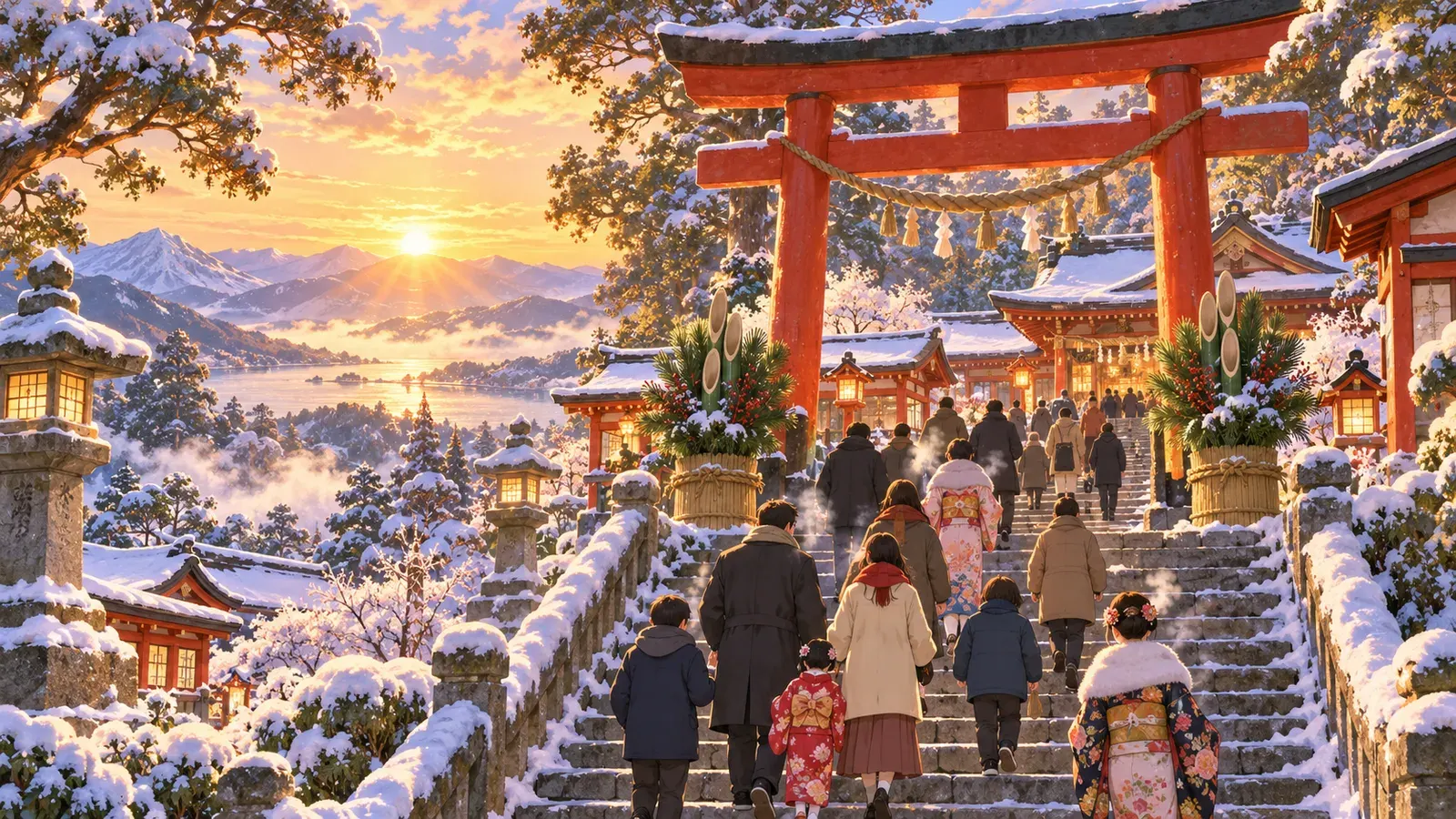
Before New Year, people clean their houses from top to bottom. This big cleaning is called osoji. They want to start the new year in a clean home. They also put decorations by the door, such as kadomatsu, made of pine and bamboo. People believe these decorations welcome the god of the new year into the house.
年が明ける前に、家の隅から隅まで掃除をします。この大がかりな掃除を「大掃除」といいます。きれいな家で新しい年を始めたいのです。また、玄関のそばには、松と竹で作った「門松」などの飾りを置きます。こうした飾りが、新しい年の神様を家に迎え入れてくれると信じられているのです。
On the night of December thirty-first, many families eat toshikoshi soba. Soba noodles are long and thin, so some people say they are a wish for a long life. Near midnight, temple bells ring slowly in towns and cities. At many temples, the bell rings one hundred and eight times. In Buddhism, people say we have one hundred and eight bad desires, like being greedy or angry. Each ring helps to clear one away.
12月31日の夜には、多くの家で「年越しそば」を食べます。そばは細く長いので、長生きの願いが込められているとも言われます。真夜中が近づくと、あちこちの町で、お寺の鐘がゆっくりと鳴りはじめます。多くのお寺では、鐘を108回つきます。仏教では、人間には欲張りや怒りなど、108の悪い心(煩悩)があると言われています。鐘を一つつくたびに、その煩悩が一つずつ払われていくのです。
On January first, people say "Akemashite omedeto gozaimasu." This means "Happy New Year." Some people get up very early to see the first sunrise of the year. In the morning, nengajo, or New Year cards, arrive at the house. People usually send them by about December twenty-fifth. The post office keeps these cards and delivers them on New Year's Day.
1月1日には、「あけましておめでとうございます」とあいさつします。英語の「ハッピー・ニューイヤー」にあたる言葉です。その年最初の日の出を見ようと、とても早起きする人もいます。朝には、新年のあいさつのはがき「年賀状」が届きます。年賀状は、ふつう12月25日ごろまでに出しておきます。郵便局はそれを預かっておき、元日にまとめて配達するのです。
Families eat osechi, special New Year food, in beautiful boxes that stack on top of each other. Each food has a meaning. Black beans are a wish for working hard and staying healthy. Shrimp have bent backs, like old people, so they are a wish for a long life. Fish eggs called kazunoko are a wish for many children. Many people also eat ozoni, a soup with rice cakes called mochi.
家族で食べるお正月の特別な料理を「おせち」といいます。重ねられる美しい箱に詰めてあります。料理の一つひとつに意味があります。黒豆は、まめに働き、元気に過ごせるようにという願いです。エビは腰が曲がっていてお年寄りのようなので、長生きの願いが込められています。「数の子」という魚の卵は、子どもにたくさん恵まれるようにという願いです。また、多くの人は、餅の入った汁物「お雑煮」も食べます。
During the first few days of the year, many people visit a shrine or a temple. This first visit of the year is called hatsumode. People pray for health and good luck, and they often buy omikuji, paper fortunes that tell their luck for the year.
年の初めの数日のうちに、多くの人が神社やお寺にお参りします。その年最初のお参りを「初詣」といいます。健康や幸運を祈り、その年の運勢が書かれた紙「おみくじ」を引く人もたくさんいます。
And children love New Year for one more reason: otoshidama! Parents, grandparents, and other relatives give children money in small, colorful envelopes. Some children save it, and some use it to buy something special.
そして、子どもたちがお正月を楽しみにしている理由が、もうひとつあります。「お年玉」です! 親や祖父母、親戚の人たちが、小さくてカラフルな袋にお金を入れて、子どもたちにくれるのです。貯金する子もいれば、何か特別なものを買う子もいます。