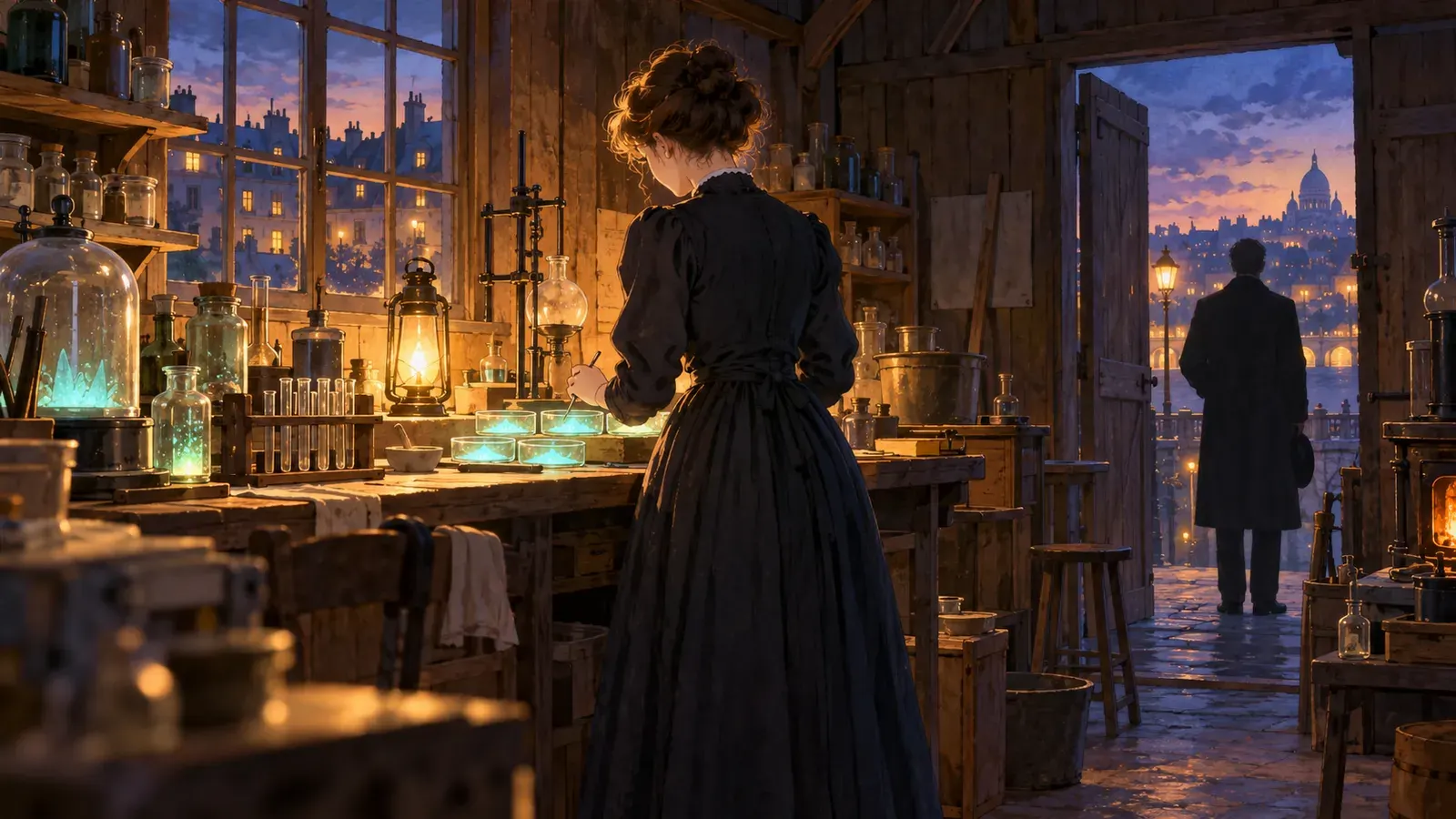
Marie Curie was born in 1867 in Warsaw, Poland. Her name then was Maria Sklodowska. She loved books and learning, and she was the best student in her class.
マリー・キュリーは1867年、ポーランドのワルシャワで生まれました。当時の名前はマリア・スクウォドフスカでした。本を読むことと学ぶことが大好きで、クラスでいちばんの生徒でした。
But there was a big problem. At that time, women could not go to university in Warsaw. Maria did not give up. She studied at a secret school with other young people. She also made a plan with her older sister. First, Maria worked as a teacher for a rich family and sent money to her sister, so her sister could study in Paris. Later, her sister would help Maria.
ところが、大きな壁がありました。そのころのワルシャワでは、女性は大学に入れなかったのです。それでもマリアはあきらめませんでした。ほかの若者たちと一緒に、ひそかに開かれていた学校で勉強しました。さらに、姉とある約束をしました。まずマリアが裕福な家で家庭教師として働き、姉に仕送りをして、パリで勉強させる。そのあとで、今度は姉がマリアを助ける、という計画でした。
In 1891, Maria finally went to Paris, in France, to study at a famous university. There, people called her Marie, the French form of her name. She was very poor. Her room was cold in winter, and she often did not have much to eat. But she studied hard and did very well.
1891年、マリアはついにフランスのパリへ行き、有名な大学で学びはじめました。パリでは、フランス風にマリーと呼ばれるようになりました。暮らしはとても貧しく、冬は部屋が寒く、ろくに食べるものがない日もよくありました。それでもマリーは一生けんめい勉強し、すばらしい成績をおさめました。
In Paris, she met a scientist named Pierre Curie. They both loved science, and they married in 1895. Together, they studied strange rays that came from some rocks. Marie gave this a name: radioactivity.
パリで、マリーはピエール・キュリーという科学者と出会いました。二人とも科学が大好きで、1895年に結婚しました。二人は一緒に、ある種の岩石から出ている不思議な光線を研究しました。マリーはこの現象に「放射能」という名前をつけました。
In 1898, Marie and Pierre found two new elements. They named one polonium, after Marie's home country, Poland. They named the other radium. Radium even glowed softly in the dark.
1898年、マリーとピエールは2つの新しい元素を発見しました。1つは、マリーの祖国ポーランドにちなんでポロニウムと名づけ、もう1つはラジウムと名づけました。ラジウムは、暗やみの中でぼんやりと光を放つことさえありました。
In 1903, Marie, Pierre, and another scientist won the Nobel Prize in Physics. Marie was the first woman to win a Nobel Prize. But three years later, Pierre died in a street accident. Marie was very sad, but she kept working. She took Pierre's job as a teacher at the university and became the first woman professor there.
1903年、マリーとピエール、そしてもう一人の科学者が、ノーベル物理学賞を受賞しました。女性がノーベル賞を受けたのは、マリーが初めてでした。ところが3年後、ピエールが路上の事故で亡くなってしまいました。マリーは深く悲しみましたが、研究を続けました。大学でピエールが受け持っていた授業を引きつぎ、その大学で初めての女性教授になったのです。
In 1911, she won a second Nobel Prize, this time in Chemistry. She was the first person to win two Nobel Prizes. She is still the only person to win them in two different sciences.
1911年、マリーは2度目のノーベル賞を、今度は化学賞で受賞しました。ノーベル賞を2度受けた人は、マリーが初めてでした。異なる2つの科学の分野でノーベル賞を受けた人は、今でもマリーただ一人です。
During World War I, Marie helped wounded soldiers. She made cars with X-ray machines inside. With them, doctors close to the fighting could see broken bones and find pieces of metal in soldiers' bodies.
第一次世界大戦のあいだ、マリーはけがをした兵士たちを助けました。エックス線の装置を積んだ車を作ったのです。この車のおかげで、戦場の近くにいる医者たちは、兵士の骨折した箇所を調べたり、体内に残った金属片を見つけたりできるようになりました。
At first, people did not fully understand how dangerous radioactivity was for the body. Marie often carried radium in her pockets, and her health became worse. She died in 1934. Her notebooks are still radioactive today. People keep them in special boxes, and readers must wear special clothes to look at them.
当時はまだ、放射能が体にどれほど危険なのか、よく分かっていませんでした。マリーはよくラジウムをポケットに入れて持ち歩いていて、だんだん体を壊していきました。そして1934年に亡くなりました。マリーのノートは、今でも放射能を帯びています。そのため特別な箱に入れて保管されていて、読むには特別な服を着なければならないのです。