Inside a beehive, it is dark, warm and busy. Tens of thousands of honeybees are working, and almost none of them is ever told what to do. There is no boss giving orders. Yet together, they build their home, raise their young, make food, keep the temperature just right, and even fight off enemies. How do they do it?
ミツバチの巣の中は、暗くて暖かく、いつも大いそがしです。何万匹ものミツバチが働いていますが、何をしろと指図されるハチは、ほとんどいません。命令を出すボスはいないのです。それなのにミツバチたちは、力を合わせて巣を作り、子どもを育て、食べ物をこしらえ、温度をちょうどよく保ち、敵を追いはらうことまでやってのけます。いったい、どうしてそんなことができるのでしょう。
A honeybee colony has three kinds of bees. There is one queen, the mother of almost every bee in the hive. In spring and summer, she can lay more than a thousand eggs a day. Then there are the drones, the male bees. Their only job is to mate with a young queen from another colony. They do not collect food. In autumn, when food becomes hard to find, the workers push them out of the hive. Finally, there are the workers. They are all female, and they do almost all the work.
ミツバチの群れには、3種類のハチがいます。まず、女王バチが1匹。巣にいるほとんどすべてのハチの母親です。春から夏にかけては、1日に1000個以上も卵を産みます。次に、オスのハチ、雄バチ。仕事はただひとつ、ほかの群れの若い女王バチと交尾することで、食べ物は集めません。秋になって食べ物が少なくなると、雄バチは働きバチに巣から追い出されてしまいます。そして最後が、働きバチです。働きバチはすべてメスで、仕事のほとんどを引き受けています。
A worker bee's job changes as she grows older. In summer, a worker lives for only about six weeks. During her first days, she cleans the cells of the hive. Then she feeds the larvae, the young bees that look like little white worms. Next, she makes wax from her own body and uses it to build the comb. After that, she may guard the entrance of the hive. Only in the last part of her life does she fly outside to collect nectar and pollen from flowers.
働きバチの仕事は、年をとるにつれて変わっていきます。夏の働きバチの命は、わずか6週間ほどです。生まれて最初の数日は、巣の部屋のそうじをします。次は、幼虫の世話です。幼虫とは、小さな白いイモムシのような姿をした、子どものハチのことです。その次は、自分の体からろうを出し、それで巣を作ります。そのあと、巣の入り口の見張り番をすることもあります。そして一生の最後になってようやく、外へ飛び立ち、花の蜜や花粉を集めるのです。
The comb is made of thousands of six-sided cells. Bees never studied math, but the shape they build is a very smart one. Six-sided cells fit together with no space between them. They can hold a lot of honey, but they use only a little wax. Making wax takes a lot of energy, so saving it is important.
巣は、何千もの六角形の部屋でできています。ハチは算数を習ったわけではありませんが、この形はじつによく考えられています。六角形の部屋は、すき間なくぴったり並びます。たくさんのハチミツをためられるのに、ろうは少ししか使いません。ろうを作るにはたくさんのエネルギーがいるので、節約するのはとても大切なのです。
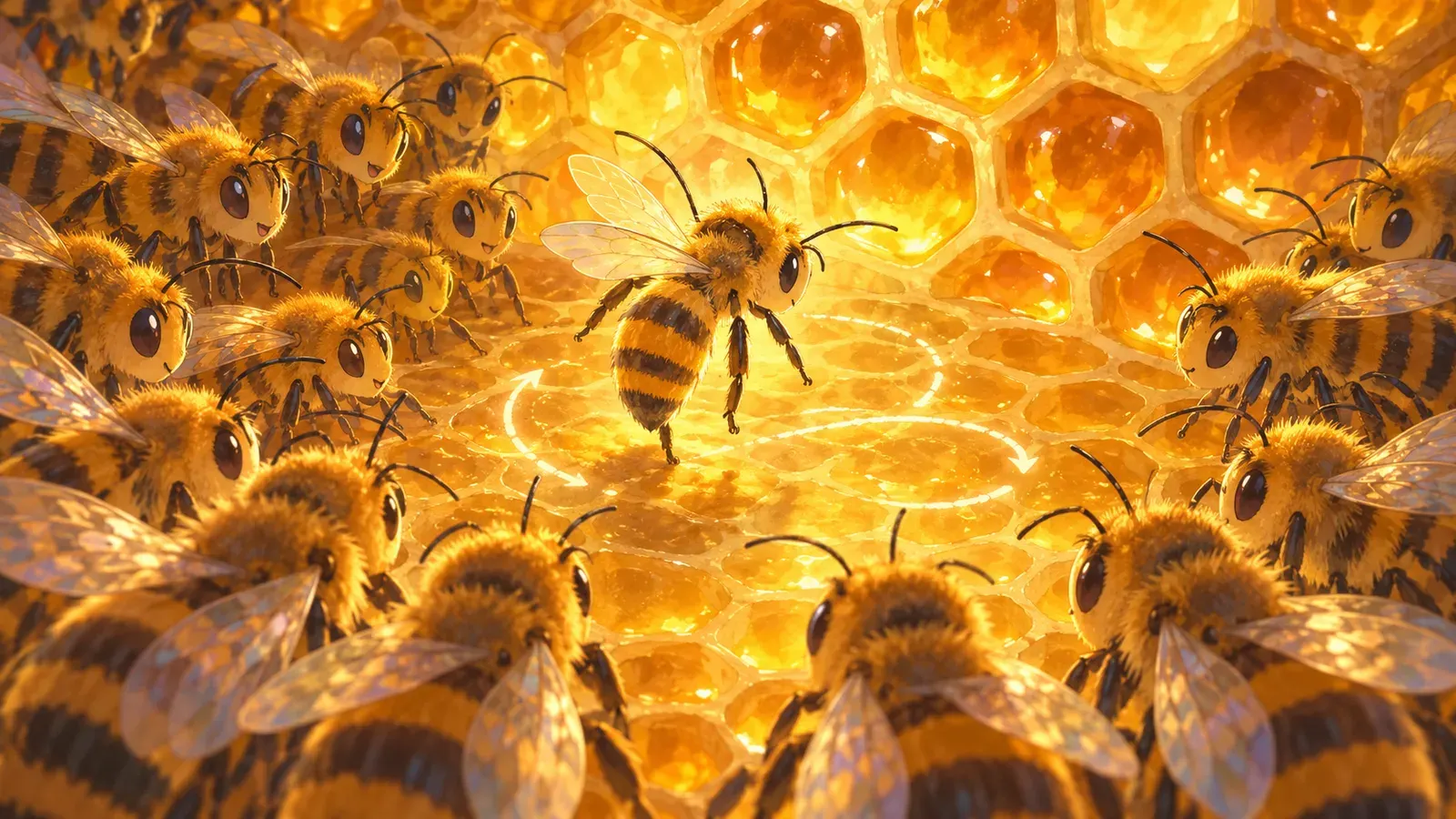
When a bee finds a good field of flowers, she flies home and tells her sisters where it is. She does this by dancing. On the comb, she runs in a straight line while shaking her body. Then she circles back and does it again and again. This is called the waggle dance. The direction of the straight run shows the direction of the flowers compared with the sun. The length of the shaking run shows how far away they are. The other bees follow her movements in the dark and then fly out to find the flowers.
よい花畑を見つけたハチは、巣に飛んで帰り、その場所を姉妹たちに知らせます。知らせる方法は、ダンスです。巣の上で、体をふるわせながらまっすぐに走ります。そして、ぐるりと回ってもとの位置にもどり、同じ動きを何度もくり返すのです。これを「8の字ダンス(尻振りダンス)」といいます。まっすぐ走る向きが、太陽を基準にした花の方角を表します。体をふりながら走る長さが、花までの距離を表します。ほかのハチたちは、暗闇の中でその動きを追い、それから花を探しに飛び立っていくのです。
An Austrian scientist named Karl von Frisch spent many years studying this dance and discovered what it meant. In 1973, he received a Nobel Prize for his work. Many people were amazed to learn that such a small insect could share information in this way.
オーストリアの科学者カール・フォン・フリッシュは、長い年月をかけてこのダンスを研究し、その意味をつきとめました。1973年、この研究でノーベル賞を受けています。こんなに小さな虫が、こんなやり方で情報を伝え合っていると知って、多くの人が驚きました。
How do bees make honey? Workers drink nectar, a sweet liquid inside flowers, and carry it home in a special stomach. In the hive, they pass it from bee to bee and add substances from their bodies that change the sugars. Then they put it into the cells and fan it with their wings to dry it out. When it is thick enough, they cover each cell with a lid of wax. Honey that is stored this way can stay good for a very long time.
ミツバチは、どうやってハチミツを作るのでしょう。働きバチは、花の奥にある甘い汁、蜜を吸い、体の中の特別な袋にためて巣へ持ち帰ります。巣の中では、蜜をハチからハチへと口移しで渡しながら、体から出る物質を混ぜて糖の種類を変えていきます。それから蜜を部屋に入れ、羽であおいで水分を飛ばします。十分にとろりとしたら、部屋のひとつひとつに、ろうでふたをします。こうしてたくわえたハチミツは、とても長いあいだ傷みません。
Bees also control the temperature of their home. The center of the hive, where the young bees grow, is kept at about 35 degrees. On hot days, workers bring water and fan their wings to cool the hive, like a living air conditioner. In winter, the bees gather in a tight ball and shake their flight muscles to make heat.
ミツバチは、巣の温度も調節しています。子どもが育つ巣のまん中は、約35度に保たれています。暑い日には、働きバチが水を運んできて、羽であおいで巣を冷やします。まるで生きたエアコンです。冬には、ハチたちがぎゅっと集まってボールのようなかたまりになり、飛ぶための筋肉をふるわせて熱を生み出します。
In Japan, there is an amazing example of bee teamwork. Japan has giant hornets, huge wasps that can kill many honeybees in a short time. Honeybees brought from Europe have little defense against them. But Japanese honeybees have a special trick. When a hornet comes into the hive, hundreds of bees quickly cover it and form a ball around it. They shake their muscles and raise the temperature inside the ball. The heat kills the hornet, but the bees can survive a little more heat than the hornet can.
日本には、ミツバチのチームワークのすごい例があります。日本にはオオスズメバチという巨大なハチがいて、短い時間でたくさんのミツバチを殺してしまいます。ヨーロッパから連れてこられたミツバチは、オオスズメバチにほとんど太刀打ちできません。ところが、ニホンミツバチには特別な技があるのです。オオスズメバチが巣に入ってくると、何百匹ものミツバチがいっせいに飛びかかって、ボールのように取り囲みます。そして筋肉をふるわせ、ボールの中の温度を上げていきます。その熱で、オオスズメバチは死んでしまいます。ミツバチのほうがオオスズメバチより少しだけ高い温度に耐えられるので、ミツバチは生きのびられるのです。
Honeybees are important to people, and not just because of honey. When bees visit flowers, they carry pollen from one flower to another. This helps plants make fruit and seeds. Many of the fruits, vegetables and nuts we eat depend partly on bees and other insects. In recent years, scientists in many countries have been worried because many bee colonies have become weak or died. Possible causes include diseases, some farm chemicals, and the loss of the flowers that bees need.
ミツバチが人間にとって大切なのは、ハチミツのためだけではありません。ミツバチが花から花へと飛び回ると、花粉が運ばれます。そのおかげで、植物は実や種をつけられるのです。わたしたちが食べている果物や野菜、ナッツの多くは、ハチやほかの虫たちの助けにある程度たよっています。ところが最近、多くの国の科学者が心配しています。弱ったり、全滅したりするミツバチの群れが増えているのです。原因としては、病気や一部の農薬、そしてミツバチに必要な花が減っていることなどが考えられています。
A single bee is small and lives a short life. But a colony works like one big living thing, with thousands of tiny minds working together. The next time you see a bee on a flower, remember that she is part of a very large and very clever family.
1匹のハチは小さく、命も短いものです。けれども群れ全体は、何千もの小さな頭脳が力を合わせた、ひとつの大きな生き物のように動いています。今度、花にとまっているハチを見かけたら、思い出してください。そのハチは、とても大きく、とても賢い家族の一員なのです。