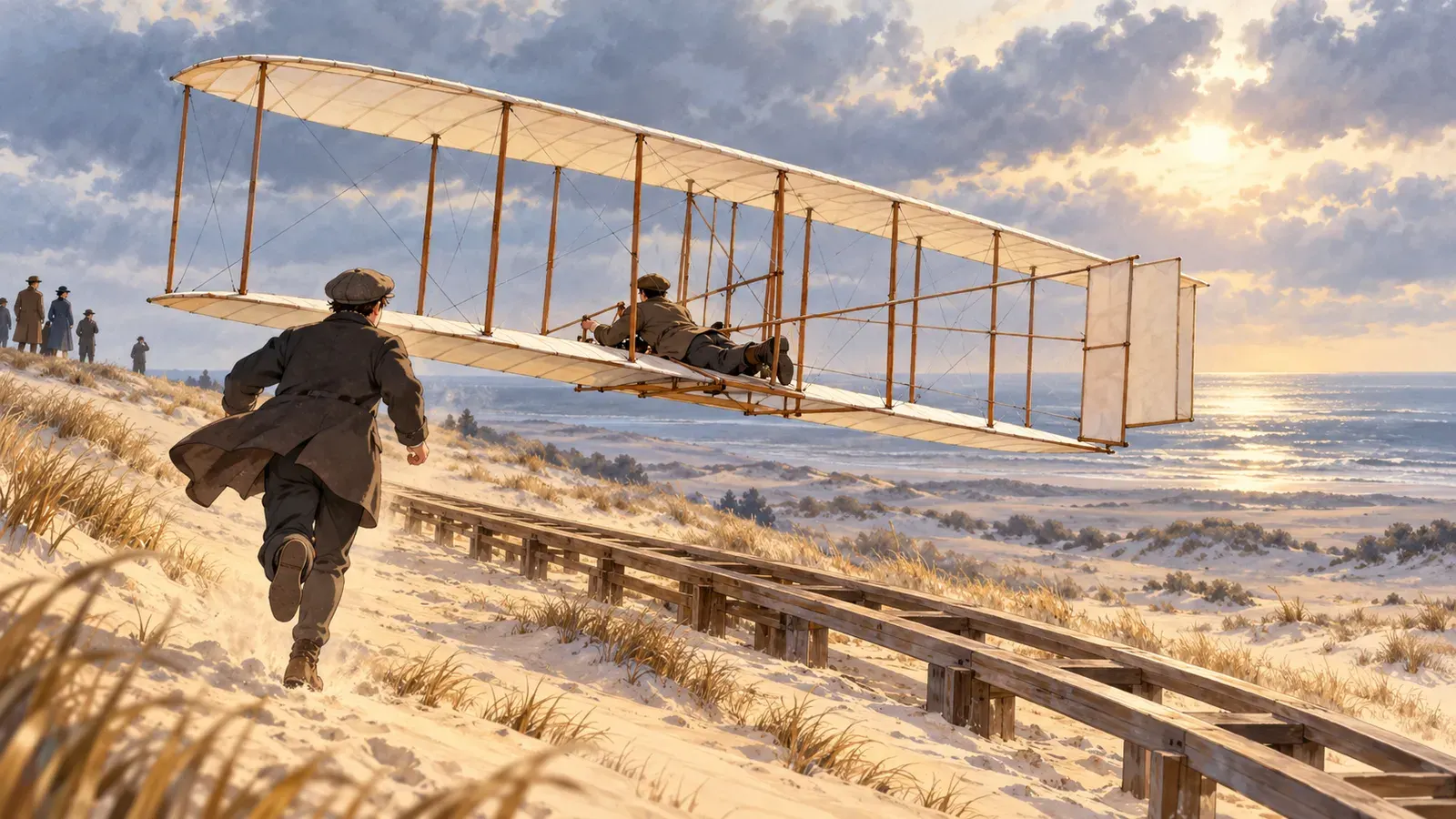
On a cold, windy morning in December 1903, a small group of people stood on a sandy beach in North Carolina, in the United States. They were watching a strange machine made of wood, cloth and wire. Two brothers were getting it ready. One of them lay down on the lower wing. The engine started, the machine moved along a wooden rail, and then it rose into the air. For twelve seconds, a human being was flying.
1903年12月、寒くて風の強い朝のことです。アメリカのノースカロライナ州の砂浜に、数人の人が立っていました。みんなが見つめていたのは、木と布と針金でできた奇妙な機械です。二人の兄弟がその準備をしていました。一人が下の翼の上に腹ばいになります。エンジンがかかり、機械は木のレールの上をすべりだし、そして空中へ浮かび上がりました。12秒のあいだ、人間が空を飛んだのです。
The brothers were Wilbur and Orville Wright. Wilbur was born in 1867, and Orville was born in 1871. They grew up in Dayton, Ohio. When they were boys, their father brought home a small toy that flew with the power of a rubber band. The boys played with it until it broke, and then they built their own. They never forgot the feeling of watching something fly.
二人は、ウィルバー・ライトとオーヴィル・ライトの兄弟です。ウィルバーは1867年、オーヴィルは1871年に生まれ、オハイオ州のデイトンで育ちました。少年のころ、父親が、ゴムの力で飛ぶ小さなおもちゃを買ってきてくれました。兄弟はこわれるまでそれで遊び、そのあとは自分たちで作りました。ものが空を飛ぶのを見たときのわくわくした気持ちを、二人は一生忘れませんでした。
As young men, the Wright brothers opened a bicycle shop. They sold and repaired bicycles, and later they built their own. This work taught them a lot about light, strong machines. It also taught them about balance. A person on a bicycle must balance all the time. The brothers believed that a flying machine would be the same. The pilot would need to control it, not just sit in it.
大人になると、ライト兄弟は自転車店を開きました。自転車を売ったり修理したりし、やがて自分たちで作るようにもなりました。この仕事から、軽くて丈夫な機械について多くのことを学びました。バランスについても学びました。自転車に乗る人は、いつもバランスをとっていなければなりません。空飛ぶ機械も同じはずだ、と兄弟は考えました。乗る人はただすわっているのではなく、自分で機体をあやつる必要があるだろう、と。
In the 1890s, many people were trying to fly. One of them was Otto Lilienthal, a German who made many flights in gliders, flying machines without engines. In 1896, he died after a crash. The Wright brothers read about him and decided to continue his work. In 1899, Wilbur wrote to the Smithsonian Institution, a famous museum in Washington, and asked for information about flight.
1890年代、空を飛ぼうと挑戦する人がたくさんいました。その一人が、ドイツのオットー・リリエンタールです。リリエンタールは、エンジンのない飛行機械であるグライダーで何度も空を飛びましたが、1896年に墜落して亡くなりました。ライト兄弟はリリエンタールについての記事を読み、その仕事を受けつごうと決めました。1899年、ウィルバーはワシントンにある有名な博物館、スミソニアン協会に手紙を書き、飛行についての資料を送ってほしいと頼みました。
The brothers watched birds carefully. They noticed that birds turn by changing the shape of their wings. One day in the shop, Wilbur was holding a long, thin box, and he twisted it in his hands. Suddenly he had an idea. They could twist the wings of a flying machine in the same way to control it. They called this idea "wing warping."
兄弟は鳥をじっくり観察しました。そして、鳥は翼の形を変えて向きを変えていることに気づきました。ある日、店でウィルバーは細長い箱を手に持ち、何気なくねじってみました。その瞬間、ひらめいたのです。空飛ぶ機械の翼も、こんなふうにねじれば機体をあやつれるのではないか。兄弟はこの考えを「たわみ翼」と名づけました。
They needed a place with strong, steady winds and soft sand for landing. They chose Kitty Hawk, on the coast of North Carolina. From 1900 to 1902, they tested gliders there. The first gliders did not lift as well as they had hoped. In 1901, they almost gave up. Wilbur later admitted that he had told Orville that people would not fly for fifty years.
兄弟には、強い風が安定して吹き、着陸しても安全なやわらかい砂のある場所が必要でした。選んだのは、ノースカロライナ州の海岸にあるキティホークです。1900年から1902年まで、兄弟はそこでグライダーを試しました。最初のグライダーは、思ったほどには浮き上がりませんでした。1901年には、あやうくあきらめかけたほどです。人間が空を飛べるのはあと50年は先だろう、とオーヴィルに言ってしまったことを、ウィルバーはのちに打ち明けています。
But they did not give up. They went back to Dayton and built a wind tunnel, a long box with a fan that blew air through it. Inside it, they tested about two hundred small wing shapes. They found that some of the numbers other people had used were not correct. With their own careful data, they built a much better glider in 1902. It flew beautifully, and they could control it.
それでも、兄弟はあきらめませんでした。デイトンに戻ると、風洞を作りました。風洞とは、扇風機で中に風を送りこむ長い箱です。その中で、約200種類もの小さな翼の形を試しました。すると、ほかの人たちが使っていた数値の中に、まちがっているものがあると分かりました。自分たちで集めた正確なデータをもとに、1902年、兄弟はずっとすぐれたグライダーを作りました。それは見事に飛び、思いどおりにあやつることもできました。
Now they needed an engine. No company could make one that was light enough, so they built it themselves with the help of a mechanic named Charlie Taylor. They also designed their own propellers. Their new machine, the Flyer, was ready at the end of 1903.
次に必要なのはエンジンでした。十分に軽いエンジンを作れる会社はありません。そこで、チャーリー・テイラーという機械工の手を借りて、自分たちで作りました。プロペラも自分たちで設計しました。こうして、新しい機械「フライヤー号」は1903年の終わりに完成しました。
On December 14, Wilbur won a coin toss and tried first. But the Flyer rose too steeply and came down after a few seconds. It needed repairs. Three days later, on December 17, it was Orville's turn. He flew for twelve seconds and traveled about 37 meters. Later that day, they made three more flights. In the last one, Wilbur flew for 59 seconds and traveled about 260 meters.
12月14日、コイン投げに勝ったウィルバーが先に挑戦しました。ところが、フライヤー号は急な角度で上がりすぎ、数秒で落ちてしまいました。修理が必要です。3日後の12月17日、今度はオーヴィルの番でした。オーヴィルは12秒間飛び、約37メートル進みました。その日のうちに、兄弟はさらに3回飛びました。最後の飛行では、ウィルバーが59秒間飛び、約260メートル進みました。
At first, few people believed them. Newspapers paid little attention. But the brothers kept improving their machine. In 1908, Wilbur flew in front of large crowds in France, turning and circling in the sky. People were amazed. Soon the whole world knew the name Wright.
初めのうちは、兄弟の話を信じる人はほとんどいませんでした。新聞もあまり取り上げませんでした。それでも、兄弟は機体の改良を続けました。1908年、ウィルバーはフランスで大観衆を前に飛び、空で向きを変えたり、輪をえがいたりしてみせました。人々は目を見張りました。まもなく、ライトの名は世界中に知れわたりました。
The first flight lasted only twelve seconds, but it changed history. In 1969, less than seventy years later, Neil Armstrong walked on the Moon. He carried small pieces of the 1903 Flyer with him. Today, the Flyer itself hangs in a museum in Washington, where visitors can look up at the machine that started it all.
最初の飛行は、たった12秒でした。けれども、その12秒が歴史を変えたのです。それから70年もたたない1969年、ニール・アームストロングが月面を歩きました。そのとき、アームストロングは1903年のフライヤー号の小さなかけらを持っていきました。今、フライヤー号そのものは、ワシントンの博物館の天井からつり下げられています。訪れた人々は、すべての始まりとなった機械を見上げることができます。