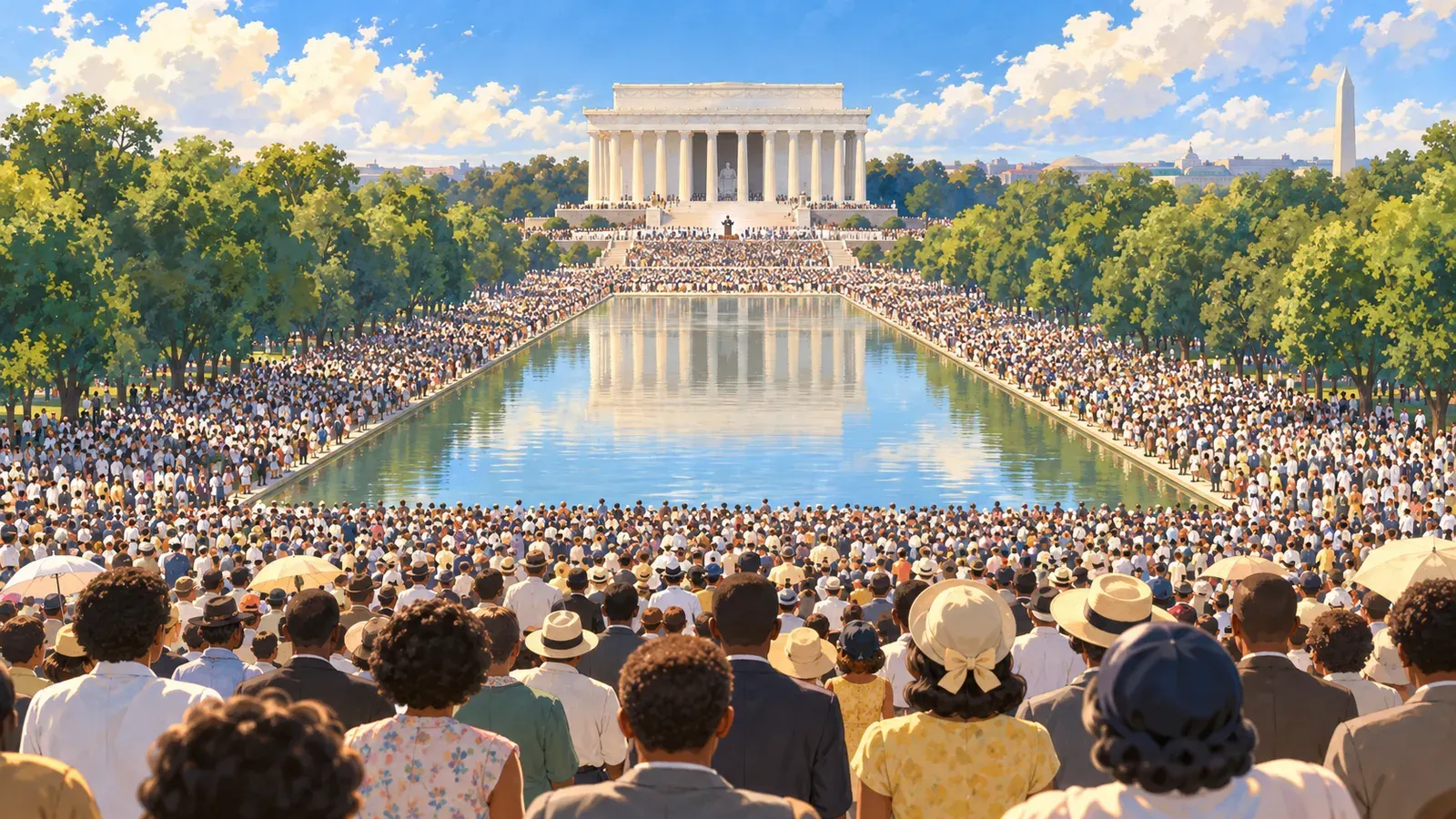
On August 28, 1963, more than 250,000 people gathered in front of the Lincoln Memorial in Washington, D.C. They had come from all over the United States, Black and white, young and old, to demand jobs and freedom. Near the end of the day, a thirty-four-year-old pastor stepped up to the microphone. As he spoke, he moved away from his written notes and began to describe his dream of an America where people of every color could live together as equals. The speaker was Martin Luther King Jr., and his speech, now known as "I Have a Dream," became one of the most famous speeches in American history.
1963年8月28日、25万を超える人々が、ワシントンD.C.のリンカーン記念堂の前に集まりました。黒人も白人も、若者もお年寄りも、仕事と自由を求めて、アメリカ中からやって来たのです。その日も終わりに近づいたころ、34歳の牧師がマイクの前に進み出ました。話しているうちに、牧師は用意していた原稿から離れ、自分の夢を語りはじめました。どんな肌の色の人も、対等な立場でともに暮らせるアメリカ。それが、牧師の夢でした。この人こそ、マーティン・ルーサー・キング・ジュニアです。今では「私には夢がある」として知られるこの演説は、アメリカの歴史でもっとも有名な演説の一つになりました。
Martin was born on January 15, 1929, in Atlanta, Georgia. His father and his grandfather were both pastors of a large Baptist church. Martin grew up in a loving family, but he also grew up in the segregated South. Black people and white people had to use separate schools, restaurants, restrooms and even drinking fountains. Martin later wrote that, as a young boy, he had a white friend whose parents suddenly told him that the two boys could no longer play together. It was his first painful lesson about racism.
マーティンは1929年1月15日、ジョージア州アトランタで生まれました。父親も祖父も、大きなバプテスト教会の牧師でした。マーティンは愛情にあふれた家庭で育ちましたが、そこは人種隔離が行われていた南部でもありました。黒人と白人は、学校もレストランもトイレも、水飲み場さえも、別々のものを使わなければなりませんでした。マーティンはのちに、幼いころの出来事を書いています。仲のよい白人の友だちがいたのに、ある日突然、その子の両親から、もう一緒に遊んではいけないと言われたのです。人種差別というものを、初めてつらい形で思い知らされた出来事でした。
Martin was a very bright student. He skipped two grades and entered Morehouse College when he was only fifteen. He decided to become a pastor like his father, and he continued to study at a seminary and then at Boston University, where he earned a doctorate. During his studies, he read about Mahatma Gandhi and became deeply interested in the idea of fighting injustice without violence.
マーティンは、とても優秀な生徒でした。2学年飛び級をして、わずか15歳でモアハウス大学に入学しました。父親と同じ牧師の道に進もうと決め、神学校で学んだあと、ボストン大学で博士号をとりました。学生時代、マーティンはマハトマ・ガンディーについての本を読み、暴力を使わずに不正と戦うという考えに、深く心をひかれるようになりました。
In 1954, King became the pastor of a church in Montgomery, Alabama. The next year, a woman named Rosa Parks was arrested for refusing to give up her bus seat to a white man. Black leaders in Montgomery decided to boycott the city's buses, and they chose the young pastor, then only twenty-six, to lead them. For 381 days, Black people walked, shared cars and refused to ride the buses.
1954年、キングはアラバマ州モンゴメリーの教会の牧師になりました。翌年、ローザ・パークスという女性が、バスの席を白人の男性に譲らなかったために逮捕されました。モンゴメリーの黒人の指導者たちは、市のバスに乗らない運動、ボイコットを起こすことに決めました。そして、その先頭に立つ人として、当時まだ26歳だったこの若い牧師を選んだのです。381日ものあいだ、黒人たちは歩いたり、車に乗り合わせたりして、バスに乗るのを拒み続けました。
The boycott was not easy. King received threatening phone calls, and in January 1956, a bomb exploded at his house while his wife and baby daughter were inside. Luckily, no one was hurt. An angry crowd gathered outside, some of them carrying guns. King stood in front of his house and asked them to go home peacefully and to answer hate with love. In the end, the Supreme Court ruled that segregation on buses was against the law, and the boycott ended in victory.
ボイコットは、楽なものではありませんでした。キングのもとには脅迫電話がかかってきました。1956年1月には、妻と幼い娘が家にいるときに、自宅で爆弾が爆発しました。幸い、けが人はいませんでした。怒った人々が家の前に集まってきました。中には銃を持っている人もいました。キングは家の前に立ち、静かに家に帰ってほしい、憎しみには愛で応えてほしい、と呼びかけました。最後には、最高裁判所が、バスでの人種隔離は法律に反するという判決を下し、ボイコットは勝利に終わりました。
King became a national leader of the civil rights movement. He believed in nonviolent protest, such as marches, sit-ins and boycotts. Protesters were trained not to hit back, even when they were attacked. King believed that when people saw peaceful protesters being beaten, the conscience of the nation would wake up.
キングは、公民権運動の全国的な指導者になりました。キングが信じていたのは、デモ行進や座りこみ、ボイコットのような、暴力を使わない抗議でした。抗議に参加する人たちは、たとえ襲われても、やり返さないように訓練を受けました。平和に抗議している人たちが殴られる姿を見れば、国の良心が目を覚ますはずだ。キングはそう信じていたのです。
In 1963, King led a campaign in Birmingham, Alabama, one of the most segregated cities in the country. The police used fire hoses and dogs against protesters, including children. Pictures of these attacks shocked people across the country. King was arrested, and in jail he wrote a long letter explaining why Black Americans could not wait any longer for justice. He wrote part of it in the margins of a newspaper. It became known as the Letter from Birmingham Jail.
1963年、キングはアラバマ州バーミングハムで運動を率いました。国内でもとりわけ人種隔離の厳しい町です。警察は、子どもたちも含む抗議の人々に、消防用のホースで水を浴びせ、犬をけしかけました。その写真は、国中の人々に衝撃を与えました。キングは逮捕されました。そして獄中で、長い手紙を書きました。黒人のアメリカ人が、なぜもうこれ以上、正義を待つことができないのか。それを説明する手紙です。その一部は、新聞の余白に書かれました。この手紙は「バーミングハム刑務所からの手紙」として知られるようになりました。
A few months later came the March on Washington and the "I Have a Dream" speech. The next year, in 1964, Congress passed the Civil Rights Act, which made segregation in public places illegal. That same year, King received the Nobel Peace Prize. At thirty-five, he was then the youngest person ever to win it. He gave the prize money to the civil rights movement.
その数か月後に行われたのが、ワシントン大行進と「私には夢がある」の演説です。翌1964年、連邦議会は公民権法を成立させました。公共の場での人種隔離を、法律で禁じたのです。同じ年、キングはノーベル平和賞を受けました。35歳での受賞は、当時、史上最年少でした。キングは、賞金を公民権運動のために差し出しました。
But in many Southern states, Black citizens were still kept from voting by unfair tests and threats. In 1965, King helped to lead marches from Selma to Montgomery in Alabama. During the first attempt, marchers were attacked by police on a bridge, a day that became known as Bloody Sunday. Two weeks later, thousands of people set out again and completed the march. That summer, the Voting Rights Act became law.
けれども南部の多くの州では、黒人の市民は、不公平な試験や脅しによって、まだ投票をはばまれていました。1965年、キングはアラバマ州のセルマからモンゴメリーまでの行進を率いるのに力を貸しました。最初の行進では、人々が橋の上で警察に襲われました。その日は「血の日曜日」として知られるようになりました。2週間後、何千人もの人々があらためて出発し、ついに行進をやりとげました。その夏、投票権法が成立しました。
In his last years, King spoke out against poverty and against the Vietnam War. Some former supporters criticized him for this, but he believed that justice meant more than ending segregation. In April 1968, he went to Memphis, Tennessee, to support Black sanitation workers who were on strike for fair pay and safe working conditions.
晩年のキングは、貧困やベトナム戦争にも反対の声をあげました。そのために、かつての支持者から批判されることもありました。けれども、正義とは人種隔離をなくすことだけではない、とキングは信じていました。1968年4月、キングはテネシー州メンフィスへ向かいました。公正な賃金と安全な職場を求めてストライキをしていた、黒人の清掃作業員たちを応援するためでした。
On the evening of April 4, 1968, as he stood on the balcony of his motel, King was shot and killed. He was only thirty-nine years old. Many American cities exploded in anger and grief. A week later, Congress passed another law, the Fair Housing Act, to fight discrimination in housing.
1968年4月4日の夕方、宿泊していたモーテルのバルコニーに立っていたキングは、銃で撃たれて亡くなりました。まだ39歳でした。アメリカの多くの町で、怒りと悲しみが爆発しました。1週間後、連邦議会は、住まいをめぐる差別と戦うための新しい法律、公正住宅法を成立させました。
Today, the third Monday of January is a national holiday in the United States in his honor. King's dream has not completely come true, and the struggle against racism continues. But his life shows that ordinary people, standing together peacefully, can change unfair laws and move a whole nation. As King believed, love is stronger than hate.
今では、1月の第3月曜日は、キングをたたえるアメリカの祝日になっています。キングの夢は、まだ完全にかなったわけではありません。人種差別との戦いは、今も続いています。それでも、ふつうの人々が平和的に力を合わせれば、不公平な法律を変え、国全体を動かすことができる。キングの一生は、そのことを示しています。キングが信じたとおり、愛は憎しみよりも強いのです。
 ▶