In one of his notebooks, Leonardo da Vinci wrote a list of things to do. It included asking a man how people in Flanders walked on ice, getting a master of water to explain how to repair a canal, and describing the tongue of the woodpecker. Why would anyone want to know about a woodpecker's tongue? For Leonardo, the answer was simple. He wanted to know everything.
レオナルド・ダ・ヴィンチは、ノートの一冊に「やることリスト」を書き残しています。そこには、こんなことが並んでいました。フランドル地方の人たちが氷の上をどうやって歩くのか、ある人に聞くこと。水の専門家に、運河の直し方を教えてもらうこと。キツツキの舌について書きとめること。いったい誰が、キツツキの舌のことなど知りたがるのでしょう。レオナルドにとって、答えは簡単でした。レオナルドは、あらゆることを知りたかったのです。
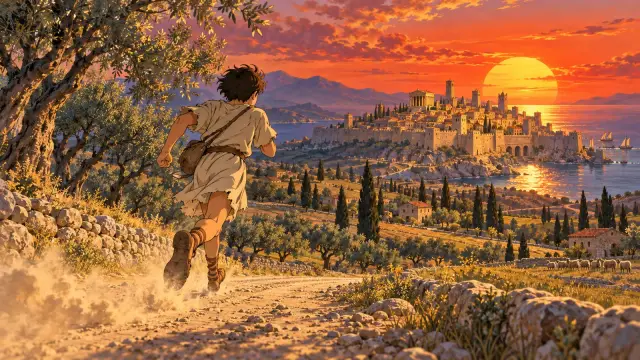
Leonardo was born on April 15, 1452, near the small town of Vinci in Tuscany, Italy. Da Vinci simply means from Vinci. His father was a notary, a man who wrote legal papers, and his mother was a young woman from a poor farming family. His parents were not married, so Leonardo could not follow his father's profession. Because of this, he did not receive the classical education in Latin that wealthy boys got. He later called himself "a man without letters." But this gave him a kind of freedom. Instead of trusting old books, he learned by looking at the world with his own eyes.
レオナルドは1452年4月15日、イタリアのトスカーナ地方にある小さな町、ヴィンチの近くで生まれました。「ダ・ヴィンチ」とは、ただ「ヴィンチ出身の」という意味です。父親は公証人、つまり法律の書類を作る人で、母親は貧しい農家の若い娘でした。両親は結婚していなかったので、レオナルドは父親と同じ職業につけませんでした。そのため、裕福な家の少年たちが受けていた、ラテン語による古典の教育も受けられませんでした。のちにレオナルドは、自分のことを「学のない人間」と呼んでいます。けれども、そのおかげで、ある種の自由を手に入れました。古い本をうのみにする代わりに、自分の目で世界を見て学んだのです。
Leonardo grew up in the countryside, watching birds, water and plants. He was left-handed, and in his notebooks he usually wrote from right to left, so that his writing can be read easily only in a mirror. Nobody knows exactly why he did this.
レオナルドはいなかで、鳥や水や植物をながめながら育ちました。左利きで、ノートにはたいてい右から左へ文字を書いていました。そのため、鏡に映さないと、すらすらとは読めません。なぜそんな書き方をしたのか、本当の理由は誰にも分かっていません。
As a teenager, he became an apprentice in the workshop of Andrea del Verrocchio, a famous artist in Florence. There, he learned painting, sculpture, metalwork and engineering. According to a story told in the sixteenth century, Leonardo painted an angel in one of Verrocchio's paintings so beautifully that his teacher decided never to paint again. The story may not be true, but the angel is still admired today.
10代のころ、レオナルドはフィレンツェの有名な芸術家、アンドレア・デル・ヴェロッキオの工房に弟子入りしました。そこで、絵画、彫刻、金属細工、そして工学を学びました。16世紀に伝えられた話があります。ヴェロッキオの絵の中に、レオナルドが天使を一人描きました。それがあまりに美しかったので、師匠のヴェロッキオは、もう二度と絵は描くまいと決めたというのです。この話は本当ではないかもしれません。けれども、その天使は今もなお、見る人をうならせています。
When he was about thirty, Leonardo moved to Milan. He wrote a letter to the ruler of the city, Ludovico Sforza, asking for a job. In the letter, he listed many things he could do as a military engineer, such as building bridges and weapons. Only near the end did he mention that he could also paint and make sculptures. In Milan, he worked on many projects, including a giant bronze horse about seven meters tall. He made a full-size clay model, but the bronze was used to make cannons for a war, and the horse was never finished.
30歳ごろ、レオナルドはミラノに移りました。町を治めていたルドヴィーコ・スフォルツァに、雇ってほしいと手紙を書きました。手紙には、橋や武器を作るなど、軍事の技術者としてできることがずらりと並べてありました。絵も描けるし彫刻も作れる、と書いたのは、ようやく終わりのほうになってからでした。ミラノでは、たくさんの仕事に取り組みました。その一つが、高さ約7メートルもある巨大な青銅の馬の像です。実物大の粘土の模型まで作りましたが、青銅は戦争の大砲を作るのに回されてしまい、馬はとうとう完成しませんでした。
Between about 1495 and 1498, he painted The Last Supper on the wall of a dining hall in a monastery in Milan. It shows the moment when Jesus tells his followers that one of them will betray him. Each follower reacts differently, with surprise, anger or sadness. Leonardo wanted to show the movements of the mind through the movements of the body. Sadly, he tried a new painting method that did not last well on the wall, and the painting began to fall apart within his lifetime.
1495年ごろから1498年にかけて、レオナルドはミラノの修道院の食堂の壁に『最後の晩餐』を描きました。イエスが弟子たちに、この中の一人が私を裏切るだろう、と告げる場面です。弟子たちは驚いたり、怒ったり、悲しんだりと、一人ひとり違う反応を見せています。体の動きで、心の動きを表したい。レオナルドはそう考えていました。残念なことに、レオナルドは新しい描き方を試したのですが、それは壁画には長もちしない方法でした。そのため、絵はレオナルドが生きているうちから、はがれ落ちはじめました。
Around 1503, back in Florence, he began a portrait of a woman that would become the most famous painting in the world, the Mona Lisa. He worked on it for many years and kept it with him wherever he went. Her soft smile seems to change as you look at it. Leonardo created this effect by using soft shadows instead of sharp lines, and by studying how the eye and the muscles of the face work.
1503年ごろ、フィレンツェに戻ったレオナルドは、一人の女性の肖像画を描きはじめました。のちに世界でいちばん有名な絵となる『モナ・リザ』です。レオナルドは何年もこの絵に手を入れつづけ、どこへ行くにも手もとに置いていました。そのやわらかなほほえみは、見ているうちに表情が変わっていくように感じられます。レオナルドは、くっきりした線ではなく、やわらかな陰影を使いました。そして、目や顔の筋肉の仕組みを研究しました。そうして、この不思議な効果を生み出したのです。
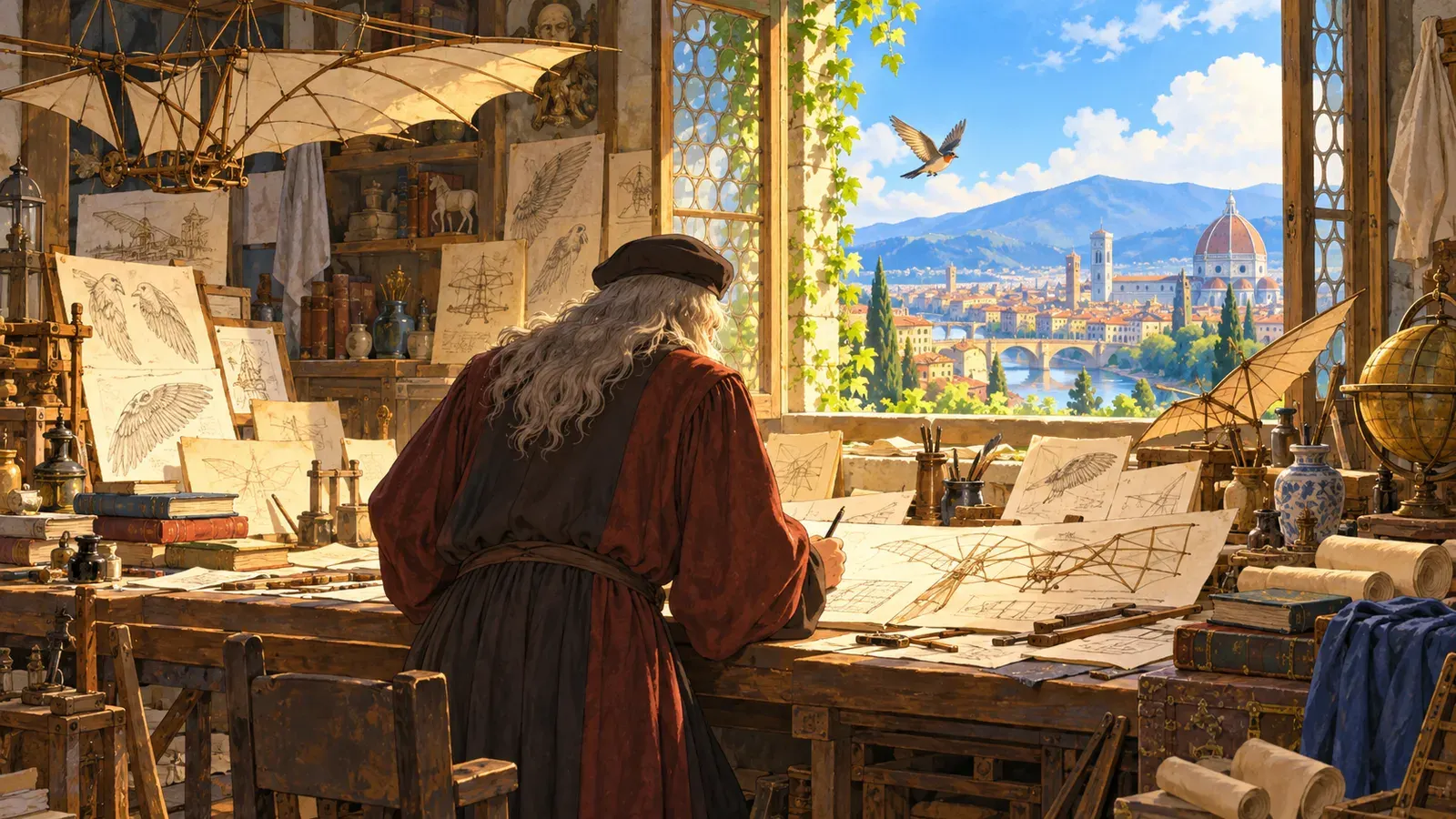
Leonardo was not only an artist. His notebooks, of which more than seven thousand pages still exist, are full of drawings and ideas. He designed flying machines after studying how birds fly. He drew plans for a kind of tank, a diving suit and machines for moving water. He studied rivers, rocks, plants and the stars. He cut open human bodies to study the heart, muscles and bones, and his anatomy drawings were more accurate than anything before them. His drawing of a man standing inside a circle and a square, known as the Vitruvian Man, shows his belief that the human body reflects the order of the universe.
レオナルドは、芸術家というだけではありませんでした。今も7000ページ以上が残るノートは、絵とアイデアでびっしり埋まっています。鳥の飛び方を研究して、空を飛ぶ機械を設計しました。戦車のようなものや潜水服、水を動かす機械の設計図も描きました。川や岩、植物、星についても研究しました。人の体を解剖して、心臓や筋肉、骨を調べました。その解剖図は、それまでのどんな図よりも正確でした。円と正方形の中に男が立っている絵は「ウィトルウィウス的人体図」として知られています。人間の体は宇宙の秩序を映し出している、というレオナルドの考えを表した絵です。
However, many of his projects were never finished. He would start something, become interested in something else and move on. He did not publish his scientific studies, so most of his discoveries were unknown for centuries. Some people say that if his ideas had been shared, science might have moved forward much faster.
けれども、レオナルドの仕事の多くは、完成しないまま終わりました。何かを始めても、別のことに興味がわくと、そちらへ移ってしまうことがよくあったのです。また、科学の研究を世に発表しなかったので、その発見のほとんどは、何百年ものあいだ知られないままでした。もしレオナルドの考えが広く伝わっていたら、科学はずっと早く進歩していたかもしれない、と言う人もいます。
In his final years, Leonardo was invited to France by King Francis I, who admired him greatly. He lived in a comfortable house near the king's castle in Amboise, and he brought the Mona Lisa with him. He died there on May 2, 1519, at the age of sixty-seven. A popular story says that he died in the king's arms, but historians doubt this. Partly because he brought it to France, the Mona Lisa is now in the Louvre in Paris.
晩年、レオナルドは、フランス王フランソワ1世に招かれてフランスへ渡りました。王はレオナルドを心から尊敬していました。レオナルドは、アンボワーズにある王の城の近くの、住み心地のよい館で暮らしました。『モナ・リザ』も一緒に持っていきました。そして1519年5月2日、その地で亡くなりました。67歳でした。王の腕の中で息を引きとった、という有名な話がありますが、歴史家たちはこれを疑っています。『モナ・リザ』が今、パリのルーブル美術館にあるのは、一つにはレオナルドがフランスへ持っていったからです。
Leonardo da Vinci is often called the perfect example of a Renaissance man, someone who is skilled in many different fields. But his greatest talent may have been his curiosity. He looked at ordinary things, like a bird's wing or a smile, and asked how they worked. His life invites us to do the same: to observe carefully, to ask questions and never to stop being amazed by the world.
レオナルド・ダ・ヴィンチは、「ルネサンス人」の見本だとよくいわれます。さまざまな分野で優れた力を発揮した人、という意味です。けれども、レオナルドのいちばんの才能は、好奇心だったのかもしれません。鳥の翼や人のほほえみのような、ありふれたものを見つめては、それがどういう仕組みになっているのかを問いかけました。注意深く観察すること。問いを持つこと。そして、世界に驚く心を決してなくさないこと。レオナルドの一生は、私たちにもそうするよう呼びかけています。
 ▶