About five hundred years ago, in the small town of Saintes in France, a man named Bernard Palissy saw a cup that changed his life. It was a beautiful cup made in Italy, covered with a shining white glaze. Palissy had never made pottery in his life. He had never even seen clay being baked. But when he looked at that cup, a burning wish was born in his heart: he wanted to discover the secret of that white glaze.
今からおよそ五百年前のことです。フランスの小さな町サントで、ベルナール・パリシーという男が一つの杯を目にし、それが人生を変えました。イタリアで作られた美しい杯で、つやつやと輝く白いうわぐすりがかかっていました。パリシーは、焼き物を作ったことが一度もありませんでした。粘土を焼くところさえ見たことがなかったのです。けれども、その杯を見たとき、胸の中に燃えるような願いが生まれました。この白いうわぐすりの秘密を、なんとしても突きとめたい、と思ったのです。
Palissy was not a rich man. His parents had been too poor to send him to school. As he later said, his only books were heaven and earth, which are open to everyone. He taught himself to paint on glass, to draw, and to read and write. He traveled around France for years doing whatever work he could find, and then he married and settled down in Saintes. Soon he had children, and his small income was not enough. He hoped the secret of the glaze would give his family a better life.
パリシーは裕福ではありませんでした。両親が貧しかったので、学校にも行けませんでした。のちに本人が語ったところでは、本といえば、誰にでも開かれている天と地しかなかったそうです。ガラスに絵を描くことも、デッサンも、読み書きも、すべて独学で身につけました。何年もフランスじゅうを旅して、見つかる仕事は何でもやり、それから結婚してサントに落ち着きました。やがて子どもが生まれると、わずかな稼ぎではやっていけなくなりました。うわぐすりの秘密が分かれば、家族にもっといい暮らしをさせてやれる。パリシーはそう願っていたのです。
So he began to experiment. He did not know what the glaze was made of, so he could only guess. He ground up every material he thought might work. He bought ordinary clay pots, broke them into pieces, covered the pieces with his mixtures, and baked them in a furnace he built himself. Every experiment failed. All he had to show for his work were broken pots, wasted fuel and wasted time.
こうしてパリシーは実験を始めました。うわぐすりが何でできているのか分からないので、見当をつけるしかありません。使えそうだと思う材料は、片っ端からすりつぶしました。ありふれた素焼きの壺を買ってきては割ってかけらにし、そこに自分で調合したものを塗り、自分で造った炉で焼きました。実験はどれも失敗でした。苦労して残ったのは、割れた壺と、無駄にした燃料と、無駄にした時間だけでした。
His wife was not happy. She needed money to buy food and clothes for the children, and here was her husband buying pots only to break them. But Palissy could not stop. Months turned into years. He later wrote that he had wasted several years in this way, with sorrow and sighs. When he could no longer afford fuel for his own furnace, he carried hundreds of pieces to a tile factory more than seven kilometers away to be baked there. Again, every piece failed. But he decided, right there on the spot, to begin again.
妻はいい顔をしませんでした。子どもたちの食べ物や服を買うお金が要るのに、夫は壺を買ってきては割ってばかりいるのですから。それでも、パリシーはやめられませんでした。何か月が過ぎ、何年もが過ぎました。のちにパリシーは、悲しみとため息のうちに、こうして何年も無駄に過ごした、と書いています。自分の炉の燃料さえ買えなくなると、何百ものかけらを、七キロ以上離れた瓦工場まで運んで焼いてもらいました。またしても、どのかけらもうまくいきませんでした。けれどもパリシーは、その場ですぐに、もう一度やり直そうと決めたのです。
After many more failures, he made what he thought would be one last great effort. He sent more than three hundred pieces to a glass furnace and watched them for four hours. When the furnace was opened, the mixture on just one of the three hundred pieces had melted. As it cooled, it turned white and smooth. It was beautiful. Palissy ran home with it to his wife, feeling like a new man.
それからもさらに失敗を重ね、パリシーは、これが最後のつもりで大がかりな挑戦をしました。三百個以上のかけらをガラス工場の炉に入れてもらい、四時間じっと見守ったのです。炉を開けてみると、三百個のうちたった一個だけ、塗ったものが溶けていました。冷えるにつれて、それは白く、なめらかになっていきました。美しい出来ばえでした。パリシーは生まれ変わったような気持ちで、それを手に妻のもとへかけて帰りました。
But the battle was not over. To complete his discovery, he decided to build a new furnace near his house. He carried the bricks on his own back and built it with his own hands. It took seven or eight months. Then he made clay pots, covered them with his glaze, and lit the fire.
けれども、戦いはまだ終わっていませんでした。発見を完全なものにするため、パリシーは家の近くに新しい炉を造ることにしました。れんがは自分の背中で運び、炉も自分の手で築きました。それに七、八か月かかりました。それから粘土で壺を作り、自分のうわぐすりを塗って、火を入れました。
All day he sat by the furnace, feeding it with wood. All night he watched and fed it. The glaze did not melt. His wife brought him a little breakfast, because he would not leave the fire. A second day passed, and a second night. A third, a fourth, a fifth, and even a sixth. For six days and nights Palissy watched and worked, pale and unshaven, and still the glaze would not melt.
昼の間じゅう、パリシーは炉のそばに座って薪をくべ続けました。夜も寝ずに見張り、薪をくべました。それでも、うわぐすりは溶けません。火のそばを離れようとしないので、妻がわずかな朝ごはんを運んできました。二日目の昼が過ぎ、二日目の夜が過ぎました。三日、四日、五日、そして六日目まで。六日六晩、パリシーは青ざめた顔で、ひげも剃らずに見張り、働き続けました。それでも、うわぐすりは溶けようとしませんでした。
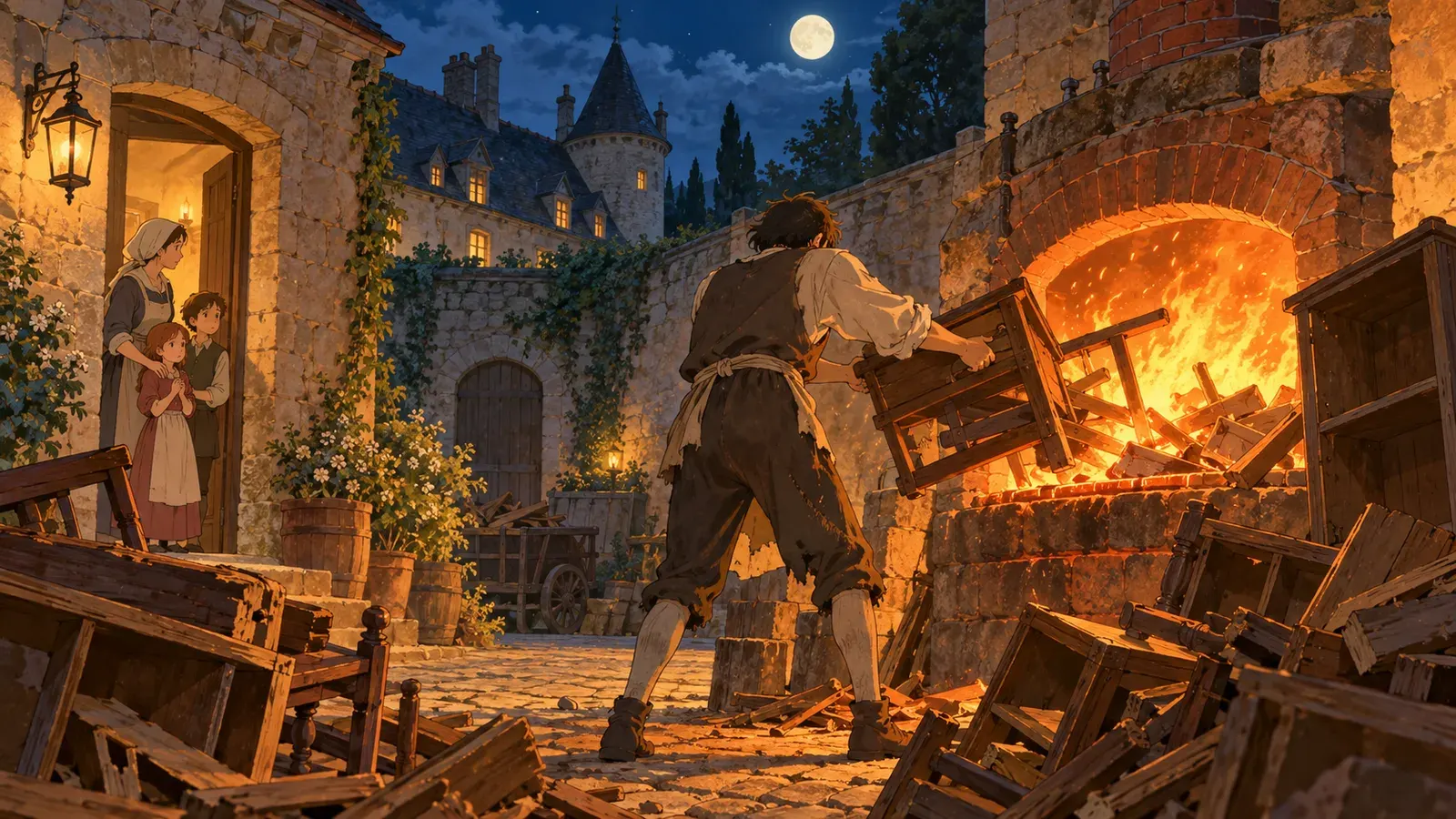
He made a new mixture and borrowed money from a friend to buy more pots and more wood. He lit the fire again. The heat grew intense, but still the glaze did not melt. Then the wood began to run out. What could he do? He pulled up the wooden fence around his garden and threw it into the fire. Still the glaze did not melt. Then came a loud crashing sound from the house. Palissy was breaking up the tables and throwing them into the furnace. His wife and children were terrified. When he began tearing down the shelves too, they ran out into the town, crying that poor Palissy had gone mad and was burning his own furniture.
パリシーは材料を調合し直し、友人から借金をして、壺と薪を買い足しました。そして、もう一度火を入れました。炉はすさまじく熱くなりましたが、それでもうわぐすりは溶けません。そのうち、薪がなくなってきました。どうすればいいのでしょう。パリシーは庭の周りの木の柵を引き抜いて、火に放りこみました。まだ溶けません。すると、家の中から、何かが壊れる大きな音が響きました。パリシーがテーブルをたたき割って、炉に投げこんでいたのです。妻と子どもたちはおびえました。パリシーが棚まで引きはがしはじめると、家族は町へ飛び出し、かわいそうにパリシーは気がふれて、自分の家の家具を燃やしている、と泣き叫びました。
For a whole month he had not changed his shirt. He was exhausted, hungry and deep in debt. But that last great burst of heat had done it. When the furnace cooled and he took out the pots, they were covered with a white glaze. He had found the secret.
まる一か月、パリシーはシャツを着替えていませんでした。くたくたに疲れ、おなかをすかせ、借金はかさむばかりでした。けれども、最後のあの猛烈な熱が、ついに成功をもたらしました。炉が冷めて壺を取り出してみると、どの壺も白いうわぐすりに覆われていたのです。パリシーは秘密を突きとめたのです。
Even then, his troubles continued. One furnace was ruined when pieces of stone inside it cracked and stuck to the pots. People offered to buy the damaged pots cheaply, but Palissy refused, saying that selling them would hurt his honor. He broke them all. His neighbors laughed at him, his family blamed him, and he grew so thin that, as he wrote, his stockings fell down around his feet when he walked. Still he did not give up.
それでも、苦労はまだ続きました。ある炉では、中の石のかけらがはじけて壺にくっつき、すべてが台なしになりました。傷ものの壺を安く買いたいと言う人もいましたが、パリシーは、そんなものを売っては自分の名がすたると言って断りました。そして壺を一つ残らず割ってしまいました。近所の人には笑われ、家族には責められました。すっかりやせ細ってしまい、本人の言葉によれば、歩くと靴下が足もとまでずり落ちてしまうほどでした。それでもパリシーは、あきらめませんでした。
In total, it took him about sixteen years. Only then did he feel brave enough to call himself a potter. Those sixteen years, Samuel Smiles wrote, were his training. He had taught himself everything, from the very beginning, and every failure had taught him something new about clay, glaze and fire. In the end, Palissy became one of the most famous potters in history. His colorful dishes, decorated with lifelike fish, lizards and leaves, are still treasured in museums today.
結局、パリシーはおよそ十六年をかけました。そこまできて、ようやく自分を陶工と名乗る勇気が持てたのです。サミュエル・スマイルズは、その十六年はパリシーにとって修業の年月だった、と書いています。何もかも一番初めから独学で身につけ、失敗するたびに、粘土やうわぐすりや火について新しいことを学んだのです。最後にパリシーは、歴史に残る名高い陶工の一人になりました。本物そっくりの魚やトカゲや木の葉で飾られた色あざやかな皿は、今も博物館で大切にされています。
Smiles told this story in Self-Help to show the power of patience and perseverance. Most people would have stopped after the first year. Palissy kept going because he believed in his goal, and because he learned from every failure instead of being defeated by it.
スマイルズは『自助論』でこの話を紹介し、忍耐と粘り強さの力を示そうとしました。たいていの人なら、一年目でやめていたでしょう。パリシーがやり続けられたのは、目指すものを信じていたからです。そして、失敗に打ちのめされるのではなく、失敗するたびにそこから学んだからなのです。
Try this today. Think of one thing you gave up on because it was too hard. What did your failures teach you? Write down one lesson, and try one more time. You do not need to burn your furniture. But you can keep the fire burning a little longer.
今日、試してみましょう。難しすぎてあきらめてしまったことを、一つ思い浮かべてください。その失敗から、何を学んだでしょうか。学んだことを一つ書き出して、もう一度だけやってみましょう。家具を燃やす必要はありません。でも、火をもう少し長く燃やし続けることはできるはずです。