


 約9分
 6:17
 全訳つき
 お道具箱
 読書ラウンジ
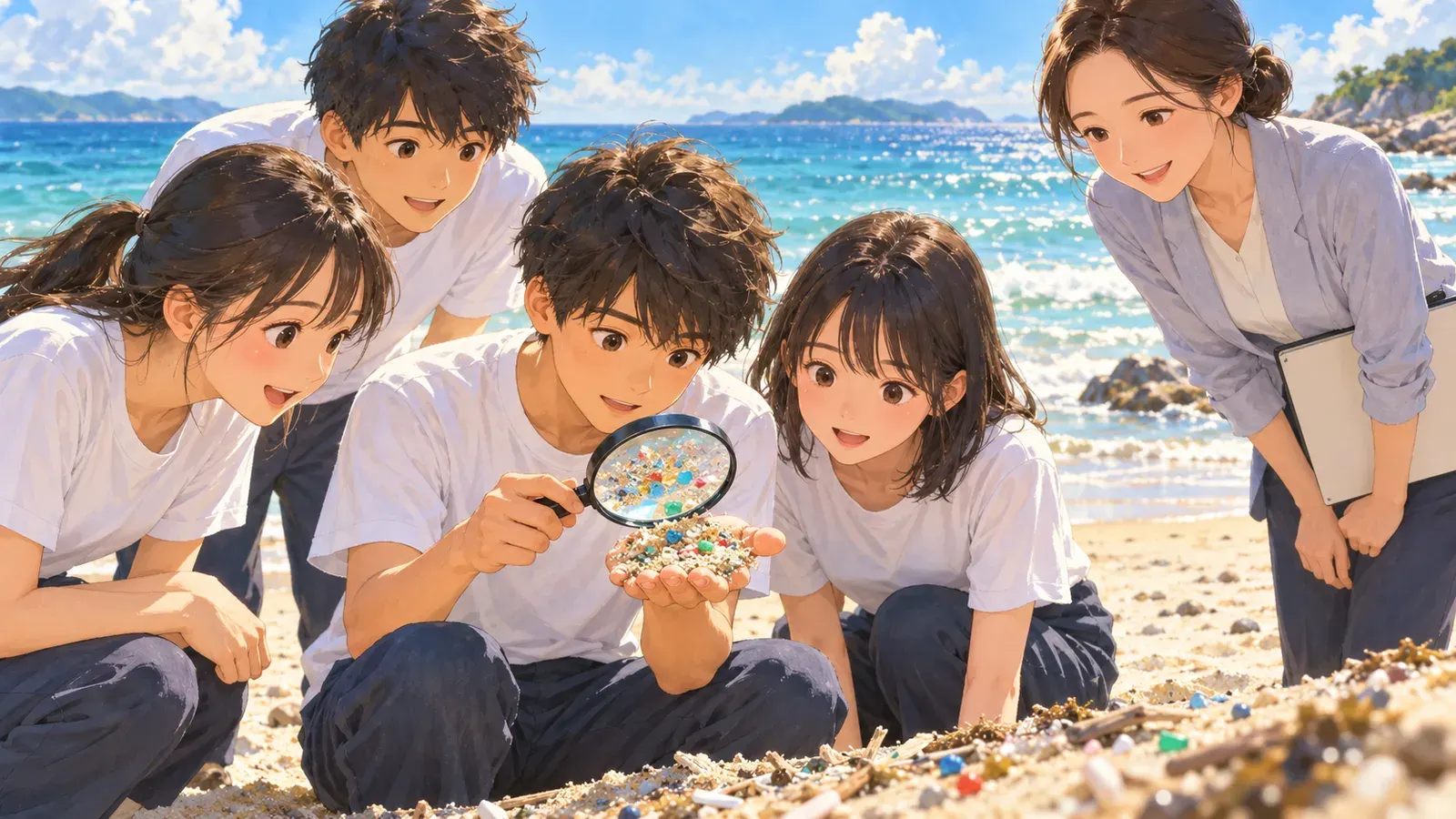
On a sunny morning, a group of high school students in Japan were cleaning a beach. In the sand, they noticed many tiny colorful pieces, smaller than grains of rice. At first, they thought the pieces were bits of shells or stones. Their teacher looked closely and shook her head. "These are plastic," she said. "They are microplastics."
よく晴れた朝、日本の高校生のグループが海岸の清掃をしていました。すると砂の中に、米粒よりも小さな色とりどりのかけらがたくさんまじっているのに気づきました。初めは、貝がらや石のかけらだと思いました。ところが、先生はじっと見つめてから首を横に振りました。「これはプラスチックよ。マイクロプラスチックね」
Microplastics are pieces of plastic that are smaller than five millimeters. Some are so small that they can only be seen with a microscope. The very smallest, which are less than one thousandth of a millimeter, are often called nanoplastics. Because they are so small, they are almost impossible to collect once they are in the environment. This is one reason why scientists and governments around the world have become worried about them.
マイクロプラスチックとは、5ミリメートルより小さいプラスチックのかけらのことです。中には顕微鏡でなければ見えないほど小さなものもあります。いちばん小さい、1000分の1ミリメートルに満たないものは、ナノプラスチックと呼ばれることが多いです。とても小さいので、いったん環境の中に出てしまうと、回収することはほぼ不可能です。世界中の科学者や政府が心配するようになったのは、これが理由の一つです。
Microplastics are often divided into two types. Primary microplastics are made small on purpose. Examples include tiny beads that were once added to face wash and toothpaste, and the small plastic pellets that factories melt to make larger products. Secondary microplastics are created when larger plastic items, such as bottles, bags, and fishing nets, are broken down by sunlight, heat, and waves. Much of the plastic waste in the ocean will slowly turn into secondary microplastics.
マイクロプラスチックは、ふつう2種類に分けられます。一つは一次マイクロプラスチックで、はじめから小さく作られたものです。かつて洗顔料や歯みがき粉に入れられていた小さな粒や、工場で溶かして大きな製品にするための小さなプラスチックの粒(ペレット)がその例です。もう一つは二次マイクロプラスチックです。ボトルや袋、漁網などの大きなプラスチック製品が、日光や熱や波によって細かく砕かれてできます。海のプラスチックごみの多くは、やがて少しずつ二次マイクロプラスチックになっていきます。
Some sources of microplastics are surprising. When clothes made of synthetic materials such as polyester are washed, thousands of tiny fibers can come off and flow out with the water. Car tires also wear down as they roll along roads, and the small pieces they leave behind are washed into rivers by rain. A 2017 report by the International Union for Conservation of Nature, or IUCN, looked at microplastics that enter the ocean already in small form. It estimated that about 35 percent of them come from washing synthetic clothes and about 28 percent come from tires.
マイクロプラスチックには、意外なところから出てくるものもあります。ポリエステルのような合成繊維の服を洗うと、何千本もの細かい繊維がはがれて、排水といっしょに流れ出ます。車のタイヤも、道路を走るうちにすり減ります。そのときに出る小さなかけらは、雨で川に流されていきます。2017年、国際自然保護連合(IUCN)は、はじめから小さな形で海に入るマイクロプラスチックについて報告をまとめました。それによると、およそ35パーセントは合成繊維の服の洗濯から、およそ28パーセントはタイヤから出ていると推定されています。
Japan has its own special source: rice paddies. Many farmers use a kind of fertilizer that is covered with a thin plastic shell. The shell releases the fertilizer slowly, which saves farmers time and work. However, after the fertilizer is gone, the empty shells can float out of the fields and into rivers and the sea. In 2022, Japanese agricultural groups announced a plan to stop the shells from flowing out. They also said they hoped that by 2030, farming in Japan would no longer depend on plastic-coated fertilizer.
日本ならではの発生源もあります。田んぼです。多くの農家は、薄いプラスチックの膜でおおわれた肥料を使っています。膜の中から肥料が少しずつ溶け出すので、農家の手間や時間が省けます。ところが、肥料が溶け出したあとの空の殻が、田んぼから川や海へ流れ出てしまうことがあるのです。2022年、日本の農業団体は、この殻の流出を防ぐための方針を発表しました。そして、2030年には、プラスチックでおおわれた肥料に頼らない農業にしたいという考えも示しました。
Once microplastics are in the environment, they travel almost everywhere. They have been found at the bottom of the deep sea, in sea ice near Antarctica, in snow on high mountains, and even in the air. A study led by researchers at Kyushu University, published in 2019, made a worrying prediction. If the amount of plastic waste entering the ocean keeps increasing, the weight of microplastics in the upper waters around Japan and in the central North Pacific could double by 2030 and become four times larger by 2060. The study also suggested that the seas of East Asia, including the seas around Japan, have some of the highest levels.
マイクロプラスチックは、いったん環境の中に出ると、ほとんどあらゆる場所に運ばれます。深い海の底、南極近くの海氷、高い山の雪、さらには空気の中からも見つかっています。2019年に発表された九州大学の研究者たちを中心とする研究は、心配な予測を示しました。海に入るプラスチックごみが今後も増え続けると、日本のまわりと北太平洋の中央部で、海の表層にあるマイクロプラスチックの重さは、2030年までに2倍、2060年までに4倍になるおそれがある、というのです。この研究によると、日本のまわりをふくむ東アジアの海は、マイクロプラスチックがとくに多い海域の一つだと考えられます。
Microplastics cause problems for living things in the sea. Tiny animals called plankton, as well as fish, shellfish, and seabirds, eat them by mistake. If an animal eats too much plastic, it may feel full and stop eating real food. In addition, plastic can contain chemicals that are added when it is made, and it can also collect harmful chemicals from the seawater around it. Scientists are studying whether these chemicals move into the bodies of the animals that eat the plastic.
マイクロプラスチックは、海の生き物に害をあたえます。プランクトンと呼ばれる小さな生き物や、魚、貝、海鳥が、まちがえて食べてしまうのです。プラスチックをたくさん食べると、おなかがいっぱいになったと感じて、本当のえさを食べなくなることがあります。さらに、プラスチックには作るときに加えられた化学物質がふくまれていることがあります。まわりの海水から有害な化学物質を吸い寄せることもあります。こうした化学物質が、プラスチックを食べた生き物の体内に移るのかどうか、科学者たちが調べています。
What about humans? We take in microplastics when we eat seafood, drink water, and even breathe. In 2020, researchers in Italy reported finding microplastics in human placentas, the organ that connects a mother and her baby before birth. In 2022, a team in the Netherlands tested the blood of 22 healthy people and found plastic particles in 17 of them. News like this has made many people anxious.
では、人間はどうでしょうか。わたしたちは、魚介類を食べたり、水を飲んだり、さらには呼吸をしたりするときに、マイクロプラスチックを体に取りこんでいます。2020年、イタリアの研究者たちは、人間の胎盤からマイクロプラスチックが見つかったと報告しました。胎盤とは、生まれる前の赤ちゃんと母親をつなぐ器官です。2022年には、オランダの研究チームが健康な人22人の血液を調べ、そのうち17人からプラスチックの粒子を見つけました。こうしたニュースを聞いて、不安になった人も多くいます。
However, it is important to separate what we know from what we do not know. In 2019, the World Health Organization reviewed studies on microplastics in drinking water. It said that it had found no clear evidence of a risk to human health, but it also pointed out that the information was limited and called for more research. Measuring such tiny particles is very difficult, and scientists are still developing reliable methods. In short, we know that microplastics are inside us, but we do not yet know how much harm they cause.
しかし、分かっていることと、まだ分かっていないことを分けて考えることが大切です。2019年、世界保健機関(WHO)は、飲み水にふくまれるマイクロプラスチックについての研究を調べました。その結果、人の健康に害があるというはっきりした証拠は見つからなかった、と発表しました。ただし同時に、情報はまだ限られていると指摘し、さらに研究を進めるよう求めました。これほど小さな粒子を測るのはとても難しく、信頼できる方法を科学者たちは今も開発しているところです。つまり、マイクロプラスチックが体の中にあることは分かっていても、それがどれほど害になるのかは、まだ分かっていないのです。
Some countries have already acted. In 2015, the United States passed a law that banned plastic microbeads in rinse-off products such as face wash and toothpaste, and several other countries introduced similar rules. Some companies are designing washing machines with filters that catch fibers, and tire makers are researching materials that wear down less. In Japan, farmers and agricultural groups are developing new ways to use fertilizer without plastic shells.
すでに対策をとった国もあります。2015年、アメリカは、洗顔料や歯みがき粉のような洗い流すタイプの製品に、プラスチックの小さな粒(マイクロビーズ)を入れることを禁止する法律を作りました。ほかのいくつかの国も、同じようなルールを取り入れました。繊維を受け止めるフィルターつきの洗濯機を開発している会社もあります。タイヤのメーカーは、すり減りにくい素材を研究しています。日本では、農家や農業団体が、プラスチックの殻を使わずに肥料をあたえる新しい方法を開発しています。
Still, people disagree about how far to go. Some environmental groups argue that the only real solution is to make much less plastic in the first place, because microplastics cannot be removed once they spread. Others say that plastic is too useful to give up. It keeps food fresh, makes cars lighter, and is used in medical equipment. They believe that better waste collection, recycling, and new technology are more realistic answers. Some also warn that replacing plastic with other materials, such as glass or paper, may create different environmental problems.
それでも、どこまで対策をとるべきかについては、意見が分かれています。いちばんの解決策は、そもそもプラスチックを作る量を大きく減らすことだ、と主張する環境団体もあります。マイクロプラスチックは、いったん広がってしまうと取り除くことができないからです。一方で、プラスチックは便利すぎて手放せない、という人もいます。食べ物を新鮮に保ち、車を軽くし、医療機器にも使われているからです。こうした人たちは、ごみの回収やリサイクルを改善し、新しい技術を使うほうが現実的だと考えています。プラスチックをガラスや紙などの別の素材に置きかえると、別の環境問題が生まれるかもしれない、と注意をうながす人もいます。
There are also small things that individuals can do. We can wash clothes in full loads instead of washing a few items at a time, avoid single-use plastic when possible, and make sure that our trash does not end up on streets or beaches. Joining a beach clean-up, like the students at the start of this story, is another good way to learn about the problem. Each action may seem tiny, but so are microplastics, and small things add up.
一人ひとりにできる小さなこともあります。洗濯物は少しずつ洗うのではなく、まとめて洗う。使い捨てのプラスチックはできるだけ避ける。自分のごみが道路や海岸に行きつかないように気をつける。この話の初めに出てきた高校生たちのように、海岸の清掃に参加するのも、この問題を知るよい方法です。一つひとつの行動は小さく見えるかもしれません。でも、マイクロプラスチックも小さいのです。小さなことも、積み重なれば大きくなります。
What do you think? Some people say that governments should strictly limit the production of plastic, because microplastics are spreading everywhere and cannot be cleaned up. Others say that strict limits are not necessary, because plastic is very useful, and better recycling, new technology, and more research can solve the problem.
あなたはどう思いますか。政府はプラスチックの生産を厳しく制限するべきだ、と言う人もいます。マイクロプラスチックはあらゆる場所に広がっていて、きれいに取り除くことができないからです。一方、厳しい制限は必要ない、と言う人もいます。プラスチックはとても便利なものであり、リサイクルの改善や新しい技術、さらなる研究によって、問題は解決できるからです。
 3段落目に「are broken down by sunlight, heat, and waves.」(日光や熱、波で分解される)とあり、大きな製品からできます。

 原田英語の究極の英単語帳(CEFR-J 6,868語)
 聞くだけモードで、文字を見ずに内容がわかるか試す。
 1文リピートで音読・シャドーイングも。

 名作文学


 世界の民話