In January 1841, a fourteen-year-old boy named Manjiro went out to sea in a small fishing boat with four other fishermen. He was from a poor village in Tosa, which is now Kochi. His father died when Manjiro was young, so he worked hard to help his mother.
1841年1月、14歳の少年、万次郎は、ほかの4人の漁師と一緒に、小さな漁船で海に出ました。ふるさとは土佐、今の高知県の貧しい村です。幼いころに父を亡くしたので、母を助けようと懸命に働いていました。
A few days later, a terrible storm hit the boat. The men could not get back to land. They drifted for days until they reached a small island with no people on it. There was no river, only rain to drink. They ate birds and shellfish to stay alive.
数日後、ひどい嵐が船を襲いました。一行は陸に戻れなくなりました。何日も海をただよったすえ、誰も住んでいない小さな島に流れ着きました。島には川がなく、飲める水は雨水だけでした。鳥や貝を食べて、なんとか命をつなぎました。
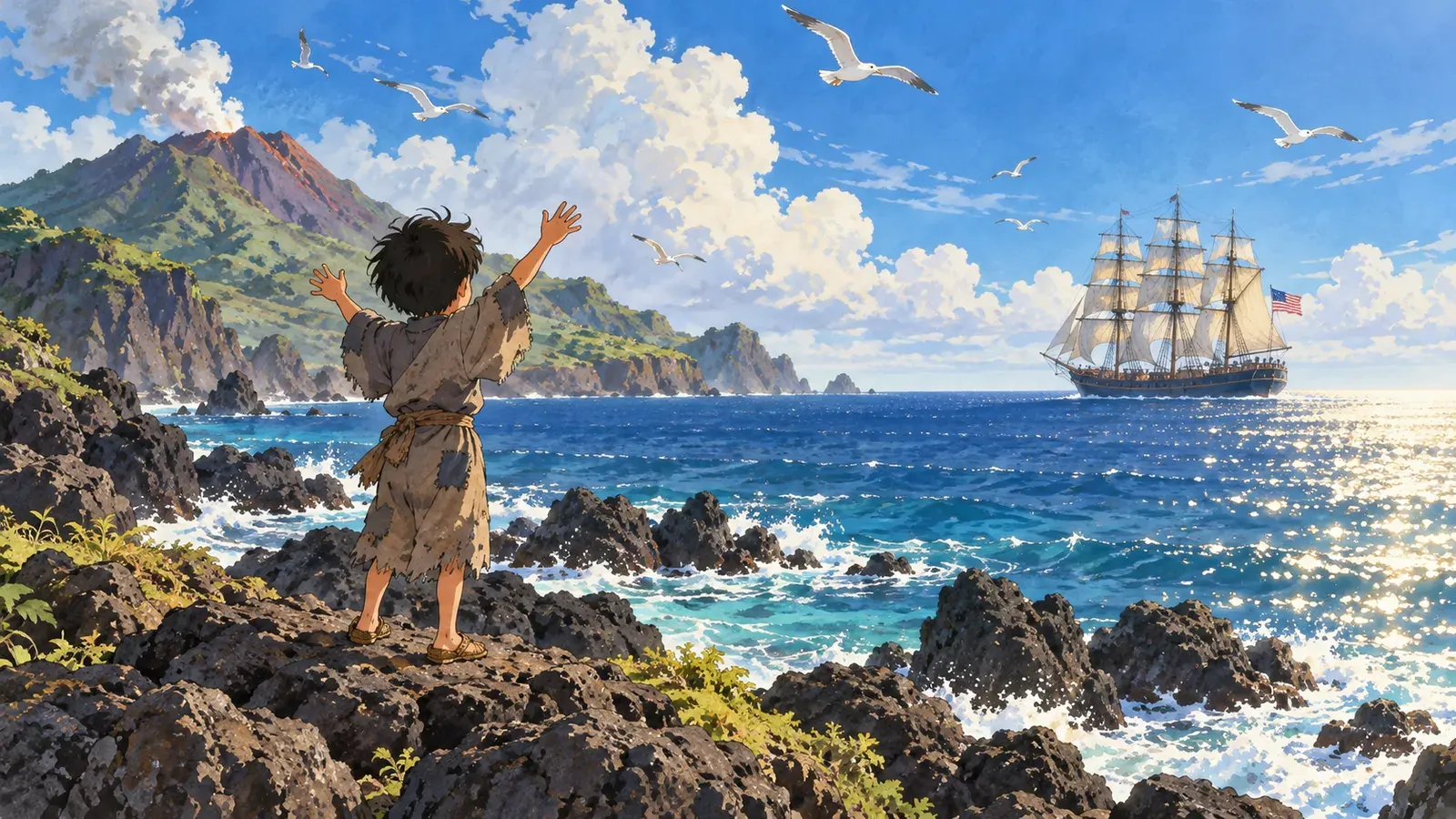
They lived on the island for about five months. Then one day, a big American ship came near. It was a whaling ship called the John Howland. Its captain, William Whitfield, saw them and saved them.
島での暮らしは、およそ5か月続きました。そしてある日、大きなアメリカの船が近づいてきました。ジョン・ハウランド号という捕鯨船です。船長のウィリアム・ホイットフィールドが一行に気づき、助け出してくれました。
At that time, Japan was closed to the world. If Japanese people went abroad and came back, they could be punished. The other four men stayed in Hawaii, but the captain liked the bright, hard-working boy. Manjiro decided to go to America with him. The sailors called him John Mung.
当時の日本は、外国に対して国を閉ざしていました。外国へ行って戻ってきた日本人は、罰を受けるおそれがありました。ほかの4人はハワイに残りました。けれども船長は、頭がよくて働き者のこの少年を気に入りました。万次郎は、船長と一緒にアメリカへ行くことに決めました。船員たちは、万次郎を「ジョン・マン」と呼びました。
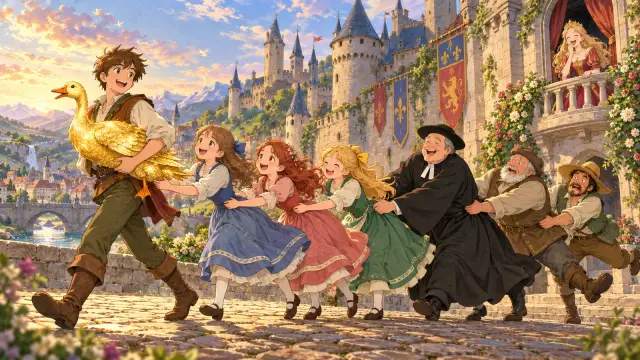
In the town of Fairhaven, Massachusetts, Manjiro lived with the captain's family and went to school. He was one of the first Japanese people to study in America. He learned English, math, and how to sail a ship by the stars. He became one of the best students in his class.
マサチューセッツ州のフェアヘイブンという町で、万次郎は船長の家族と暮らしながら学校に通いました。アメリカで学んだ、最初の日本人の一人です。英語や数学のほか、星を頼りに船を進める航海術も学びました。クラスでも指折りの優秀な生徒になりました。
Not everyone was kind to him. It is said that one church did not want him to sit with white people. The captain did not argue. He just took his family to another church that welcomed Manjiro.
誰もが万次郎に優しかったわけではありません。ある教会は、万次郎が白人と並んで座るのを嫌がったといわれています。船長は言い争いをしませんでした。ただ、万次郎を歓迎してくれる別の教会へ、家族を連れて移ったのです。
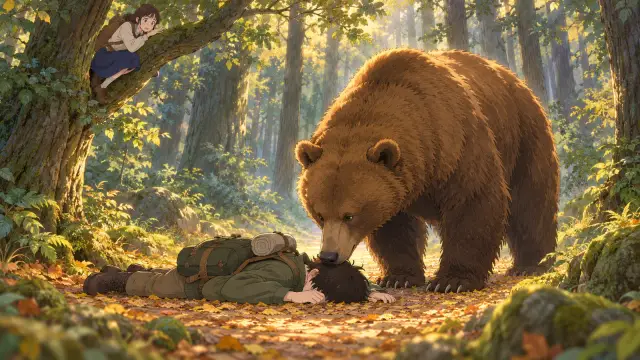
But Manjiro never forgot his mother. He worked on a whaling ship for a few years, and then he went to look for gold in California. With the money he earned, he bought a small boat. In 1851, he finally landed in Okinawa.
それでも、万次郎は母のことを決して忘れませんでした。数年間、捕鯨船で働いたあと、カリフォルニアへ金を掘りに行きました。そうして稼いだお金で、小さなボートを買いました。そして1851年、ついに沖縄に上陸したのです。
Officials asked him questions for many months. At last, in 1852, he went home to his village. It had been almost twelve years. It is said that his mother cried with joy when she saw him.
それから何か月ものあいだ、役人の取り調べが続きました。1852年、ようやくふるさとの村に帰ることができました。村を出てから、ほぼ12年がたっていました。母は万次郎の姿を見て、うれし泣きしたといわれています。
Soon after that, American ships led by Commodore Perry came to Japan. Suddenly, Japan needed someone who knew America and English. Manjiro was made a samurai and took the name Nakahama Manjiro. He became one of the first Japanese people to teach English in Japan. In 1860, he crossed the Pacific again on the ship Kanrin Maru as an interpreter.
その後まもなく、ペリー提督の率いるアメリカの艦隊が日本にやって来ました。日本は急に、アメリカと英語を知る人を必要とするようになったのです。万次郎は侍に取り立てられ、中浜万次郎と名のりました。そして、日本で英語を教えた最初の日本人の一人になりました。1860年には通訳として咸臨丸に乗り、ふたたび太平洋を渡りました。
Manjiro learned English by ear, so he wrote down words the way they sounded. A popular story says he taught people that "What time is it now?" sounds like the Japanese words hotta imo ijiruna, which mean "Don't touch the potato I dug up." Try saying it fast!
万次郎は英語を耳で覚えたので、聞こえたとおりに言葉を書きとめました。よく知られた話があります。「What time is it now?」は、日本語の「掘った芋いじるな」(掘った芋にさわるな)のように聞こえる、と教えたというのです。速く言ってみてください!
Manjiro's life shows that a terrible day can become a door to a new world. He turned a shipwreck into a chance to learn. Then he used what he learned to help his country meet the world.
万次郎の人生を見ると、最悪の一日が、新しい世界への扉にもなりうることがわかります。万次郎は遭難という不運を、学ぶチャンスに変えました。そして学んだことを生かして、日本が世界と出会う手助けをしたのです。