Matsuo Basho was born in 1644 in Iga, a land of mountains in today's Mie. His family were farmers with a low samurai rank. When he was young, he served a young lord named Todo Yoshitada.
松尾芭蕉は1644年、伊賀で生まれました。伊賀は、今の三重県にある山あいの土地です。家は農家でしたが、低いながらも武士の身分を持っていました。若いころの芭蕉は、藤堂良忠という若い主君に仕えました。
Yoshitada loved haikai, a kind of poetry game where people made short poems together. The two young men wrote poems side by side. But when Basho was about twenty-two, Yoshitada died suddenly. Basho was very sad, and his life began to change.
良忠は俳諧を愛していました。俳諧とは、何人かで短い句をつなげて作り合う、遊びのような詩です。若い二人は、肩を並べて句を作りました。ところが芭蕉が22歳くらいのとき、良忠が突然亡くなってしまいました。芭蕉は深く悲しみました。そして、その人生は変わりはじめました。
Later, Basho moved to Edo. He became a teacher of poetry and had many students. But he wanted a quiet life. In 1680, he moved to a small hut by the Sumida River. A student gave him a basho tree, a kind of banana plant, and he planted it by the hut. People began to call it the Basho Hut, and he took Basho as his name.
やがて芭蕉は江戸に移り、俳諧の先生として、たくさんの弟子を持つようになりました。けれども、本当に望んでいたのは静かな暮らしでした。1680年、芭蕉は隅田川のほとりの小さな庵に移り住みました。弟子の一人が芭蕉(ばしょう)の株を贈ってくれたので、庵のそばに植えました。芭蕉は、バナナの仲間の植物です。やがて人々はこの庵を「芭蕉庵」と呼ぶようになり、本人も芭蕉と名のるようになりました。
At that time, many haikai poems were just funny word games. Basho wanted more. He wanted short poems that showed the quiet beauty of everyday things. In 1686, he wrote his most famous poem. In English, it goes something like this. An old pond. A frog jumps in. The sound of water.
当時の俳諧の多くは、ただの気のきいた言葉遊びでした。芭蕉はそれでは満足できませんでした。ふだんの身のまわりにある物の、静かな美しさを表す短い詩を作りたかったのです。1686年、芭蕉はいちばん有名な句を作りました。英語にすると、だいたい次のようになります。「古い池。蛙が飛びこむ。水の音。」(古池や蛙飛びこむ水の音)
The poem is very short. But it makes us feel the deep silence before and after the little sound. This kind of short poem later came to be called haiku.
とても短い詩です。けれども、この句を読むと、小さな水の音の前とあとに広がる深い静けさが感じられます。このような短い詩が、のちに「俳句」と呼ばれるようになりました。
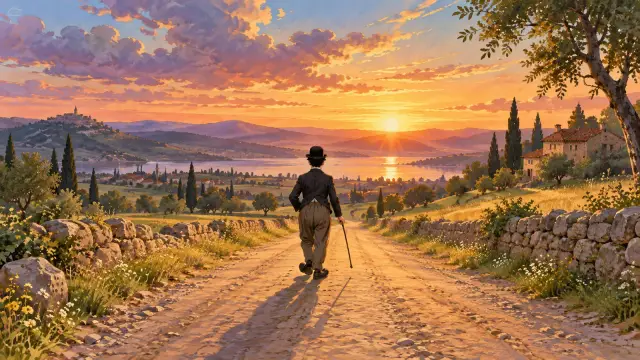
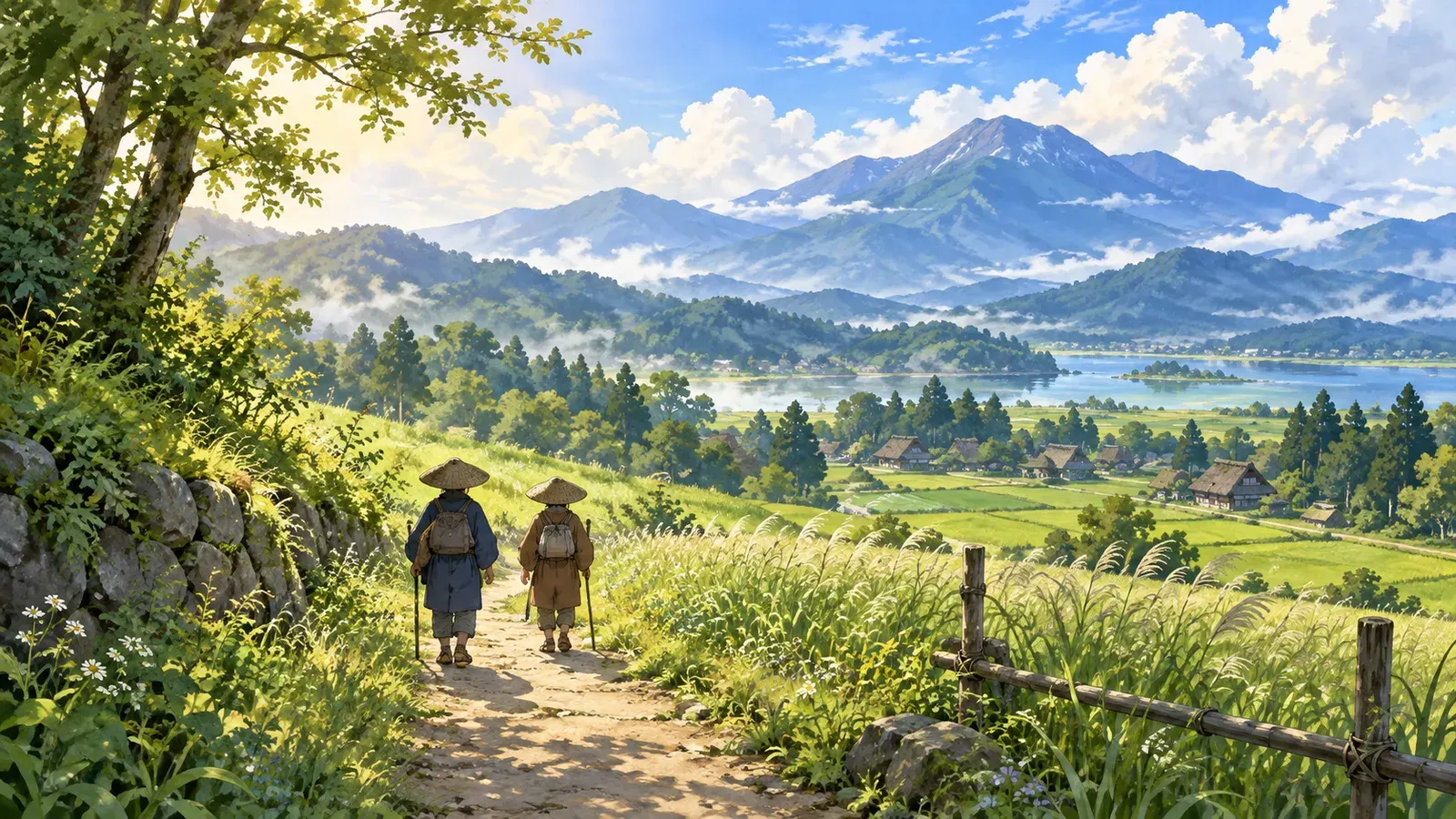
Basho loved to travel. In those days, there were no trains or cars. In 1689, when he was forty-five, he set out on foot with his student Sora to the far north of Japan. They walked for about five months and around two thousand four hundred kilometers.
芭蕉は旅が大好きでした。当時は、列車も車もありません。1689年、45歳の芭蕉は、弟子の曾良と一緒に、歩いて日本のはるか北へ旅立ちました。二人はおよそ5か月をかけて、約2400キロを歩きました。
On the way, they saw old battlefields, quiet temples, and the wide sea. At Hiraizumi, where warriors had died long ago, Basho wrote about the summer grass growing where their dreams had been. At a mountain temple, he wrote that the voices of cicadas seemed to go deep into the rocks.
途中、二人は昔の戦場や静かな寺、広い海を目にしました。平泉は、昔、武士たちが命を落とした土地です。芭蕉はここで、武士たちが夢を追った場所に、今は夏草がしげっている、と詠みました。山の寺では、セミの声が岩の奥までしみ入っていくようだ、と詠みました。
From this trip came his famous book Oku no Hosomichi, The Narrow Road to the Deep North. It mixes travel writing and haiku.
この旅から生まれたのが、有名な『おくのほそ道』です。旅の記録の文章と俳句を織りまぜた作品です。
Basho kept traveling until the end. In 1694, he got sick on a trip to Osaka and died there. In one of his last poems, he wrote that his dreams were still wandering over dry winter fields.
芭蕉は最後まで旅を続けました。1694年、大坂への旅の途中で病気になり、そのまま大坂で亡くなりました。最後のころの句の一つで、芭蕉は、自分の夢が今も枯れた冬の野をさまよっている、と詠んでいます。
Today, people all over the world write haiku, even in English. Basho teaches us to slow down and look carefully. A frog, a cicada, a field of grass. Beautiful things are everywhere if we stop and listen.
今では、世界中の人が俳句を作っています。英語の俳句まであります。芭蕉は私たちに、ゆっくり、じっくり見ることを教えてくれます。一匹の蛙、一匹のセミ、一面の草。立ち止まって耳をすませば、美しいものはどこにでもあるのです。