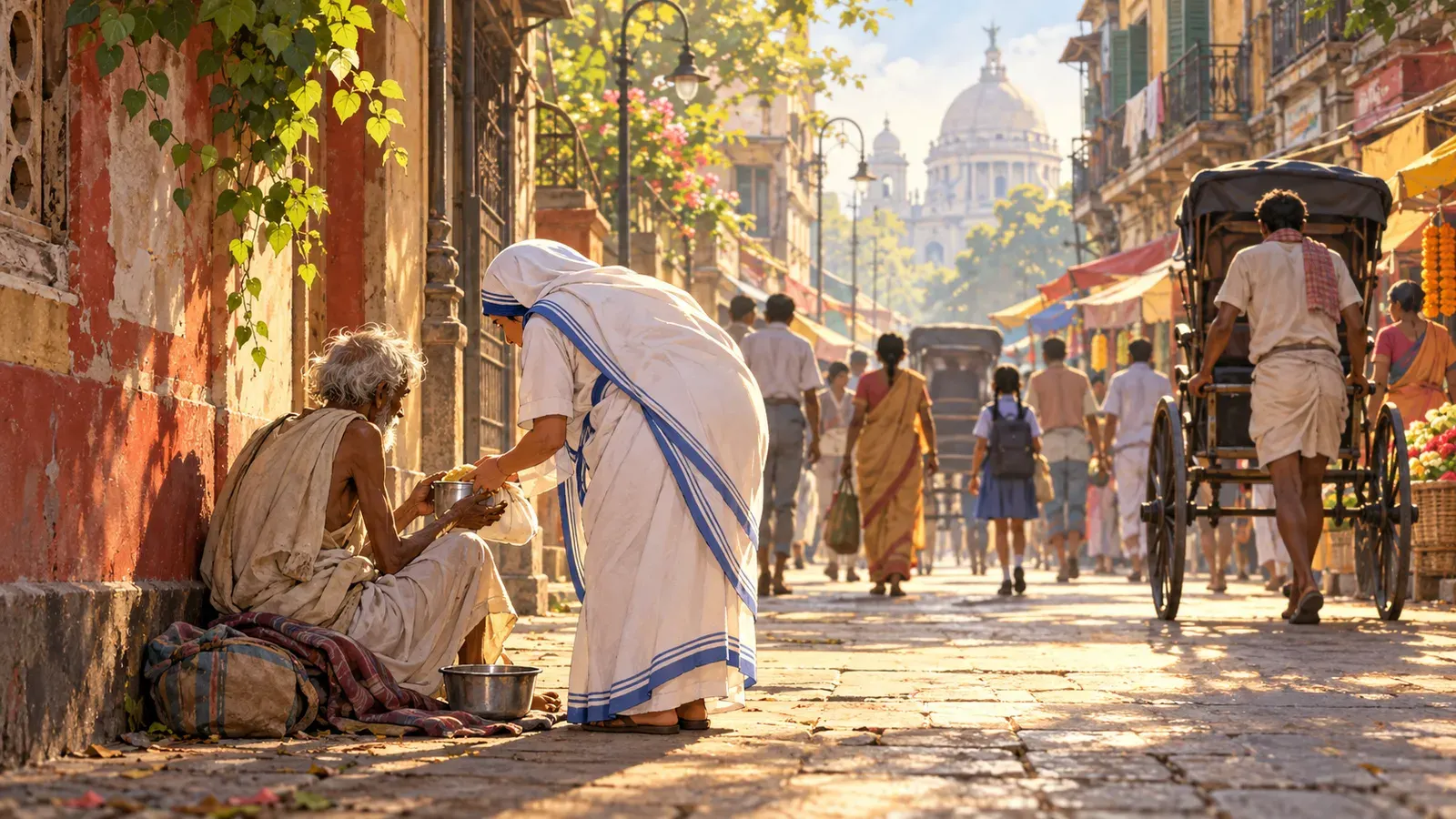
In the busy streets of Kolkata, India, there were people who were sick, hungry and alone. Many people walked past them. But one small woman in a white sari with blue lines stopped. She was Mother Teresa.
インドのコルカタのにぎやかな通りには、病気の人、おなかをすかせた人、ひとりぼっちの人がいました。多くの人は、その横を素通りしていきました。けれども、青い線の入った白いサリーを着た一人の小柄な女性は、立ち止まりました。それが、マザー・テレサでした。
She was born in 1910 in Skopje, a city that is now in North Macedonia. Her family was Albanian, and as a child she was called Agnes. Her father died when she was eight. Her mother did not have much money, but she often shared food with poor people and taught her children to help others.
マザー・テレサは1910年、スコピエという町で生まれました。今の北マケドニアにある町です。一家はアルバニア系で、子どものころはアグネスと呼ばれていました。8歳のとき、お父さんが亡くなりました。お母さんにはあまりお金がありませんでしたが、よく貧しい人に食べ物を分けてあげ、人を助けるよう子どもたちに教えました。
At eighteen, Agnes left home to become a nun. She first went to Ireland to learn English. Then she went to India. She took the name Teresa, and for many years she taught girls at a school in Kolkata. The students liked their kind teacher.
18歳のとき、アグネスは修道女になるため家を出ました。まずアイルランドへ行って英語を学び、それからインドへ渡りました。テレサという名前をもらい、長いあいだコルカタの学校で女の子たちに勉強を教えました。生徒たちは、この優しい先生が大好きでした。
But outside the school walls, she saw terrible poverty. In 1946, on a train ride to the mountains, she felt a strong call from God. She believed that she must leave the school and live among the poorest of the poor.
けれども、学校の塀の外には、ひどい貧しさが広がっていました。1946年、山へ向かう列車の中で、テレサは神からの強い呼びかけを感じました。学校を離れ、もっとも貧しい人々の中で暮らさなければならない。そう信じたのです。
In 1948, she left the school. She put on a cheap white sari, like the ones poor Indian women wore. She learned basic nursing. Then she started a small open-air school for children in a poor area. She had no building and no desks. It is said that she wrote letters on the ground with a stick.
1948年、テレサは学校を去りました。インドの貧しい女性たちが着ているような、安い白いサリーを身につけました。看護の基本も学びました。そして、貧しい地区で、子どもたちのための小さな青空学校を始めました。建物も机もありませんでした。棒で地面に文字を書いて教えたといわれています。
Slowly, other women joined her. In 1950, she started a new group of nuns called the Missionaries of Charity. In 1952, she opened a home for dying people. People who had been left in the street could spend their last days in a clean bed, with someone holding their hand. Later, the sisters also opened homes for children with no parents and for people with leprosy.
少しずつ、テレサのもとに、ほかの女性たちが加わっていきました。1950年、テレサは「神の愛の宣教者会」という新しい修道会をつくりました。1952年には、死を迎えようとしている人たちのための家を開きました。道ばたに置き去りにされていた人たちが、清潔なベッドの上で、誰かに手をにぎってもらいながら、最後の日々を過ごせるようになったのです。のちに修道女たちは、親のいない子どもたちやハンセン病の人たちのための家も開きました。
Her work spread to many countries. In 1979, she won the Nobel Peace Prize. Usually there was a big dinner for the winner. She asked that the money for the dinner be given to poor people instead.
その活動は、多くの国に広がりました。1979年、テレサはノーベル平和賞を受けました。ふつうは、受賞者のために盛大な晩餐会が開かれます。テレサは、その晩餐会にかかるお金を、代わりに貧しい人たちのために使ってほしいと頼みました。
Not everyone praised her. Some people said that the medical care in her homes was not good enough. Others said that the money she received should have been used better. Other people often forgot the poor, but she loved them. Her love moved millions of people.
誰もがテレサをほめたわけではありません。テレサの施設の医療は十分ではない、と言う人もいました。寄せられたお金は、もっとうまく使えたはずだ、と言う人もいました。それでも、ほかの人たちが忘れがちな貧しい人たちを、テレサは愛しました。その愛は、何百万もの人の心を動かしました。
Mother Teresa died in 1997, at the age of eighty-seven. In 2016, the Catholic Church named her a saint. Her message was simple. We do not always need to do great things. We can do small things with great love.
マザー・テレサは1997年、87歳で亡くなりました。2016年、カトリック教会はテレサを聖人と認めました。テレサの伝えたことは、とても単純です。いつも大きなことをする必要はありません。小さなことを、大きな愛を込めてすればよいのです。
 ▶