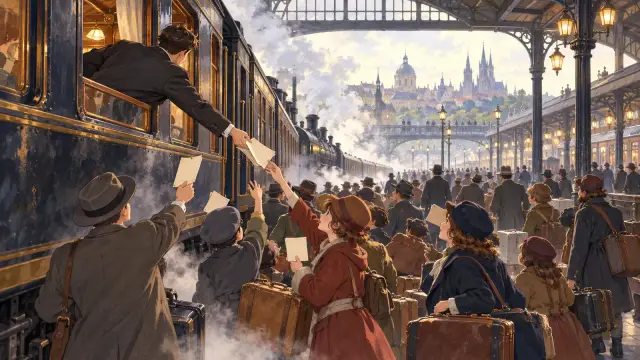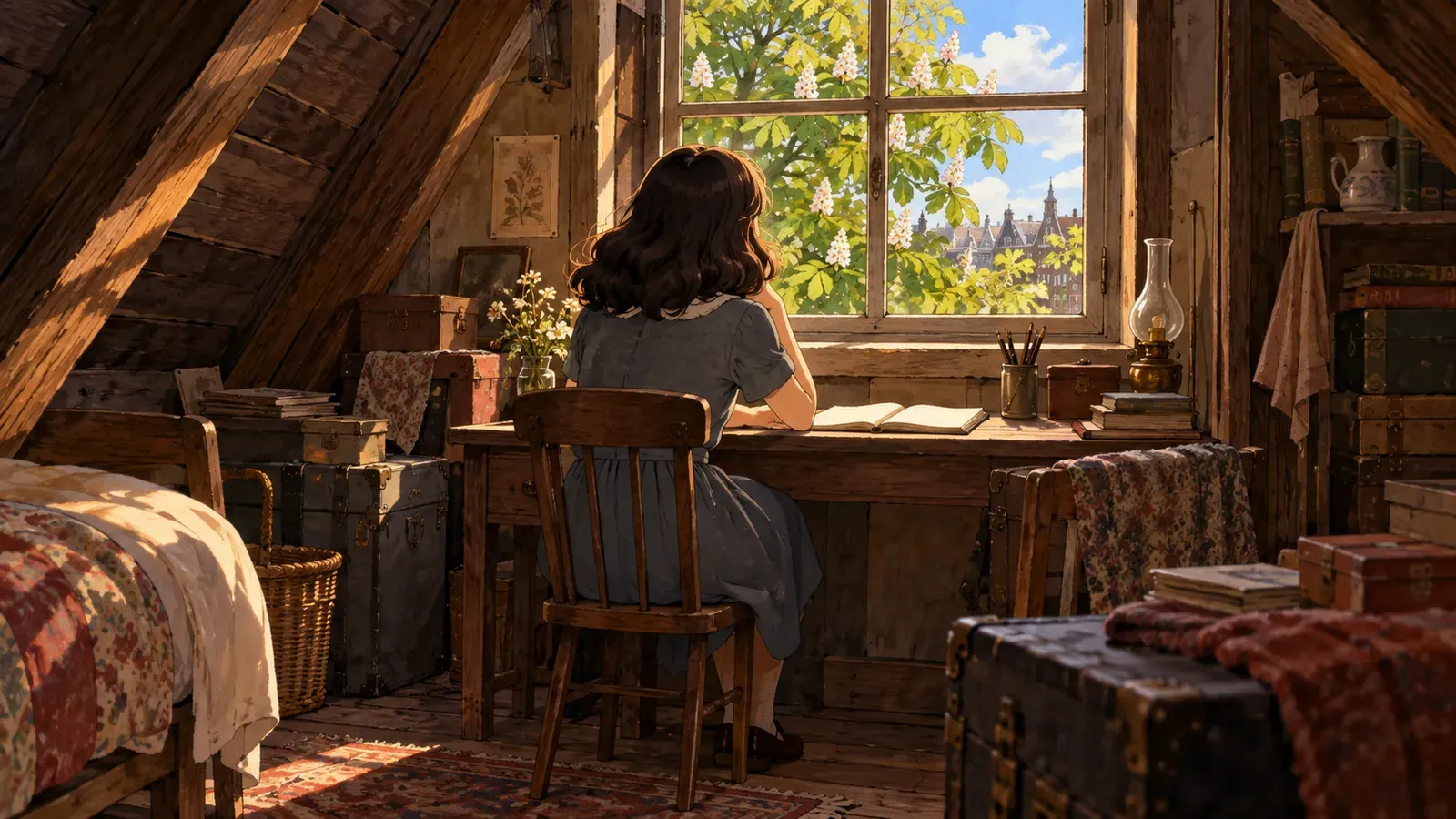
Behind a bookcase in an old building in Amsterdam, there is a hidden door. For more than two years, eight people lived secretly in the rooms behind it. One of them was a teenage girl named Anne Frank.
アムステルダムの古い建物の中、本棚の後ろに、隠し扉があります。2年以上ものあいだ、その奥の部屋で、8人の人がひそかに暮らしていました。その一人が、アンネ・フランクという10代の少女でした。
Anne was born in 1929 in Frankfurt, Germany. Her family was Jewish. In 1933, Adolf Hitler and the Nazi party came to power in Germany. They treated Jewish people very badly. So Anne's father, Otto, moved the family to Amsterdam in the Netherlands. There, Anne went to school, made many friends and had a happy childhood.
アンネは1929年、ドイツのフランクフルトで生まれました。一家はユダヤ人でした。1933年、ドイツでアドルフ・ヒトラーとナチス党が権力を握りました。ナチスは、ユダヤ人をひどく迫害しました。そこで、アンネのお父さんのオットーは、家族を連れてオランダのアムステルダムに移り住みました。アンネはそこで学校に通い、たくさんの友だちを作り、幸せな子ども時代を過ごしました。
But in 1940, the German army took over the Netherlands. New rules began. Jewish people had to wear a yellow star on their clothes. Jewish children had to go to separate schools. Jewish people could not ride on trams or go into many parks.
ところが1940年、ドイツ軍がオランダを占領しました。新しい決まりが、次々に作られました。ユダヤ人は、服に黄色い星をつけなければなりませんでした。ユダヤ人の子どもは、別の学校に通わなければなりませんでした。ユダヤ人は、路面電車に乗ることも、多くの公園に入ることも許されませんでした。
On her thirteenth birthday in June 1942, Anne got a present that she loved: a notebook with a red and white cover. She began to use it as a diary. She wrote about her life, her friends and her feelings.
1942年6月、13歳の誕生日に、アンネはとても気に入ったプレゼントをもらいました。赤と白の表紙のノートです。アンネはこれを日記帳にして、毎日の暮らしや友だちのこと、自分の気持ちを書きはじめました。
Just a few weeks later, Anne's older sister, Margot, received an order to go to a work camp in Germany. The family knew that this was very dangerous. The next morning, they went into hiding. Their hiding place was in the back part of the building where Otto's company worked. A bookcase was later built to hide its door.
そのわずか数週間後、アンネの姉マルゴーに、ドイツの労働収容所へ行けという命令が届きました。それがどれほど危険なことか、家族にはわかっていました。次の朝、一家は隠れ家に身をひそめました。隠れ家は、オットーの会社が入っている建物の奥にありました。のちに、その入り口を隠すために本棚が作られました。
Soon, four more people joined them. During the day, they had to be very quiet, because people were working in the building below. They could not go outside at all. A few brave people from Otto's company brought them food, books and news. If the Nazis found out, these helpers could also be punished.
まもなく、さらに4人が加わりました。昼間は、下の階で人が働いていたので、物音を立てないようにしていなければなりませんでした。外に出ることは、まったくできませんでした。オットーの会社の勇気ある数人が、食べ物や本、ニュースを運んでくれました。ナチスに知られれば、この人たちも罰を受けるおそれがありました。
Anne kept writing. She wanted to become a writer or a journalist. In 1944, she heard on the radio that people should keep their diaries, so that after the war, others could read about this time. Anne began to rewrite her diary so that it could become a book one day.
アンネは書きつづけました。作家か記者になるのが夢でした。1944年、アンネはラジオで、日記を大切にとっておこう、という呼びかけを耳にしました。戦争が終わったあとで、ほかの人たちがこの時代のことを読めるように、というのです。アンネは、いつか本になるようにと、日記を書き直しはじめました。
On August 4, 1944, the police found the hiding place. All eight people were arrested and sent to camps. In early 1945, Anne and Margot died of illness in a camp called Bergen-Belsen. Anne was only fifteen. It was just a few months before the end of the war in Europe.
1944年8月4日、警察が隠れ家を見つけました。8人全員が捕まり、収容所へ送られました。1945年の初め、アンネとマルゴーは、ベルゲン・ベルゼンという収容所で病気のために亡くなりました。アンネは、まだ15歳でした。ヨーロッパで戦争が終わる、ほんの数か月前のことでした。
Of the eight people in hiding, only Otto survived. After the war, one of the helpers, Miep Gies, gave him Anne's diary. She had saved it from the floor of the hiding place. Otto decided to make his daughter's dream come true. In 1947, the diary was published as a book.
隠れ家にいた8人のうち、生き残ったのはオットーだけでした。戦争が終わると、隠れ家の暮らしを支えた一人、ミープ・ヒースが、アンネの日記をオットーに手渡しました。ミープは、隠れ家の床から日記を拾い上げ、大切にしまっておいたのです。オットーは、娘の夢をかなえようと決めました。1947年、日記は本として出版されました。
Today, Anne's diary has been translated into more than seventy languages, including Japanese. The hiding place is now a museum, and more than a million people visit it every year. Through her words, Anne still helps people understand how much hate can hurt, and how important every single life is.
今では、アンネの日記は日本語を含む70以上の言葉に訳されています。隠れ家は博物館になり、毎年100万人を超える人が訪れます。憎しみがどれほど人を傷つけるか。そして、一つひとつの命がどれほど大切か。アンネの言葉は今も、そのことを人々に伝え続けています。
 ▶