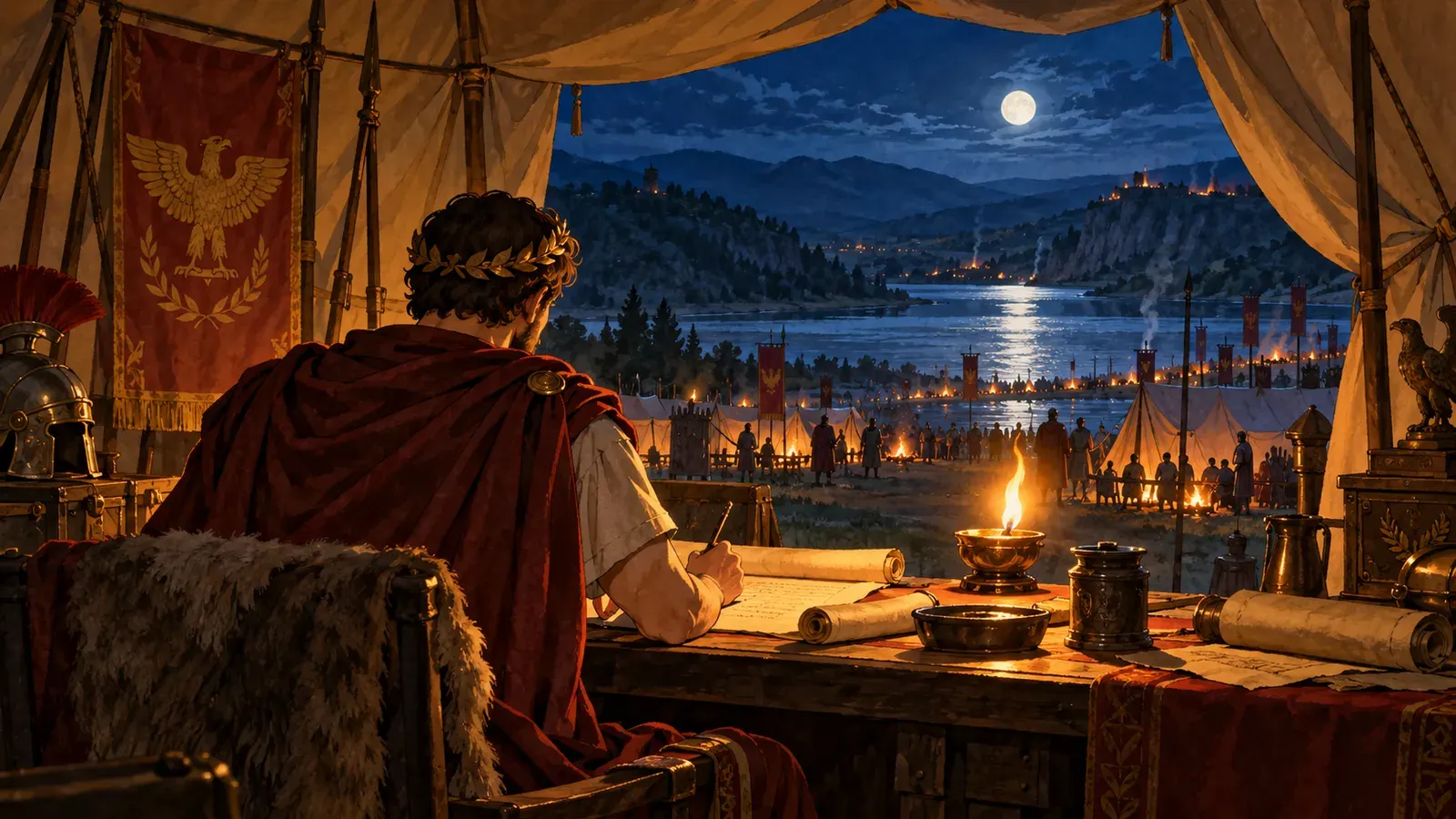
Nearly two thousand years ago, the most powerful man in the world was far from home, near a cold river in central Europe. He was Marcus Aurelius, the emperor of Rome. He was leading his army in a long and difficult war. During those years, he wrote notes to himself in a small book. He never meant anyone else to read them. Today we call this book Meditations, and it is one of the most loved books in history.
今からおよそ二千年前、世界でいちばん力のある男が、故郷から遠く離れた中央ヨーロッパの、冷たい川のほとりにいました。ローマ皇帝マルクス・アウレリウスです。マルクスは、長く苦しい戦争で軍を率いていました。その年月のあいだに、小さな本に自分あての覚え書きを書きつけていきました。人に読ませるつもりなど、まったくありませんでした。今、私たちはこの本を『自省録』と呼んでいます。歴史上でもとりわけ愛されてきた本の一つです。
The very first part of the book is not about war or power. It is a list of thanks. One by one, Marcus remembers the people in his life and writes down exactly what good thing he learned from each of them.
この本のいちばん最初の部分は、戦争の話でも権力の話でもありません。感謝のリストです。マルクスは、人生でかかわった人たちを一人ずつ思い出し、それぞれの人からどんなよいことを学んだのかを、具体的に書きとめているのです。
From his grandfather, he learned good manners and how to control his temper. From his father, whom he remembered mainly through what others said about him, he learned modesty and strength of character. From his mother, he learned to respect the gods, to be generous, and to avoid not only bad actions but even bad thoughts. She also taught him to live simply, far from the habits of the rich.
祖父からは、礼儀正しさと、かっとなる気持ちを抑えることを学びました。父のことは、主に人から聞いた話で知っているだけでしたが、その父からは、つつしみ深さと、しっかりした人柄を学びました。母からは、神々をうやまうこと、人に気前よくすること、悪い行いはもちろん、悪い考えさえ持たないことを学びました。母はまた、お金持ちのぜいたくな暮らしとは無縁の、質素な暮らし方も教えてくれました。
From the man who looked after him as a boy, he learned not to take sides too excitedly in the chariot races. He also learned to work hard, to want little, to do things with his own hands, not to interfere in other people's business, and not to listen to gossip.
子どものころに世話をしてくれた養育係からは、戦車競走で、どちらかのチームにむきになって肩入れしないことを学びました。また、よく働くこと、多くを望まないこと、自分の手で物事をすること、他人のことに口出ししないこと、うわさ話に耳を貸さないことも学びました。
From one teacher, he learned not to waste time on small, silly things, and not to believe people who claimed to do magic. From another, called Rusticus, he learned to read carefully and not to be satisfied with a quick, surface understanding. Rusticus also taught him to write letters simply and to forgive people quickly when they wanted to make peace. It was Rusticus who first lent him the teachings of Epictetus from his own library.
ある先生からは、つまらないことに時間をむだにしないこと、そして、魔法が使えるなどと言う人を信じないことを学びました。ルスティクスという別の先生からは、じっくり読むこと、表面をさっとなでただけで分かったつもりにならないことを学びました。ルスティクスは、手紙は飾らずに書くこと、相手が仲直りしたがっているときにはすぐに許すことも教えてくれました。エピクテトスの教えを書いた本を、自分の書庫から初めて貸してくれたのも、このルスティクスでした。
From a teacher of language named Alexander, he learned a kind lesson about correcting others. When someone used a wrong word, Alexander did not criticize him. Instead, he simply used the right word himself in his reply, so the person could learn without being embarrassed.
言葉の先生アレクサンドロスからは、人のまちがいの直し方について、思いやりのある教えを学びました。誰かが言葉をまちがえても、アレクサンドロスはそれをとがめませんでした。そのかわり、自分の返事の中で、正しい言葉をさりげなく使ってみせたのです。そうすれば、相手は恥ずかしい思いをせずに学べるからです。
From his adopted father, the emperor Antoninus, he learned many things: to be gentle but firm in decisions, not to care for empty honors, to love work, to listen to anyone with a useful idea, and to treat everyone fairly. Marcus's list for him is the longest of all.
養父である皇帝アントニヌスからは、たくさんのことを学びました。おだやかでありながら、決めたことはゆるがないこと。中身のない名誉にこだわらないこと。仕事を愛すること。役に立つ考えを持っている人なら、誰の話でも聞くこと。そして、誰に対しても公平であること。アントニヌスについての部分は、リストの中でいちばん長くなっています。
At the end, Marcus thanks the gods for giving him good grandparents, good parents, a good sister, good teachers, and good friends. He knew that he had not become who he was by himself.
最後にマルクスは、よい祖父母、よい両親、よい姉妹、よい先生たち、よい友人たちに恵まれたことを、神々に感謝しています。今の自分は、自分ひとりの力でできあがったのではない。マルクスはそのことを知っていたのです。
Isn't it amazing? The ruler of a huge empire did not write about his victories. He wrote about what he owed to the people around him. Even the small lessons, like how to correct someone kindly, seemed important to him.
驚くべきことだと思いませんか。大帝国を治める皇帝が、自分の手柄については何も書かなかったのです。書いたのは、周りの人たちから受けた恩のことでした。人のまちがいをやさしく直す方法のような、ささやかな教えでさえ、マルクスにとっては大切なものだったのです。
Try this today. Write your own list like Marcus. Think of five people in your life: family, teachers, friends, even someone you met only once. Next to each name, write one thing you learned from them. Be specific, as Marcus was. You might be surprised at how rich you already are.
今日、試してみましょう。マルクスにならって、自分だけのリストを書いてみてください。これまでの人生でかかわった人を五人、思い浮かべましょう。家族、先生、友だち、一度しか会ったことのない人でもかまいません。それぞれの名前の横に、その人から学んだことを一つずつ書いてください。マルクスのように、具体的に書くのがこつです。自分がもうどれほど豊かなのかに、驚くかもしれません。