It was on the first day of the new year that the announcement was made, almost simultaneously from three observatories, that the motion of the planet Neptune, the outermost of all the planets that wheel about the sun, had become very erratic. Ogilvy had already called attention to a suspected retardation in its velocity in December. Such a piece of news was scarcely calculated to interest a world the greater portion of whose inhabitants were unaware of the existence of the planet Neptune, nor outside the astronomical profession did the subsequent discovery of a faint remote speck of light in the region of the perturbed planet cause any very great excitement. Scientific people, however, found the intelligence remarkable enough, even before it became known that the new body was rapidly growing larger and brighter, that its motion was quite different from the orderly progress of the planets, and that the deflection of Neptune and its satellite was becoming now of an unprecedented kind.
新しい年の最初の日、三つの天文台から、ほとんど同時に発表があった。太陽のまわりを回る惑星のうち、いちばん外側にある海王星の動きが、ひどく乱れてきたというのである。オグルヴィは十二月の時点で、海王星の速さが落ちているのではないかと、すでに注意をうながしていた。だが、こんな知らせに世間が関心を持つはずもなかった。世界の人々の大半は、海王星という惑星があることさえ知らなかったのだ。その後、動きの乱れた海王星のあたりに、はるか遠くかすかな光の点が見つかったが、天文学の専門家のほかは、それほど騒ぎはしなかった。けれども科学者たちにとっては、これだけでも十分に驚くべき知らせだった。そしてまもなく、さらに驚くべきことがわかってきた。この新しい天体は、みるみる大きく明るくなっていた。その動きは、惑星の規則正しい運行とはまるで違っていた。そして、海王星とその衛星の軌道のずれは、いまや前例のないものになりつつあったのである。
Few people without a training in science can realise the huge isolation of the solar system. The sun with its specks of planets, its dust of planetoids, and its impalpable comets, swims in a vacant immensity that almost defeats the imagination. Beyond the orbit of Neptune there is space, vacant so far as human observation has penetrated, without warmth or light or sound, blank emptiness, for twenty million times a million miles. That is the smallest estimate of the distance to be traversed before the very nearest of the stars is attained. And, saving a few comets more unsubstantial than the thinnest flame, no matter had ever to human knowledge crossed this gulf of space until early in the twentieth century this strange wanderer appeared. A vast mass of matter it was, bulky, heavy, rushing without warning out of the black mystery of the sky into the radiance of the sun. By the second day it was clearly visible to any decent instrument, as a speck with a barely sensible diameter, in the constellation Leo near Regulus. In a little while an opera glass could attain it.
科学を学んだことのない人には、太陽系がどれほど広大な孤独の中にあるか、なかなか実感できないだろう。太陽は、点のような惑星たち、塵のような小惑星たち、つかみどころのない彗星たちを引き連れて、想像も及ばないほど何もない広がりの中を泳いでいる。海王星の軌道の外には、人間の観測が届くかぎり、何もない空間が続いている。ぬくもりも光も音もない、まったくの空白である。それが二十兆マイルも続いているのだ。いちばん近い恒星にたどり着くまでに越えなければならない距離を、いちばん少なく見積もっても、それだけある。そして、人間の知るかぎり、この空間の深い淵を越えてきた物質は一つもなかった。どんな薄い炎よりも実体の乏しい彗星がいくつかあったくらいである。ところが二十世紀の初め、この奇妙な放浪者が現れた。それは巨大な物質のかたまりだった。かさばった、重いかたまりが、何の前ぶれもなく暗く謎めいた空の奥から、太陽の輝きの中へと突進してきたのだ。二日目には、まともな望遠鏡なら、はっきり見えるようになった。獅子座の一等星レグルスの近くに、かろうじて大きさがわかるくらいの点として見えたのである。ほどなく、オペラグラスでも見えるようになった。
On the third day of the new year the newspaper readers of two hemispheres were made aware for the first time of the real importance of this unusual apparition in the heavens. "A Planetary Collision," one London paper headed the news, and proclaimed Duchaine's opinion that this strange new planet would probably collide with Neptune. The leader-writers enlarged upon the topic. So that in most of the capitals of the world, on January 3rd, there was an expectation, however vague, of some imminent phenomenon in the sky; and as the night followed the sunset round the globe, thousands of men turned their eyes skyward to see—the old familiar stars just as they had always been.
新年の三日目、東と西の両半球の新聞読者は、空に現れたこの異例の天体がどれほど重大なものか、初めて知らされた。ロンドンのある新聞は「惑星の衝突」という見出しでこの知らせを伝え、デュシェーヌの意見を報じた。この奇妙な新しい惑星は、おそらく海王星と衝突するだろう、というのである。論説記者たちはこの話題をふくらませた。こうして一月三日には、世界の首都の多くで、ばくぜんとではあるが、空で何かが起こるのではないかと期待が高まっていた。そして日が沈み、夜が地球をひと巡りしていくにつれて、何千という人々が空を見上げた。そこに見えたのは、いつもと変わらない、昔なじみの星々だった。
Until it was dawn in London and Pollux setting and the stars overhead grown pale. The Winter's dawn it was, a sickly filtering accumulation of daylight, and the light of gas and candles shone yellow in the windows to show where people were astir. But the yawning policeman saw the thing, the busy crowds in the markets stopped agape, workmen going to their work betimes, milkmen, the drivers of news-carts, dissipation going home jaded and pale, homeless wanderers, sentinels on their beats, and, in the country, labourers trudging afield, poachers slinking home, all over the dusky quickening country it could be seen—and out at sea by seamen watching for the day—a great white star, come suddenly into the westward sky!
ところが、ロンドンで夜が明けはじめ、ふたご座のポルックスが沈み、頭上の星々が色あせたころのことである。冬の夜明けで、病人のような弱々しい日の光が少しずつしみこんでくる朝だった。人々が起きだした家の窓には、ガス灯やろうそくの明かりが黄色くともっていた。あくびをしていた巡査が、それを見た。市場のにぎやかな人ごみも、口を開けて立ちつくした。早くから仕事に向かう労働者たち、牛乳配達、新聞を運ぶ荷車の御者、夜遊びに疲れて青い顔で家路につく者、家のない放浪者、持ち場を見回る歩哨。田舎では、畑へとぼとぼ向かう農夫、こそこそと家に帰る密猟者。薄暗く目覚めはじめた国じゅうで、それが見えた。海の上でも、夜明けを待つ船乗りたちの目に、それは見えた。西の空に突然現れた、大きな白い星が!
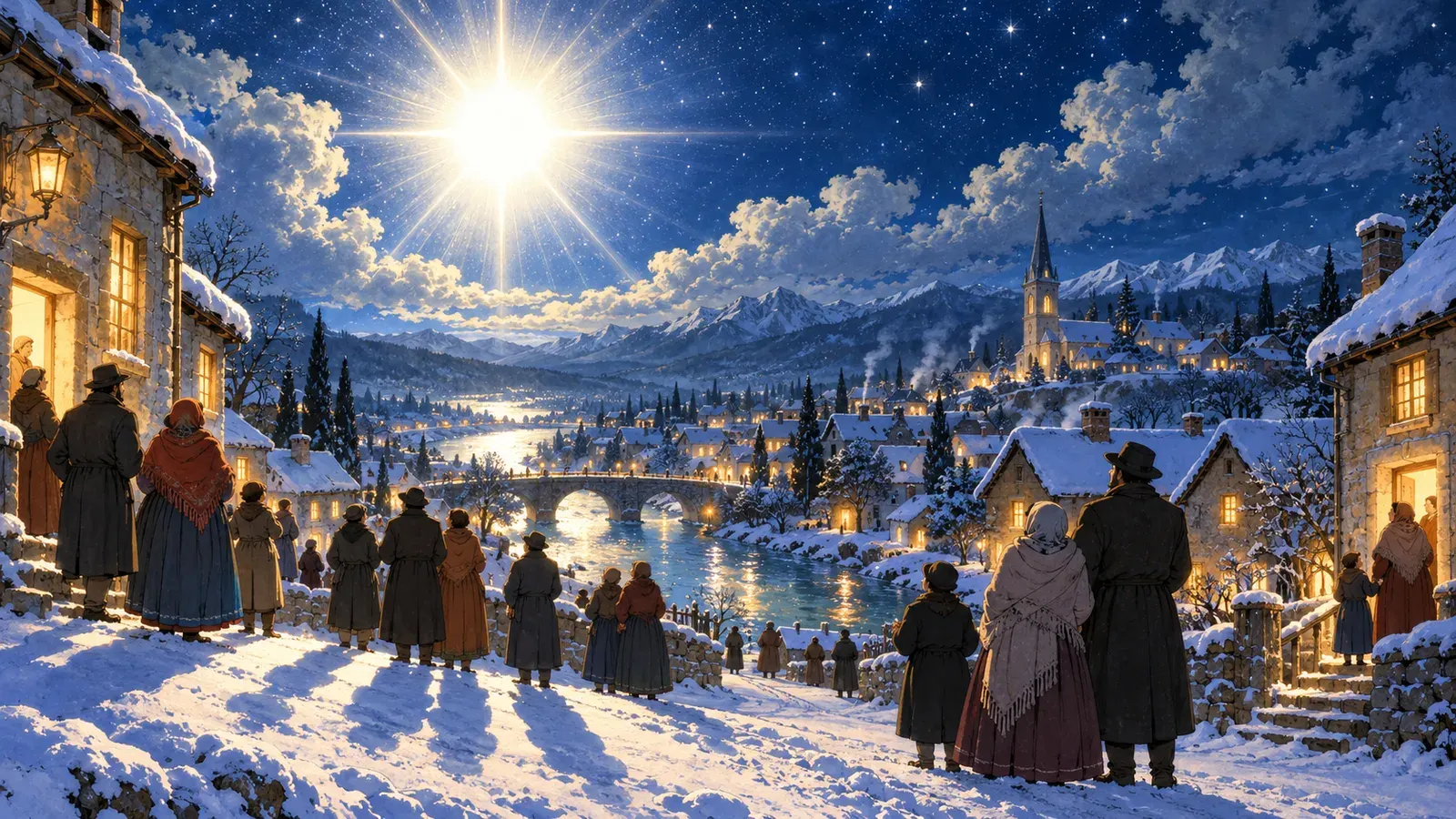
Brighter it was than any star in our skies; brighter than the evening star at its brightest. It still glowed out white and large, no mere twinkling spot of light, but a small, round, clear shining disc, an hour after the day had come. And where science has not reached, men stared and feared, telling one another of the wars and pestilences that are foreshadowed by these fiery signs in the Heavens. Sturdy Boers, dusky Hottentots, Gold Coast negroes, Frenchmen, Spaniards, Portuguese, stood in the warmth of the sunrise watching the setting of this strange new star.
それは、私たちの空のどの星よりも明るかった。いちばん明るいときの宵の明星よりも、まだ明るかった。日が昇って一時間たっても、それはまだ白く大きく輝いていた。ちらちらとまたたく光の点ではない。小さく丸い、くっきりと光る円盤だった。科学の届かない土地では、人々はそれを見つめておびえた。天に現れる火のしるしは、戦争や疫病の前ぶれだと言い交わしたのである。たくましいボーア人も、浅黒いコイコイ人も、黄金海岸の黒人たちも、フランス人も、スペイン人も、ポルトガル人も、朝日のぬくもりの中に立って、この奇妙な新しい星が沈んでいくのを眺めていた。
And in a hundred observatories there had been suppressed excitement, rising almost to shouting pitch, as the two remote bodies had rushed together, and a hurrying to and fro, to gather photographic apparatus and spectroscope, and this appliance and that, to record this novel, astonishing sight, the destruction of a world. For it was a world, a sister planet of our earth, far greater than our earth indeed, that had so suddenly flashed into flaming death. Neptune it was had been struck, fairly and squarely, by the strange planet from outer space, and the heat of the concussion had incontinently turned two solid globes into one vast mass of incandescence. Round the world that day, two hours before the dawn, went the pallid great white star, fading only as it sank westward and the sun mounted above it. Everywhere men marvelled at it, but of all those who saw it none could have marvelled more than those sailors, habitual watchers of the stars, who far away at sea had heard nothing of its advent and saw it now rise like a pigmy moon and climb zenithward and hang overhead and sink westward with the passing of the night.
百もの天文台では、はるか遠くの二つの天体がぶつかり合ったとき、興奮のあまり叫びださんばかりになりながら、人々はそれを必死に抑えていた。そしてあわただしく行き来して、写真機や分光器や、あれやこれやの器具を集めた。一つの世界が滅びるという、前代未聞の驚くべき光景を記録するためである。そう、突然炎をあげて死んだのは、一つの世界だった。私たちの地球の姉妹惑星であり、しかも地球よりはるかに大きな世界だったのだ。外の宇宙からやって来た奇妙な惑星は、海王星に真正面からぶつかった。その衝撃の熱で、二つの固い球体は、たちまち一つの巨大な白熱のかたまりになってしまったのである。その日、夜明けの二時間前に、この青白い大きな白い星は世界をひと巡りした。西に沈み、太陽がその上に昇ってきて、ようやく見えなくなった。どこでも人々はこの星に目をみはった。だが、それを見た人々の中で誰よりも驚いたのは、いつも星を見て暮らしている船乗りたちだったに違いない。遠い海の上にいた船乗りたちは、この星が現れたことを何も聞いていなかった。その彼らの前で、星は小さな月のように昇り、天頂へと上って頭上にかかり、夜が過ぎるとともに西へ沈んでいったのである。
And when next it rose over Europe everywhere were crowds of watchers on hilly slopes, on house-roofs, in open spaces, staring eastward for the rising of the great new star. It rose with a white glow in front of it, like the glare of a white fire, and those who had seen it come into existence the night before cried out at the sight of it. "It is larger," they cried. "It is brighter!" And indeed the moon, a quarter full and sinking in the west, was in its apparent size beyond comparison, but scarcely in all its breadth had it as much brightness now as the little circle of the strange new star.
次にその星がヨーロッパの空に昇ったときには、丘の斜面にも、家の屋根にも、広場にも、見物人がひしめいていた。誰もが東の空を見つめ、大きな新しい星が昇ってくるのを待っていた。星は、白い火の照り返しのような白い輝きを先に放ちながら昇ってきた。前の晩にこの星が生まれるところを見た人々は、それを見て叫んだ。「大きくなった」と人々は叫んだ。「明るくなった!」確かに、西に沈みかけていた月は、まだ四分の一ほどしか満ちていなかったが、見かけの大きさでは比べものにならないほど大きかった。それでも、その広い面全体の明るさを合わせても、この奇妙な新しい星の小さな円には、もうかなわなかった。
"It is brighter!" cried the people clustering in the streets. But in the dim observatories the watchers held their breath and peered at one another. "It is nearer!" they said. "Nearer!"
「明るくなった!」と、通りに群がる人々は叫んだ。だが薄暗い天文台では、星を見張っていた人々は息をのみ、互いの顔を見つめ合った。「近づいている!」と彼らは言った。「近づいているんだ!」
And voice after voice repeated, "It is nearer," and the clicking telegraph took that up, and it trembled along telephone wires, and in a thousand cities grimy compositors fingered the type. "It is nearer." Men writing in offices, struck with a strange realisation, flung down their pens, men talking in a thousand places suddenly came upon a grotesque possibility in those words, "It is nearer." It hurried along awakening streets, it was shouted down the frost-stilled ways of quiet villages, men who had read these things from the throbbing tape stood in yellow-lit doorways shouting the news to the passers-by. "It is nearer," Pretty women, flushed and glittering, heard the news told jestingly between the dances, and feigned an intelligent interest they did not feel. "Nearer! Indeed. How curious! How very, very clever people must be to find out things like that!"
その声は次から次へと繰り返された。「近づいている」かちかちと鳴る電信がそれを受け継ぎ、電話線を震わせて伝わり、千もの都市で、すすけた植字工たちが活字を拾った。「近づいている」事務所で書きものをしていた人々は、奇妙なことに思い当たって、ペンを投げ出した。千もの場所で話をしていた人々は、その言葉にひそむ、とんでもない可能性に突然気づいた。「近づいている」その言葉は、目覚めつつある町の通りを駆けぬけ、霜で静まりかえった静かな村の道に叫び伝えられた。電信テープに次々と打ち出される知らせを読んだ人々は、黄色い明かりのともる戸口に立って、通りがかりの人々に叫んだ。「近づいている」頬を上気させ、きらびやかに着飾った美しい女性たちは、ダンスの合間にその知らせを冗談まじりに聞かされ、本当は興味もないのに、感心したふりをした。「近づいているですって! まあ。なんて不思議なんでしょう! そんなことを見つけだすなんて、なんて、なんて頭のいい方たちなんでしょう!」
Lonely tramps faring through the wintry night murmured those words to comfort themselves—looking skyward. "It has need to be nearer, for the night's as cold as charity. Don't seem much warmth from it if it is nearer, all the same."
冬の夜を歩き続ける孤独な浮浪者たちは、空を見上げながら、自分をなぐさめるようにその言葉をつぶやいた。「近づいてもらわなくちゃ困るさ。なにしろ今夜は、お情けの施しみたいに冷てえからな。それにしたって、近づいてきたところで、たいしてあったかくもならねえようだがね」
"What is a new star to me?" cried the weeping woman, kneeling beside her dead.
「新しい星なんか、わたしに何の関係があるの?」と、死んだ家族のそばにひざまずいて泣いている女が叫んだ。
The schoolboy, rising early for his examination work, puzzled it out for himself—with the great white star shining broad and bright through the frost-flowers of his window. "Centrifugal, centripetal," he said, with his chin on his fist. "Stop a planet in its flight, rob it of its centrifugal force, what then? Centripetal has it, and down it falls into the sun! And this—!
試験勉強のために早起きした少年は、自分なりに答えを考えていた。窓の霜の花ごしに、大きな白い星が広く明るく輝いていた。「遠心力、求心力」と少年は、こぶしにあごをのせて言った。「惑星が飛んでいるのを止めて、遠心力をなくしたら、どうなる? 求心力だけが残って、太陽に落ちていく! じゃあ、これは……!
"Do we come in the way? I wonder—"
「ぼくたちは、その通り道にいるんだろうか? どうなんだろう……」
The light of that day went the way of its brethren, and with the later watches of the frosty darkness rose the strange star again. And it was now so bright that the waxing moon seemed but a pale yellow ghost of itself, hanging huge in the sunset. In a South African city a great man had married, and the streets were alight to welcome his return with his bride. "Even the skies have illuminated," said the flatterer. Under Capricorn, two negro lovers, daring the wild beasts and evil spirits for love of one another, crouched together in a cane brake where the fire-flies hovered. "That is our star," they whispered, and felt strangely comforted by the sweet brilliance of its light.
その日の光も、それまでの日々と同じように過ぎ去った。そして、霜の降りた闇の夜ふけに、奇妙な星はふたたび昇った。いまや星はあまりに明るく、満ちていく月は、日暮れの空に大きくかかっていても、淡い黄色の、自分の幽霊のようにしか見えなかった。南アフリカのある都市では、偉い人物が結婚し、花嫁を連れて帰ってくるのを迎えるために、通りに明かりがともされていた。「天までもが祝いの灯をともしましたな」と、おべっか使いが言った。南回帰線のあたりでは、黒人の恋人同士が、互いを思うあまり、猛獣も悪霊も恐れずに、ホタルの飛びかう葦の茂みの中で身を寄せ合っていた。「あれはぼくたちの星だね」と二人はささやいた。そして、その光のやさしい輝きに、不思議となぐさめられるのを感じた。
The master mathematician sat in his private room and pushed the papers from him. His calculations were already finished. In a small white phial there still remained a little of the drug that had kept him awake and active for four long nights. Each day, serene, explicit, patient as ever, he had given his lecture to his students, and then had come back at once to this momentous calculation. His face was grave, a little drawn and hectic from his drugged activity. For some time he seemed lost in thought. Then he went to the window, and the blind went up with a click. Half-way up the sky, over the clustering roofs, chimneys, and steeples of the city, hung the star.
大数学者は自分の部屋に座り、書類を押しやった。計算はもう終わっていた。小さな白い薬びんには、まだ少し薬が残っていた。四晩ものあいだ、それを飲んで眠らずに頭を働かせてきたのだ。昼間は毎日、いつものように落ち着いて、わかりやすく、根気よく学生たちに講義をした。そして終わるとすぐに戻ってきて、この重大な計算に取り組んできたのである。その顔はいかめしく、薬で無理に働き続けたせいで、少しやつれて熱っぽかった。しばらくのあいだ、数学者は物思いにふけっているようだった。それから窓のところへ行くと、ブラインドがかちりと音を立てて上がった。都会の屋根や煙突や尖塔が群がるその上、空の中ほどに、星がかかっていた。
He looked at it as one might look into the eyes of a brave enemy. "You may kill me," he said after a silence. "But I can hold you—and all the universe for that matter—in the grip of this small brain. I would not change. Even now."
数学者は、勇敢な敵の目をのぞきこむように、星を見つめた。「おまえは私を殺すかもしれない」と、しばらく黙ったあとで数学者は言った。「だが私は、おまえを、いや、宇宙全体をも、この小さな頭脳でしっかりとつかむことができる。私はこの頭脳を手放そうとは思わない。いまでさえも」
He looked at the little phial. "There will be no need of sleep again," he said. The next day at noon, punctual to the minute, he entered his lecture theatre, put his hat on the end of the table as his habit was, and carefully selected a large piece of chalk. It was a joke among his students that he could not lecture without that piece of chalk to fumble in his fingers, and once he had been stricken to impotence by their hiding his supply. He came and looked under his grey eyebrows at the rising tiers of young fresh faces, and spoke with his accustomed studied commonness of phrasing.
数学者は小さな薬びんを見た。「もう眠る必要はないだろう」と言った。翌日の正午、一分の狂いもなく時間どおりに、数学者は講義室に入った。そしていつものように帽子を机の端に置き、大きなチョークを一本ていねいに選んだ。このチョークを指でいじっていないと講義ができない、というのが学生たちのあいだの冗談だった。一度、学生たちがチョークを隠してしまったとき、何もできなくなってしまったことがあるのだ。数学者は教壇に立ち、灰色の眉の下から、階段状に並ぶ若々しい顔を見上げた。そして、いつもの、わざとありふれた言葉を選んだ話し方で語りはじめた。
"Circumstances have arisen—circumstances beyond my control," he said, and paused, "which will debar me from completing the course I had designed. It would seem, gentlemen, if I may put the thing clearly and briefly, that—Man has lived in vain."
「ある事情が生じました。私の力ではどうにもならない事情です」と数学者は言い、言葉を切った。「そのため、予定していた講義を最後まで終えることができなくなりました。諸君、はっきりと手短に申しあげるなら、どうやら、人類は生きてきたかいがなかった、ということのようです」
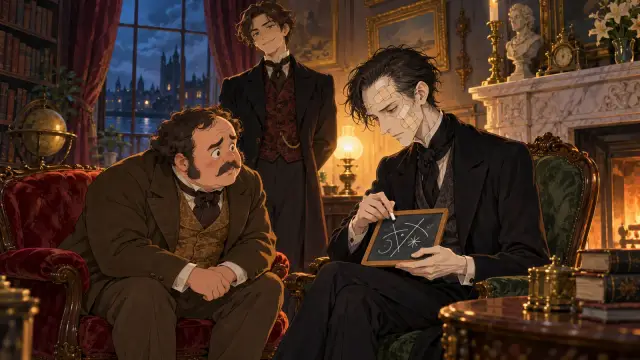
The students glanced at one another. Had they heard aright? Mad? Raised eyebrows and grinning lips there were, but one or two faces remained intent upon his calm grey-fringed face. "It will be interesting," he was saying, "to devote this morning to an exposition, so far as I can make it clear to you, of the calculations that have led me to this conclusion. Let us assume——"
学生たちは顔を見合わせた。聞き間違いだろうか? 気がふれたのか? 眉をつり上げる者も、にやにや笑う者もいた。だが、一人か二人は、灰色の髪に縁どられた落ち着いた顔を、じっと見つめ続けていた。「今朝は」と数学者は話していた。「私をこの結論に導いた計算を、できるかぎりわかりやすく説明してみましょう。興味深い時間になると思います。仮に……としましょう」
He turned towards the blackboard, meditating a diagram in the way that was usual to him. "What was that about 'lived in vain'?" whispered one student to another. "Listen," said the other, nodding towards the lecturer.
数学者はいつものように頭の中で図を思い描きながら、黒板のほうを向いた。「『生きてきたかいがなかった』って、どういうことだ?」と、一人の学生が隣にささやいた。「聞けよ」と、隣の学生は講師のほうにあごをしゃくった。
And presently they began to understand.
そしてまもなく、学生たちにもわかりはじめた。
That night the star rose later, for its proper eastward motion had carried it some way across Leo towards Virgo, and its brightness was so great that the sky became a luminous blue as it rose, and every star was hidden in its turn, save only Jupiter near the zenith, Capella, Aldebaran, Sirius, and the pointers of the Bear. It was very white and beautiful. In many parts of the world that night a pallid halo encircled it about. It was perceptibly larger; in the clear refractive sky of the tropics it seemed as if it were nearly a quarter the size of the moon. The frost was still on the ground in England, but the world was as brightly lit as if it were midsummer moonlight. One could see to read quite ordinary print by that cold, clear light, and in the cities the lamps burnt yellow and wan.
その夜、星は前の晩より遅く昇った。星自身が東へ動いて、獅子座から乙女座のほうへ少し移っていたからだ。その明るさはすさまじく、星が昇るにつれて空は光る青色になり、星々は次々に見えなくなった。残ったのは、天頂近くの木星と、カペラ、アルデバラン、シリウス、そして大熊座の北斗七星の端の二つの星だけだった。星はとても白く、美しかった。その夜、世界の多くの場所で、星のまわりに青白い光の輪がかかっていた。星は目に見えて大きくなっていた。熱帯の澄んだ空では、月の四分の一近くの大きさに見えた。イギリスではまだ地面に霜が降りていたが、世界は真夏の月夜のように明るかった。その冷たく澄んだ光で、ふつうの大きさの活字が読めるほどだった。町では街灯が黄色く、弱々しくともっていた。
And everywhere the world was awake that night, and throughout Christendom a sombre murmur hung in the keen air over the country-side like the belling of bees in the heather, and this murmurous tumult grew to a clangour in the cities. It was the tolling of the bells in a million belfry towers and steeples, summoning the people to sleep no more, to sin no more, but to gather in their churches and pray. And overhead, growing larger and brighter, as the earth rolled on its way and the night passed, rose the dazzling star.
その夜、世界じゅうが目を覚ましていた。キリスト教の国々のいたるところで、ヒースの茂みでうなるミツバチの羽音のような、重々しいざわめきが、田園の冷たく澄んだ空気の中にただよっていた。そのざわめきは、都会では鳴りひびく轟音になった。百万もの鐘楼や尖塔で鳴らされる鐘の音だった。もう眠るな、もう罪を犯すな、教会に集まって祈れ、と人々に呼びかける鐘だった。そして頭上には、まばゆい星が昇っていた。地球が回り、夜がふけていくにつれて、星はますます大きく、明るくなっていった。
And the streets and houses were alight in all the cities, the shipyards glared, and whatever roads led to high country were lit and crowded all night long. And in all the seas about the civilized lands, ships with throbbing engines, and ships with bellying sails, crowded with men and living creatures, were standing out to ocean and the north. For already the warning of the master mathematician had been telegraphed all over the world and translated into a hundred tongues. The new planet and Neptune, locked in a fiery embrace, were whirling headlong, ever faster and faster towards the sun. Already every second this blazing mass flew a hundred miles, and every second its terrific velocity increased. As it flew now, indeed, it must pass a hundred million of miles, wide of the earth and scarcely affect it. But near its destined path, as yet only slightly perturbed, spun the mighty planet Jupiter and his moons sweeping splendid round the sun. Every moment now the attraction between the fiery star and the greatest of the planets grew stronger. And the result of that attraction? Inevitably Jupiter would be deflected from its orbit into an elliptical path, and the burning star, swung by his attraction wide of its sunward rush, would "describe a curved path," and perhaps collide with, and certainly pass very close to, our earth. "Earthquakes, volcanic outbreaks, cyclones, sea waves, floods, and a steady rise in temperature to I know not what limit"—so prophesied the master mathematician.
どの都会でも、通りや家々に明かりがともっていた。造船所はぎらぎらと照らされていた。高地へ向かう道はどれも、ひと晩じゅう明かりがつき、人であふれていた。文明国をとりまく海という海では、エンジンを鳴らす汽船も、帆をふくらませた帆船も、人や生き物をいっぱいに乗せて、外洋へ、北へと向かっていた。大数学者の警告は、すでに電信で世界じゅうに伝えられ、百の言語に訳されていたのだ。新しい惑星と海王星は、炎の中で抱き合ったまま、ますます速く、まっしぐらに太陽へと向かっていた。燃えるかたまりは、すでに一秒に百マイルも飛んでいて、そのすさまじい速さは一秒ごとに増していた。このままの道筋で飛んでいくなら、地球から一億マイルも離れたところを通り過ぎ、地球にはほとんど影響がないはずだった。ところが、その通り道の近くを、巨大な惑星の木星が、衛星たちを従えて堂々と太陽のまわりを回っていた。木星はまだ、わずかに乱されただけだった。だが、燃える星と、惑星の中でいちばん大きな木星とのあいだで引き合う力は、刻一刻と強まっていた。その結果はどうなるのか。木星は避けようもなく軌道からそらされ、細長い楕円の道を進むことになる。そして燃える星は、木星に引っぱられて、太陽へ向かう道筋から大きくそれ、「曲線を描いて」進むことになる。そうなれば、私たちの地球にぶつかるかもしれない。少なくとも、地球のすぐそばを通るのは間違いない。「地震、火山の噴火、暴風、高波、洪水、そしてどこまで上がるかわからない気温の上昇」大数学者はそう予言した。
And overhead, to carry out his words, lonely and cold and livid blazed the star of the coming doom.
そして頭上には、その言葉を実現しようとするかのように、迫りくる破滅の星が、孤独に、冷たく、青白く燃えていた。
To many who stared at it that night until their eyes ached it seemed that it was visibly approaching. And that night, too, the weather changed, and the frost that had gripped all Central Europe and France and England softened towards a thaw.
その夜、目が痛くなるまで星を見つめていた多くの人々には、星が目に見えて近づいてくるように思えた。そしてその夜、天気も変わった。中央ヨーロッパとフランスとイギリスをかたく凍らせていた霜がゆるみ、雪どけが始まった。
But you must not imagine, because I have spoken of people praying through the night and people going aboard ships and people fleeing towards mountainous country, that the whole world was already in a terror because of the star. As a matter of fact, use and wont still ruled the world, and save for the talk of idle moments and the splendour of the night, nine human beings out of ten were still busy at their common occupations. In all the cities the shops, save one here and there, opened and closed at their proper hours, the doctor and the undertaker plied their trades, the workers gathered in the factories, soldiers drilled, scholars studied, lovers sought one another, thieves lurked and fled, politicians planned their schemes. The presses of the newspapers roared through the nights, and many a priest of this church and that would not open his holy building to further what he considered a foolish panic. The newspapers insisted on the lesson of the year 1000—for then, too, people had anticipated the end. The star was no star—mere gas—a comet; and were it a star it could not possibly strike the earth. There was no precedent for such a thing. Common-sense was sturdy everywhere, scornful, jesting, a little inclined to persecute the obdurate fearful. That night, at seven-fifteen by Greenwich time, the star would be at its nearest to Jupiter. Then the world would see the turn things would take. The master mathematician's grim warnings were treated by many as so much mere elaborate self-advertisement. Common-sense at last, a little heated by argument, signified its unalterable convictions by going to bed. So, too, barbarism and savagery, already tired of the novelty, went about their nightly business, and, save for a howling dog here and there, the beast world left the star unheeded.
夜通し祈る人々や、船に乗りこむ人々や、山地へ逃げる人々の話をしたが、だからといって、世界じゅうがもう星を恐れてふるえあがっていたと思ってはいけない。実のところ、世の中はまだ、いつもの習慣どおりに動いていた。ひまなときに星の話をしたり、夜の輝きに見とれたりするほかは、十人のうち九人までが、相変わらずふだんの仕事に精を出していた。どの都会でも、ところどころを除けば、店は決まった時間に開いて閉まった。医者も葬儀屋も商売を続け、労働者は工場に集まり、兵士は訓練をし、学者は研究し、恋人たちは互いを求め、泥棒はひそみ、逃げ、政治家は策をめぐらせた。新聞の印刷機は夜通しうなりを上げていた。あちこちの教会の聖職者の多くは、ばかげた騒ぎをあおるだけだと考えて、聖堂の扉を開こうとしなかった。新聞は西暦一〇〇〇年の教訓を持ち出した。あのときも人々は世の終わりが来ると思いこんだではないか、と。あの星は星ではない。ただのガスだ。彗星だ。たとえ星だとしても、地球にぶつかるはずがない。そんな前例はない、と。どこでも常識はかたくなだった。人をあざけり、冗談をとばし、いつまでもこわがっている者たちを、少々いじめたがるところさえあった。その夜、グリニッジ時間の七時十五分に、星は木星にいちばん近づくはずだった。そのとき、事態がどちらへ転ぶか、世界は知ることになる。大数学者の不吉な警告は、多くの人から、手のこんだ売名行為にすぎないと見られていた。常識は、議論で少々熱くなったあげく、最後は寝床に入ることで、自分の信念が揺るがないことを示した。未開の土地の人々も、もうこの珍しいものに飽きて、いつものように夜を過ごした。そして、ところどころで遠ぼえする犬を除けば、獣たちは星に見向きもしなかった。
And yet, when at last the watchers in the European States saw the star rise, an hour later, it is true, but no larger than it had been the night before, there were still plenty awake to laugh at the master mathematician—to take the danger as if it had passed.
それでも、ヨーロッパの国々で見張っていた人々が、ついに星が昇るのを見たとき、星は前の晩より大きくなってはいなかった。確かに一時間遅れて昇ってはきたが、それだけだった。そこで、大数学者を笑い、危険はもう去ったと思いこむ人々が、まだ大勢起きていた。
But hereafter the laughter ceased. The star grew—it grew with a terrible steadiness hour after hour, a little larger each hour, a little nearer the midnight zenith, and brighter and brighter, until it had turned night into a second day. Had it come straight to the earth instead of in a curved path, had it lost no velocity to Jupiter, it must have leapt the intervening gulf in a day; but as it was, it took five days altogether to come by our planet. The next night it had become a third the size of the moon before it set to English eyes, and the thaw was assured. It rose over America near the size of the moon, but blinding white to look at, and hot; and a breath of hot wind blew now with its rising and gathering strength, and in Virginia, and Brazil, and down the St. Lawrence valley, it shone intermittently through a driving reek of thunder-clouds, flickering violet lightning, and hail unprecedented. In Manitoba was a thaw and devastating floods. And upon all the mountains of the earth the snow and ice began to melt that night, and all the rivers coming out of high country flowed thick and turbid, and soon—in their upper reaches— with swirling trees and the bodies of beasts and men. They rose steadily, steadily in the ghostly brilliance, and came trickling over their banks at last, behind the flying population of their valleys.
だが、それからあと、笑い声はやんだ。星は大きくなった。恐ろしいほど着実に、一時間ごとに大きくなっていった。一時間ごとに少しずつ大きく、少しずつ真夜中の天頂へ近づき、ますます明るくなって、ついには夜を二度目の昼に変えてしまった。もし星が曲線を描かずにまっすぐ地球へ向かってきていたら、もし木星に少しも速さを奪われていなかったら、あいだの深い淵をたった一日で飛び越えていたに違いない。だが実際には、私たちの惑星のそばを通り過ぎるまでに、全部で五日かかった。次の夜、イギリスで沈むころには、星は月の三分の一の大きさになっていて、雪どけはもう止めようがなかった。アメリカの空には、月ほどの大きさで昇った。だが目もくらむほど白く、熱かった。星が昇るとともに、熱い風が吹きはじめ、しだいに強まっていった。ヴァージニアでも、ブラジルでも、セントローレンス川の流域でも、星は、吹きつける雷雲のもや、ちらつく紫の稲妻、そして前代未聞のひょうの合間から、とぎれとぎれに輝いた。カナダのマニトバでは雪どけが進み、すさまじい洪水が起きた。その夜、地球上のすべての山で雪と氷がとけはじめた。高地から流れ出る川という川は、泥で濁ってどろどろになり、まもなく上流では、渦巻く木々や、獣や人の死体を運ぶようになった。幽霊のような輝きの中で、川はじわじわと、じわじわと水かさを増した。そしてついに、谷から逃げていく人々を追うように、岸を越えてあふれ出した。
And along the coast of Argentina and up the South Atlantic the tides were higher than had ever been in the memory of man, and the storms drove the waters in many cases scores of miles inland, drowning whole cities. And so great grew the heat during the night that the rising of the sun was like the coming of a shadow. The earthquakes began and grew until all down America from the Arctic Circle to Cape Horn, hillsides were sliding, fissures were opening, and houses and walls crumbling to destruction. The whole side of Cotopaxi slipped out in one vast convulsion, and a tumult of lava poured out so high and broad and swift and liquid that in one day it reached the sea.
アルゼンチンの海岸沿いでも、南大西洋を北へさかのぼったあたりでも、潮は人の記憶にあるどんなときよりも高くなった。嵐が海水を何十マイルも内陸へ押しこみ、町がまるごと水に沈んだところも多かった。夜のあいだに暑さはあまりにひどくなり、朝日が昇っても、影が差したようにしか感じられなかった。地震が始まり、しだいに激しくなって、北極圏からホーン岬まで、アメリカ大陸じゅうで山の斜面がすべり、地割れが口を開け、家や壁が崩れ落ちた。コトパクシ山の片側が、まるごと一度の巨大な揺れでくずれ落ちた。そして溶岩がどっとあふれ出した。高く、広く、速く、どろどろと流れて、たった一日で海まで届いた。
So the star, with the wan moon in its wake, marched across the Pacific, trailed the thunder-storms like the hem of a robe, and the growing tidal wave that toiled behind it, frothing and eager, poured over island and island and swept them clear of men: until that wave came at last—in a blinding light and with the breath of a furnace, swift and terrible it came—a wall of water, fifty feet high, roaring hungrily, upon the long coasts of Asia, and swept inland across the plains of China. For a space the star, hotter now and larger and brighter than the sun in its strength, showed with pitiless brilliance the wide and populous country; towns and villages with their pagodas and trees, roads, wide cultivated fields, millions of sleepless people staring in helpless terror at the incandescent sky; and then, low and growing, came the murmur of the flood. And thus it was with millions of men that night—a flight nowhither, with limbs heavy with heat and breath fierce and scant, and the flood like a wall swift and white behind. And then death.
こうして星は、青白い月を後ろに従えて、太平洋を渡っていった。衣のすそのように雷雨を引きずっていた。そしてその後ろから、しだいに大きくなる津波が、泡立ちながら、いきりたって懸命に追いかけていき、島という島に押し寄せて、そこから人を消し去った。ついにその波は、アジアの長い海岸に押し寄せた。目もくらむ光の中、かまどの息のような熱を帯びて、速く恐ろしく、それはやって来た。高さ五十フィート(約十五メートル)の水の壁が、飢えたようにうなりながら押し寄せ、中国の平野を内陸へと押し流していった。しばらくのあいだ、星はその広く人の多い国を、容赦ない輝きで照らしだしていた。いまや星は、真昼の太陽よりも熱く、大きく、明るかった。照らしだされたのは、塔や木々のある町や村、道路、広く耕された畑、そして白熱した空を、なすすべもなくおびえて見つめる何百万もの眠れない人々だった。やがて、低く、しだいに大きく、洪水のとどろきが近づいてきた。その夜、何百万もの人々の最期はこうだった。暑さで重くなった手足を引きずり、息は荒く、浅い。後ろからは、白い壁のような洪水が速く迫ってくる。どこへ行くあてもない逃避。そして、死。
China was lit glowing white, but over Japan and Java and all the islands of Eastern Asia the great star was a ball of dull red fire because of the steam and smoke and ashes the volcanoes were spouting forth to salute its coming. Above was the lava, hot gases and ash, and below the seething floods, and the whole earth swayed and rumbled with the earthquake shocks. Soon the immemorial snows of Thibet and the Himalaya were melting and pouring down by ten million deepening converging channels upon the plains of Burmah and Hindostan. The tangled summits of the Indian jungles were aflame in a thousand places, and below the hurrying waters around the stems were dark objects that still struggled feebly and reflected the blood-red tongues of fire. And in a rudderless confusion a multitude of men and women fled down the broad river-ways to that one last hope of men—the open sea.
中国は白く輝いて照らされていた。だが日本やジャワや、東アジアのすべての島々の上では、大きな星は、にぶい赤色の火の玉だった。星を迎えるかのように火山が噴き上げる、蒸気と煙と灰のせいだった。上には溶岩と熱いガスと灰、下には煮えたぎる洪水。そして大地全体が、地震で揺れ動き、とどろいていた。まもなく、チベットとヒマラヤの、太古から積もっていた雪がとけはじめた。とけた水は、数えきれない水路に集まりながら深さを増し、ビルマとインドの平野へと流れ落ちてきた。インドのジャングルでは、からみ合った木々のこずえが、千か所で燃えあがっていた。その下の、幹のまわりを流れる急な水の中には、黒い影がいくつもあった。それはまだ弱々しくもがきながら、血のように赤い炎を映していた。そして、かじを失った船のような混乱の中で、大勢の男や女が、広い川を下って逃げていった。人間に残されたただ一つの最後の望み、ひらけた海をめざして。
Larger grew the star, and larger, hotter, and brighter with a terrible swiftness now. The tropical ocean had lost its phosphorescence, and the whirling steam rose in ghostly wreaths from the black waves that plunged incessantly, speckled with storm-tossed ships.
星はますます大きく、ますます熱く、明るくなっていった。いまや恐ろしい速さだった。熱帯の海は夜光虫の光を失った。黒い波がたえまなく荒れ狂い、嵐にもまれる船が点々と浮かんでいた。その波から、渦巻く蒸気が、幽霊のような輪になって立ちのぼっていた。
And then came a wonder. It seemed to those who in Europe watched for the rising of the star that the world must have ceased its rotation. In a thousand open spaces of down and upland the people who had fled thither from the floods and the falling houses and sliding slopes of hill watched for that rising in vain. Hour followed hour through a terrible suspense, and the star rose not. Once again men set their eyes upon the old constellations they had counted lost to them for ever. In England it was hot and clear overhead, though the ground quivered perpetually, but in the tropics, Sirius and Capella and Aldebaran showed through a veil of steam. And when at last the great star rose near ten hours late, the sun rose close upon it, and in the centre of its white heart was a disc of black.
そのとき、不思議なことが起こった。ヨーロッパで星が昇るのを待っていた人々には、地球が回るのをやめてしまったに違いないと思えた。洪水や、倒れる家や、すべり落ちる丘の斜面から逃れてきた人々は、丘陵や高地のあちこちの開けた場所で、星が昇るのを待っていた。だが、むだだった。恐ろしい緊張の中で、一時間、また一時間と過ぎても、星は昇らなかった。人々は、二度と見られないと思っていた昔なじみの星座を、もう一度見上げた。イギリスでは、地面はたえず震えていたが、頭上は暑く晴れていた。熱帯では、シリウスとカペラとアルデバランが、蒸気のベールごしに見えた。そして、ついに大きな星が十時間近く遅れて昇ったとき、そのすぐあとに太陽が昇ってきた。そして星の白い中心には、黒い円盤があった。
Over Asia it was the star had begun to fall behind the movement of the sky, and then suddenly, as it hung over India, its light had been veiled. All the plain of India from the mouth of the Indus to the mouths of the Ganges was a shallow waste of shining water that night, out of which rose temples and palaces, mounds and hills, black with people. Every minaret was a clustering mass of people, who fell one by one into the turbid waters, as heat and terror overcame them. The whole land seemed a-wailing, and suddenly there swept a shadow across that furnace of despair, and a breath of cold wind, and a gathering of clouds, out of the cooling air. Men looking up, near blinded, at the star, saw that a black disc was creeping across the light. It was the moon, coming between the star and the earth. And even as men cried to God at this respite, out of the East with a strange inexplicable swiftness sprang the sun. And then star, sun, and moon rushed together across the heavens.
星が空の動きから遅れはじめたのは、アジアの上でのことだった。そして、インドの上にかかったとき、突然、その光がさえぎられたのだ。その夜、インダス川の河口からガンジス川の河口まで、インドの平原はどこまでも、光る浅い水におおわれた荒れ野になっていた。そこから寺院や宮殿、塚や丘が突き出していて、どれも人で黒く埋まっていた。尖塔という尖塔に人がびっしりとしがみついていたが、暑さと恐怖に負けて、一人、また一人と濁った水の中へ落ちていった。国じゅうが泣き叫んでいるようだった。そのとき突然、その絶望のかまどの上を影がよぎった。冷たい風がひと吹きし、冷えていく空気の中から雲がわき起こった。目がくらみそうになりながら星を見上げた人々は、黒い円盤が光の上をじわじわと横切っていくのを見た。それは月だった。星と地球のあいだに月が入ってきたのだ。この束の間の救いに、人々が神に叫んだちょうどそのとき、東の空から、説明のつかない妙な速さで、太陽が躍り出た。そして星と太陽と月は、そろって天を駆けていった。
So it was that presently to the European watchers star and sun rose close upon each other, drove headlong for a space and then slower, and at last came to rest, star and sun merged into one glare of flame at the zenith of the sky. The moon no longer eclipsed the star but was lost to sight in the brilliance of the sky. And though those who were still alive regarded it for the most part with that dull stupidity that hunger, fatigue, heat and despair engender, there were still men who could perceive the meaning of these signs. Star and earth had been at their nearest, had swung about one another, and the star had passed. Already it was receding, swifter and swifter, in the last stage of its headlong journey downward into the sun.
こうしてまもなく、ヨーロッパで見張っていた人々の目に、星と太陽がすぐ近くに並んで昇ってくるのが見えた。二つはしばらくまっしぐらに進み、やがてゆっくりになり、ついには止まった。そして空のいちばん高いところで、星と太陽は一つのまばゆい炎に溶け合った。月はもう星を隠してはおらず、空の輝きの中に見えなくなっていた。まだ生き残っていた人々は、たいてい、飢えと疲れと暑さと絶望のために、ぼんやりと放心したままそれを眺めていた。それでも、これが何を意味するのかわかる人々もいた。星と地球はいちばん近づき、互いのまわりを振りまわし合い、そして星は通り過ぎたのだ。星はもう遠ざかりはじめていた。太陽へとまっしぐらに落ちていく旅の最後の道のりを、ますます速く進んでいたのである。
And then the clouds gathered, blotting out the vision of the sky, the thunder and lightning wove a garment round the world; all over the earth was such a downpour of rain as men had never before seen, and where the volcanoes flared red against the cloud canopy there descended torrents of mud. Everywhere the waters were pouring off the land, leaving mud-silted ruins, and the earth littered like a storm-worn beach with all that had floated, and the dead bodies of the men and brutes, its children. For days the water streamed off the land, sweeping away soil and trees and houses in the way, and piling huge dykes and scooping out Titanic gullies over the country-side. Those were the days of darkness that followed the star and the heat. All through them, and for many weeks and months, the earthquakes continued.
それから雲が集まって空をおおい隠し、雷と稲妻が、地球を包む衣を織りあげた。地上のいたるところで、人々がこれまで見たこともないような大雨が降った。火山が雲の天井に赤く燃えているところでは、泥の雨が激しく降りそそいだ。どこでも水が陸から流れ出していき、泥に埋もれた廃墟を残していった。大地には、嵐のあとの浜辺のように、流されてきたありとあらゆるものが散らばっていた。そこには大地の子である人や獣の死体もまじっていた。何日ものあいだ、水は陸から流れ出し続けた。行く手の土も木も家も押し流し、野山に巨大な土手を積みあげ、とてつもない谷をえぐった。星と熱のあとには、こうした暗黒の日々が続いた。そのあいだずっと、そしてそれから何週間も何か月も、地震はやまなかった。
But the star had passed, and men, hunger-driven and gathering courage only slowly, might creep back to their ruined cities, buried granaries, and sodden fields. Such few ships as had escaped the storms of that time came stunned and shattered and sounding their way cautiously through the new marks and shoals of once familiar ports. And as the storms subsided men perceived that everywhere the days were hotter than of yore, and the sun larger, and the moon, shrunk to a third of its former size, took now fourscore days between its new and new.
だが、星は去った。人々は、飢えに追い立てられ、少しずつ勇気を取り戻しながら、廃墟となった町や、埋もれた穀物倉や、水びたしの畑へと、はうようにして戻ることができた。あのころの嵐をくぐり抜けたわずかな船は、打ちのめされ、こわれた姿で戻ってきた。かつてはよく知っていた港も、目じるしや浅瀬がすっかり変わっていたので、水の深さを測りながら、おそるおそる入ってきた。そして嵐がしずまってみると、人々は気がついた。どこでも昼は以前より暑くなっていた。太陽は大きくなっていた。月は以前の三分の一に縮み、新月から次の新月まで八十日かかるようになっていた。
But of the new brotherhood that grew presently among men, of the saving of laws and books and machines, of the strange change that had come over Iceland and Greenland and the shores of Baffin's Bay, so that the sailors coming there presently found them green and gracious, and could scarce believe their eyes, this story does not tell. Nor of the movement of mankind, now that the earth was hotter, northward and southward towards the poles of the earth. It concerns itself only with the coming and the passing of the star.
やがて人々のあいだに新しい兄弟愛が育ったこと。法や書物や機械が守られたこと。アイスランドやグリーンランドやバフィン湾の岸辺が不思議な変わり方をし、やがてそこを訪れた船乗りたちが、緑豊かな美しい土地になっているのを見て、わが目を疑ったこと。この物語は、そうしたことについては語らない。地球が暑くなったために、人類が北へ、南へ、地球の両極へ向かって移っていったことについても語らない。この物語が語るのは、ただ、星がやって来て、そして去っていったことだけである。
The Martian astronomers—for there are astronomers on Mars, although they are very different beings from men—were naturally profoundly interested by these things. They saw them from their own standpoint of course. "Considering the mass and temperature of the missile that was flung through our solar system into the sun," one wrote, "it is astonishing what a little damage the earth, which it missed so narrowly, has sustained. All the familiar continental markings and the masses of the seas remain intact, and indeed the only difference seems to be a shrinkage of the white discolouration (supposed to be frozen water) round either pole." Which only shows how small the vastest of human catastrophes may seem at a distance of a few million miles.
火星の天文学者たちは、当然ながら、こうした出来事に深い関心を寄せた。そう、火星にも天文学者がいるのだ。人間とはずいぶん違う生き物ではあるけれども。もちろん、彼らは彼らの立場から、それを眺めた。「私たちの太陽系を横切って太陽へと飛びこんでいった天体の、大きさと温度を考えると」と、ある天文学者は書いた。「すれすれのところで衝突をまぬかれた地球の被害が、これほど小さかったのは驚くべきことである。おなじみの大陸の模様も、海の広がりも、すべてそのまま残っている。実のところ、ただ一つ変わったのは、両極のまわりの白い部分(凍った水と考えられている)が小さくなったことくらいのようだ」これを見ても、人類にとって最大の破局でさえ、何百万マイルか離れて眺めれば、どれほど小さく見えるものかがわかるだろう。