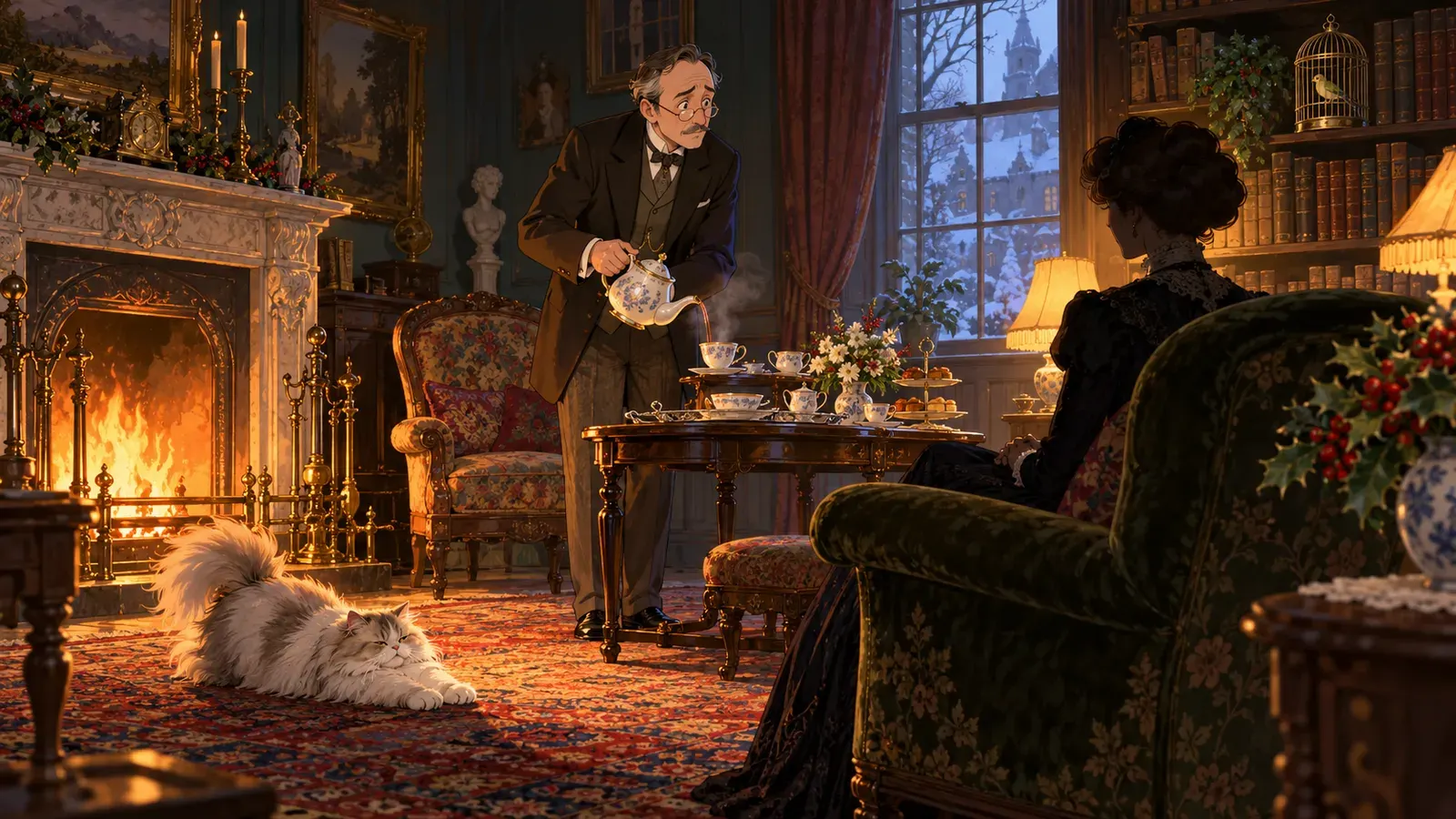
Egbert came into the large, dimly lit drawing-room with the air of a man who is not certain whether he is entering a dovecote or a bomb factory, and is prepared for either eventuality. The little domestic quarrel over the luncheon-table had not been fought to a definite finish, and the question was how far Lady Anne was in a mood to renew or forgo hostilities. Her pose in the arm-chair by the tea-table was rather elaborately rigid; in the gloom of a December afternoon Egbert's pince-nez did not materially help him to discern the expression of her face.
エグバートは、薄暗い広い客間に入ってきた。ハトの小屋に入るのか、爆弾工場に入るのか、自分でもよくわからない。どちらであっても大丈夫なように、覚悟を決めている。そんな男の顔つきだった。昼食の席でのちょっとした夫婦げんかは、はっきり決着がつかないまま終わっていた。問題は、レディ・アンがどこまで戦いを再開する気でいるのか、それとも、ほこを収める気でいるのか、ということだった。お茶のテーブルのそばの肘かけ椅子に座ったアンは、いささかわざとらしいほどに、身をこわばらせていた。十二月の午後の薄暗がりのなかでは、エグバートの鼻眼鏡も、アンの表情を見分けるのに、たいして役に立たなかった。
By way of breaking whatever ice might be floating on the surface he made a remark about a dim religious light. He or Lady Anne were accustomed to make that remark between 4.30 and 6 on winter and late autumn evenings; it was a part of their married life. There was no recognised rejoinder to it, and Lady Anne made none.
水面に浮かんでいるかもしれない氷を、とにかく割ってみようと、エグバートは「ほの暗い、敬虔な光だね」とひとこと口にした。冬や晩秋の夕方、四時半から六時のあいだに、夫か妻のどちらかがこの文句を口にするのが、習わしになっていた。それは二人の結婚生活の一部だった。これにはお決まりの返事というものがなく、レディ・アンも何も答えなかった。
Don Tarquinio lay astretch on the Persian rug, basking in the firelight with superb indifference to the possible ill-humour of Lady Anne. His pedigree was as flawlessly Persian as the rug, and his ruff was coming into the glory of its second winter. The page-boy, who had Renaissance tendencies, had christened him Don Tarquinio. Left to themselves, Egbert and Lady Anne would unfailingly have called him Fluff, but they were not obstinate.
ドン・タルクィニオは、ペルシャじゅうたんの上に長々と寝そべって、暖炉の火にぬくぬくと当たっていた。レディ・アンの機嫌が悪いかもしれないことなど、みごとなまでに気にもとめていない。この猫の血統は、そのじゅうたんと同じく、非の打ちどころのないペルシャで、首まわりの毛は、二度目の冬を迎えて、ちょうど見事な盛りになりかけていた。ルネサンスかぶれの小姓が、ドン・タルクィニオと名づけたのだった。エグバートとレディ・アンにまかせておけば、まちがいなく「フワフワ」とでも呼んでいただろう。だが、二人は意地を張るたちではなかった。
Egbert poured himself out some tea. As the silence gave no sign of breaking on Lady Anne's initiative, he braced himself for another Yermak effort.
エグバートは自分で紅茶をついだ。沈黙をレディ・アンのほうから破る気配はなかった。そこで、エグバートはもう一度、砕氷船のように氷を割る努力をしようと身構えた。
"My remark at lunch had a purely academic application," he announced; "you seem to put an unnecessarily personal significance into it."
「昼食のときのぼくの発言は、まったくの一般論だったんだよ」とエグバートは言った。「きみは、そこに必要以上に、自分のことを言われたような意味を読みこんでいるようだけど」
Lady Anne maintained her defensive barrier of silence. The bullfinch lazily filled in the interval with an air from Iphigenie en Tauride. Egbert recognised it immediately, because it was the only air the bullfinch whistled, and he had come to them with the reputation for whistling it. Both Egbert and Lady Anne would have preferred something from The Yeomen of the Guard, which was their favourite opera. In matters artistic they had a similarity of taste. They leaned towards the honest and explicit in art, a picture, for instance, that told its own story, with generous assistance from its title. A riderless warhorse with harness in obvious disarray, staggering into a courtyard full of pale swooning women, and marginally noted "Bad News", suggested to their minds a distinct interpretation of some military catastrophe. They could see what it was meant to convey, and explain it to friends of duller intelligence.
レディ・アンは、沈黙という防壁をくずさなかった。その合間を、ウソが、オペラ『トーリードのイフィジェニー』の一節を口笛で吹いて、のんびりと埋めた。エグバートには、すぐにその曲だとわかった。このウソが吹ける曲は、それ一曲きりだったし、その曲が吹けるというふれこみで、二人の家にやってきたのだから。エグバートもレディ・アンも、本当は、大好きなオペラ『ヨーマン・オブ・ザ・ガード』の曲のほうがよかったのだが。芸術については、二人の好みはよく似ていた。二人とも、正直で、わかりやすい芸術が好きだった。たとえば、題名に大いに助けてもらって、絵を見ただけで物語がわかるような絵だ。乗り手のいない軍馬が、馬具をすっかり乱したまま、青ざめて気を失いかけた女たちでいっぱいの中庭に、よろよろと入ってくる。そして、わきに『悪い知らせ』と書いてある。そういう絵を見れば、二人には、何か戦で大変なことが起きたのだと、はっきりわかるのだった。その絵が何を伝えようとしているのかがわかり、自分たちより頭の鈍い友人に、説明してやることもできた。
The silence continued. As a rule Lady Anne's displeasure became articulate and markedly voluble after four minutes of introductory muteness. Egbert seized the milk-jug and poured some of its contents into Don Tarquinio's saucer; as the saucer was already full to the brim an unsightly overflow was the result. Don Tarquinio looked on with a surprised interest that evanesced into elaborate unconsciousness when he was appealed to by Egbert to come and drink up some of the spilt matter. Don Tarquinio was prepared to play many roles in life, but a vacuum carpet-cleaner was not one of them.
沈黙は続いた。いつもなら、レディ・アンの不機嫌は、前置きとして四分ほど黙っていたあと、言葉になって、それもひどくおしゃべりになるのだった。エグバートはミルク入れをつかんで、中身をドン・タルクィニオの受け皿についだ。受け皿はもうなみなみといっぱいだったので、みっともなくあふれてしまった。ドン・タルクィニオは驚いたように、興味をもってながめていた。だが、エグバートに、こぼれたのを少しなめてくれないかと頼まれると、その興味は、わざとらしい知らん顔に変わって消えてしまった。ドン・タルクィニオは、この世でいろいろな役を演じるつもりはあったが、電気掃除機の役は、そのなかに入っていなかった。
"Don't you think we're being rather foolish?" said Egbert cheerfully.
「ぼくたち、ちょっとばかげていると思わないかい?」とエグバートは明るく言った。
If Lady Anne thought so she didn't say so.
レディ・アンは、そう思っていたとしても、口には出さなかった。
"I dare say the fault has been partly on my side," continued Egbert, with evaporating cheerfulness. "After all, I'm only human, you know. You seem to forget that I'm only human."
「たぶん、ぼくのほうにも悪いところはあったんだろう」とエグバートは続けた。明るさは、しだいに消えかけていた。「なにしろ、ぼくだって、ただの人間なんだからね。きみは、ぼくがただの人間だってことを忘れているようだけど」
He insisted on the point, as if there had been unfounded suggestions that he was built on Satyr lines, with goat continuations where the human left off.
エグバートはその点を強調した。まるで、自分が神話のサテュロスのように、人間の体の続きが山羊になっている、とでもいう根も葉もないうわさがあったかのように。
The bullfinch recommenced its air from Iphigenie en Tauride. Egbert began to feel depressed. Lady Anne was not drinking her tea. Perhaps she was feeling unwell. But when Lady Anne felt unwell she was not wont to be reticent on the subject. "No one knows what I suffer from indigestion" was one of her favourite statements; but the lack of knowledge can only have been caused by defective listening; the amount of information available on the subject would have supplied material for a monograph.
ウソが、また『トーリードのイフィジェニー』の一節を吹きはじめた。エグバートは気がめいってきた。レディ・アンは紅茶を飲んでいない。ひょっとしたら、具合が悪いのかもしれない。だが、レディ・アンは、具合が悪いときに、そのことを黙っているような人ではなかった。「わたしが胃もたれでどんなに苦しんでいるか、誰にもわかりはしないのよ」というのが、お気に入りの文句の一つだった。だが、もし誰にもわからないのだとしたら、それは聞く側がちゃんと聞いていないせいにちがいない。その件について聞かされた話を集めたら、研究論文が一冊書けるほどだったのだから。
Evidently Lady Anne was not feeling unwell.
どうやら、レディ・アンは具合が悪いわけではないらしかった。
Egbert began to think he was being unreasonably dealt with; naturally he began to make concessions.
エグバートは、自分が理不尽な扱いを受けているような気がしてきた。そうなると、当然、エグバートは折れはじめた。
"I dare say," he observed, taking as central a position on the hearth-rug as Don Tarquinio could be persuaded to concede him, "I may have been to blame. I am willing, if I can thereby restore things to a happier standpoint, to undertake to lead a better life."
「たぶん」とエグバートは、暖炉の前の敷物の、まんなかに陣取りながら言った。もっとも、ドン・タルクィニオがゆずってくれた範囲でのまんなかだったが。「ぼくが悪かったのかもしれない。それでまた前のように仲よくやれるなら、心を入れかえて、行いをあらためると約束してもいい」
He wondered vaguely how it would be possible. Temptations came to him, in middle age, tentatively and without insistence, like a neglected butcher-boy who asks for a Christmas box in February for no more hopeful reason that than he didn't get one in December. He had no more idea of succumbing to them than he had of purchasing the fish-knives and fur boas that ladies are impelled to sacrifice through the medium of advertisement columns during twelve months of the year. Still, there was something impressive in this unasked-for renunciation of possibly latent enormities.
そんなことがどうしたらできるのか、エグバートはぼんやりと考えた。中年になったエグバートのところへ、誘惑がやってくることがあっても、それはおずおずと、ちっともしつこくなくやってくるのだった。ちょうど、ほうっておかれた肉屋の小僧が、十二月にもらえなかったというだけの、たいして望みもない理由で、二月になって年末のご祝儀をねだりにくるようなものだ。エグバートには、そんな誘惑に負けるつもりなど、まったくなかった。新聞の広告欄につられて、ご婦人がたが一年じゅう買わされている魚用ナイフや毛皮の襟巻きを、自分が買うつもりがないのと同じことだ。それでも、自分の中にひそんでいるかもしれない悪の数々を、頼まれもしないのに捨ててみせるというのには、どこか感動的なところがあった。
Lady Anne showed no sign of being impressed.
レディ・アンは、少しも感動した様子を見せなかった。
Egbert looked at her nervously through his glasses. To get the worst of an argument with her was no new experience. To get the worst of a monologue was a humiliating novelty.
エグバートは、眼鏡ごしに、おどおどと妻を見た。妻との言い争いで負けるのは、べつに初めてのことではない。だが、ひとりでしゃべっているだけなのに負けるというのは、屈辱的な初めての経験だった。
"I shall go and dress for diner," he announced in a voice into which he intended some shade of sternness to creep.
「夕食の着替えをしてくる」とエグバートは言った。その声に、いくらかきびしさがにじむようにしたつもりだった。
At the door a final access of weakness impelled him to make a further appeal.
ドアのところで、最後にどうしても弱気がこみ上げてきて、エグバートはもう一度訴えた。
"Aren't we being very silly?"
「ぼくたち、ずいぶんばかなことをしていると思わないか?」
"A fool" was Don Tarquinio's mental comment as the door closed on Egbert's retreat. Then he lifted his velvet forepaws in the air and leapt lightly on to a bookshelf immediately under the bullfinch's cage. It was the first time he had seemed to notice the bird's existence, but he was carrying out a long-formed theory of action with the precision of mature deliberation. The bullfinch, who had fancied himself something of a despot, depressed himself of a sudden into a third of his normal displacement; then he fell to a helpless wing-beating and shrill cheeping. He had cost twenty-seven shillings without the cage, but Lady Anne made no sign of interfering. She had been dead for two hours.
「ばかなやつ」と、エグバートが退却していったあとでドアが閉まると、ドン・タルクィニオは心の中で思った。それから、ビロードのような前足を宙に上げると、ウソの鳥かごのすぐ下の本棚へ、軽やかに飛び乗った。この猫がウソに気づいたそぶりを見せたのは、これが初めてだった。だが実は、長いあいだ温めてきた作戦を、じっくり考えた末の正確さで実行に移していたのだ。自分のことをちょっとした暴君だとうぬぼれていたウソは、いきなり、ふだんの三分の一くらいに縮みあがった。それから、どうしようもなく羽をばたつかせ、甲高い声でぴいぴい鳴きはじめた。このウソは、鳥かごぬきで二十七シリングもしたのだが、レディ・アンはやめさせようとするそぶりも見せなかった。レディ・アンは、二時間前に死んでいたのだ。