
 約6分
 3:03
 全訳つき
 お道具箱
 読書ラウンジ
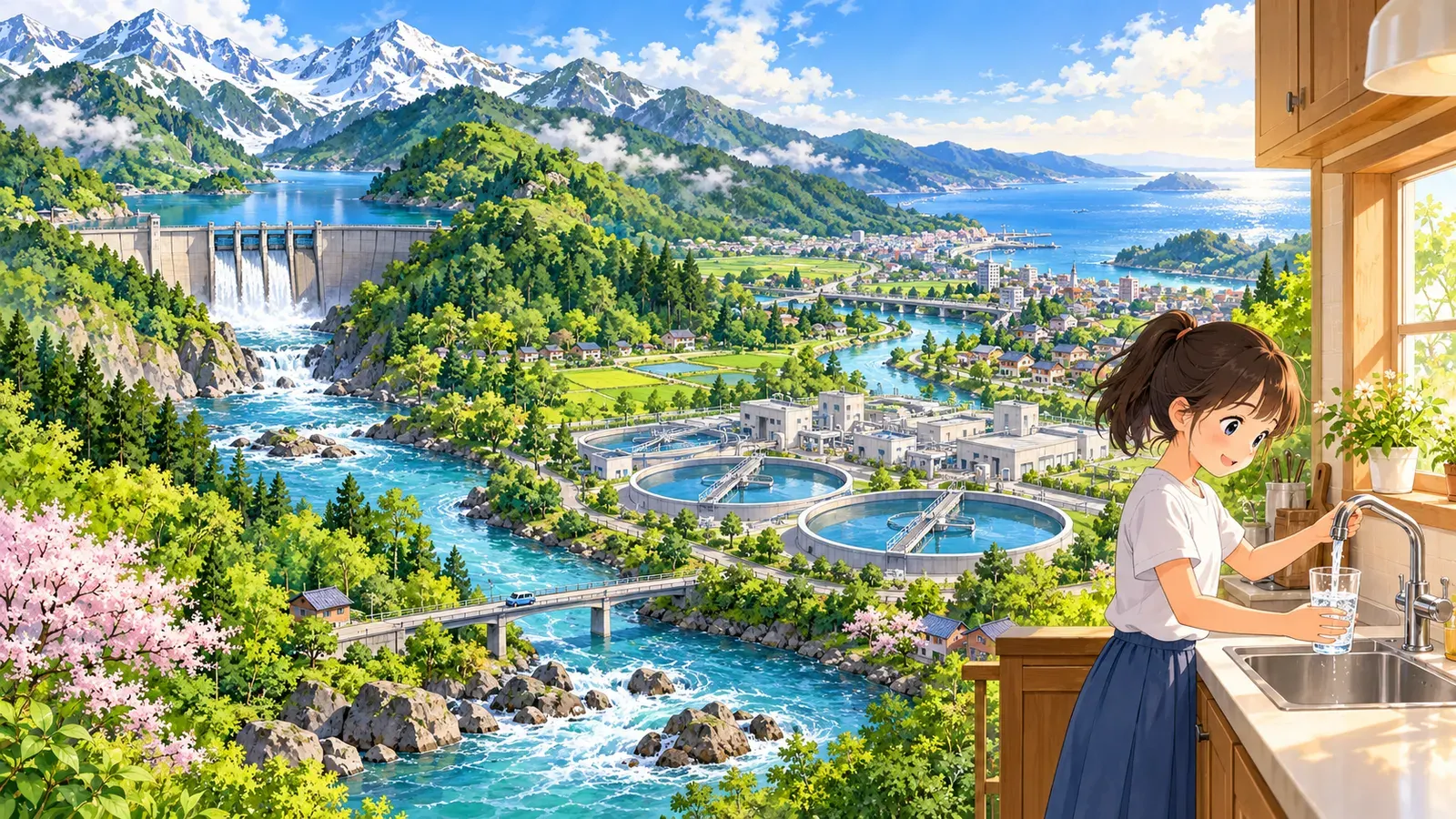
A student named Yuna was brushing her teeth one morning. She turned on the tap, and clean water came out, as always. Then she had a question. "Where does this water come from?" At school that day, she asked her science teacher.
ある朝、ユナという生徒が歯をみがいていました。蛇口をひねると、いつものようにきれいな水が出てきました。そのとき、ユナはふと疑問に思いました。「この水は、どこから来るんだろう?」その日、ユナは学校で理科の先生に聞いてみました。
Her teacher smiled and drew a picture on the board. "It starts as rain and snow," he said. "The rain falls on the mountains. Then it goes into rivers, lakes, and the ground." Many cities build dams to keep river water for dry seasons. Some towns also use water from deep under the ground.
先生はにっこり笑って、黒板に絵をかきました。「始まりは雨や雪なんだよ」と先生は言いました。「雨は山に降る。それから川や湖、地面の中に入っていくんだ」多くの町では、雨の少ない季節のために、ダムをつくって川の水をためています。地下深くの水を使っている町もあります。
Next, the water goes to a water purification plant. There, workers take out sand, dirt, and very small living things. They also add a little chlorine to kill germs. After that, the clean water travels through long pipes under the streets to homes, schools, and shops.
次に、水は浄水場に運ばれます。浄水場では、砂や泥、目に見えないほど小さな生き物を取りのぞきます。ばい菌を殺すために、塩素も少し加えます。そのあと、きれいになった水は、道路の下を通る長い水道管を通って、家や学校やお店に届けられます。
After we use water, it does not just disappear. It goes into sewer pipes and then to a sewage treatment plant. The plant cleans the water, and then the water goes back into rivers or the sea. Later, the sun warms the sea, the water goes up into the sky, and it becomes rain again. Water travels in a big circle.
使った水は、そのまま消えてしまうわけではありません。下水管を通って、下水処理場に運ばれます。処理場で水をきれいにしてから、川や海に戻すのです。やがて太陽が海を温めると、水は空にのぼり、また雨になります。水は大きな輪をえがいて旅をしているのです。
Japan gets a lot of rain. Every year, it gets more rain than the world average. But Japan has many people and not much land, so the amount of rain for each person is only about one fourth of the world average. Also, rivers in Japan are short and steep. After a heavy rain, much of the water runs into the sea very quickly.
日本は雨の多い国です。毎年、世界の平均より多くの雨が降ります。けれども日本は人口が多く、土地がせまいので、一人あたりの雨の量は、世界の平均の4分の1ほどしかありません。また、日本の川は短く、流れが急です。大雨が降っても、その水の多くはあっという間に海へ流れていってしまいます。
In Japan, people can drink water right from the tap. This is not true in many countries. In 2024, about one in four people in the world did not have safe drinking water that they could easily get at home.
日本では、蛇口から出る水をそのまま飲むことができます。でも、多くの国ではそうはいきません。2024年には、世界の約4人に1人が、家ですぐに手に入る安全な飲み水を持っていませんでした。
Here is another surprising fact. Most of the water on the earth is salt water in the sea. Only about 2.5 percent is fresh water, and most of that is ice or water deep under the ground. The water that people can easily use is only about 0.01 percent of all the water on the earth.
もう一つ、おどろくような事実があります。地球の水のほとんどは、海の塩水です。真水は約2.5パーセントしかなく、しかもその大部分は氷か、地下深くにある水です。人がかんたんに使える水は、地球の水全体のたった0.01パーセントほどなのです。
Japan also has a new problem. Many water pipes were put under the ground a long time ago, when Japanese cities were growing fast. Now they are getting old, and some of them break and leak. Fixing them costs a lot of money, so in some towns, people may have to pay more for water.
日本には、新しい問題もあります。水道管の多くは、日本の都市が急に大きくなっていったころ、ずっと昔に地面の下にうめられました。それが今、古くなってきて、こわれたり水がもれたりするものも出てきています。直すのにはたくさんのお金がかかるので、町によっては水道料金が上がるかもしれません。
That evening, Yuna turned off the tap while she was brushing her teeth. "Water takes a long trip to get to my home," she thought. "I should not waste it."
その夜、ユナは歯をみがいている間、蛇口を閉めておきました。「水は長い旅をして、わたしの家まで来てくれるんだ」とユナは思いました。「むだにしちゃいけないな」
What do you think? Some people say that we should drink tap water, because it is cheap and safe, and it does not make plastic waste. Others say that bottled water is sometimes better, because it is easy to carry and useful to keep at home for disasters.
あなたはどう思いますか。水道の水を飲むべきだ、と言う人もいます。安くて安全で、プラスチックのごみも出ないからです。一方、ペットボトルの水のほうがよいときもある、と言う人もいます。持ち運びやすく、災害に備えて家に置いておくのにも役立つからです。
 3段落目に「take out sand, dirt, and very small living things.」(砂や泥、小さな生物を取り除く)とあります。塩は加えません。

 原田英語の究極の英単語帳(CEFR-J 6,868語)
 聞くだけモードで、文字を見ずに内容がわかるか試す。
 1文リピートで音読・シャドーイングも。
 世界の名作童話