



 約6分
 2:49
 全訳つき
 お道具箱
 読書ラウンジ
One morning in April, our teacher came into the classroom with a new student. "This is Mariana," he said. "She came to Japan from Brazil last month." Mariana bowed and said, "Nice to meet you," in Japanese. Her voice was very quiet. My name is Yuna, and that day I sat next to her.
4月のある朝、先生が新しい生徒を連れて教室に入ってきました。「こちらはマリアナさんです」と先生は言いました。「先月、ブラジルから日本に来ました」。マリアナはおじぎをして、日本語で「はじめまして」と言いました。とても小さな声でした。わたしの名前はユナです。その日、わたしはマリアナのとなりの席になりました。
Mariana is not the only student like this. More and more children from other countries are coming to Japanese schools with their families. In 2025, about 85,000 students in Japan's public schools needed special help with the Japanese language. Many of them speak Chinese or Portuguese at home.
マリアナのような生徒は、ほかにもいます。家族と一緒に外国から来て、日本の学校に通う子どもは、どんどん増えています。2025年には、日本の公立学校で約8万5000人の児童生徒が、日本語の特別な手助けを必要としていました。その多くは、家では中国語やポルトガル語を話しています。
The first weeks were hard for Mariana. She could not read the kanji on the blackboard, and she did not understand the teacher's jokes. At lunch, she ate quietly and looked out of the window. Once, I saw her crying in the hallway. I wanted to help her, but I did not know any Portuguese.
最初の何週間かは、マリアナにとってつらい毎日でした。黒板の漢字は読めませんし、先生の冗談も分かりません。給食の時間には、黙って食べながら、窓の外をながめていました。一度、廊下で泣いているマリアナを見かけたこともあります。助けてあげたいと思いましたが、わたしはポルトガル語をひとことも知りませんでした。
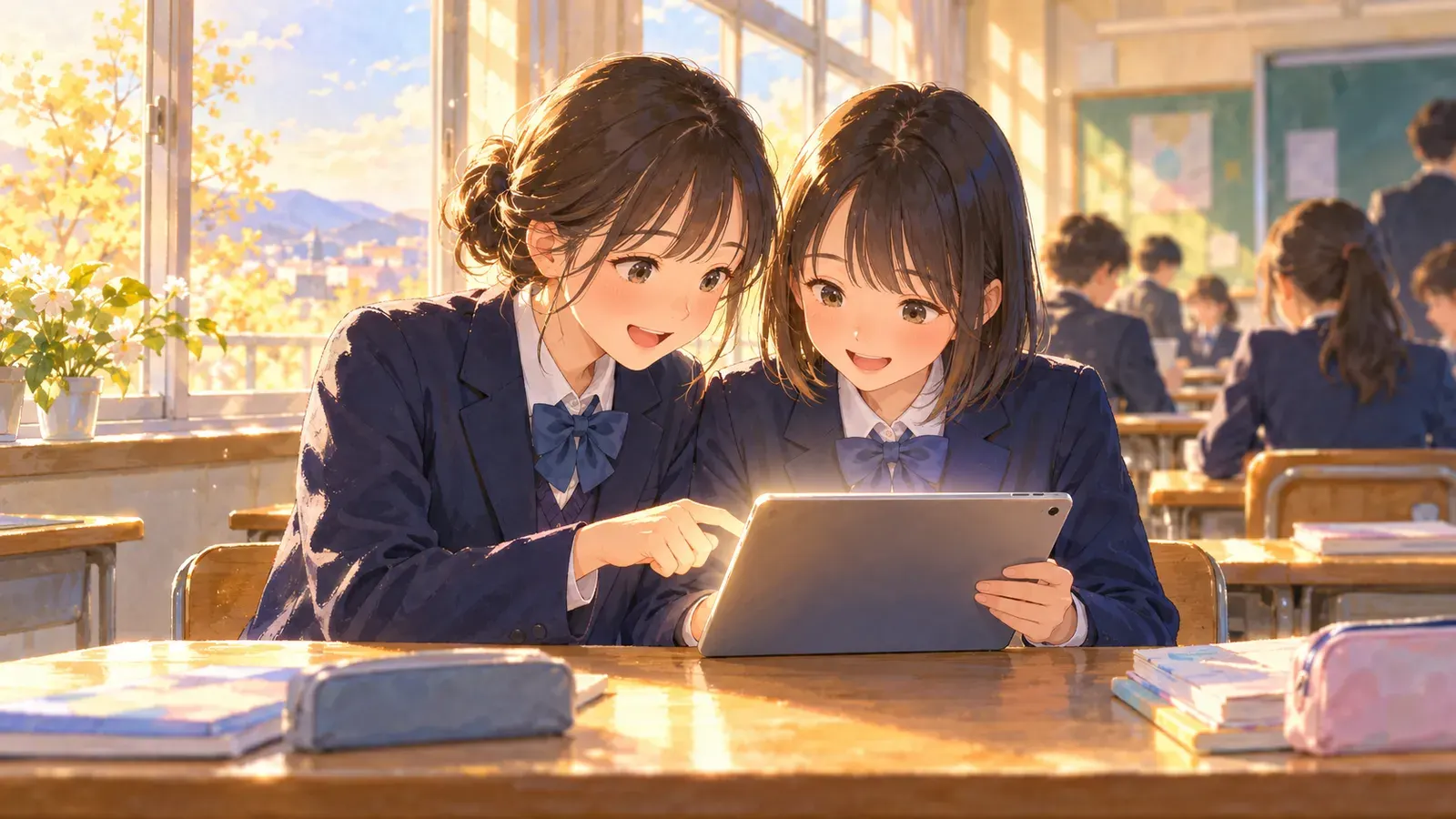
Then I had an idea. I used a translation app on my school tablet. "Do you like music?" I typed. Her face lit up. She showed me a video of samba dancers from her hometown, and I showed her my favorite Japanese song. We laughed a lot, and I found out that we did not need many words to have fun.
そのとき、いい考えが浮かびました。学校のタブレットの翻訳アプリを使ったのです。「音楽は好き?」と打ちこむと、マリアナの顔がぱっと明るくなりました。マリアナはふるさとの町のサンバのダンサーの動画を見せてくれて、わたしは大好きな日本の歌を聞かせました。二人でたくさん笑いました。楽しむのに、言葉はそれほどいらないのだと分かりました。
After that, we helped each other. I taught Mariana easy Japanese words, and I tried to speak slowly and use short sentences. She taught me how to say "thank you" in Portuguese. It is "obrigada." Twice a week, she also went to a special Japanese class at our school. Little by little, her Japanese got better.
それからは、おたがいに助け合うようになりました。わたしはマリアナにやさしい日本語の言葉を教え、ゆっくり、短い文で話すようにしました。マリアナは、ポルトガル語で「ありがとう」をどう言うのかを教えてくれました。「オブリガーダ」です。マリアナは週に2回、学校の日本語の特別な授業にも通いました。少しずつ、日本語が上手になっていきました。
Our class learned a lot, too. One day, Mariana told us about Christmas in Brazil. It is summer there in December, so some families eat outside or go to the beach. We were all surprised. Before I met her, Brazil was just a country on the map. Now it is the home of my friend.
クラスのみんなも、たくさんのことを学びました。ある日、マリアナがブラジルのクリスマスの話をしてくれました。ブラジルでは12月は夏なので、外で食事をしたり、海に行ったりする家族もいるそうです。みんなびっくりしました。マリアナに会うまで、わたしにとってブラジルは地図の上の国にすぎませんでした。今では、友だちのふるさとです。
Of course, it is not always easy for students from abroad. Some schools do not have enough teachers who can teach Japanese. These students may also fall behind in math and science, because they cannot understand the words in the textbooks. Some parents cannot read the letters from the school, so they do not know about school events.
もちろん、外国から来た生徒にとって、いつも楽なわけではありません。日本語を教えられる先生が足りない学校もあります。教科書の言葉が分からないために、数学や理科の勉強で遅れてしまうこともあります。学校からのお知らせが読めず、学校の行事を知らないままになってしまう親もいます。
Now, six months later, Mariana answers questions in class and laughs at the teacher's jokes. Last week, she said to me, "Yuna, you were my first friend in Japan." I felt very happy. I learned that a smile and a little help can make a big difference.
あれから半年がたちました。今ではマリアナは授業で質問に答え、先生の冗談に笑っています。先週、マリアナはわたしに「ユナは、日本でできた最初の友だちだよ」と言ってくれました。わたしはとてもうれしくなりました。笑顔とちょっとした手助けが、大きな違いを生むのだと分かりました。
What do you think? Some people say that students from abroad should study in special Japanese classes first, because they can learn the language faster there. Others say that they should study with everyone in a normal class, because they can make friends and learn Japanese naturally.
あなたはどう思いますか。外国から来た生徒は、まず日本語の特別な教室で勉強するべきだ、と言う人もいます。そのほうが早く言葉を覚えられるからです。一方、ふつうのクラスでみんなと一緒に勉強するべきだ、と言う人もいます。友だちができ、日本語も自然に身につくからです。
 1段落目に「She came to Japan from Brazil last month.」(先月ブラジルから日本に来た)とあります。

 原田英語の究極の英単語帳(CEFR-J 6,868語)

 聞くだけモードで、文字を見ずに内容がわかるか試す。
 1文リピートで音読・シャドーイングも。

 日本の昔話と名作