 約7分
 3:08
 全訳つき
 お道具箱
 読書ラウンジ
It was lunchtime at a junior high school in Japan. A student named Yuna put her hands under the water for two seconds and went back to her desk. "You didn't even use soap," her friend Mei said with a laugh. "Why does it matter?" Yuna answered. "My hands look clean."
日本のある中学校の、お昼の時間のことです。ユナという生徒が、水に手を2秒だけ当てて、自分の席に戻りました。「せっけんも使ってないじゃない」と、友だちのメイが笑いながら言いました。「それがどうしたの?」とユナは答えました。「手はきれいに見えるよ。」
Many people think like Yuna. But germs are too small to see. They live on door handles, phones, and desks, and can move to our hands. When we touch our eyes, nose, or mouth, they can get into our bodies and make us sick. Washing with soap is one of the easiest ways to stop them.
ユナのように考える人はたくさんいます。でも、細菌は小さすぎて目に見えません。ドアの取っ手やスマホ、机の上にいて、わたしたちの手に移ることがあります。その手で目や鼻、口をさわると、細菌が体の中に入って、病気を引き起こすことがあるのです。せっけんで手を洗うのは、細菌を防ぐいちばん簡単な方法の一つです。
But less than two hundred years ago, even doctors did not wash their hands. One of the first people to understand the danger was a doctor named Ignaz Semmelweis. In 1846, he started working at a big hospital in Vienna, Austria.
ところが、ほんの200年足らず前には、医者でさえ手を洗っていませんでした。その危険に最初に気づいた人の一人が、イグナーツ・ゼンメルワイスという医者です。1846年、彼はオーストリアのウィーンにある大きな病院で働き始めました。
The hospital had two rooms where women had their babies. In the first room, many mothers became sick with a fever and died. For years, about one mother in ten died there. In the second room, far fewer mothers died. Some women were so afraid of the first room that they begged to go to the second one.
その病院には、女性が赤ちゃんを産むための部屋が二つありました。一つ目の部屋では、多くのお母さんが熱を出して亡くなっていました。何年もの間、そこでは10人に1人ほどのお母さんが亡くなっていたのです。二つ目の部屋では、亡くなるお母さんはずっと少数でした。一つ目の部屋をあまりに怖がって、二つ目の部屋に入れてほしいと頼み込む女性もいました。
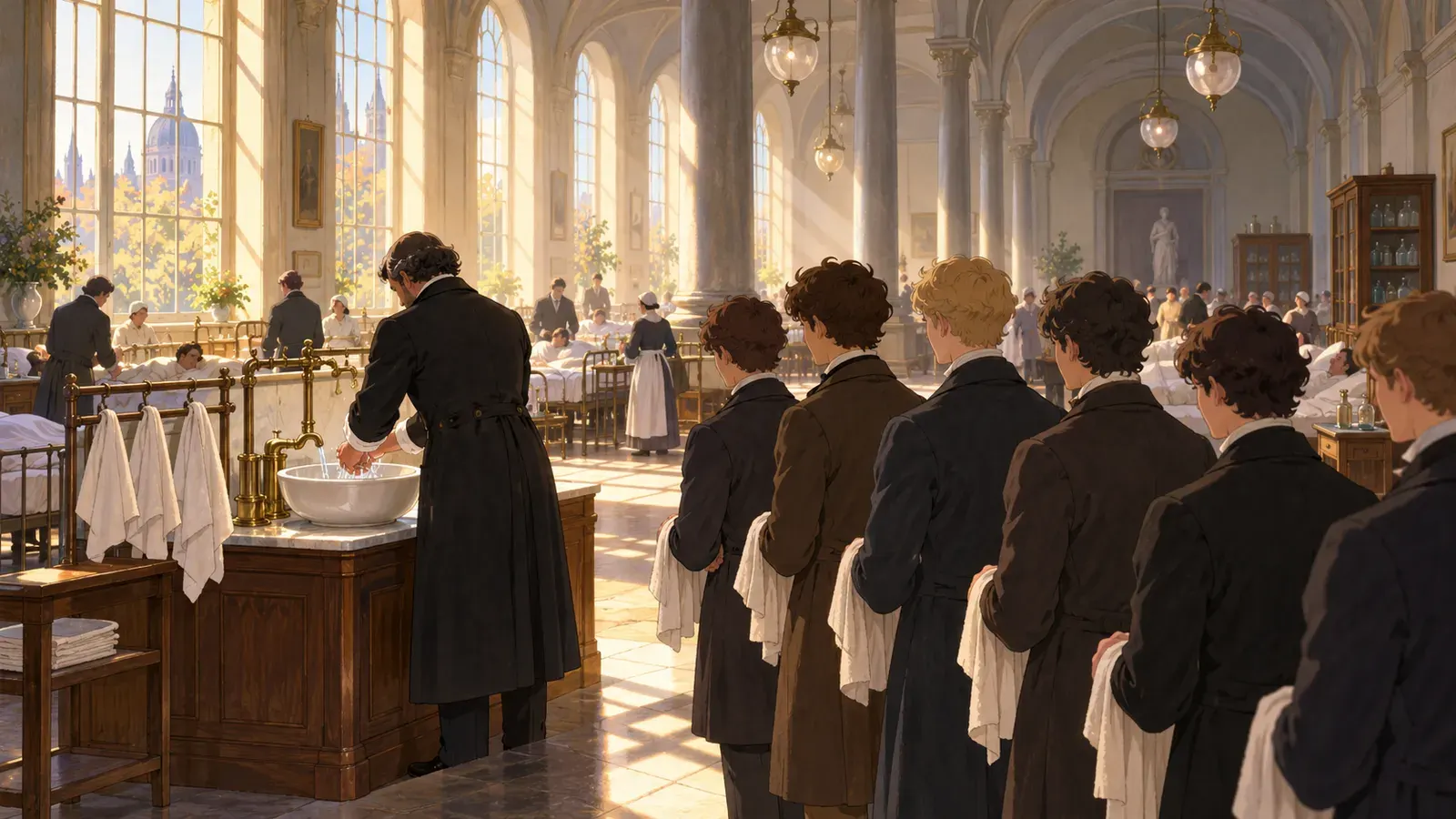
Semmelweis wanted to know why. He found one big difference. In the first room, doctors and medical students took care of the mothers. Before that, they often studied dead bodies to learn about disease. In the second room, midwives took care of the mothers, and they did not touch dead bodies. Semmelweis began to believe that the doctors were carrying something deadly on their hands.
ゼンメルワイスは、その理由を知りたいと思いました。そして、一つの大きな違いに気づきました。一つ目の部屋でお母さんたちの世話をしていたのは、医者と医学生でした。彼らはその前に、病気について学ぶため、よく遺体を調べていました。二つ目の部屋でお母さんたちの世話をしていたのは助産師で、遺体にはさわりませんでした。ゼンメルワイスは、医者たちが手に何か命に関わるものをつけて運んでいるのではないか、と考えるようになりました。
In 1847, he made a new rule. Before they touched a mother, all the doctors had to wash their hands in water with a strong chemical called chlorine. The results were amazing. Soon, only about one or two mothers in a hundred died in the first room. His simple rule was saving many lives.
1847年、彼は新しい決まりを作りました。お母さんにさわる前に、医者は全員、塩素という強い薬品を入れた水で手を洗わなければならない、というものです。結果は驚くべきものでした。まもなく、一つ目の部屋で亡くなるお母さんは、100人に1人か2人ほどになったのです。この簡単な決まりが、たくさんの命を救っていました。
But many doctors did not believe him. At that time, most doctors did not know that germs could cause disease, and Semmelweis could not explain why washing worked. Some doctors were angry at the idea that their own hands were making people sick. Semmelweis had to leave Vienna, and he died in 1865, before most doctors accepted his idea.
ところが、多くの医者は彼の言うことを信じませんでした。当時はまだ、細菌が病気を引き起こすことを知っている医者はほとんどいませんでした。ゼンメルワイス自身も、手を洗うとなぜ効くのかを説明できなかったのです。自分の手が人を病気にしているという考えに、腹を立てる医者もいました。ゼンメルワイスはウィーンを去ることになり、ほとんどの医者が彼の考えを受け入れる前の1865年に亡くなりました。
Later, scientists such as Louis Pasteur showed that tiny living things can cause disease. Then doctors understood that Semmelweis was right. Today, he is sometimes called "the savior of mothers."
その後、ルイ・パスツールなどの科学者が、目に見えないほど小さな生き物が病気を引き起こすことを明らかにしました。そこで医者たちは、ゼンメルワイスが正しかったことを理解したのです。今では、彼は「母親たちの救い主」と呼ばれることもあります。
So how should we wash our hands? Health experts say we should use soap and rub our hands for at least twenty seconds. That is about as long as singing "Happy Birthday" two times. Every year, October 15 is Global Handwashing Day, a day to remind people of this simple habit.
では、手はどのように洗えばよいのでしょうか。健康の専門家は、せっけんを使って、少なくとも20秒間は手をこすり合わせるように、と言っています。「ハッピーバースデー」の歌を2回歌うくらいの長さです。毎年10月15日は「世界手洗いの日」で、この簡単な習慣を人々に思い出してもらうための日になっています。
After she heard this story, Yuna went back to the sink. This time, she used soap and counted slowly to twenty. "It takes time," she said, "but I don't want to catch a cold before my exams."
この話を聞いたあと、ユナは手洗い場に戻りました。今度はせっけんを使って、ゆっくり20まで数えました。「時間はかかるけど」とユナは言いました。「試験の前に風邪をひきたくないからね。」
What do you think? Some people say schools should give students a few minutes to wash their hands before every lunch, because it can stop colds from spreading. Others say students are old enough to do it by themselves, so schools do not need to make a rule.
あなたはどう思いますか。学校は毎日、昼食の前に手を洗う時間を生徒に数分あげるべきだ、と言う人もいます。風邪が広がるのを防げるからです。一方、生徒はもう自分でできる年なのだから、学校が決まりを作る必要はない、と言う人もいます。
 4段落目に「many mothers became sick with a fever and died.」(多くの母親が熱を出して亡くなった)とあります。
 原田英語の究極の英単語帳(CEFR-J 6,868語)
 聞くだけモードで、文字を見ずに内容がわかるか試す。
 1文リピートで音読・シャドーイングも。




 世界の名作童話