

 約6分
 2:47
 全訳つき
 お道具箱
 読書ラウンジ
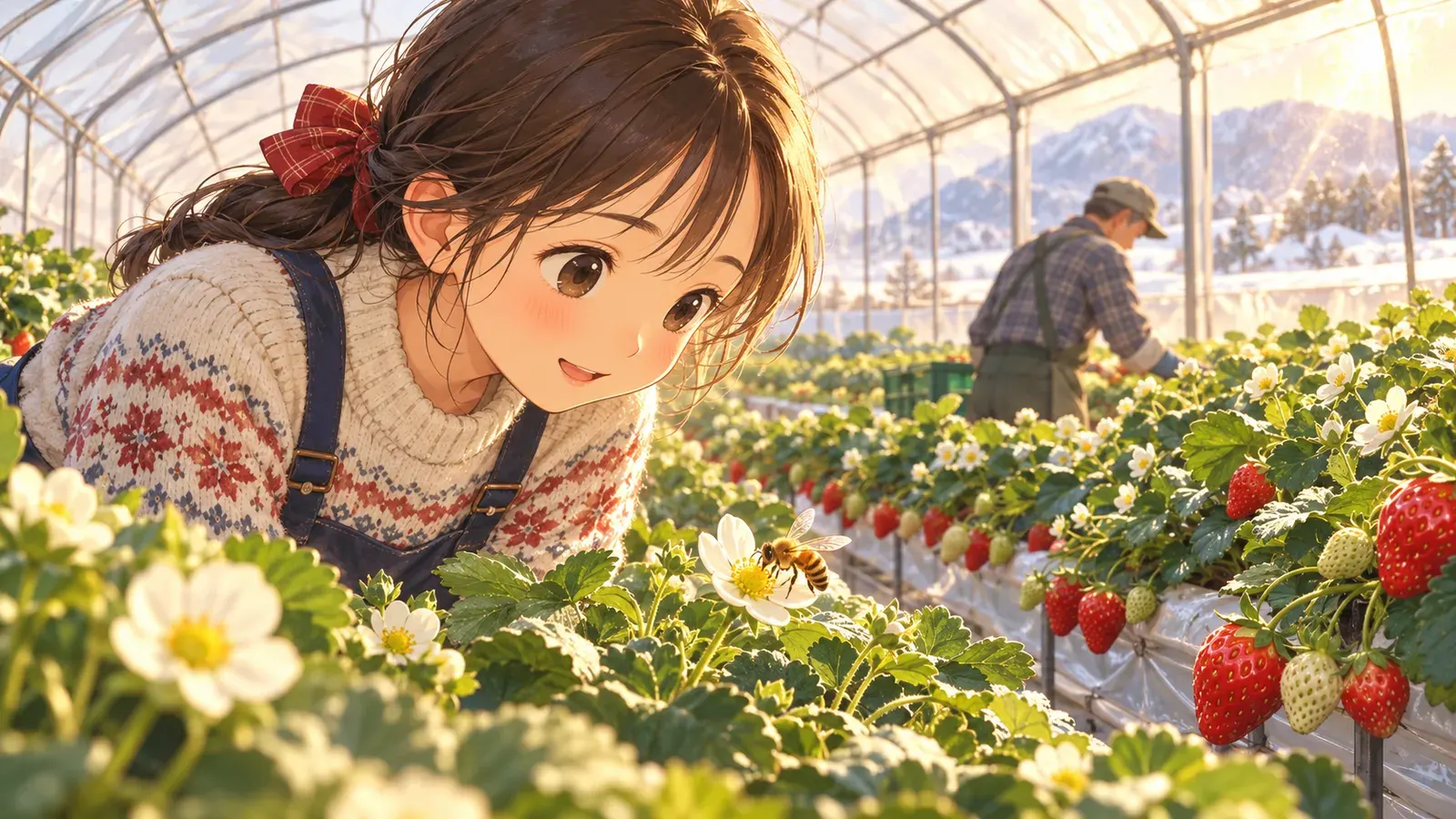
Mio loves strawberries. One winter day, she visited her uncle's strawberry farm. Inside the warm greenhouse, she saw something surprising. Many small bees were flying from flower to flower. "Why are there bees in here?" she asked.
ミオはイチゴが大好きです。ある冬の日、ミオはおじさんのイチゴ農園をたずねました。暖かいビニールハウスに入ると、思いがけないものが目に入りました。たくさんの小さなハチが、花から花へと飛び回っていたのです。「どうしてハウスの中にハチがいるの?」とミオはたずねました。
Her uncle smiled. "They are my most important workers," he said. "Without them, I can't grow good strawberries." To make fruit, a flower needs pollen. When bees look for food, they carry pollen from one flower to another. This is called pollination.
おじさんはにっこりしました。「いちばん大事な働き手なんだよ。ハチがいなかったら、いいイチゴは育てられないんだ」。花が実をつけるには、花粉が必要です。ハチはえさを探すとき、ある花から別の花へ花粉を運びます。これを受粉といいます。
Bees do this work for many other plants, too. Apples, melons, pumpkins, almonds, and coffee all get help from bees and other animals. A big international report in 2016 said that animal pollination helps more than three quarters of the main kinds of food crops in the world. It can give farmers more fruit or better fruit. So when we eat fruit and vegetables, we should thank the bees.
ハチは、ほかの多くの植物のためにも、この仕事をしています。リンゴ、メロン、カボチャ、アーモンド、コーヒーは、どれもハチなどの動物に助けてもらっています。2016年のある大きな国際的な報告書によると、世界の主な食用作物の4分の3以上で、動物による受粉が役に立っています。受粉のおかげで、実がたくさんなったり、質のよい実ができたりするのです。ですから、果物や野菜を食べるときは、ハチに感謝しなければなりませんね。
There are more than 20,000 kinds of wild bees in the world. Honeybees are the most famous, because they make honey and live in large groups. A healthy hive can have tens of thousands of bees. Honeybees can even "dance" to tell other bees where to find flowers.
世界には、2万種以上の野生のハチがいます。いちばん有名なのはミツバチです。はちみつを作り、大きな群れで暮らしているからです。元気な巣には、何万匹ものハチがいることもあります。ミツバチは「ダンス」をして、花のある場所をほかのハチに教えることさえできます。
But bees are in trouble. The same report said that in some parts of the world, many kinds of bees and butterflies are in danger of dying out. There are several reasons. People cut down forests and destroy fields of wildflowers to build roads, houses, and big farms. Some chemicals used on farms can hurt bees. Diseases, tiny insects called mites, and climate change also make life hard for them.
ところが、ハチは今、困った状況にあります。同じ報告書によると、世界の一部の地域では、多くの種類のハチやチョウが絶滅の危機にあります。理由はいくつかあります。人間は、道路や家、大きな農場をつくるために、森を切りひらき、野の花が咲く野原をこわしています。農場で使われる薬品の中には、ハチに害を与えるものがあります。病気や、ダニという小さな虫、気候変動も、ハチの暮らしを苦しくしています。
In 2009, farmers in Japan had a big problem. There were not enough honeybees for their greenhouses, and some farmers could not get the bees they needed. People suddenly understood how much we depend on these small insects.
2009年、日本の農家は大きな問題をかかえました。ビニールハウスで使うミツバチが足りなくなり、必要なハチを手に入れられない農家も出たのです。人々は、この小さな虫にどれほど頼っているかを、急に思い知らされました。
Today, many people are trying to help bees. Some farmers use fewer chemicals. Some towns plant flowers along roads and in parks. In Tokyo, a group of people started keeping honeybees on the roof of a building in Ginza in 2006. The bees visit flowers in the parks and streets nearby, and the group now collects honey every year. The United Nations also made May 20 World Bee Day.
今、多くの人がハチを助けようとしています。薬品を減らしている農家もあります。道ばたや公園に花を植えている町もあります。東京では2006年に、ある人たちが銀座のビルの屋上でミツバチを飼い始めました。ハチたちは近くの公園や通りの花を訪れ、今では毎年はちみつがとれています。国連も、5月20日を「世界ミツバチの日」と定めました。
Mio decided to help, too. When she got home, she planted flowers in pots on her balcony. A few weeks later, a small bee came to visit. "Welcome," Mio said with a smile.
ミオも、何か手伝おうと決めました。家に帰ると、ベランダの植木鉢に花を植えました。数週間後、小さなハチが一匹やって来ました。「いらっしゃい」とミオはにっこりして言いました。
What do you think? Some people say that farmers should stop using chemicals that may hurt bees, because bees are necessary for our food. Others say that farmers still need these chemicals, because insects and diseases can destroy their crops.
あなたはどう思いますか。ハチに害を与えるかもしれない薬品を、農家は使うのをやめるべきだ、と言う人もいます。ハチは私たちの食べ物に欠かせないからです。一方、農家にはまだこうした薬品が必要だ、と言う人もいます。害虫や病気で、作物がだめになってしまうことがあるからです。
 2段落目に「Without them, I can't grow good strawberries.」(ハチなしでは良いイチゴを育てられない)とあります。

 原田英語の究極の英単語帳(CEFR-J 6,868語)

 聞くだけモードで、文字を見ずに内容がわかるか試す。
 1文リピートで音読・シャドーイングも。




 世界の名作童話