



 約7分
 3:60
 全訳つき
 お道具箱
 読書ラウンジ
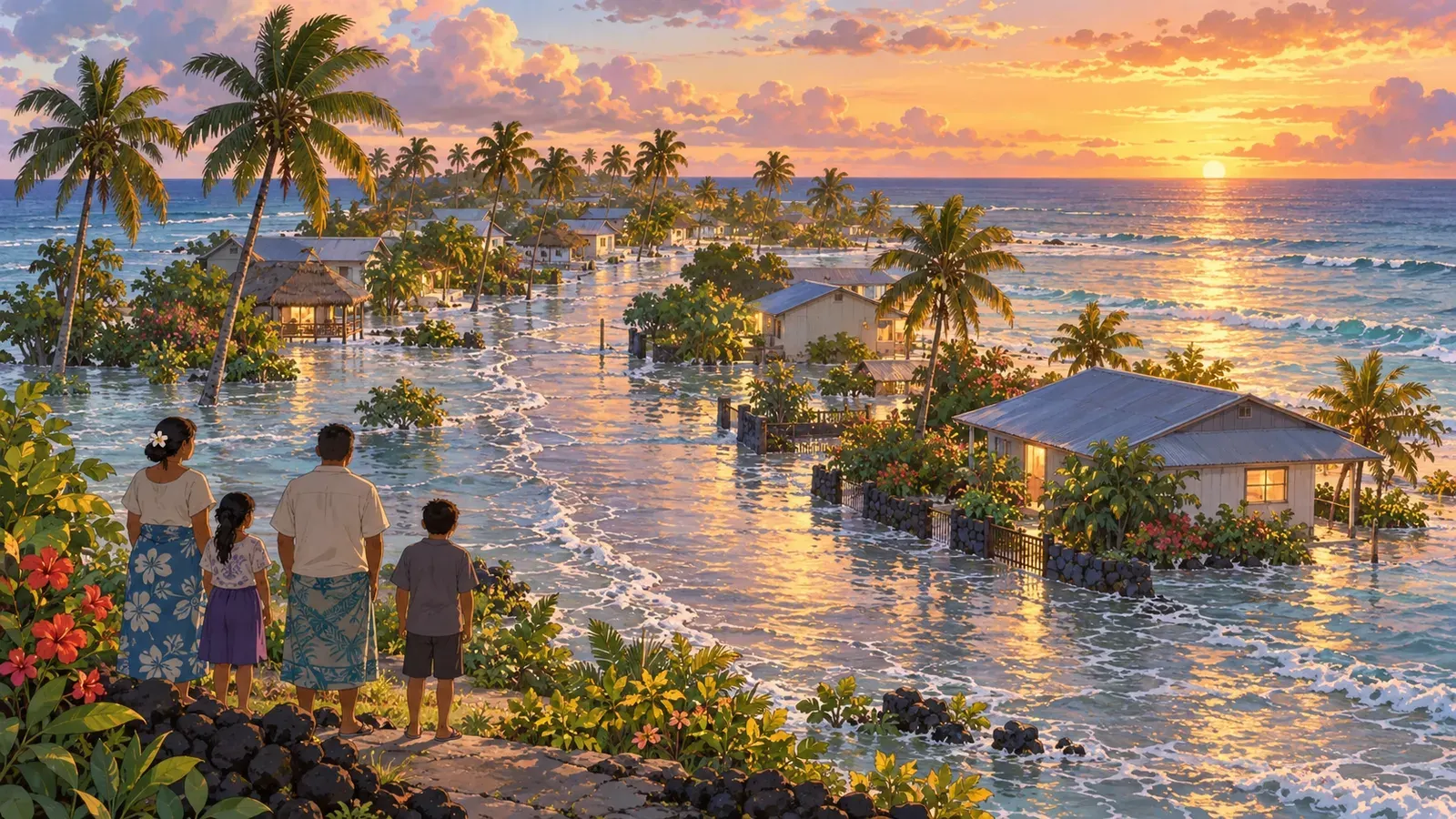
Imagine a country where most of the land is less than two meters above the sea. That country is real. Tuvalu is a small island nation in the Pacific Ocean, about halfway between Hawaii and Australia. About 11,000 people live there, on nine small, low islands. For the people of Tuvalu, rising seas are not a problem of the future. They are already part of daily life.
国土のほとんどが、海面から2メートルもない国を想像してみてください。そんな国が本当にあるのです。ツバルは太平洋にある小さな島国で、ハワイとオーストラリアのほぼ中間にあります。九つの小さく低い島々に、およそ1万1000人が暮らしています。ツバルの人々にとって、海面上昇は将来の問題ではありません。すでに毎日の暮らしの一部になっているのです。
Around the world, the sea has been slowly rising. Between 1901 and 2018, the average sea level rose by about 20 centimeters. That may not sound like much, but the speed is increasing. In 2024, scientists at NASA reported that the sea was rising more than twice as fast as it was in 1993. They also said that if this speed continues to increase, the sea could rise by about another 20 centimeters by 2050.
世界中で、海面は少しずつ上がってきました。1901年から2018年までの間に、平均の海面は約20センチ上がりました。大したことはないように聞こえるかもしれませんが、上がる速さは増しています。2024年、NASAの科学者たちは、海面の上がる速さが1993年の2倍以上になっていると発表しました。さらに、このまま速さが増していけば、2050年までに海面がもう20センチほど上がるおそれがある、とも述べています。
Why is the sea rising? There are two main reasons. First, water expands when it gets warmer. The oceans have taken in a huge amount of heat because of global warming, so the water takes up more space. Second, ice on land is melting. Mountain glaciers and the huge ice sheets of Greenland and Antarctica are losing ice, and the water flows into the ocean.
海面はなぜ上がるのでしょうか。主な理由は二つあります。一つ目は、水が温まるとふくらむことです。地球温暖化によって海は大量の熱を吸収してきたので、海水の体積が大きくなっているのです。二つ目は、陸の上の氷がとけていることです。山の氷河や、グリーンランドと南極をおおう巨大な氷床で氷が減り、そのとけた水が海に流れこんでいます。
Interestingly, not all melting ice raises the sea. Think of ice in a glass of water. When the ice melts, the water level in the glass does not go up. Ice that is already floating in the sea, like much of the ice in the Arctic Ocean, works in the same way. The ice that matters most for sea level is the ice that sits on land.
おもしろいことに、とけた氷がすべて海面を上げるわけではありません。水の入ったコップの中の氷を考えてみてください。氷がとけても、コップの水の高さは上がりません。北極海の氷の多くのように、すでに海に浮かんでいる氷も同じです。海面にとっていちばん問題になるのは、陸の上にある氷なのです。
In Tuvalu, the effects are easy to see. During very high tides, seawater comes up through the ground and covers roads and gardens. Salt water gets into the soil, which makes it harder to grow traditional crops. Storms with big waves can also damage houses near the beach.
ツバルでは、その影響がはっきり目に見えます。潮がとても高くなる時期には、海水が地面からわき出して、道路や畑をおおってしまいます。塩水が土にしみこむと、昔から育ててきた作物が育ちにくくなります。大波をともなう嵐が、海辺の家をこわすこともあります。
Rising seas also affect drinking water. On small islands, people often depend on rainwater and on a thin layer of fresh water under the ground. When salt water mixes into this fresh water, it can no longer be used for drinking or for growing food.
海面上昇は、飲み水にも影響します。小さな島の人々は、雨水や、地下にうすく広がる真水にたよって暮らしていることがよくあります。この真水に塩水がまじると、飲み水にも、作物を育てるのにも使えなくなってしまいます。
The people of Tuvalu are not just waiting. They have planted trees along the coast and built walls to protect the land. With help from other countries, they have also made new, higher land on the main island, so that people can live there safely in the future.
ツバルの人々は、ただ待っているわけではありません。海岸に沿って木を植え、土地を守るための壁を築いてきました。ほかの国の助けを借りて、中心の島に、より高い新しい土地もつくりました。将来も人々が安全に暮らせるようにするためです。
In 2023, Tuvalu and Australia signed an agreement called the Falepili Union. Under this agreement, up to 280 people from Tuvalu can move to Australia each year to live, work, and study. They are chosen by lottery. When the first lottery opened in 2025, thousands of people applied. Some people see this as a safe choice for the future, but others worry that their culture and community may slowly disappear.
2023年、ツバルとオーストラリアは「ファレピリ連合」という協定を結びました。この協定のもとで、毎年最大280人のツバルの人が、オーストラリアに移り住み、働いたり学んだりできます。移住する人は抽選で選ばれます。2025年に初めての抽選の受け付けが始まると、何千人もが申しこみました。これを将来に向けた安全な選択だと考える人もいますが、自分たちの文化や地域のつながりが少しずつ消えてしまうのではないか、と心配する人もいます。
Rising seas are a problem for many other places, too. Big cities such as Tokyo, Osaka, and Nagoya have areas that are lower than the sea at high tide. These areas are protected by strong sea walls and pumps. Many of the world's largest cities are near the coast, so hundreds of millions of people may be affected in the future.
海面上昇は、ほかの多くの場所にとっても問題です。東京や大阪、名古屋のような大都市にも、満潮のときの海面より低い地域があります。こうした地域は、がんじょうな堤防とポンプで守られています。世界の大都市の多くは海の近くにあるので、将来、何億もの人が影響を受けるかもしれません。
People have different ideas about what we should do. Some say that the most important thing is to cut greenhouse gases quickly, so that the sea will not rise too much. Others say that the sea will keep rising for many years anyway, so we must also prepare by building sea walls and helping people move to safer places.
何をするべきかについては、さまざまな考えがあります。いちばん大切なのは温室効果ガスを急いで減らし、海面があまり上がらないようにすることだ、と言う人もいます。一方、どちらにしても海面はこの先何年も上がり続けるのだから、堤防を築いたり、人々が安全な場所に移るのを助けたりして、備えもしなければならない、と言う人もいます。
Another question is who should pay. Small island nations have produced very little of the gases that cause global warming, so many people believe that richer countries should help them more. In 2022, at a United Nations meeting, countries agreed to create a fund for poorer nations that suffer losses and damage from climate change.
もう一つの問題は、だれが費用を負担するのかということです。小さな島国は、地球温暖化を引き起こすガスをほとんど出してきませんでした。そのため、より豊かな国々がもっと助けるべきだ、と考える人がたくさんいます。2022年の国連の会議では、気候変動によって損失や被害を受けた貧しい国々のための基金をつくることで、各国が合意しました。
What do you think? Some people say that rich countries should give more money to island nations like Tuvalu, because rich countries have produced most of the gases that cause the problem. Others say that each country should mainly protect itself first, because rich countries also need money to deal with their own disasters.
あなたはどう思いますか。豊かな国々はツバルのような島国にもっとお金を出すべきだ、と言う人もいます。この問題を引き起こすガスの大部分を出してきたのは、豊かな国々だからです。一方、それぞれの国はまず自分の国を守ることを中心に考えるべきだ、と言う人もいます。豊かな国々も、自分たちの災害に対応するためにお金が必要だからです。
 4段落目に「The ice that matters most for sea level is the ice that sits on land.」(海面に最も関係するのは陸上の氷)とあります。

 原田英語の究極の英単語帳(CEFR-J 6,868語)
 聞くだけモードで、文字を見ずに内容がわかるか試す。
 1文リピートで音読・シャドーイングも。

 世界の名作童話


 名作文学