




 約13分
 9:02
 全訳つき
 お道具箱
 読書ラウンジ
Every year, hundreds of millions of people travel abroad for pleasure, and the number keeps climbing as flights become cheaper and the middle class grows in many countries. Tourism creates jobs, keeps alive traditions that might otherwise disappear, and allows people from different cultures to meet. Yet the same visitors who bring these benefits can also wear down the very places they come to admire. This tension lies behind one of the most widely discussed ideas in modern travel: sustainable tourism.
毎年、何億もの人が楽しみのために海外へ旅行しています。飛行機代が安くなり、多くの国で中間層がふえるにつれて、その数は増え続けています。観光は仕事を生み、放っておけば消えてしまうかもしれない伝統を守り、異なる文化を持つ人々が出会う機会を生みます。しかし、こうした恵みをもたらす観光客そのものが、自分たちがあこがれて訪れる場所をすり減らしてしまうこともあります。今の旅行の世界で最も盛んに議論されている考え方の一つは、この矛盾から生まれました。それが「持続可能な観光」です。
According to the United Nations' tourism agency, sustainable tourism takes full account of its present and future effects on the economy, society, and the environment, while meeting the needs of visitors, the tourism industry, nature, and the communities that host travelers. In simpler words, a sustainable destination is one that people can still enjoy, live in, and earn a living from many years later. The definition sounds obvious, but putting it into practice is surprisingly difficult, because the interests of these groups often clash.
国連の観光機関によると、持続可能な観光とは、経済・社会・環境への今と将来の影響を十分に考えたうえで、旅行者、観光業界、自然、そして旅行者を受け入れる地域社会のそれぞれの必要を満たす観光のことです。もっとかんたんに言えば、持続可能な観光地とは、何年たっても人が楽しめて、住むことができて、生計も立てられる場所のことです。当たり前に聞こえる定義ですが、実行するのは意外に難しいものです。これらの人々の利害は、しばしばぶつかり合うからです。
To make this idea more concrete, researchers often speak of a place's carrying capacity: the number of visitors it can receive without serious damage to its nature, its facilities, or the quality of life of its residents. The figure is not fixed. A mountain area with well-maintained trails and toilets can handle more hikers than one without them, and a town may accept crowds for a few summer weeks that would feel unbearable all year round. Carrying capacity therefore depends partly on how a place is managed.
この考え方をもっと具体的にするために、研究者はよく、その場所の「収容力」という言葉を使います。自然や施設、住民の生活の質に深刻な害を与えずに受け入れられる観光客の数のことです。この数は決まったものではありません。登山道やトイレがよく整備された山は、そうでない山より多くの登山者を受け入れられます。また町の人たちも、夏の数週間だけならがまんできる人出でも、それが一年中続けば耐えられないと感じるでしょう。つまり収容力は、その場所をどう管理するかによっても変わるのです。
Consider the environment first. Popular natural sites can be damaged simply by the number of feet that walk on them. Trails erode, plants are trampled, and wild animals change their behavior when crowds arrive every day. A striking example comes from Maya Bay in Thailand, a beach that became world famous after appearing in a Hollywood film. Over the years, huge numbers of visitors arrived by boat, and anchors badly damaged the coral. In 2018, the authorities closed the bay completely. When it reopened at the start of 2022, swimming was banned, and blacktip reef sharks had returned to the shallow water.
まず、環境について考えてみましょう。人気のある自然の名所は、そこを歩く人の多さだけで傷ついてしまうことがあります。登山道の土は削られ、植物は踏み荒らされ、毎日人の群れがやって来ると、野生の動物も行動を変えます。印象的な例が、タイのマヤ湾です。ハリウッド映画に登場して世界的に有名になった浜辺です。長年、ものすごい数の観光客が船でやって来て、船のいかりがサンゴをひどく傷つけました。2018年、当局はマヤ湾を完全に閉鎖しました。2022年の初めに再開したときには遊泳が禁止され、浅い海にはツマグロというサメが戻ってきていました。
The effects on society can be just as serious, though they are often less visible. In cities such as Barcelona, many apartments that once housed local families have been turned into short-term rentals for tourists, and residents complain that rents have risen beyond their reach. In 2024, the city's mayor announced that licenses for tourist apartments would not be renewed when they expire in November 2028, a plan that apartment owners strongly opposed. Whether or not such a policy succeeds, it shows how tourism can change who is able to live in a neighborhood.
社会への影響も同じくらい深刻な場合がありますが、目に見えにくいことが多いものです。バルセロナなどの都市では、かつて地元の家族が住んでいたアパートの多くが、観光客向けの短期の貸し部屋に変わりました。住民からは、家賃が上がりすぎて手が届かなくなった、という不満の声が上がっています。2024年、バルセロナの市長は、観光客向けアパートの営業許可を、2028年11月に期限が切れたあとは更新しないと発表しました。この計画には、アパートの持ち主たちが強く反対しました。この政策がうまくいくかどうかはともかく、この例は、観光がその地域に住める人を変えてしまうことがあるのを示しています。
Culture can be affected as well. When traditions are performed mainly for visitors, they may be shortened, simplified, or changed to suit outside tastes, and local people sometimes feel that their festivals and sacred places have become stage sets. On the other hand, income from tourism has helped many communities keep crafts, dances, and old buildings alive when younger generations might otherwise have abandoned them. Tourism, in other words, can either wear culture down or give it new life.
文化も影響を受けます。伝統行事が主に観光客のために行われるようになると、短くされたり、簡単にされたり、外から来た人の好みに合わせて変えられたりすることがあります。地元の人が、自分たちの祭りや神聖な場所が舞台のセットになってしまった、と感じることもあります。その一方で、観光の収入のおかげで、手工芸や踊り、古い建物を守り続けられた地域もたくさんあります。そうでなければ、若い世代が見捨ててしまっていたかもしれないものです。つまり観光は、文化をすり減らすこともあれば、文化に新しい命を吹きこむこともあるのです。
Economic benefits, too, are not always shared fairly. When large international companies own the hotels, airlines, and tour agencies, much of the money that tourists spend flows out of the destination. Local people may be left with low-paid seasonal jobs, rising prices, and crowded streets. Experts call this outflow of money "leakage," and it is one reason why more tourism does not automatically mean a better life for residents.
経済的な恵みも、いつも公平に分けられるとは限りません。ホテルや航空会社、旅行会社を大きな国際企業が持っている場合、観光客が使ったお金の多くは、その土地の外へ流れ出てしまいます。地元の人に残されるのは、給料の安い季節だけの仕事と、上がった物価と、混雑した道だけ、ということもあります。専門家は、こうしたお金の流出を「リーケージ(漏れ)」と呼びます。観光客がふえれば住民の暮らしが自動的によくなるわけではない理由の一つが、これです。
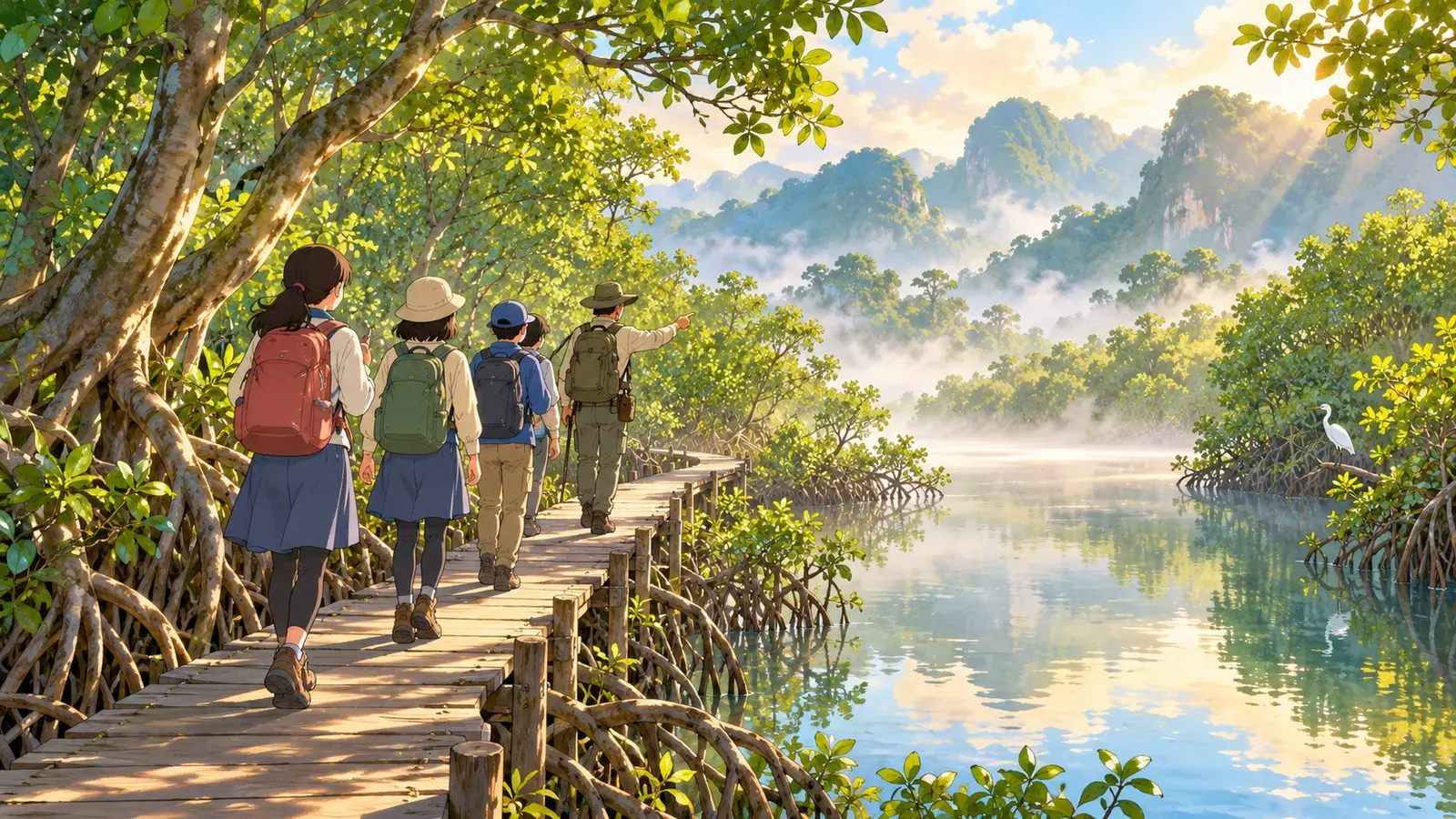
One response to these problems is ecotourism, a form of travel that focuses on experiencing nature while protecting it and supporting local people. Ecotourists might join a small guided walk through a forest, learn about plants and animals from a local expert, and stay at a family-run guesthouse. In Japan, a law to promote ecotourism was passed in 2007 and took effect the following year. It allows local communities to draw up plans that balance tourism with the protection of nature.
こうした問題への答えの一つが、エコツーリズムです。自然を守り、地元の人々を支えながら、自然を体験することに重きを置く旅のかたちです。エコツーリズムの旅行者は、たとえば少人数のガイドつきで森を歩き、地元の専門家から植物や動物について学び、家族で営む宿に泊まります。日本では、2007年にエコツーリズムを進めるための法律が成立し、翌年から施行されました。この法律によって、地域は、観光と自然保護のバランスをとる計画を自分たちで立てられるようになりました。
Iriomote Island in Okinawa offers an example of how this can work. Much of the island is covered by subtropical forest and is home to rare animals such as the Iriomote cat, and in 2021 it became part of a natural World Heritage Site. Under the ecotourism law, the local town has set daily limits on how many people may enter certain rivers and mountains, such as a maximum of 200 people a day along one popular river. Visitors to these areas need permission from the town in advance.
沖縄の西表島は、こうした仕組みがどのように機能するかを示す例です。島の大部分は亜熱帯の森におおわれ、イリオモテヤマネコなどの珍しい動物がすんでいます。2021年には、世界自然遺産の一部になりました。エコツーリズムの法律にもとづいて、地元の町は、特定の川や山に入れる人数に1日ごとの上限を設けています。たとえば、ある人気の川ぞいのルートでは、1日200人までです。こうした場所を訪れるには、前もって町の許可を得なければなりません。
Another approach focuses on the behavior of individual travelers. In 2017, the Pacific island nation of Palau began asking every arriving visitor to sign a pledge, stamped into their passport, promising to act in an environmentally and culturally responsible way. A signature alone cannot change behavior, of course, but the pledge reminds visitors that they are guests in someone else's home. Similar campaigns elsewhere encourage tourists to stay on marked trails, avoid feeding wild animals, and take their trash home.
旅行者一人ひとりの行動に注目する取り組みもあります。2017年、太平洋の島国パラオは、入国するすべての旅行者に、パスポートに押された誓約書へのサインを求め始めました。環境と文化に責任ある行動をとる、という約束です。もちろん、サイン一つで行動が変わるわけではありません。それでもこの誓約は、旅行者に、自分はほかの人の家におじゃましている客なのだ、ということを思い出させてくれます。ほかの土地でも、決められた道から外れない、野生動物にえさをやらない、ごみを持ち帰る、といったことを観光客に呼びかける同じような運動が行われています。
A third strategy is to spread tourism more widely, so that no single place carries too heavy a load. Instead of visiting only the most famous sights at the busiest times, travelers can be encouraged to explore lesser-known regions, to travel in the off-season, and to stay longer in one area. In rural Japan, for example, farm stays allow visitors, including school groups, to sleep in local homes, help with farm work, and eat meals made from local ingredients. Such stays bring income directly to families in areas where the population is shrinking.
三つ目の方法は、観光をもっと広い範囲に分散させて、一つの場所に負担が集中しすぎないようにすることです。いちばん有名な名所だけを、いちばん混む時期に訪れるのではなく、あまり知られていない地域を訪ねたり、観光客の少ない季節に旅をしたり、一つの地域に長く滞在したりするよう、旅行者にすすめるのです。たとえば日本の農村では、修学旅行の生徒をはじめとする旅行者が、農家に泊まって農作業を手伝い、地元の食材で作った食事をとる「農泊」ができます。こうした宿泊は、人口が減っている地域の家庭に、直接お金をもたらします。
Supporters of sustainable tourism argue that these measures benefit everyone in the long run. Protected nature remains attractive, residents who are not overwhelmed welcome visitors more warmly, and money that stays in the community can be spent on schools, roads, and conservation. Entrance fees at some national parks, for instance, help pay for rangers and the repair of trails. A destination that limits its numbers today, they say, is protecting its own future income.
持続可能な観光を支持する人たちは、こうした取り組みは長い目で見ればすべての人のためになる、と主張します。守られた自然は魅力を失いませんし、観光客に押しつぶされていない住民は、旅行者をあたたかく迎えます。また、地域に残ったお金は、学校や道路、自然保護に使えます。たとえば、一部の国立公園の入園料は、レンジャー(自然保護官)の給料や登山道の修理に役立てられています。今日、観光客の数を制限する観光地は、自分たちの将来の収入を守っているのだ、と支持する人たちは言います。
Critics, however, raise several important objections. To begin with, the word "sustainable" is easy to use in advertising but difficult to check. Some companies label their tours as eco-friendly while doing little to reduce harm, a practice known as greenwashing. Furthermore, promoting a remote place as an ecotourism destination can bring visitors to areas that were previously untouched, and these areas may be more fragile than the crowded cities they are meant to relieve.
しかし、批判する人たちは、いくつかの大事な反論をしています。まず、「持続可能」という言葉は、広告に使うのはかんたんでも、本当かどうか確かめるのは難しい、という点です。環境への害をほとんど減らしていないのに、自分たちのツアーを「環境にやさしい」とうたう会社もあります。こうしたやり方は、グリーンウォッシュと呼ばれます。さらに、人里離れた場所をエコツーリズムの目的地として宣伝すると、それまで人の手が入っていなかった場所に旅行者を呼びこむことになります。そうした場所は、混雑をやわらげようとしている都会よりも、もっと傷つきやすいかもしれません。
There is also the problem of travel itself. Most international tourists arrive by plane, and flying produces large amounts of carbon dioxide. One study published in 2018 estimated that tourism as a whole was responsible for about 8 percent of the world's greenhouse gas emissions. Even the most careful traveler cannot avoid this impact entirely, although taking trains instead of planes for shorter journeys, and taking one longer trip instead of several short ones, can reduce it.
旅そのものの問題もあります。海外からの旅行者のほとんどは飛行機でやって来ますが、飛行機は大量の二酸化炭素を出します。2018年に発表されたある研究は、観光全体で、世界の温室効果ガス排出量の約8パーセントを占めていると推定しました。どれほど気をつけている旅行者でも、この影響を完全になくすことはできません。それでも、近い距離なら飛行機ではなく列車を使う、短い旅を何度もするより長い旅を1回にする、といった工夫で減らすことはできます。
Limits and fees raise questions of fairness as well. If only a small number of people can visit a famous forest or island, who should those people be? Systems based on high prices favor wealthy travelers, while lotteries and reservation systems can be inconvenient. Some local businesses also worry that strict rules will drive customers to other destinations, especially in regions that depend heavily on tourism.
人数の制限や料金には、公平さの問題もあります。有名な森や島を訪れることができるのが少数の人だけなら、それは誰であるべきなのでしょうか。高い料金で決める方法はお金持ちに有利ですし、抽選や予約の仕組みは使いにくいことがあります。また、地元の店や会社の中には、ルールがきびしすぎると、客がほかの観光地に流れてしまうと心配するところもあります。観光にたよって暮らしている地域では、とくにそうです。
While these concerns are real, they do not mean that sustainable tourism is an empty slogan. Rather, they suggest that it requires honest measurement and the participation of local residents in decisions. Japan's ecotourism law, which encourages residents, guides, businesses, and experts in each area to form a council and plan together, is one attempt to put this principle into practice. A town that counts its visitors, monitors the health of its forests and beaches, listens to residents, and adjusts its rules over time is far more likely to succeed than one that simply puts the word "eco" on its posters.
こうした心配はもっともですが、持続可能な観光が中身のないスローガンだということにはなりません。むしろ、実態を正確に測ること、そして地元の住民が決定に加わることが必要だ、ということを示しているのです。日本のエコツーリズムの法律は、それぞれの地域の住民、ガイド、事業者、専門家が協議会をつくり、一緒に計画を立てるよううながしています。これは、この考え方を実行に移そうとする試みの一つです。観光客の数を数え、森や浜辺の状態を見守り、住民の声に耳をかたむけ、時間をかけてルールを見直していく町は、ポスターに「エコ」と書くだけの町よりも、はるかに成功しやすいでしょう。
Travelers, too, have a role to play. Learning a few words of the local language, following local customs, choosing locally owned restaurants and guesthouses, and visiting at quieter times are small actions, but when millions of people take them, the combined effect can be large. In the end, sustainable tourism is less a single rule than a responsibility shared by governments, businesses, residents, and visitors.
旅行者にも、果たすべき役割があります。その土地の言葉を少し覚える、地元の習慣を守る、地元の人が営むレストランや宿を選ぶ、混んでいない時期に訪れる。どれも小さな行動ですが、何百万人もの人がそうすれば、全体としては大きな効果になります。結局のところ、持続可能な観光とは、一つのルールというより、政府、企業、住民、旅行者がみんなで分かち合う責任なのです。
What do you think? Some people say that popular natural areas should strictly limit the number of visitors, because protecting nature and local life must come first. Others say that strict limits are unfair and can harm local economies, so it is better to manage crowds through education and careful planning.
あなたはどう思いますか。人気のある自然の観光地は、訪れる人の数をきびしく制限するべきだ、と言う人もいます。自然と地元の暮らしを守ることが何よりも先だからです。一方で、きびしい制限は不公平で、地域の経済に害を与えることもあるので、教育や計画の工夫で混雑を管理するほうがよい、と言う人もいます。
 4段落目に「blacktip reef sharks had returned to the shallow water.」(ツマグロが浅瀬に戻っていた)とあります。

 原田英語の究極の英単語帳(CEFR-J 6,868語)

 聞くだけモードで、文字を見ずに内容がわかるか試す。
 1文リピートで音読・シャドーイングも。

 英語で日本紹介

 ノンフィクション
 原文で読む名作