



 約7分
 4:12
 全訳つき
 お道具箱
 読書ラウンジ
When we think of trash, we usually imagine plastic bottles on a beach or garbage bags on the street. But there is also trash in a place most people never see: space. Thousands of broken satellites, old rocket parts, and tiny pieces of metal are flying around the Earth. This is called space debris, or space junk, and it is becoming a serious problem.
ごみと聞くと、ふつうは浜辺のペットボトルや、道ばたのごみ袋を思いうかべます。でも、ほとんどの人が目にすることのない場所にも、ごみがあります。宇宙です。こわれた人工衛星や古いロケットの部品、小さな金属のかけらが、何千も地球のまわりを飛び回っています。これを宇宙ごみ(スペースデブリ)といいます。そして今、宇宙ごみは深刻な問題になりつつあります。
Where does space junk come from? Since 1957, when the first satellite was launched, people have sent thousands of rockets into space. When a satellite stops working, it is often left in orbit. The upper parts of the rockets that carried satellites also stay there. Over time, some of these objects break apart or crash into each other, and they make many smaller pieces.
宇宙ごみは、どこから来るのでしょうか。初めて人工衛星が打ち上げられた1957年から、人類は何千ものロケットを宇宙に送ってきました。人工衛星は動かなくなると、そのまま軌道に残されることがよくあります。人工衛星を運んだロケットの上の部分も、軌道に残ります。そのうちに、こうした物の一部がばらばらにこわれたり、おたがいにぶつかったりして、たくさんの小さなかけらが生まれます。
How much junk is there? According to the European Space Agency, about 47,000 objects in space were being tracked in October 2026. Only some of them are working satellites. The agency also estimates that there are about 1.5 million pieces between 1 and 10 centimeters, and more than 200 million even smaller pieces. Most of these are too small to follow from the ground.
宇宙ごみは、どのくらいあるのでしょうか。ヨーロッパ宇宙機関によると、2026年10月の時点で、宇宙にある約4万7000個の物体が追跡されていました。そのうち、動いている人工衛星は一部にすぎません。また、1センチから10センチの大きさのかけらが約150万個、それより小さなかけらが2億個以上あると推定されています。そのほとんどは小さすぎて、地上から追いかけることはできません。
Why is a small piece of junk dangerous? The answer is speed. In low orbits, objects travel at about 28,000 kilometers per hour, which is much faster than a bullet. At this speed, even a piece about one centimeter wide can seriously damage a satellite. The International Space Station has special shields, and it has sometimes moved to a safer position to avoid larger pieces of junk.
小さなごみが、なぜ危ないのでしょうか。答えは速さです。低い軌道では、物体は時速約2万8000キロメートルで飛んでいます。銃の弾よりもずっと速いのです。この速さだと、幅1センチくらいのかけらでも、人工衛星に大きな損傷を与えることがあります。国際宇宙ステーションには特別な防護板がついています。また、大きめのごみをよけるために、より安全な位置へ移動したこともあります。
Accidents have already happened. In 2009, an American communications satellite and an old Russian satellite that was no longer working crashed into each other above Siberia. It was the first time two whole satellites had hit each other by accident. The crash created more than 2,000 pieces of junk that were large enough to be tracked.
実際に、事故はもう起きています。2009年、アメリカの通信衛星と、もう使われていなかったロシアの古い人工衛星が、シベリアの上空で衝突しました。こわれていない人工衛星どうしが事故でぶつかったのは、これが初めてでした。この衝突で、追跡できるほどの大きさのごみが2000個以上も生まれました。
Scientists are worried about a chain reaction. In 1978, NASA scientist Donald Kessler and a colleague warned that if there were too many objects in orbit, one crash could create pieces that would cause more crashes. In the worst case, some orbits could become too dangerous to use. This idea is now called the Kessler syndrome.
科学者たちは、連鎖反応を心配しています。1978年、NASAの科学者ドナルド・ケスラーと同僚は、こう警告しました。軌道上の物体が多くなりすぎると、一つの衝突でできたかけらが、さらに別の衝突を引き起こすかもしれない。最悪の場合、危なくて使えない軌道が出てくるかもしれない。この考えは、今では「ケスラーシンドローム」と呼ばれています。
The problem is growing because the number of satellites is rising quickly. Companies now launch thousands of small satellites to provide internet service from space. These satellites are useful, but more satellites mean a higher risk of crashes. We depend on satellites for weather forecasts, maps on our phones, and TV. If orbits became too crowded, these services could be in danger.
人工衛星の数が急速にふえているため、問題は大きくなっています。今では企業が、宇宙からインターネットを届けるために、何千もの小さな人工衛星を打ち上げています。こうした人工衛星は便利ですが、数がふえれば、衝突の危険も高まります。わたしたちは、天気予報やスマホの地図、テレビを、人工衛星にたよっています。軌道が混みすぎれば、こうしたサービスがあぶなくなるかもしれません。
What can be done? First, new satellites can be designed to leave orbit when their work is finished. Satellites in low orbits slowly fall toward the Earth and burn up in the air. Rules and guidelines now ask satellite owners to remove their satellites within a certain number of years after their missions end.
どうすればよいのでしょうか。一つ目は、新しい人工衛星を、仕事を終えたら軌道から離れるように設計することです。低い軌道の人工衛星は、少しずつ地球に向かって落ちていき、大気の中で燃えつきます。今では、ルールや指針によって、人工衛星の持ち主は、役目を終えてから一定の年数のうちに衛星を取り除くよう求められています。
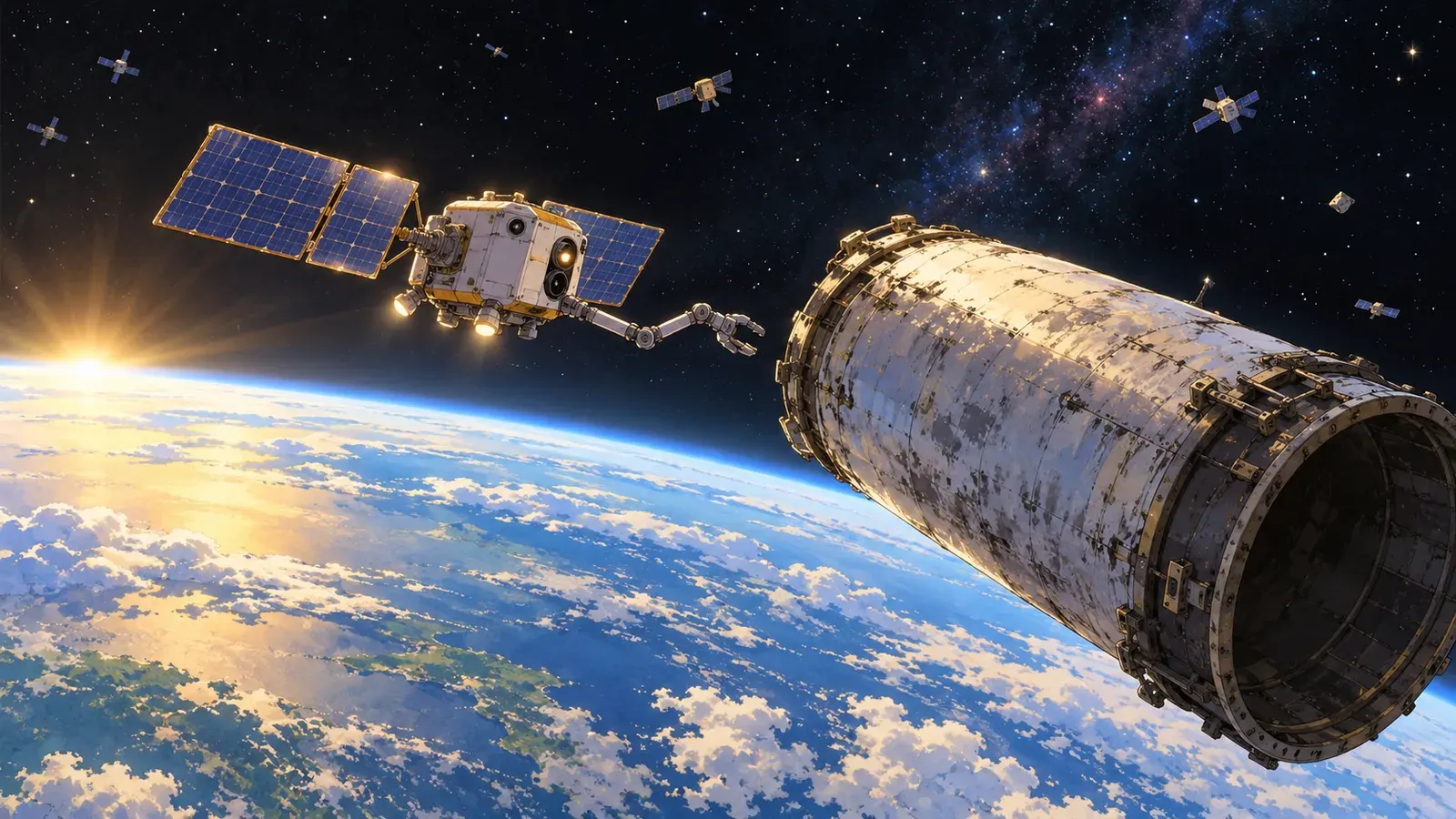
Second, some companies are trying to clean up the junk that is already there. Astroscale, a company based in Tokyo, launched a spacecraft called ADRAS-J in 2024. It flew close to an old Japanese rocket part that had been in orbit since 2009, and it came within about 15 meters of it. The company plans another mission to catch an old rocket part and bring it down.
二つ目は、すでにあるごみを片づけようという取り組みです。東京に本社を置くアストロスケールという会社は、2024年に「ADRAS-J」という宇宙機を打ち上げました。ADRAS-Jは、2009年から軌道上に残っていた日本の古いロケットの部品に近づき、約15メートルのところまで接近しました。この会社は、古いロケットの部品をつかまえて落とす、次のミッションも計画しています。
However, cleaning up space is not easy. Junk moves very fast, and every piece is in a different orbit. Catching even one piece costs a lot of money, and there are thousands of large pieces. There are also difficult questions. Who should pay for the cleanup? And can a company touch an old satellite that belongs to another country?
しかし、宇宙のそうじはかんたんではありません。ごみはとても速く動いていて、一つひとつがちがう軌道を回っています。たった一つをつかまえるのにも多額のお金がかかるのに、大きなごみは何千個もあります。難しい問題もあります。そうじの費用は誰が払うべきなのでしょうか。そして、ほかの国のものである古い人工衛星に、会社が勝手にさわってもよいのでしょうか。
Some people say that the countries and companies that made the junk should pay to remove it. Others say that all countries should work together, because everyone uses space and everyone would suffer if orbits became unusable. Many space agencies say that the most important step is to stop making new junk.
ごみを出した国や企業が、取り除く費用を払うべきだ、と言う人もいます。一方、すべての国が協力するべきだ、と言う人もいます。宇宙はみんなが使っていて、軌道が使えなくなれば、みんなが困るからです。多くの宇宙機関は、いちばん大事なのは、新しいごみを出さないことだと言っています。
What do you think? Some people say that countries should spend more money on cleaning up space junk, because satellites are important for our daily lives. Others say that it is better to focus on strict rules that stop new junk, because cleaning up is too difficult and expensive.
あなたはどう思いますか。人工衛星はわたしたちの毎日の暮らしに欠かせないので、国は宇宙ごみの片づけにもっとお金を使うべきだ、と言う人もいます。一方で、片づけるのは難しすぎるし、お金もかかりすぎるので、新しいごみを出さないためのきびしいルールに力を入れるほうがよい、と言う人もいます。
 4段落目に「The answer is speed.」(答えは速度です)とあり、時速約2万8千キロで動くため危険です。

 原田英語の究極の英単語帳(CEFR-J 6,868語)

 聞くだけモードで、文字を見ずに内容がわかるか試す。
 1文リピートで音読・シャドーイングも。




 世界の名作童話


 名作文学