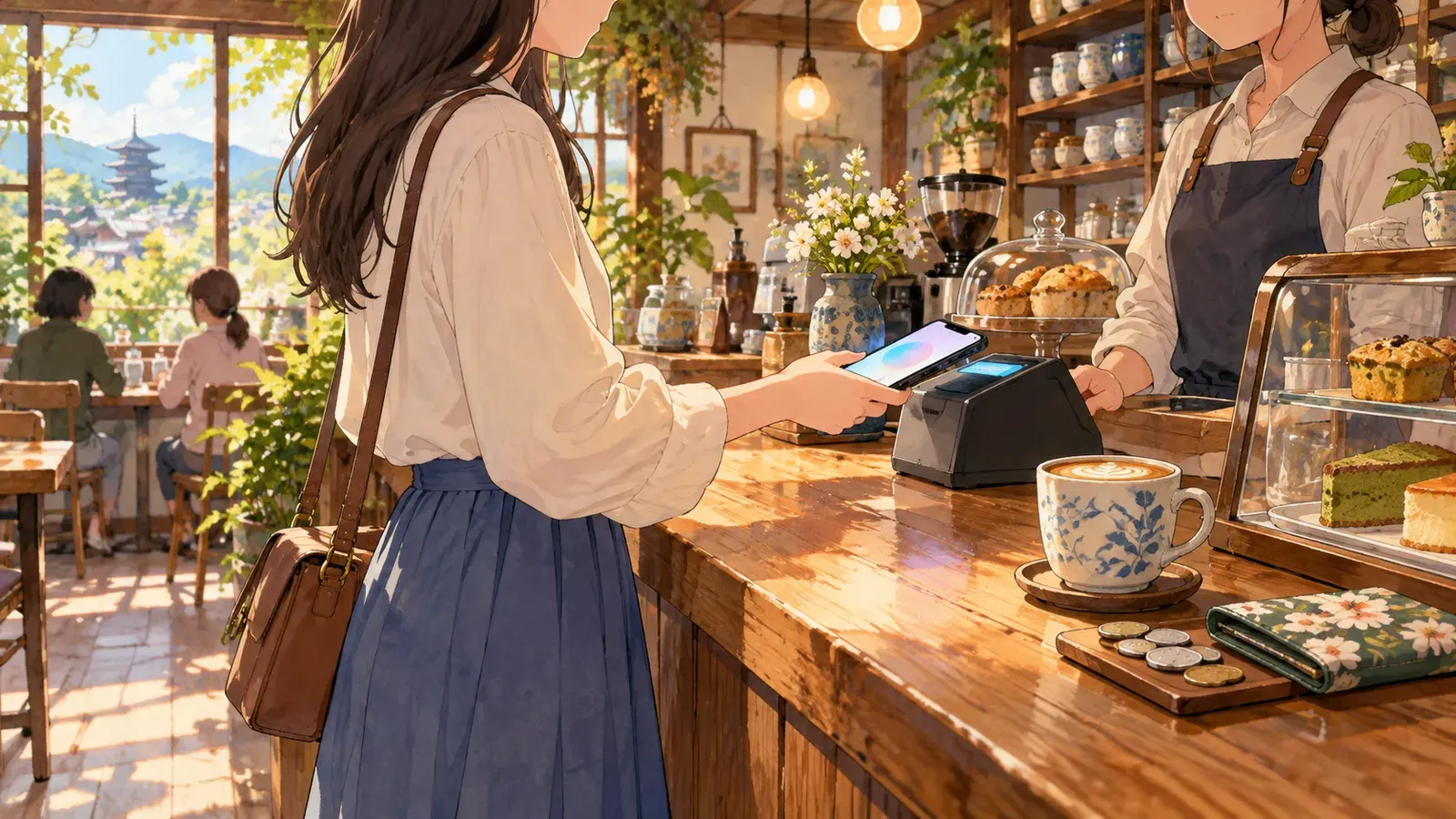
Not long ago, Japan was known as a country that loved cash. People carried thick wallets, and many small shops and restaurants accepted only bills and coins. Today, things have changed a lot. Many people now pay with credit cards, IC cards for trains, or QR codes on their smartphones.
少し前まで、日本は現金が大好きな国として知られていました。人々は分厚い財布を持ち歩き、小さな店やレストランの多くは、紙幣と硬貨しか受けつけていませんでした。ところが今では、ずいぶん様子が変わりました。クレジットカードや電車のICカード、スマートフォンのQRコードで支払う人がたくさんいます。
The government has been encouraging cashless payment for years. In 2024, cashless payments made up about 40 percent of the money people in Japan spent on shopping, so the government reached its goal a year early. Still, the rate in Japan is lower than in countries like South Korea and China, where most shopping is cashless. In Sweden, some shops do not accept cash at all.
政府は何年も前から、キャッシュレス決済を進めてきました。2024年には、日本での買い物の支払いの約40パーセントがキャッシュレスになり、政府は目標を1年早く達成しました。それでも、韓国や中国など、買い物のほとんどがキャッシュレスの国にくらべると、日本の割合はまだ低いままです。スウェーデンには、現金をまったく受けつけない店もあります。
Several events helped this change in Japan. In 2019, when the consumption tax went up, the government gave points to people who paid without cash at small shops. During the COVID-19 pandemic, many people did not want to touch bills and coins that other people had touched. QR code apps also helped small shops. With these apps, they could accept cashless payment without buying expensive machines.
日本でこの変化を後押ししたできごとが、いくつかあります。2019年に消費税が上がったとき、政府は、小さな店で現金を使わずに支払った人にポイントを還元しました。新型コロナウイルスが世界的に流行していた間は、ほかの人がさわった紙幣や硬貨にふれたくない、と思う人がたくさんいました。また、QRコード決済のアプリも小さな店の助けになりました。アプリを使えば、高い機械を買わなくても、キャッシュレス決済を受けつけられるからです。
Cashless payment has many advantages. It is fast and easy, so lines at the register move more quickly. People do not need to carry a lot of coins. Shops save time, because they do not have to count money at the end of the day. Some payment apps give points or discounts, and it is easy to check how much money you have spent. For tourists from abroad, it is also convenient, because they do not need to change money.
キャッシュレス決済には長所がたくさんあります。速くて簡単なので、レジの列が早く進みます。たくさんの小銭を持ち歩く必要もありません。一日の終わりにお金を数えなくてよいので、店も時間を節約できます。ポイントや割引がつく決済アプリもありますし、自分がいくら使ったかを簡単に確かめられます。外国からの旅行者にとっても、両替をしなくてよいので便利です。
There are also disadvantages. Some people, especially older people, find smartphones difficult to use, and they may be left behind if cash is no longer accepted. If there is a power failure or a big earthquake, electronic payment may stop working. In fact, after some disasters, people could only buy things with cash. Small shops also have to pay fees to card and app companies, which can be a heavy cost for them.
短所もあります。お年寄りをはじめ、スマートフォンを使いこなすのが難しい人もいます。現金が使えなくなれば、そうした人たちが取り残されるかもしれません。停電や大地震が起きると、電子決済が使えなくなるおそれもあります。実際、災害のあとに現金でしか物が買えなかったこともありました。また小さな店は、カード会社やアプリの会社に手数料を払わなければならず、それが大きな負担になることもあります。
Another worry is privacy and safety. When we pay electronically, companies can collect information about what we buy, where, and when. This information is useful for business, but some people do not like being watched. There is also the risk of cards or accounts being used by criminals. On the other hand, cash can be stolen or lost, too, and it is much harder to get back.
もう一つの心配は、プライバシーと安全です。電子的に支払うと、企業は私たちが何を、どこで、いつ買ったかという情報を集めることができます。この情報は商売には役立ちますが、見張られているようでいやだと思う人もいます。カードやアカウントが犯罪者に使われる危険もあります。その一方で、現金も盗まれたりなくしたりすることがあり、取り戻すのはずっと難しいのです。
Some experts also warn that when we cannot see or touch money, we may spend more without noticing. With cash, it is easier to feel how much is leaving your wallet. For young people, learning how to manage money carefully is more important than ever.
お金が目に見えず、手でさわることもできないと、気づかないうちに使いすぎてしまうかもしれない。そう注意をうながす専門家もいます。現金なら、財布からどれだけお金が出ていくかを実感しやすいのです。若い人にとって、お金を上手に管理する方法を学ぶことは、これまで以上に大切になっています。
What do you think? Some people say that Japan should become a fully cashless society, because it is convenient, fast, and good for business. Others say that cash should always be available, because everyone, including older people, must be able to shop, even during a disaster.
あなたはどう思いますか。日本は完全なキャッシュレス社会になるべきだ、と言う人もいます。便利で速く、商売にもよいからです。一方、現金はいつでも使えるようにしておくべきだ、と言う人もいます。お年寄りもふくめてだれもが、災害のときでさえ買い物ができなければならないからです。