



 約6分
 3:57
 全訳つき
 お道具箱
 読書ラウンジ
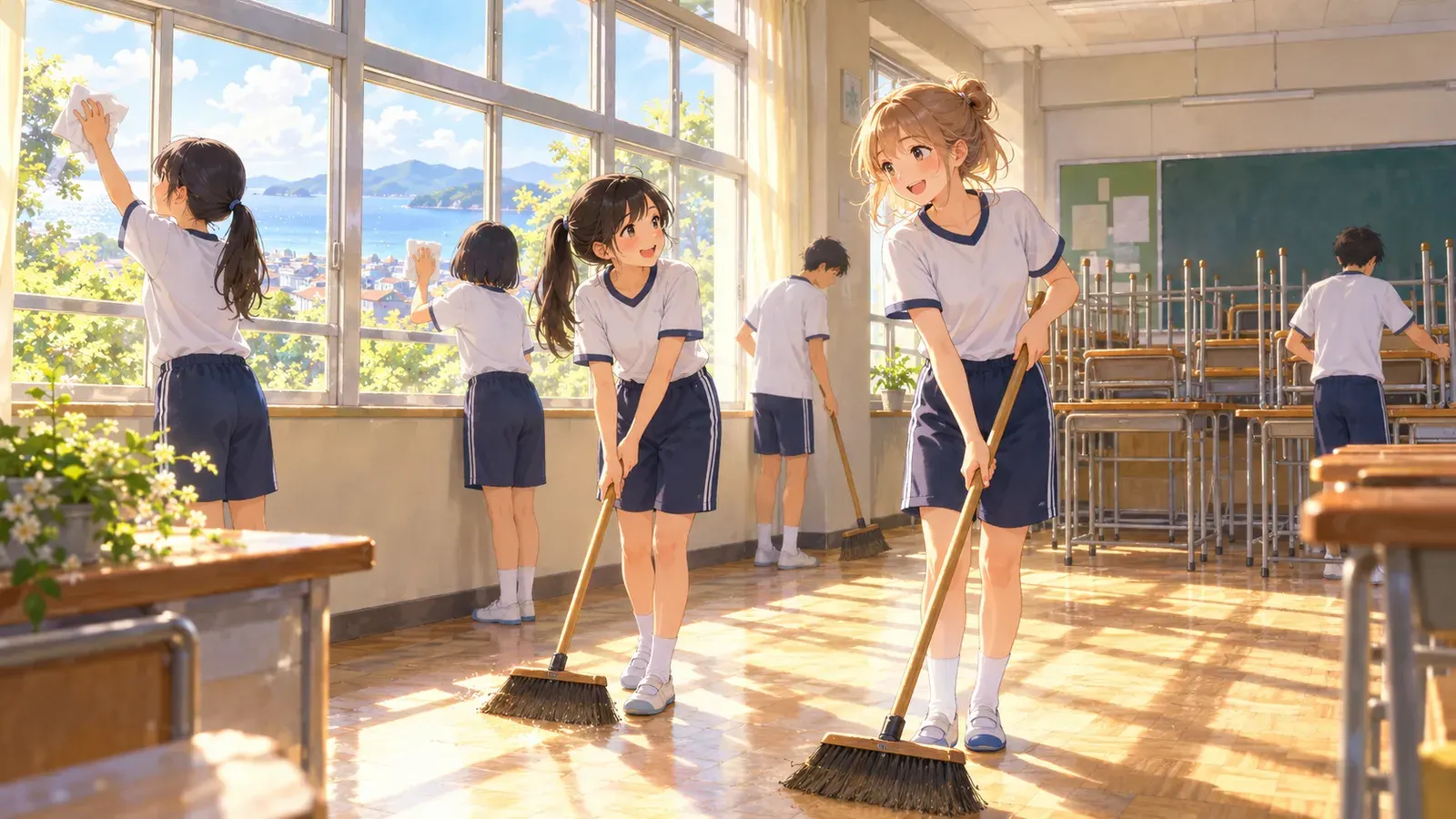
Imagine an exchange student named Emma who comes from Canada to study at a high school in Japan. Many things would probably surprise her, but one thing might surprise her most. After lunch, music begins to play, and all the students stand up, pick up brooms and cloths, and start cleaning. "At my school in Canada, we never cleaned," she might say. "Workers came in the evening and did everything."
カナダから日本の高校に勉強しに来た、エマという交換留学生を思いうかべてみてください。きっと、いろいろなことに驚くでしょう。でも、いちばん驚くのはこんな場面かもしれません。昼休みが終わると音楽が流れ始め、生徒が全員立ち上がって、ほうきやぞうきんを手にそうじを始めるのです。「カナダの学校では、私たちがそうじをすることはありませんでした」と、エマは言うかもしれません。「夕方に業者の人が来て、全部やってくれていたんです」
In Japan, cleaning time, or soji, is part of the school day at most elementary and junior high schools and at many high schools. Students sweep and wipe the floors of their classrooms, clean the hallways, and sometimes even clean the toilets. They usually work in small groups, and the groups change places every week or two.
日本では、ほとんどの小学校と中学校、そして多くの高校で、そうじの時間が一日の予定に入っています。生徒たちは教室の床をはいたり、ふいたりします。廊下もそうじしますし、トイレまでそうじすることもあります。ふつうは少人数の班に分かれて取り組み、1、2週間ごとに担当の場所が変わります。
Cleaning a classroom is real work. First, students carry all the desks and chairs to the back of the room. Then they sweep and wipe the front half of the floor. Next, they move the desks to the front and clean the back half. Finally, they put everything back in neat lines and take out the trash.
教室のそうじは、なかなかの重労働です。まず、生徒たちは机といすを全部、教室の後ろに運びます。それから、前半分の床をはいて、ふきます。次に、机を前に移して、後ろ半分をそうじします。最後に、すべてをきちんと並べ直して、ごみを捨てに行きます。
In many other countries, this is not common. In the United States and many European countries, schools usually hire professional cleaners. Students may put their chairs on their desks at the end of the day, but they rarely wash the floors. That is why many visitors find soji so unusual.
ほかの多くの国では、これはあまり見られないことです。アメリカやヨーロッパの多くの国では、学校はふつう専門の清掃員を雇っています。一日の終わりにいすを机の上に上げることはあっても、生徒が床をふくことはめったにありません。だから日本に来た人の多くは、そうじの時間をとてもめずらしく感じるのです。
Why do Japanese schools have cleaning time? One reason is respect. Many people believe that when students clean a place by themselves, they learn to take care of it. A student who has scrubbed a floor will probably not throw trash on it. Cleaning has also long been an important part of training in Buddhist temples, and some people say this tradition influenced Japanese schools.
日本の学校には、なぜそうじの時間があるのでしょうか。理由の一つは、ものを大切にする心です。自分の手で場所をきれいにすると、その場所を大切にするようになる、と多くの人が考えています。ごしごしと床をみがいた生徒は、その床にごみを捨てたりはしないでしょう。また、そうじは昔から仏教の寺で大切な修行の一つとされてきました。この伝統が日本の学校にも影響を与えた、と言う人もいます。
Another reason is responsibility and teamwork. Each group has a job, and if one person does not do his or her part, the others have to do more. Students learn to cooperate and to finish a job together. The same idea can be seen at lunchtime, when students take turns serving school lunch to their classmates.
もう一つの理由は、責任感とチームワークです。班の一人ひとりに仕事があり、誰かが自分の分をやらなければ、ほかの人の負担が増えてしまいます。生徒たちは、協力して一緒に仕事をやりとげることを学びます。同じ考え方は給食の時間にも見られます。生徒たちが交代で、クラスメートに給食を配るのです。
Cleaning also teaches practical skills. Students learn how to use a broom, wring out a wet cloth, and sort trash for recycling. These are skills that they will need when they start living by themselves in the future. Some people also say that soji helps students understand how hard cleaners work, so they learn to appreciate them.
そうじからは、生活に役立つ技能も学べます。ほうきの使い方、ぬれたぞうきんのしぼり方、リサイクルのためのごみの分け方を身につけるのです。どれも、将来一人暮らしを始めるときに必要になる技能です。そうじをすることで、清掃の仕事がどれほど大変かが分かり、働く人に感謝できるようになる、と言う人もいます。
At first, Emma might think that cleaning is a waste of time. But after a few weeks, she may start to enjoy it. "We talk and laugh while we clean," she might say. "And when the classroom is shiny, I feel proud of it. I want to tell my friends in Canada about soji."
初めのうち、エマはそうじの時間をむだだと思うかもしれません。でも、何週間かたつと、楽しくなってくるかもしれません。「おしゃべりをしたり、笑ったりしながらそうじをするんです」とエマは言うでしょう。「教室がぴかぴかになると、誇らしい気持ちになります。カナダの友達にも、日本のそうじのことを教えたいです」
Not everyone agrees that soji is a good idea, however. Some people say that students should spend that time studying or resting. Others worry about safety and health, especially when students clean toilets or use strong cleaning products. In some countries, people also say that cleaning is a job for trained workers, and that schools should give those jobs to adults in the community.
とはいえ、そうじの時間がよいものだと、誰もが思っているわけではありません。その時間は勉強や休みに使うべきだ、と言う人もいます。安全や健康を心配する人もいます。特に、生徒がトイレをそうじしたり、強い洗剤を使ったりするときです。そうじは訓練を受けた人の仕事であり、学校はその仕事を地域の大人に任せるべきだ、という声がある国もあります。
Some people also point out that students' cleaning is not always perfect. Corners are often missed, and children cannot safely clean high windows. In fact, many Japanese schools still need adult workers for difficult or dangerous jobs.
生徒のそうじはいつも完ぺきとは限らない、と指摘する人もいます。すみのほうはよくそうじし忘れますし、高い窓を子どもが安全にふくことはできません。実際、日本の多くの学校でも、難しい仕事や危ない仕事には、今も大人の作業員が必要なのです。
Even so, people around the world are becoming more interested in Japanese school life. Visitors often say that Japanese classrooms look clean and that students seem to care about their school. Some teachers from other countries have also become interested in soji and other activities that Japanese students do together.
それでも、世界中で日本の学校生活への関心は高まっています。日本の教室はきれいだ、生徒が自分の学校を大切にしているようだ、と、訪れた人たちはよく口にします。そうじなど、日本の生徒がみんなで取り組む活動に関心を持つようになった外国の先生もいます。
What do you think? Some people say students should clean their own schools, because they learn responsibility, teamwork, and respect for their school. Others say schools should hire professional cleaners, because students need that time for studying and some cleaning work can be dangerous.
あなたはどう思いますか。生徒は自分の学校をそうじするべきだ、と言う人がいます。責任感やチームワーク、学校を大切にする心が身につくからです。一方、学校は専門の清掃員を雇うべきだ、と言う人もいます。生徒にはその時間が勉強のために必要ですし、そうじの仕事の中には危ないものもあるからです。
 1段落目に「After lunch, music begins to play」(昼食後に音楽が流れ始める)とあり、その後、生徒全員が掃除を始めます。

 原田英語の究極の英単語帳(CEFR-J 6,868語)

 聞くだけモードで、文字を見ずに内容がわかるか試す。
 1文リピートで音読・シャドーイングも。



 世界の名作童話


 名作文学