




 約10分
 6:13
 全訳つき
 お道具箱
 読書ラウンジ
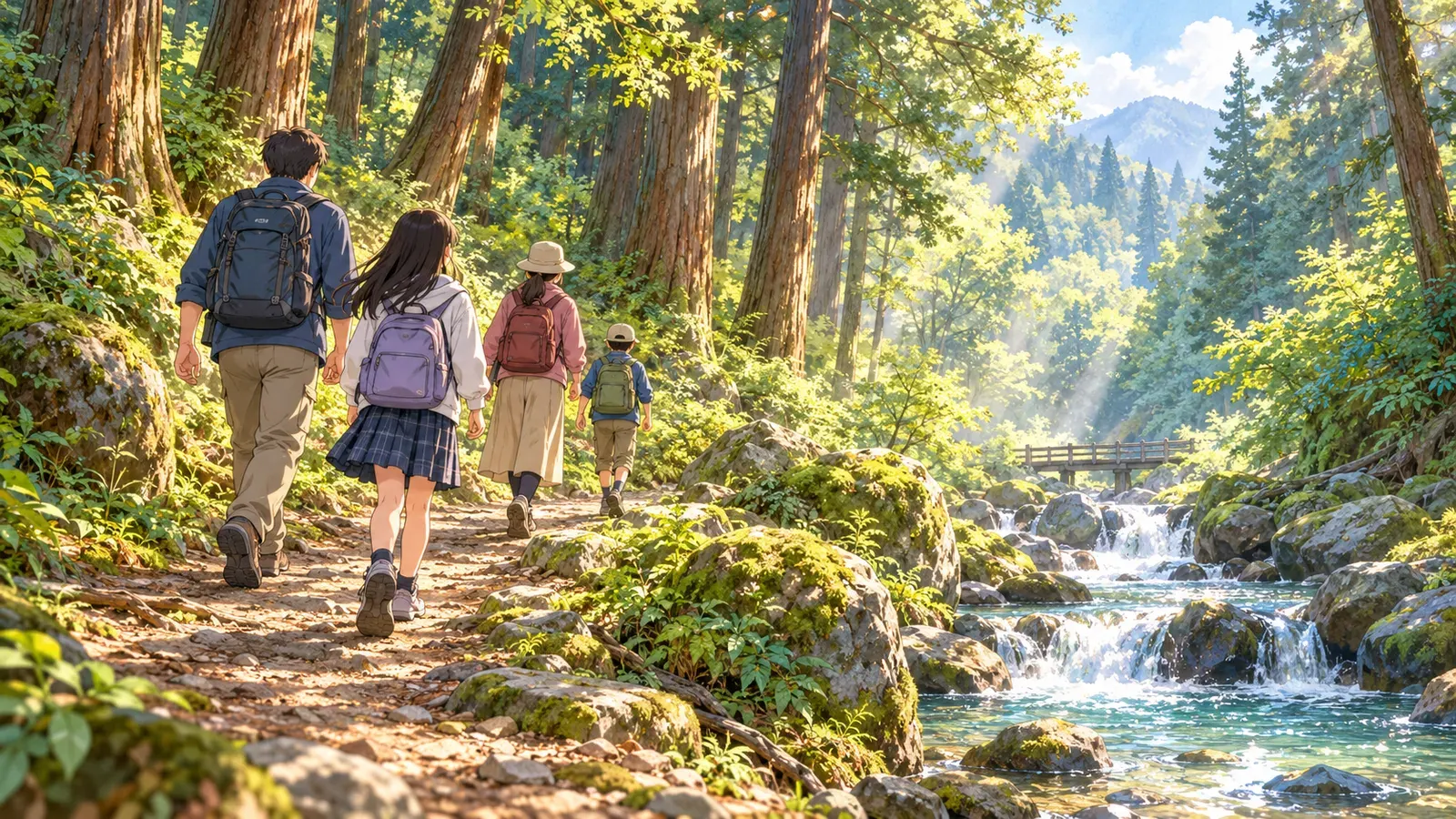
After a long week of classes and cram school, a high school student named Riko went hiking with her family in the mountains. At first, she complained about losing a weekend of study. But after an hour among the tall trees, listening to birds and a running stream, she noticed something surprising. Her shoulders felt lighter, and the worries that had filled her head all week seemed smaller. Many people have had a similar experience, and scientists are now trying to explain why.
授業と塾で長い1週間を過ごしたあと、リコという高校生は、家族と山へハイキングに行きました。はじめは、週末の勉強時間がなくなると文句を言っていました。ところが、高い木々の間で1時間ほど、鳥の声や川のせせらぎを聞いているうちに、驚くことに気づきました。肩が軽くなり、1週間ずっと頭の中を埋め尽くしていた心配ごとが、小さくなったように思えたのです。同じような経験をした人はたくさんいます。そして今、科学者たちは、そのわけを明らかにしようとしています。
This question has become more important as more people live in cities. According to the United Nations, about 55 percent of the world's population lived in urban areas in 2018, and this figure is expected to rise to 68 percent by 2050. City life has many advantages, such as jobs, schools, hospitals, and convenient transportation. However, many city residents spend most of their day indoors, looking at screens, and have few chances to spend time in nature.
都市に住む人が増えるにつれて、この問いはますます大切になっています。国連によると、2018年には世界の人口の約55パーセントが都市部に住んでいました。そしてこの割合は、2050年までに68パーセントに上がると予想されています。都会の暮らしには、仕事や学校、病院がそろい、交通も便利だといった多くの利点があります。でも、都会に住む人の多くは、一日のほとんどを屋内で画面を見て過ごし、自然の中で過ごす機会があまりありません。
Japan has played a special role in this area. In 1982, the Forestry Agency of Japan introduced the term shinrin-yoku, which means "forest bathing." It does not mean swimming in a forest. Instead, it means slowly walking or sitting among trees and taking in the forest through your senses: the colors and smell of the leaves, the sound of the wind, and the feel of the ground under your feet. The idea was to encourage city dwellers to visit forests for their health, and it later spread to many other countries.
この分野では、日本が特別な役割を果たしてきました。1982年、日本の林野庁が「森林浴」という言葉を打ち出したのです。森の中で泳ぐという意味ではありません。木々の間をゆっくり歩いたり、座ったりして、いろいろな感覚で森を味わうことです。葉の色やにおい、風の音、そして足の下の地面の感触。都会に住む人に、健康のために森を訪れてもらおうという考えで、この言葉はのちに多くの国に広まりました。
Since then, researchers in Japan and elsewhere have studied how forests affect people. Many studies have found that walking in a forest is linked to lower levels of stress than walking in a city, and people often report feeling calmer and more positive afterward. Scientists are still discussing exactly why this happens. Some point to the quiet and the fresh air, while others believe that natural scenes simply allow our tired brains to rest.
それ以来、日本や世界の研究者が、森が人にどのような影響を与えるのかを調べてきました。多くの研究で、森の中を歩くと、都会の中を歩くよりもストレスが低くなることが分かっています。また、森を歩いたあとには、気持ちが落ち着き、前向きになったと感じる人がよくいます。それがなぜなのかについては、科学者の間でまだ議論が続いています。静けさやきれいな空気のおかげだと言う人もいれば、自然の景色を見ると、疲れた脳がひと休みできるからだと考える人もいます。
One of the most famous studies about nature and health was published in 1984 by an American researcher, Roger Ulrich. He looked at the records of patients who had had the same kind of operation at a hospital in the United States. Some patients stayed in rooms with windows that looked out on trees, while others had a view of a brick wall. Those with the tree view left the hospital slightly earlier on average and needed fewer strong painkillers. Nurses also wrote fewer negative comments about them. It was a small study, but it suggested that even looking at nature might help the body heal.
自然と健康についてのもっとも有名な研究の一つが、1984年にアメリカの研究者ロジャー・ウルリッヒが発表したものです。彼は、アメリカのある病院で同じ種類の手術を受けた患者たちの記録を調べました。窓から木々が見える部屋に入院した患者もいれば、れんがの壁しか見えない部屋に入院した患者もいました。木が見える部屋の患者は、平均すると少し早く退院し、強い痛み止めも少なくてすみました。看護師が書いた否定的なコメントも少なかったのです。小さな研究でしたが、自然をながめるだけでも、体の回復を助けるかもしれないことを示していました。
More recently, a study published in 2019 used survey data from nearly 20,000 people in England. It found that people who spent at least 120 minutes a week in nature, such as parks, woods, or beaches, were more likely to report good health and high well-being than those who spent no time in nature. Interestingly, it did not matter whether the 120 minutes came from one long visit or several short ones.
もっと最近では、2019年に発表された研究が、イギリスのイングランドに住む2万人近くの調査データを使いました。この研究によると、公園や森、海辺など、自然の中で1週間に少なくとも120分過ごす人は、自然の中でまったく過ごさない人よりも、自分は健康で幸福感が高いと答える割合が高かったのです。おもしろいことに、その120分が1回の長い外出でも、何回かの短い外出の合計でも、違いはありませんでした。
However, the researchers noted that more research was needed. A survey like this can show a link between nature and health, but it cannot prove that nature causes the benefits. For example, it is possible that people who are already healthy simply go outside more often.
ただし、研究者たちは、さらに研究が必要だとも述べています。このような調査からは、自然と健康の間に関係があることは分かっても、自然がよい効果を生んでいるとまでは証明できません。たとえば、もともと健康な人が、よく外に出かけているだけ、という可能性もあるのです。
Why might nature be good for us? One idea is that modern life demands constant attention. At school or work, we must focus on tasks, messages, and traffic, and this effort tires the mind. In nature, our attention is gently drawn by things like moving clouds or leaves in the wind, which requires little effort and gives the mind a chance to recover. Another idea is that, for most of human history, people lived close to nature, so we may feel most at ease in such surroundings. Exercise, sunlight, and time with friends and family, which often come with trips outdoors, are probably part of the answer too.
自然は、なぜわたしたちの体によいのでしょうか。一つの考え方は、現代の暮らしでは、いつも注意を集中していなければならない、というものです。学校や職場では、課題やメッセージ、車の流れなどに気を配らなければならず、その努力で心が疲れてしまいます。自然の中では、流れていく雲や風に揺れる葉などに、注意がそっと引きつけられます。これにはほとんど力がいらないので、心が回復するチャンスになるのです。もう一つの考え方は、人間は歴史のほとんどの間、自然の近くで暮らしてきたので、そうした環境でいちばんくつろげるのかもしれない、というものです。外に出かけると、運動をしたり、日の光を浴びたり、友達や家族と過ごしたりすることも多いので、それも理由の一部でしょう。
Because of findings like these, many cities are trying to bring nature closer to people. They are planting trees along streets, creating new parks, and covering the roofs and walls of buildings with plants. Some cities have even turned old railways, roads, or rivers that had been covered with concrete into green walkways where people can relax. Trees also provide shade and help cool the streets on hot summer days, which is becoming more and more important as summers get hotter.
こうした研究の結果を受けて、多くの都市が、自然を人々の身近にしようとしています。通りに木を植え、新しい公園を作り、建物の屋上や壁を植物でおおっているのです。古い線路や道路、コンクリートでふたをされていた川を、人々がくつろげる緑の遊歩道に変えた都市さえあります。木は日陰を作り、暑い夏の日に通りを涼しくするのにも役立ちます。夏がだんだん暑くなる中で、これはますます大切になっています。
In Japan, many people already enjoy nature through seasonal traditions, such as viewing cherry blossoms in spring and colored leaves in autumn. Some towns and companies also offer forest walking programs as a way to help people relax and reduce stress.
日本では、多くの人が、春の花見や秋の紅葉狩りといった季節の行事を通して、もともと自然を楽しんでいます。また、くつろいでストレスを減らす方法として、森の中を歩くプログラムを用意している町や会社もあります。
However, creating green spaces is not always easy. In big cities, land is very expensive, and the same space could be used for housing, offices, or shops, which may also be badly needed. Parks and trees need care, which costs money every year. Some researchers have also noticed an unexpected problem. When a new park makes a neighborhood more attractive, rents and house prices may rise, and people with lower incomes may be forced to move away. These researchers argue that cities should plan green spaces in ways that benefit everyone, not just the wealthy.
けれども、緑の空間を作るのは、いつも簡単なわけではありません。大都市では土地がとても高く、同じ場所を住宅や事務所、店に使うこともできます。そして、そうした建物もまた、大いに必要とされているかもしれないのです。公園や木には手入れが必要で、毎年お金がかかります。思わぬ問題に気づいた研究者もいます。新しい公園ができて地域の人気が上がると、家賃や家の値段が上がり、収入の少ない人が引っ越さざるをえなくなることがあるのです。こうした研究者は、お金持ちだけでなく、だれもが恩恵を受けられるように緑の空間を計画するべきだ、と主張しています。
It is also important to remember that nature is not a cure for every problem. Spending time outdoors can help people feel better, but it cannot replace proper medical care for people with serious health problems. In addition, not everyone can easily reach a forest or a beach. For this reason, some experts emphasize small, everyday contact with nature, such as walking through a local park, caring for plants at home, or simply looking up at the sky for a few minutes.
自然はどんな問題でも解決してくれる薬ではない、ということも忘れてはいけません。外で過ごすと気分がよくなることはありますが、重い病気を抱えている人にとって、きちんとした治療の代わりにはなりません。それに、だれもが森や海辺に気軽に行けるわけではありません。そのため、毎日の暮らしの中で、少しずつ自然に触れることを大切にする専門家もいます。近所の公園を歩く、家で植物を育てる、あるいは数分間、空を見上げるだけでもよいのです。
Riko still lives in the city, but she has changed one small habit. On her way home from school, she now takes a slightly longer route through a park. "It only takes ten more minutes," she says, "but I always feel a little better when I get home."
リコは今も都会に住んでいますが、小さな習慣を一つ変えました。学校からの帰り道に、少し遠回りをして公園を通るようになったのです。「10分よけいにかかるだけなんです」とリコは言います。「でも、家に着いたときには、いつも少しだけ気分がよくなっているんですよ。」
What do you think? Some people say that cities should use more land for parks and trees, because nature improves people's mental and physical health. Others say that in crowded cities, land should be used for housing and other buildings, because people need affordable places to live and work.
あなたはどう思いますか。都市は、もっと多くの土地を公園や木々のために使うべきだ、と言う人もいます。自然は人々の心と体の健康をよくするからです。一方、人が密集した都市では、土地は住宅やほかの建物に使うべきだ、と言う人もいます。人々には、手ごろな値段で住んだり働いたりできる場所が必要だからです。
 3段落目に「slowly walking or sitting among trees and taking in the forest through your senses」(木々の中でゆっくり歩いたり座ったりし、感覚で森を味わうこと)とあります。

 原田英語の究極の英単語帳(CEFR-J 6,868語)

 聞くだけモードで、文字を見ずに内容がわかるか試す。
 1文リピートで音読・シャドーイングも。


 名作文学


 世界の民話