 約6分
 2:54
 全訳つき
 お道具箱
 読書ラウンジ
September 1 is Disaster Prevention Day in Japan. On that day, a junior high school student named Yuna came home with a paper from school. "Let's make an emergency bag," it said. Her family had a lot of water and food in the kitchen, but they did not have a bag to carry when they had to run.
9月1日は、日本の「防災の日」です。その日、ユナという中学生が、学校から1枚のプリントを持って帰ってきました。そこには「非常持ち出し袋を作ろう」と書いてありました。ユナの家の台所には、水や食べ物がたくさんありました。でも、逃げなければならないときに持って出る袋は、ありませんでした。
An emergency bag is different from your food at home. When an earthquake, a flood, or a big fire happens, you may have to leave your house quickly. You will not have time to look for things. So you should pack a bag before a disaster and keep it near the door.
非常持ち出し袋は、家にある食料とはちがいます。地震や洪水、大きな火事が起きたら、すぐに家を出なければならないかもしれません。物を探している時間はありません。だから、災害が起きる前に袋につめて、玄関の近くに置いておくのです。
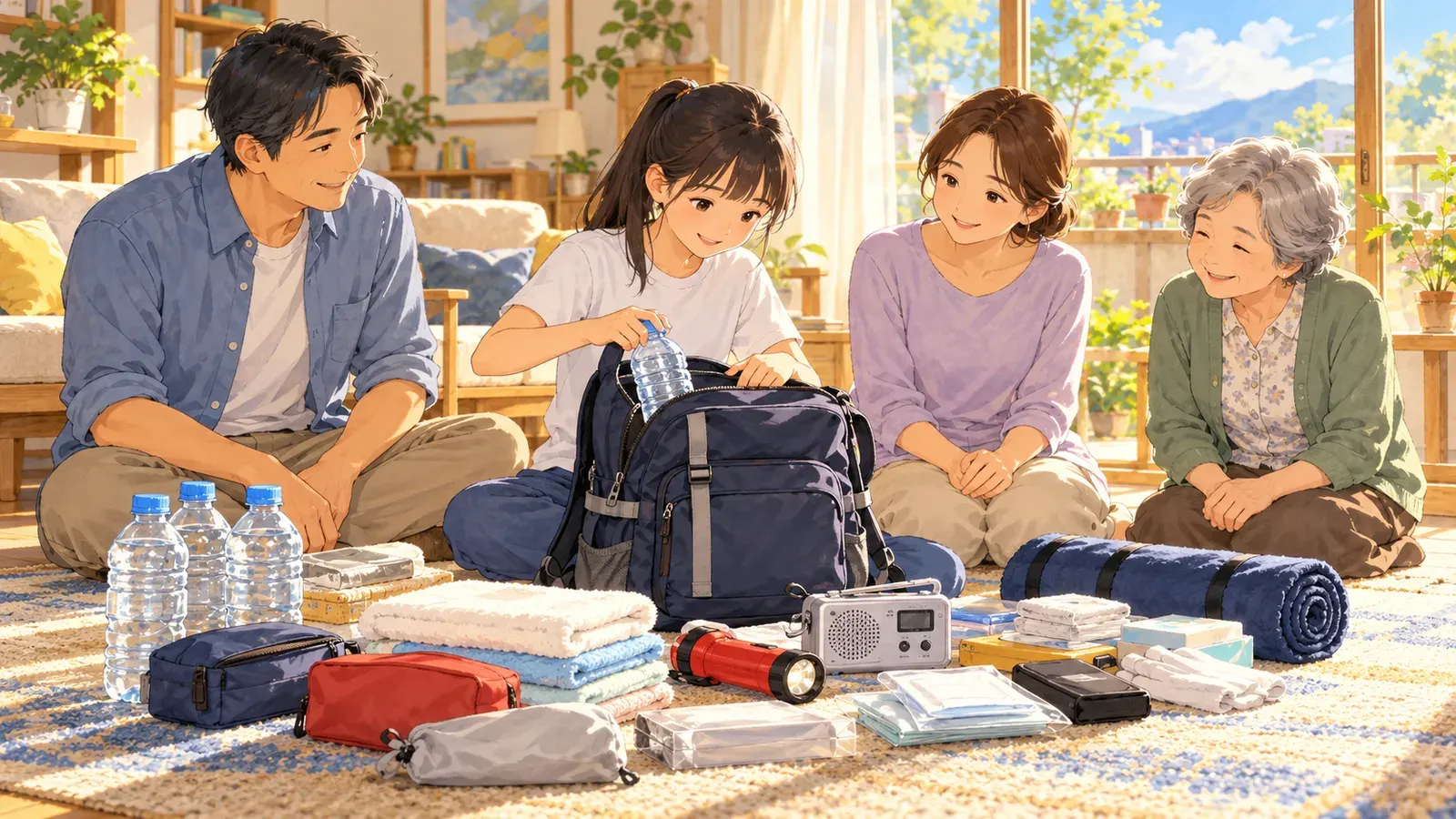
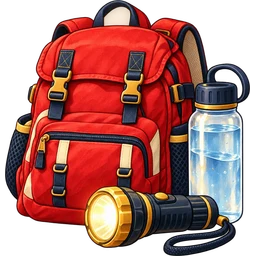
Yuna and her parents sat on the living room floor and made a list. First, they wrote water and food. They chose crackers, canned bread, and energy bars. They could eat these foods without cooking. Next, they wrote a flashlight, a small radio, batteries, and a portable charger for their phones.
ユナと両親は居間の床にすわって、リストを作りました。まず、水と食べ物を書きました。クラッカーやパンの缶詰、栄養バーを選びました。どれも料理しなくても食べられるものです。次に、懐中電灯、小さなラジオ、電池、スマホ用のモバイルバッテリーを書きました。
"What about medicine?" Yuna's mother asked. Her grandmother lives with them, and she needs medicine every day. They also added a first aid kit, masks, towels, a raincoat, and some emergency toilet bags. Yuna's father said, "We should put in some cash, too. Card payments may not work if the power goes out."
「薬はどうする?」とお母さんがたずねました。ユナの家にはおばあちゃんも一緒に住んでいて、毎日薬が必要なのです。ほかに、救急セット、マスク、タオル、レインコート、携帯トイレも加えました。お父さんは「現金も少し入れておこう。停電したら、カードで払えないかもしれないからね」と言いました。
Yuna put a whistle on her list. Her teacher said that if you are trapped, a whistle is easier than shouting. You can keep blowing it for a long time, and people can hear it from far away. Yuna also wrote her family's phone numbers on a card. She knew that her phone might not work after a disaster.
ユナはリストに笛も書き加えました。閉じこめられたときは、さけぶより笛を吹くほうが楽だと、先生が言っていたのです。笛なら長い間吹き続けられるし、遠くからでも聞こえます。ユナは、家族の電話番号もカードに書きました。災害のあとは、スマホが使えなくなるかもしれないとわかっていたからです。
When they finished, Yuna tried to pick up the bag. "It's too heavy!" she said. Her father laughed. Some city guides say that a bag should be no heavier than about fifteen kilograms for men and ten kilograms for women. Bags for children should be much lighter. Yuna took out some cans and bottles, and then she could carry it easily.
つめ終わって、ユナは袋を持ち上げようとしました。「重すぎる!」お父さんは笑いました。市の手引きの中には、袋の重さは男性ならおよそ15キロ、女性なら10キロまでを目安に、と書いているものもあります。子どもの袋は、それよりずっと軽くするべきです。ユナが缶詰やペットボトルをいくつか取り出すと、楽に運べるようになりました。
Making a bag is not the end. Food and batteries get old, and children grow bigger. Many experts say that families should check their bags once or twice a year. Yuna's family decided to check theirs every September 1 and every March 11.
袋を作ったら終わり、ではありません。食べ物や電池は古くなるし、子どもは大きくなります。家族で年に1、2回は袋の中身を確かめたほうがよい、と多くの専門家は言っています。ユナの家族は、毎年9月1日と3月11日に確かめることにしました。
Some people say that a bag is not enough. They think that it is more important to know where to go and how to get there. Yuna's family also looked at a hazard map of their town and walked to the nearest evacuation site together. It took them twelve minutes.
袋だけでは十分ではない、と言う人もいます。どこへ逃げればよいか、そこまでどう行けばよいかを知っておくことのほうが大切だ、と考えているのです。ユナの家族は、町のハザードマップも見て、いちばん近い避難場所まで家族で歩いてみました。12分かかりました。
What do you think? Some people say that every family should make an emergency bag now, because a disaster can happen at any time. Others say that a bag is not the most important thing, because knowing where to go and how to contact your family can save more lives.
あなたはどう思いますか。すべての家族が今すぐ非常持ち出し袋を作るべきだ、と言う人もいます。災害はいつ起きてもおかしくないからです。一方、袋がいちばん大切なわけではない、と言う人もいます。どこへ避難するか、どうやって家族と連絡をとるかを知っておくほうが、多くの命を救えるからです。
 4段落目に「Card payments may not work if the power goes out.」(停電するとカード決済が使えないかもしれない)とあります。
 原田英語の究極の英単語帳(CEFR-J 6,868語)

 聞くだけモードで、文字を見ずに内容がわかるか試す。
 1文リピートで音読・シャドーイングも。
 世界の名作童話