




 約6分
 3:52
 全訳つき
 お道具箱
 読書ラウンジ
It is two o'clock in the morning at a care home in a small town in Japan. Most of the residents are asleep. Suddenly, a small screen in the staff office lights up. A sensor under one woman's bed has noticed that she is sitting up.
日本のある小さな町の介護施設。午前2時です。入所者のほとんどは眠っています。突然、職員室の小さな画面が光ります。ある女性が体を起こしたことを、ベッドの下のセンサーが感知したのです。
A care worker, whom we will call Mr. Tanaka, walks quietly to her room before she tries to stand up alone. Without the sensor, he might not have known until she fell.
介護職員の田中さん(仮の名前です)は、その女性が一人で立ち上がろうとする前に、静かに部屋へ向かいます。センサーがなければ、女性が転ぶまで気づかなかったかもしれません。
Scenes like this are becoming more common. Japan is one of the oldest societies in the world. In 2026, 29.6 percent of its people were aged 65 or older, a higher share than in any other country with a large population. As the number of older people grows, more people need help with eating, bathing, and moving around.
こうした場面は、ますます増えています。日本は世界でもっとも高齢化が進んだ社会の一つです。2026年には、人口の29.6パーセントが65歳以上でした。人口の多い国の中では、ほかのどの国よりも高い割合です。お年寄りが増えるにつれて、食事や入浴、移動に手助けが必要な人も増えていきます。
However, there are not enough people to do this work. Care work is important, but it is physically hard, and many workers feel that the pay is low for such a tough job. In 2024, the Ministry of Health, Labour and Welfare estimated that Japan will need about 2.72 million care workers in 2040. That is about 570,000 more than in 2022. Many people believe that technology must be part of the answer.
ところが、この仕事をする人が足りません。介護は大切な仕事ですが、体力的にきつく、これほど大変な仕事のわりに給料が安いと感じている職員も多くいます。厚生労働省は2024年に、2040年には介護職員が約272万人必要になると推計しました。2022年より約57万人多い数です。解決策の一部として技術の力が欠かせない、と考える人はたくさんいます。
Care robots come in many types, and some of them do not look like the robots we see in movies. The bed sensor in Mr. Tanaka's care home is one example. Other sensors can check a person's breathing and sleep without using a camera, so staff do not have to open every door at night. This lets both residents and workers rest better.
介護ロボットにはいろいろな種類があり、映画に出てくるロボットのような見た目ではないものもあります。田中さんの施設にあるベッドのセンサーも、その一つです。カメラを使わずに、呼吸や眠りのようすを確かめられるセンサーもあります。そのため、職員が夜中に一部屋ずつドアを開けて見回る必要がありません。入所者も職員も、よく休めるようになるのです。
Another type helps with heavy work. Lifting a person from a bed into a wheelchair many times a day can hurt a worker's back. Wearable robots, which workers put on like a backpack or a special suit, can support the lower back when they lift someone. There are also machines that help move a person from a bed to a wheelchair safely.
力仕事を手伝うタイプもあります。ベッドから車いすへ人を抱きかかえて移す作業を一日に何度もくり返すと、職員は腰を痛めてしまうことがあります。リュックサックや特別なスーツのように身につけるロボットなら、人を持ち上げるときに腰を支えてくれます。ベッドから車いすへ、人を安全に移すのを助ける機械もあります。
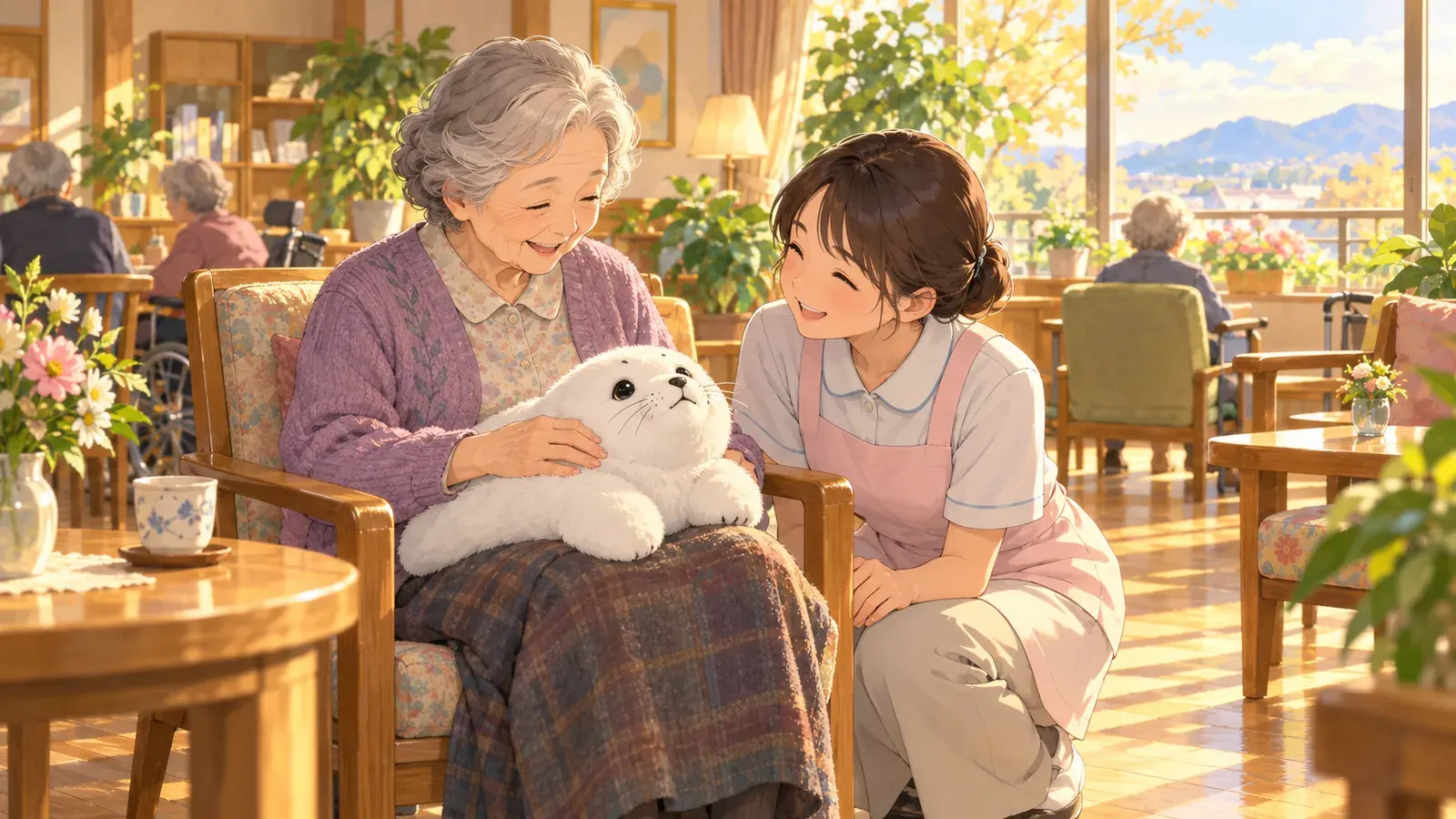
A third type helps people feel calm and happy. One famous example is PARO, a soft robot that looks like a baby seal. It was developed by a Japanese national research institute, and it moves its head and makes gentle sounds when people touch it or talk to it. It has been used in care homes in Japan and other countries, especially for people with dementia. Care workers have reported that some residents become calmer or more talkative when they hold it. Other small robots lead exercises, sing songs, or play quiz games with groups of residents.
三つ目のタイプは、人の心を落ち着かせ、明るい気持ちにしてくれるロボットです。有名な例が、赤ちゃんのアザラシの姿をした、やわらかいロボット「パロ」です。日本の国立の研究所が開発したもので、なでたり話しかけたりすると、頭を動かし、やさしい声で鳴きます。パロは日本やほかの国の介護施設で、特に認知症の人のために使われてきました。パロを抱くと落ち着いたり、口数が増えたりする入所者がいる、という介護職員の報告もあります。ほかにも、体操を指導したり、歌を歌ったり、入所者たちとクイズをしたりする小さなロボットもあります。
Supporters say that care robots help everyone. Workers suffer less pain and feel less tired, so they may be able to keep working longer. When machines do some of the checking and lifting, workers have more time for the most human parts of the job, such as talking with residents and listening to their stories. Some residents may also feel more independent if a machine helps them instead of a person.
介護ロボットはだれにとっても助けになる、と支持する人たちは言います。職員は体の痛みや疲れが減るので、もっと長く働き続けられるかもしれません。見回りや持ち上げる作業の一部を機械がしてくれれば、職員は、仕事の中でもいちばん人間らしい部分に時間を使えます。入所者と話したり、思い出話に耳を傾けたりすることです。人ではなく機械に手伝ってもらうほうが、自分の力で暮らしていると感じられる入所者もいるかもしれません。
However, not everyone is excited. Many robots are expensive. Some local governments help care homes pay for them, but small care homes still find it hard to buy them. Some machines take time to set up and are difficult to use, so busy workers stop using them. Some families worry about privacy when sensors watch their parents all night. Others ask a deeper question: is it right to give a robot to a lonely person instead of a human friend?
しかし、だれもが乗り気なわけではありません。ロボットの多くは値段が高いのです。施設の購入費を補助している自治体もありますが、小さな施設には、それでも買うのが難しいのが現状です。準備に時間がかかったり、使い方が難しかったりして、忙しい職員が使わなくなってしまう機械もあります。親が一晩中センサーに見守られることについて、プライバシーを心配する家族もいます。もっと根本的な問いを投げかける人もいます。さびしい思いをしている人に、人間の友達の代わりにロボットを与えるのは、正しいことなのでしょうか。
Many experts say that robots should be partners, not replacements. A robot can lift a person, but it cannot understand a person's feelings in the way a human can. The best care may come when machines handle the heavy and repeated tasks, and people give the warmth and kindness that only people can give.
ロボットは人の代わりではなく、パートナーであるべきだ、と多くの専門家は言います。ロボットは人の体を持ち上げることはできても、人間と同じように相手の気持ちを理解することはできません。重い作業やくり返しの作業は機械にまかせ、人は人にしかできない温かさとやさしさを届ける。そのとき、最もよい介護が生まれるのかもしれません。
What do you think? Some people say that Japan should use more care robots, because they reduce the heavy burden on workers and help solve the shortage of staff. Others say that we should not depend too much on robots, because older people need human contact, and the machines are expensive and sometimes difficult to use.
あなたはどう思いますか。日本はもっと介護ロボットを使うべきだ、と言う人もいます。職員の重い負担を減らし、人手不足を解消する助けになるからです。一方で、ロボットに頼りすぎるべきではない、と言う人もいます。お年寄りには人とのふれあいが必要ですし、機械は高価で、使いにくいこともあるからです。
 1段落目に「she is sitting up」(女性が起き上がっている)とあります。空腹や電話ではありません。

 原田英語の究極の英単語帳(CEFR-J 6,868語)

 聞くだけモードで、文字を見ずに内容がわかるか試す。
 1文リピートで音読・シャドーイングも。




 日本の昔話と名作


 名作文学