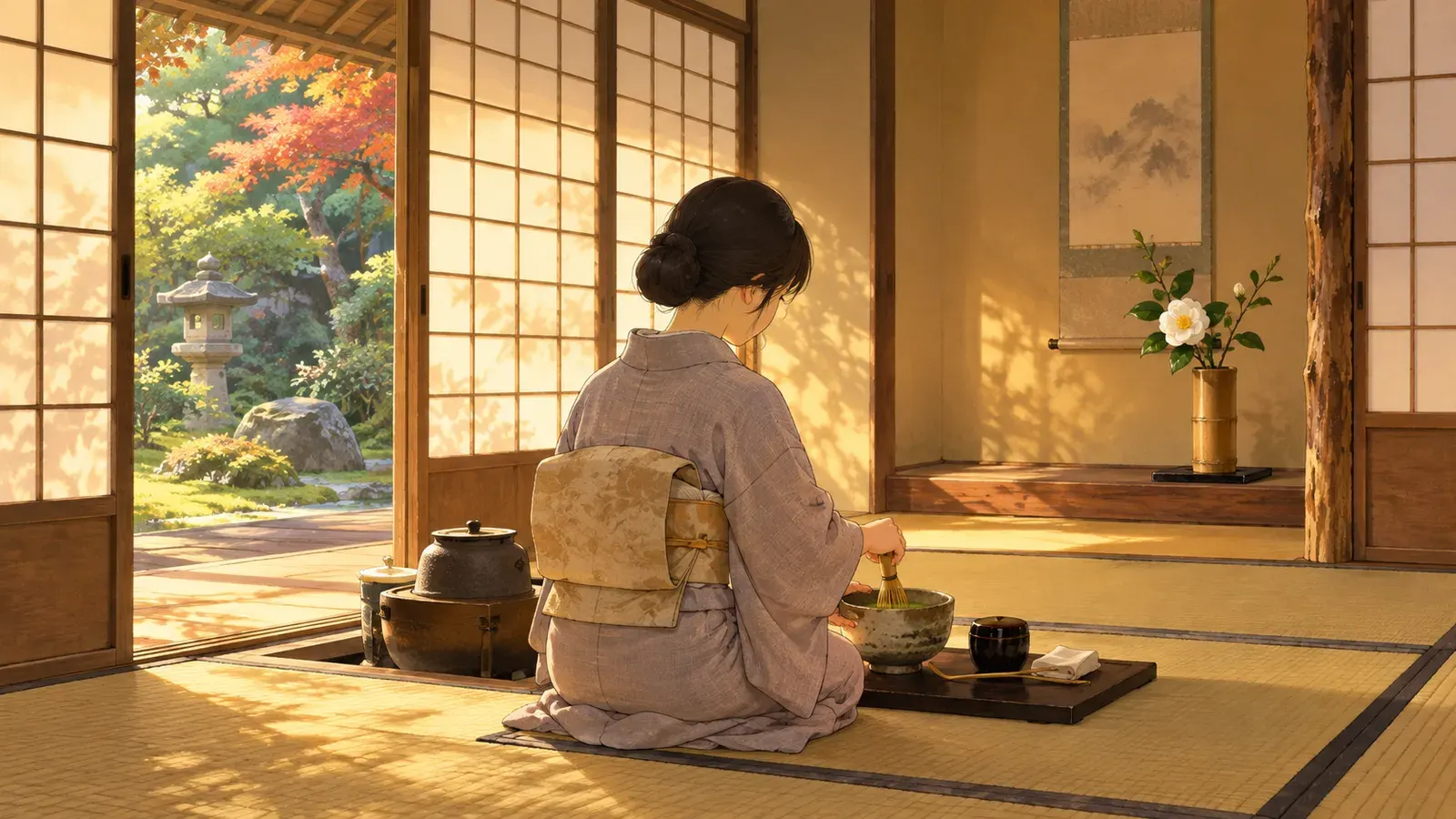
Imagine stepping into a small, quiet room with tatami mats. There is no furniture, only a hanging scroll and a single flower in a simple vase. Water is heating in an iron kettle, making a soft sound that people compare to wind in the pine trees. A host kneels in front of you and, with slow and careful movements, prepares one bowl of green tea just for you. This is chanoyu, the Japanese tea ceremony, also called sado, or "the way of tea."
畳の敷かれた、小さな静かな部屋に入っていくところを想像してください。家具はありません。あるのは掛け軸と、素朴な花入れに生けた一輪の花だけです。鉄の釜で湯が沸き、静かな音を立てています。松林をわたる風にたとえられる音です。亭主があなたの前に正座し、ゆっくりと、丁寧な手つきで、あなたのためだけに一杯のお茶をたててくれます。これが日本の「茶の湯」です。「茶道」、つまり「お茶の道」とも呼ばれます。
Tea came to Japan from China more than a thousand years ago, but at first it was rare and used mainly by monks and nobles. In the late twelfth century, a monk named Eisai, who had studied in China, helped spread the custom of drinking powdered green tea. Zen monks drank it to stay awake during long hours of meditation. Later, in the fifteenth and sixteenth centuries, tea masters turned the simple act of drinking tea into an art.
お茶が中国から日本に伝わったのは千年以上前ですが、はじめは貴重なもので、おもに僧や貴族が飲んでいました。12世紀の終わりごろ、中国で学んだ栄西という僧が、粉にした緑茶を飲む習慣を広めるのに力をつくしました。禅僧たちは、長い座禅の間に眠気をさますため、このお茶を飲みました。のちの15世紀から16世紀にかけて、茶人たちが、お茶を飲むというだけのことを一つの芸術に高めていったのです。
The most famous of these masters was Sen no Rikyu, who lived in the sixteenth century and served powerful leaders such as Oda Nobunaga and Toyotomi Hideyoshi. At a time when rich and powerful men loved showing off expensive tea bowls from China, Rikyu valued plain, natural, and imperfect beauty. This idea is often called wabi. He is said to have made tea rooms smaller and simpler, and he chose rough, handmade bowls. The three best-known schools of tea in Japan today were started by his descendants.
こうした茶人の中でいちばん有名なのが、千利休です。16世紀の人で、織田信長や豊臣秀吉といった権力者に仕えました。当時、金持ちや権力者たちは、中国から来た高価な茶碗を見せびらかすのを好みました。そんな時代に、利休は、飾り気のない、自然で、どこか不完全なものの美しさを大切にしたのです。この考え方は、よく「わび」と呼ばれます。利休は茶室をより小さく簡素にし、手作りの素朴な茶碗を選んだと言われています。今の日本でいちばんよく知られている三つの茶道の流派は、どれも利休の子孫が始めたものです。
One famous feature of a traditional tea room is its tiny entrance, called a nijiriguchi. It is only about 60 to 70 centimeters high, so every guest must bend low and crawl in. It is said that even samurai had to leave their swords outside. Inside, everyone was equal, whatever their rank in the outside world.
伝統的な茶室の有名な特徴の一つが、にじり口と呼ばれる小さな入り口です。高さはわずか60センチから70センチほどしかないので、客はみな体を低くかがめて、はうようにして入らなければなりません。武士でさえ、刀を外に置いていかなければならなかったと言われています。中に入れば、外の世界での身分にかかわらず、だれもが対等だったのです。
A formal tea gathering can last up to four hours and include a full meal, but most visitors today experience a shorter version that lasts about thirty minutes to an hour. Many tea houses, temples, and cultural centers offer such experiences, often with explanations in English. Here is what usually happens, and what you should do as a guest.
正式な茶会は4時間に及ぶこともあり、食事のコースがつくこともあります。でも今、旅行者の多くが体験するのは、30分から1時間ほどの短いものです。茶室やお寺、文化センターの多くがこうした体験を用意していて、英語の説明がつくことも少なくありません。ふつうどんな流れで進むのか、お客として何をすればよいのかを紹介しましょう。
First, prepare. Take off your shoes before stepping onto the tatami, and remove watches and large rings so that you do not scratch the precious tea bowls. Many people also wear clean white socks. In the room, guests usually sit in the seiza position, kneeling with their legs folded under them. This can be painful if you are not used to it. Do not worry; at most places for visitors, it is fine to sit more comfortably if you need to.
まず、準備です。畳に上がる前に靴を脱ぎます。大切な茶碗に傷をつけないように、腕時計や大きな指輪は外しておきます。清潔な白い靴下をはいていく人も多いです。部屋の中では、客はふつう正座をします。ひざを折りたたみ、その上に腰を下ろす座り方です。慣れていないと、足が痛くなるかもしれません。でも心配はいりません。旅行者向けの場所の多くでは、つらければ楽な座り方をしてかまいません。
Before the tea, you will be served a Japanese sweet, called wagashi. These sweets are often beautiful little works of art that show the season: a pink cherry blossom in spring, or a red maple leaf in autumn. Eat the sweet before the tea arrives. Its sweetness balances the slightly bitter taste of the tea.
お茶の前に、和菓子という日本のお菓子が出されます。和菓子は、季節を表した美しい小さな芸術品であることが多いです。春ならピンクの桜の花、秋なら赤いもみじの葉といった具合です。お菓子は、お茶が来る前に食べておきます。その甘さが、お茶のほのかな苦みとつりあうのです。
Then the host prepares the tea. Each movement, from wiping the tea scoop with a silk cloth to pouring the hot water, follows a set order. The host puts matcha, a fine green tea powder, into the bowl, adds hot water, and whisks it quickly with a bamboo whisk called a chasen until the tea is smooth and foamy. Watching these calm, careful movements is part of the experience.
それから亭主がお茶をたてます。絹の布で茶杓を拭くことから湯を注ぐことまで、一つ一つの動きの順序が決まっています。亭主は抹茶(細かい緑茶の粉)を茶碗に入れ、湯を注ぎます。そして茶筅という竹の泡立て器ですばやくかきまぜ、なめらかに泡立てます。その落ち着いた、丁寧な動きを眺めることも、体験の一部です。
When the bowl is placed in front of you, bow slightly to the person sitting next to you and say "Osaki ni," which means "Excuse me for going before you." Then pick up the bowl with your right hand and place it on the palm of your left hand. Bow a little to the host in thanks. Next, in many schools of tea, you turn the bowl clockwise in two small turns. The host placed the bowl with its most beautiful side, the "front," facing you. You turn it away so that you do not drink from the front. This is a way of showing respect and modesty.
茶碗が目の前に置かれたら、となりの人に軽くおじぎをして「お先に」と言います。あなたより先にいただいて失礼します、という意味です。それから右手で茶碗を取り、左の手のひらにのせます。亭主に軽くおじぎをして、感謝を表します。次に、多くの流派では、茶碗を時計回りに、2回に分けて少しずつ回します。亭主は、茶碗のいちばん美しい面、つまり「正面」をあなたに向けて置いてくれました。その正面に口をつけないように、正面をよそへ向けるのです。敬意と、へりくだる気持ちを表すしぐさです。
Drink the tea in a few sips. It is polite to make a small slurping sound on the last sip, to show that you have finished and enjoyed it. Wipe the edge where your lips touched with your fingers, then turn the bowl back so the front faces you again. Finally, put it down and take a moment to look at the bowl and admire it. In the tea ceremony, the bowl itself is something to appreciate, like a piece of art.
お茶は数口で飲みます。最後のひと口は、小さく音を立ててすするのが礼儀です。飲み終えたこと、おいしくいただいたことを示すのです。唇がふれたところを指でぬぐい、茶碗を回して、正面をまた自分のほうに向けます。最後に茶碗を置き、少し時間をとって、茶碗を眺めて味わいます。茶の湯では、茶碗そのものも、美術品のように鑑賞するものなのです。
If all these steps sound difficult, don't worry. Hosts who welcome visitors understand that you are new to the ceremony, and they will guide you. What matters most is not doing everything perfectly, but being present, quiet, and grateful.
こうした手順がむずかしそうに思えても、心配はいりません。旅行者を迎える亭主は、あなたが茶の湯は初めてだとわかっていて、ちゃんと教えてくれます。いちばん大切なのは、すべてを完ぺきにこなすことではありません。その場に心を向け、静かに、感謝の気持ちでいることです。
There is a well-known phrase connected with tea: ichigo ichie. It means "one time, one meeting." Each tea gathering happens only once. Even if the same people meet again in the same room, the season, the flowers, and their feelings will never be exactly the same. So the host and guests try to treat this one moment as something precious. Many Japanese people use this phrase in everyday life, too, to remind themselves to value each meeting with another person.
お茶にまつわる、よく知られた言葉があります。「一期一会」です。一生に一度の出会い、という意味です。茶会は、どれもたった一度きりのものです。同じ人たちが同じ部屋でまた集まったとしても、季節も花も、それぞれの気持ちも、まったく同じになることはありません。だから亭主も客も、このひとときをかけがえのないものとして大切にしようとするのです。多くの日本人は、普段の生活でもこの言葉を使います。人との一つ一つの出会いを大事にしよう、と自分に言い聞かせるためです。
How to explain it in English: "The tea ceremony is a traditional way of preparing and serving matcha, a powdered green tea. It's not just about drinking tea; it's about calm, respect, and enjoying the moment. We have a phrase, ichigo ichie, which means every meeting happens only once, so we should treat it as special."
英語で説明してみよう:「茶道は、抹茶(粉にした緑茶)をたてて客にふるまう、伝統的な作法です。ただお茶を飲むだけではありません。心を落ち着け、相手を敬い、その時を味わうことが大切なのです。『一期一会』という言葉があります。どの出会いも一度きりだから、特別なものとして大切にしよう、という意味です。」
 ▶