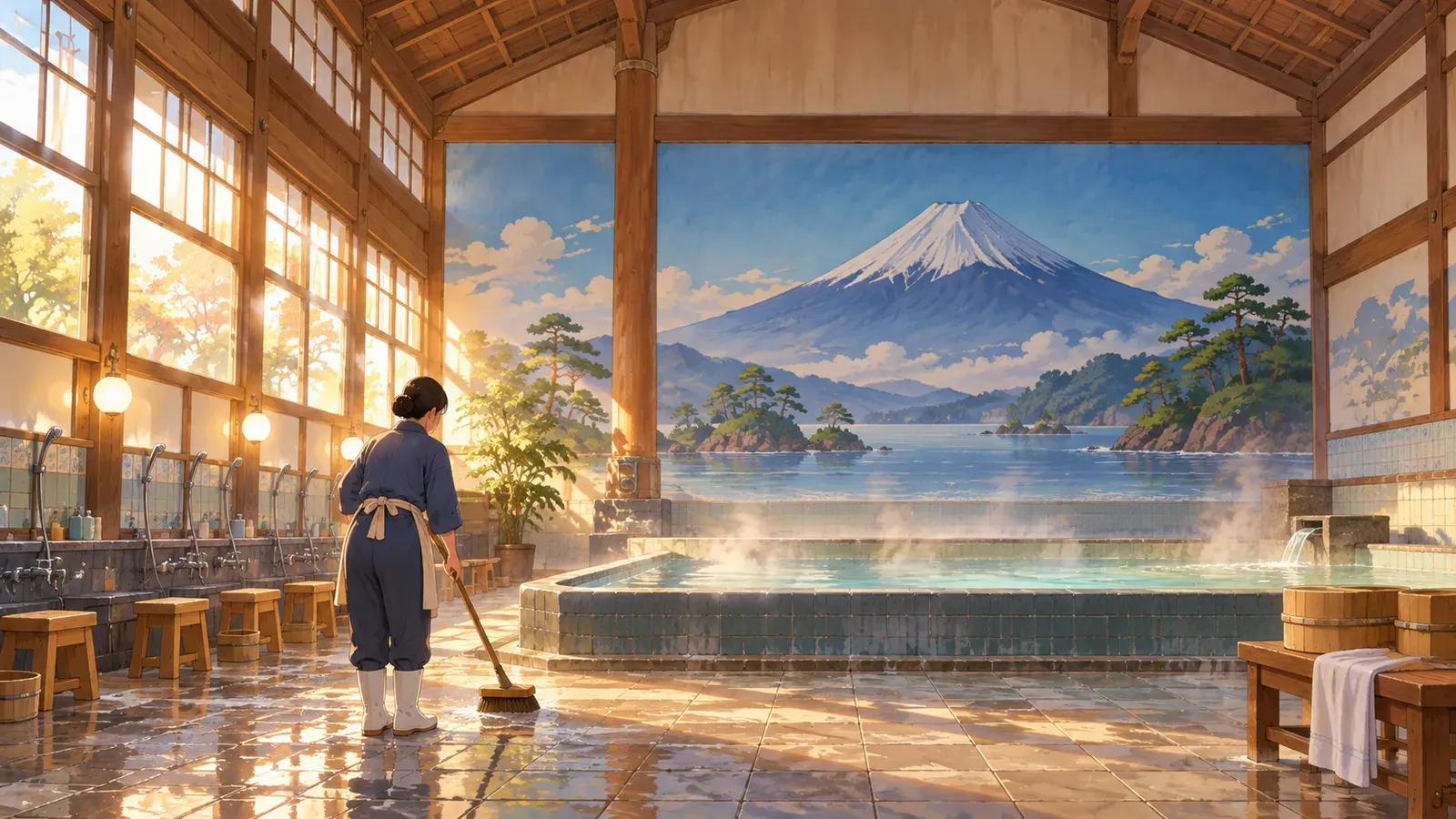
In a quiet neighborhood in Tokyo, a tall chimney rises above the rooftops. Below it is a building with a curved, temple-like roof and a cloth curtain over the door. Inside, an old man is scrubbing his back, a father is teaching his little son how to wash his hair, and on the wall, a huge painting of Mount Fuji looks down on everyone. This is a sento, a Japanese public bath. For centuries, sento have been more than a place to get clean. They have been the living rooms of Japan's towns.
東京の静かな住宅街に、高い煙突が屋根の上にそびえています。その下には、お寺のように反りかえった屋根の建物があり、入り口には布ののれんがかかっています。中では、おじいさんが背中をごしごしこすっています。お父さんが、小さな息子に髪の洗い方を教えています。そして壁からは、巨大な富士山の絵がみんなを見下ろしています。これが銭湯、日本の公衆浴場です。何百年もの間、銭湯はただ体をきれいにする場所ではありませんでした。日本の町の「居間」だったのです。
A sento is different from an onsen. An onsen uses natural hot spring water that comes from under the ground. A sento usually uses ordinary water that is heated, although some sento in Tokyo and other cities do use natural spring water. Sento were built in towns for everyday life, as a place where local people could bathe cheaply.
銭湯は温泉とは違います。温泉は、地下からわき出る天然の湯を使います。銭湯はたいてい、ふつうの水を沸かして使います。ただ、東京などの都市には、天然の温泉を使っている銭湯もあります。銭湯は、地元の人が安く入浴できるように、日々の暮らしのために町の中に作られたものです。
Public bathing in Japan has deep roots in Buddhism. Many centuries ago, large temples had bathhouses, and washing the body was seen as a way to clean the mind as well. Some temples opened their baths to poor and sick people as an act of kindness. Little by little, bathing came to be seen as something good for both health and the spirit.
日本の公衆浴場は、仏教に深いルーツをもっています。何百年も昔、大きなお寺には浴室があり、体を洗えば心も清められると考えられていました。思いやりの行いとして、貧しい人や病気の人に浴室を開放したお寺もありました。こうして少しずつ、入浴は体にも心にもよいものだと考えられるようになったのです。
Public baths that people paid to use appeared in cities by the late sixteenth century. Many people say one of the first in Edo, now Tokyo, opened in 1591. Early baths were often steam baths rather than deep tubs of hot water. To keep the steam inside, the entrance to the bath area was very low, and people had to bend down to get through it.
お金を払って入る公衆浴場は、16世紀の終わりには都市にあらわれていました。江戸(今の東京)で最初の銭湯の一つは、1591年に開かれたとよく言われます。初期の浴場は、深い湯ぶねにつかるものより、蒸し風呂が多かったのです。湯気を中に閉じこめておくため、浴場の入り口はとても低く、人々はかがんでくぐらなければなりませんでした。
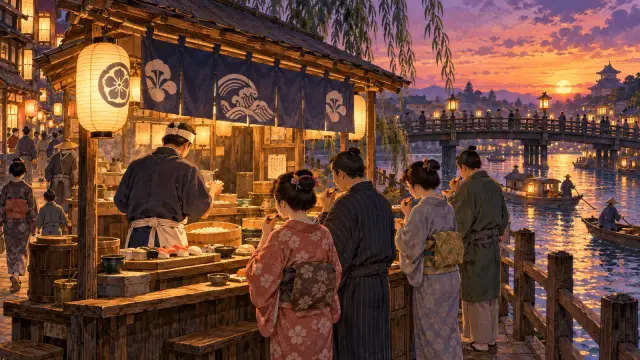
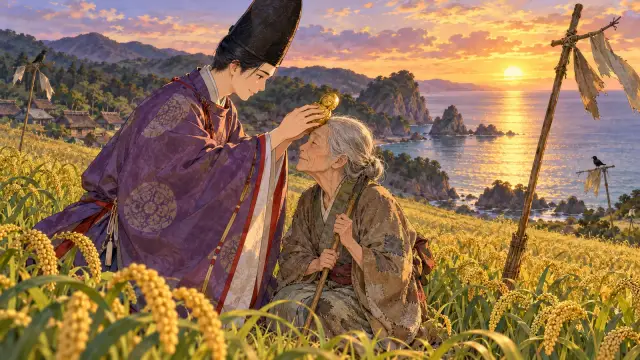
In the Edo period, sento became a key part of city life. Most homes in Edo had no bath. Fires were a constant danger in a city of wooden houses, and firewood and water were expensive. So people went to the neighborhood bath, often every day. By the early nineteenth century, there were several hundred sento in Edo. At first, men and women often bathed together, but the government tried again and again to stop this. Later, in the Meiji period, mixed bathing in city sento was strictly banned.
江戸時代、銭湯は町の暮らしに欠かせないものになりました。江戸のほとんどの家には、風呂がありませんでした。木造の家が建ちならぶ町では、いつも火事が心配でしたし、まきや水も高かったのです。そこで人々は近所の銭湯に、たいていは毎日通いました。19世紀のはじめには、江戸に数百軒の銭湯がありました。はじめは男女が一緒に入ることも多かったのですが、幕府は何度もそれをやめさせようとしました。のちの明治時代には、町の銭湯での混浴は厳しく禁止されました。
The sento was also a place to talk. Neighbors met there, shared news, and gossiped. Some sento had a room upstairs where men played board games and drank tea after their bath. A popular comic novel from the early nineteenth century, set in an Edo bathhouse, shows people of every kind chatting, joking, and arguing in the bath. In a crowded city, the sento was where the community came together.
銭湯は、おしゃべりの場所でもありました。近所の人たちがそこで顔を合わせ、ニュースを伝え合い、うわさ話をしました。2階に部屋があって、男たちが風呂上がりに将棋や碁を打ったり、お茶を飲んだりする銭湯もありました。19世紀はじめに人気を集めた滑稽本に、江戸の湯屋を舞台にしたものがあります。そこには、あらゆる種類の人が湯の中でおしゃべりをし、冗談を言い、言い争う様子がえがかれています。人でごったがえす町で、銭湯は地域の人々が集まる場所だったのです。
Many of the sento images that people know today come from the twentieth century. After the great earthquake of 1923 destroyed much of Tokyo, many new sento were built in a grand style with high curved roofs, like temples. The famous Mount Fuji paintings began around 1912, when a sento in Kanda, Tokyo, put a painting on its wall. It is said the owner wanted to please children. The idea was so popular that it spread to sento all over the Tokyo area. Today, only a few artists still paint these huge murals by hand.
今の人が思い浮かべる銭湯のイメージの多くは、20世紀に生まれたものです。1923年の大地震で東京の大部分が壊れたあと、新しい銭湯がたくさん建てられました。お寺のような、高く反りかえった屋根をもつ立派なつくりです。有名な富士山の絵の始まりは、1912年ごろ、東京・神田のある銭湯が壁に絵を描いたことです。主人が子どもたちを喜ばせたかったのだと言われています。このアイデアは大人気になり、東京周辺の銭湯に広まりました。今では、この巨大な壁画を手で描く絵師は、ほんの数人しか残っていません。
In the old style of sento, there was a raised seat called a bandai at the entrance, between the men's side and the women's side. The person sitting there collected money and watched both sides. Many newer sento have a front desk in the lobby instead. Other familiar sights include wooden lockers with wooden keys, old-fashioned scales for weighing yourself, and a refrigerator full of cold bottles of milk. Drinking a bottle of coffee milk or fruit milk, with one hand on your hip, after a hot bath is a classic sento tradition.
昔ながらの銭湯では、入り口の、男湯と女湯の間に、番台という一段高い席がありました。そこに座った人がお金を受け取り、両方の側を見守っていたのです。新しい銭湯の多くでは、かわりにロビーにフロントがあります。ほかにも、木の札のかぎがついた木のロッカー、昔ながらの体重計、冷たい瓶牛乳がぎっしりの冷蔵庫など、おなじみの光景があります。熱いお風呂から上がったら、腰に片手をあてて、瓶のコーヒー牛乳やフルーツ牛乳を飲む。これが銭湯の昔からのお決まりです。
After World War II, as cities grew, the number of sento grew too. Around 1968, there were about 18,000 sento across Japan, and more than 2,600 in Tokyo alone. But as more and more homes were built with their own baths, people stopped going to the neighborhood bath. Many sento closed, often because the owners were getting old and had no one to take over. Today, in Tokyo, fewer than 500 remain.
第二次世界大戦後、都市が大きくなるにつれて、銭湯の数も増えました。1968年ごろには、日本全国に約1万8千軒、東京だけでも2600軒以上の銭湯がありました。でも、風呂のある家がどんどん建てられるようになると、人々は近所の銭湯に通わなくなりました。経営者が高齢になり、跡を継ぐ人がいないという理由で、多くの銭湯が店を閉じました。今では、東京に残っているのは500軒足らずです。
However, sento are now enjoying a quiet comeback. Young people have discovered them as cheap, relaxing places to rest after work. Some old sento have been renovated with stylish designs, cafes, and modern saunas, and the popularity of saunas has brought many new customers. Others hold art shows and concerts. Sento lovers share maps and information online, and some travel around the country to visit as many sento as they can. The price is still low, because it is set by each prefecture, so a visit costs about the same as a cup of coffee.
ところが今、銭湯はひそかに復活しつつあります。若い人たちが、仕事帰りに安くくつろげる場所として、銭湯を見直しているのです。古い銭湯の中には、おしゃれなデザインに改装し、カフェや最新のサウナを備えたところもあります。サウナの人気のおかげで、新しいお客もたくさん来るようになりました。美術展やコンサートを開く銭湯もあります。銭湯好きの人たちはインターネットで地図や情報を共有していますし、できるだけ多くの銭湯をめぐろうと全国を旅する人もいます。料金は都道府県ごとに決められているので今でも安く、一回の入浴はコーヒー一杯ほどの値段です。
Visiting a sento is a lot like visiting an onsen, and the manners are the same. Wash your body well before getting into the bath. Do not put your towel in the water, and tie up long hair. Some sento have very hot water, so get in slowly. And when you leave, dry your body before you go back to the changing room, so the floor stays dry.
銭湯に行くのは温泉に行くのとよく似ていて、マナーも同じです。湯ぶねに入る前に体をよく洗いましょう。タオルはお湯に入れず、長い髪はまとめます。とても熱いお湯の銭湯もあるので、ゆっくり入りましょう。そして出るときは、床がぬれないように、体を拭いてから脱衣所に戻りましょう。
October 10 is Sento Day in Japan. In Japanese, the number 1010 can be read as "sen-to": "sen" means "one thousand," and "to" is one way to say "ten." On this day, many sento hold special events. It is a fun reminder that the old neighborhood bath is still part of Japanese life.
10月10日は、日本の「銭湯の日」です。日本語では、1010を「せん・とう」と読むことができるからです。「せん」は「千」、「とう」は「十」の読み方の一つです。この日には、多くの銭湯で特別なイベントが開かれます。昔ながらの町のお風呂が、今も日本の暮らしの一部であることを、楽しく思い出させてくれる日です。
How to explain it in English: "A sento is a Japanese public bath, usually with heated tap water, not natural hot spring water. In the past, most homes didn't have a bath, so people went to the sento every day and talked with their neighbors. Many sento have a big painting of Mount Fuji on the wall."
英語で説明してみよう:「銭湯は日本の公衆浴場で、ふつうは天然の温泉ではなく、沸かした水道水を使っています。昔はほとんどの家に風呂がなかったので、人々は毎日銭湯に通って、近所の人たちとおしゃべりをしました。多くの銭湯には、壁に大きな富士山の絵があります。」
 ▶