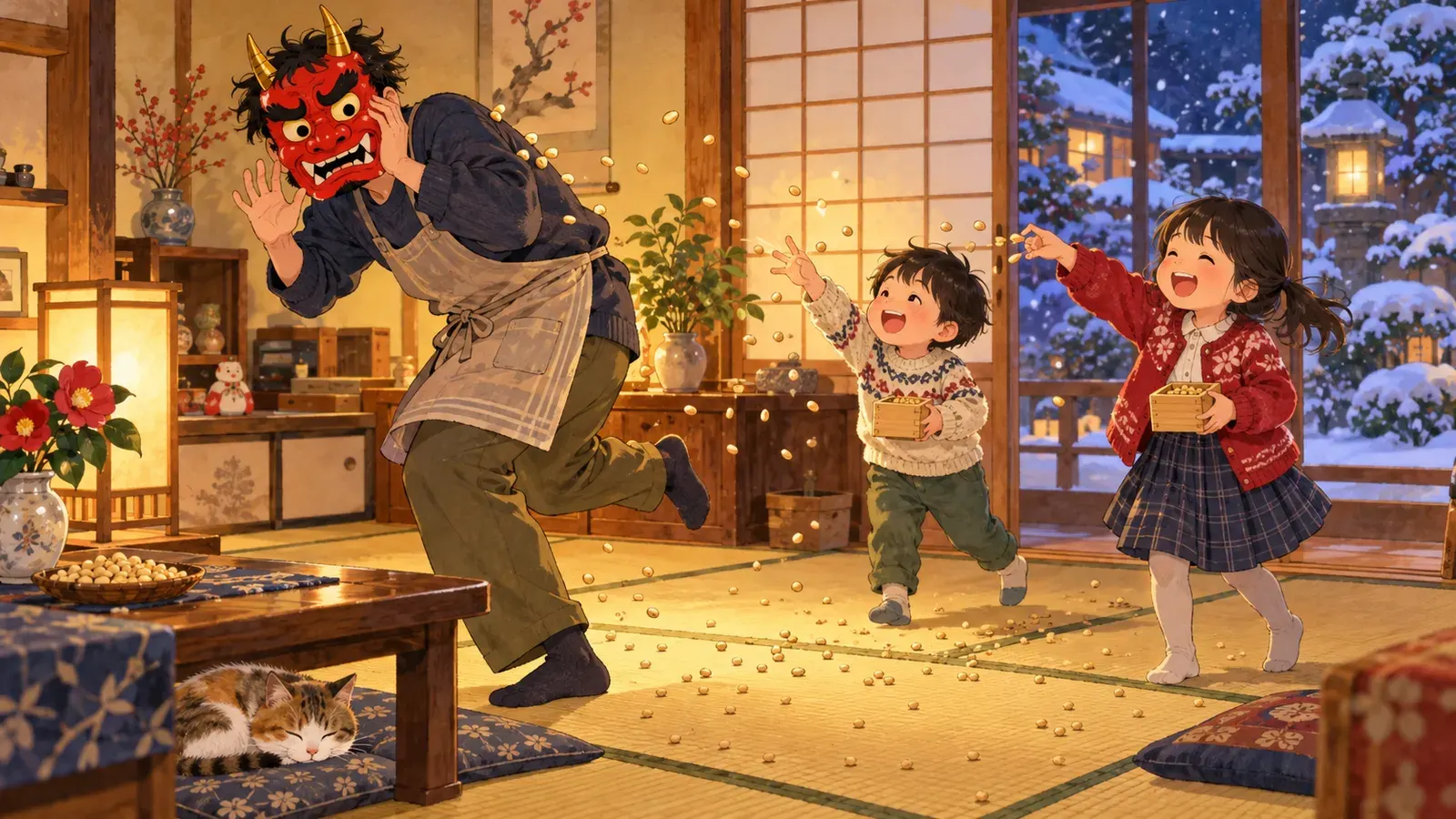
Early in February, you might hear a strange shout in Japanese homes and schools: "Oni wa soto! Fuku wa uchi!" It means "Ogres out! Good luck in!" At the same time, people are throwing beans. This is Setsubun, one of the most fun days of winter.
2月のはじめ、日本の家や学校から、不思議な掛け声が聞こえてくるかもしれません。「鬼は外! 福は内!」。鬼は出ていけ、幸運は入ってこい、という意味です。そう叫びながら、みんなで豆を投げています。これが節分です。冬でいちばん楽しい日の一つです。
Setsubun means "the division of the seasons." In the old calendar, spring started on a day called Risshun, around February 4. Setsubun is the day before it, so it is usually February 3. People believed that bad spirits came in when one season changed into the next. They wanted to chase them away before spring.
節分とは「季節の分かれ目」という意味です。昔の暦では、2月4日ごろの立春という日から春が始まりました。節分はその前の日なので、たいてい2月3日になります。季節の変わり目には悪いものが入りこんでくる、と昔の人は信じていました。そこで、春が来る前に追い払おうとしたのです。
The custom of throwing beans is called mamemaki. People use roasted soybeans. Often, the father puts on an oni mask, and the children throw beans at him. Oni are ogres from Japanese stories. They have horns, wild hair, and red or blue skin. When the "ogre" runs out of the house, everyone laughs and closes the door.
豆を投げる習わしを豆まきといいます。使うのは炒った大豆です。よくお父さんが鬼のお面をかぶり、子どもたちがお父さんめがけて豆を投げます。鬼とは、日本の昔話に出てくる怪物です。角があり、髪はぼさぼさで、肌は赤や青です。「鬼」が家から逃げ出していくと、みんなで笑ってドアを閉めます。
After that, people eat some of the beans. The custom is to eat the same number of beans as your age, or one more for the year ahead. This is for good health. For grandparents, that can be a lot of beans!
そのあと、豆をいくつか食べます。食べる数は、自分の年と同じ数か、これからの一年の分を足して一つ多くするのが習わしです。健康でいられるように、という願いが込められています。おじいちゃんやおばあちゃんは、かなりたくさん食べることになりますね!
Many big temples and shrines also hold mamemaki. Famous people such as sumo wrestlers and actors stand on a stage and throw beans and small bags of candy to the crowd. People reach up with both hands to catch some luck.
大きなお寺や神社の多くでも豆まきが行われます。力士や俳優などの有名人が舞台に立ち、豆やお菓子の小袋を集まった人々にまきます。人々は福をつかもうと、両手を伸ばします。
There is another Setsubun custom called ehomaki. It started in the Osaka area, and it spread across Japan when convenience stores began to sell it. Ehomaki is a thick sushi roll. You face the lucky direction of the year and eat the whole roll without cutting it. You must not talk until you finish! People say that cutting it will cut your luck.
節分にはもう一つ、恵方巻きという習わしがあります。これは大阪のあたりで始まり、コンビニが売り出したことで全国に広まりました。恵方巻きは太い巻きずしです。その年の縁起のよい方角を向いて、切らずに一本まるごと食べます。食べ終わるまで、しゃべってはいけません! 切ると運も切れてしまう、と言われています。
Some families also put a holly branch and a sardine head by the door. People say that ogres hate the sharp leaves and the smell of the fish.
ヒイラギの枝とイワシの頭を戸口に飾る家もあります。鬼はとがった葉と魚の匂いが嫌いなのだそうです。
How to explain it in English: "Setsubun is the day before the start of spring in the old calendar, usually February 3. We throw roasted beans and shout, 'Ogres out, good luck in!' Then we eat as many beans as our age for good health."
英語で説明してみよう:「節分は昔の暦で春が始まる日の前日で、たいてい2月3日です。炒った豆をまいて『鬼は外、福は内』と叫びます。それから健康を願って、年の数だけ豆を食べます。」
 ▶