Imagine you take a trip to Hokkaido. On Monday, you go back to school or work. What do you bring with you? In Japan, the answer is clear: omiyage! Omiyage are gifts, usually food, that you bring back from a trip for the people around you.
北海道へ旅行したと想像してください。月曜日には学校や職場にもどります。そのとき何を持っていきますか? 日本では答えははっきりしています。おみやげです! おみやげとは、旅行先からまわりの人のために持ち帰る贈り物のことで、たいていは食べ物です。
In English, people often translate omiyage as "souvenir." But they are a little different. A souvenir is often something for yourself, like a key chain or a T-shirt. Omiyage are mostly for others: your family, friends, classmates, and coworkers.
英語では、おみやげはよく souvenir と訳されます。でも、この二つは少しちがいます。souvenir は、キーホルダーやTシャツなど、自分のためのものであることが多いのです。おみやげはおもに、家族、友達、クラスメート、職場の同僚など、ほかの人のためのものです。
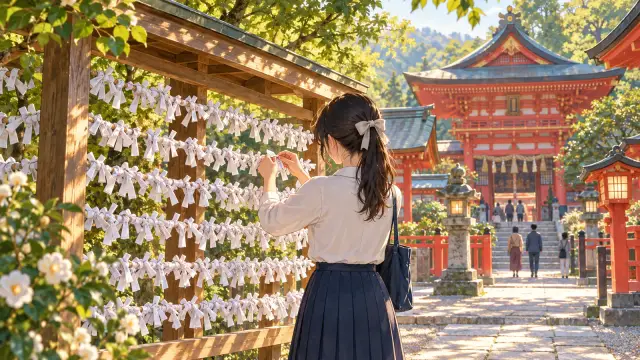
Why do people give omiyage? One popular explanation is about the past. Long ago, people went on long trips to visit famous shrines and temples. The trips were expensive, so neighbors often gave money to help. When the traveler came home, he brought back gifts from the shrine to say thank you. Today, people still give omiyage to share the trip. They also want to thank the people who did their work while they were away.
人はなぜおみやげを配るのでしょう? よく言われるのは、昔の旅にまつわる説です。昔の人は、有名な神社やお寺にお参りするために、長い旅に出ました。旅にはお金がかかるので、近所の人たちがよくお金を出して助けてくれました。そこで旅人は、家に帰ると、お礼に神社のおみやげを持ち帰ったのです。今でも、旅の楽しさを分け合うためにおみやげを配ります。留守の間に仕事を引き受けてくれた人たちに、お礼を言う意味もあります。
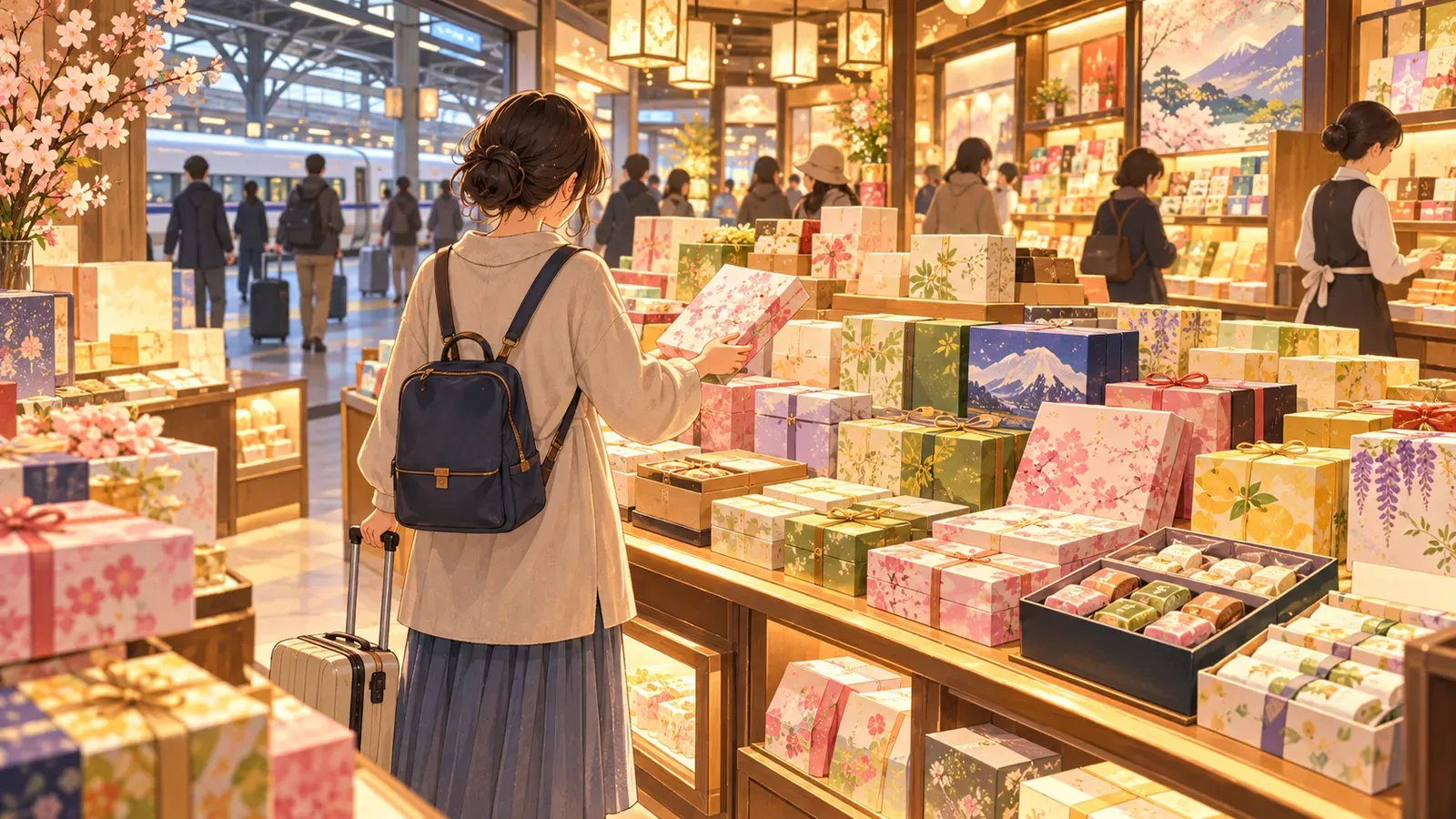
The best omiyage is easy to share. That is why many omiyage are boxes of sweets or cookies, with each piece in its own small bag. At work, people often put the box on a table with a note, and everyone takes one.
いちばんいいおみやげは、分けやすいものです。だから、お菓子やクッキーを一つずつ小さな袋に入れて、箱につめたおみやげが多いのです。職場では、メモをそえて箱をテーブルに置いておき、みんなが一つずつ取っていくことがよくあります。
Every area of Japan has its own special omiyage. Many shops at stations and airports sell gifts that you can buy only in that area. They are often made with local food, like melons, sweet potatoes, or green tea. Some famous snacks even come in special local flavors. These products are called gotochi, or "local" products.
日本の各地には、その土地ならではのおみやげがあります。駅や空港の店では、その地域でしか買えないおみやげをたくさん売っています。メロンやさつまいも、緑茶など、地元の食材を使ったものが多いです。有名なお菓子に、その土地だけの特別な味があることさえあります。こうした、その土地ならではの商品を「ご当地」ものと呼びます。
When people visit someone's home, they also bring a small gift. This is called temiyage. It is polite to give it with both hands. In the past, people often said, "Tsumaranai mono desu ga," which means "It's only a small thing, nothing special." This was a humble way of speaking. Today, many people say something more positive, like "I hope you like it."
人の家を訪ねるときにも、ちょっとした贈り物を持っていきます。これを手みやげといいます。両手でわたすのが礼儀です。昔はよく「つまらないものですが」と言いました。ほんのささやかなもので、大したものではありません、という意味です。自分をへりくだった言い方でした。今では「気に入ってもらえるとうれしいです」のように、もっと前向きな言い方をする人も多くなっています。
If someone gives you a big gift, for example for a wedding, people often give something back later. This is called okaeshi, or "a return gift."
結婚祝いなどで大きな贈り物をもらったら、あとで何かを返すことがよくあります。これを「お返し」といいます。
How to explain it in English: "Omiyage are gifts from a trip that we give to family, friends, and coworkers. They are often local sweets in small packs, so everyone can share them. It is a way to say thank you and share the trip."
英語で説明してみよう:「おみやげは、旅行先から家族や友達、職場の人に配る贈り物です。みんなで分けられるように、小分けになった地元のお菓子であることが多いです。お礼を伝え、旅の楽しさを分け合う方法なのです。」