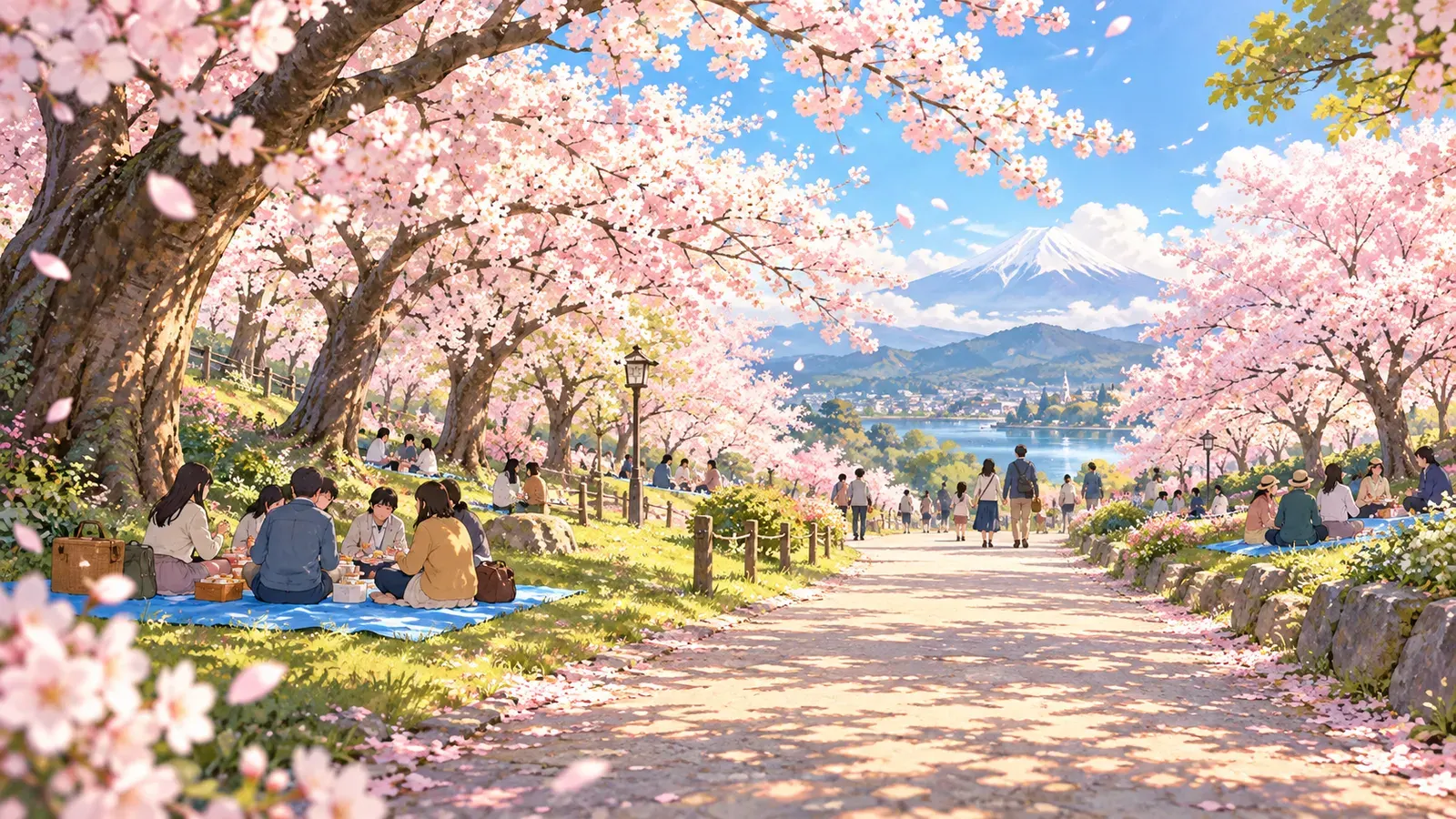
Every spring, for about one or two weeks, Japanese parks turn pink and white. Under the cherry trees, thousands of people sit on blue plastic sheets. They are eating, drinking, laughing, and looking up. They are enjoying hanami. "Hana" means "flower," and "mi" means "looking." But hanami is more than looking. It is a party.
毎年春になると、1、2週間ほど、日本の公園はピンクと白に染まります。桜の木の下では、何千人もの人が青いビニールシートに座っています。食べたり、飲んだり、笑ったり、見上げたりしています。花見を楽しんでいるのです。「はな」は「花」、「み」は「見ること」という意味です。でも花見は、見るだけではありません。パーティーなのです。
People in Japan have enjoyed flower viewing for more than a thousand years. At first, nobles in the old capital enjoyed plum flowers and wrote poems about them. Later, cherry blossoms became more popular. In 1598, a powerful leader named Toyotomi Hideyoshi held a huge hanami party in Kyoto. In the Edo period, many cherry trees were planted in Edo, now Tokyo, and ordinary people began to enjoy hanami too.
日本の人々は千年以上も前から花を見て楽しんできました。はじめは、昔の都の貴族たちが梅の花を楽しみ、それについて歌をよみました。のちに、桜の花のほうが人気になりました。1598年には、豊臣秀吉という権力者が京都で大規模な花見の宴を開きました。江戸時代になると、江戸、つまり今の東京にたくさんの桜の木が植えられ、ふつうの人々も花見を楽しむようになりました。
A good hanami spot is hard to get on a weekend. In some companies, the newest worker has an important job. He or she goes to the park early in the morning, puts down a sheet, and waits there for hours to save a place. This is called basho-tori, or "spot taking." The others arrive later with food and drinks.
週末にいい花見の場所を取るのは大変です。会社によっては、いちばん新しく入った社員に大切な仕事がまかされます。朝早く公園へ行ってシートを広げ、何時間もそこで待って場所を確保するのです。これを「場所取り」といいます。ほかの人たちは、あとから食べ物や飲み物を持ってやってきます。
What do people eat? Many bring bento lunch boxes, onigiri, fried chicken, and sweets. One famous sweet is hanami dango. It has three small rice dumplings on a stick: pink, white, and green. There is even a Japanese saying, "Hana yori dango." It means "dumplings rather than flowers." It is about people who care more about useful things, like food, than beautiful things.
何を食べるのでしょう? お弁当やおにぎり、からあげ、お菓子を持ってくる人が多いです。有名なお菓子の一つに花見だんごがあります。串に小さなおだんごが三つささっていて、色はピンク、白、緑です。「花より団子」ということわざまであります。花よりもだんごのほうがいい、という意味です。美しいものより、食べ物のように役に立つものを大事にする人のことです。
Hanami at night is also popular. It is called yozakura, or "night cherry blossoms." In many parks, lanterns or lights shine on the trees. The flowers look white and almost magical against the dark sky. It is often cold at night in early spring, so bring a jacket.
夜の花見も人気があります。これを夜桜といいます。多くの公園では、ちょうちんや明かりが木を照らします。暗い空にうかぶ花は白く、まるで魔法のようです。春のはじめの夜は冷えこむことが多いので、上着を持っていきましょう。
There are some manners to remember. Do not climb the trees or pull the branches. Take all your trash home, or use the trash cans in the park. Some parks do not allow barbecues or loud music. And do not leave your sheet there all day with nobody on it.
覚えておきたいマナーがあります。木に登ったり、枝を引っぱったりしてはいけません。ごみはすべて持ち帰るか、公園のごみ箱を使いましょう。バーベキューや大音量の音楽を禁止している公園もあります。それから、だれもいないのにシートを一日中置きっぱなしにしてはいけません。
Why do Japanese people love hanami so much? The flowers are beautiful, but they fall after only a few days. This reminds people that good times do not last forever. So people want to enjoy them together, right now.
日本人はなぜこんなに花見が好きなのでしょう? 桜の花は美しいけれど、ほんの数日で散ってしまいます。楽しい時はいつまでも続かない。桜を見ると、そう気づかされるのです。だからこそ、今この時を、みんなで楽しみたいのです。
How to explain it in English: "Hanami means 'flower viewing.' In spring, we have picnics under the cherry trees with friends, family, or coworkers. We eat, talk, and enjoy the flowers before they fall."
英語で説明してみよう:「花見は『花を見ること』という意味です。春には、友達や家族、職場の仲間と桜の木の下でピクニックをします。花が散る前に、食べたり話したりしながら花を楽しむのです。」
 ▶