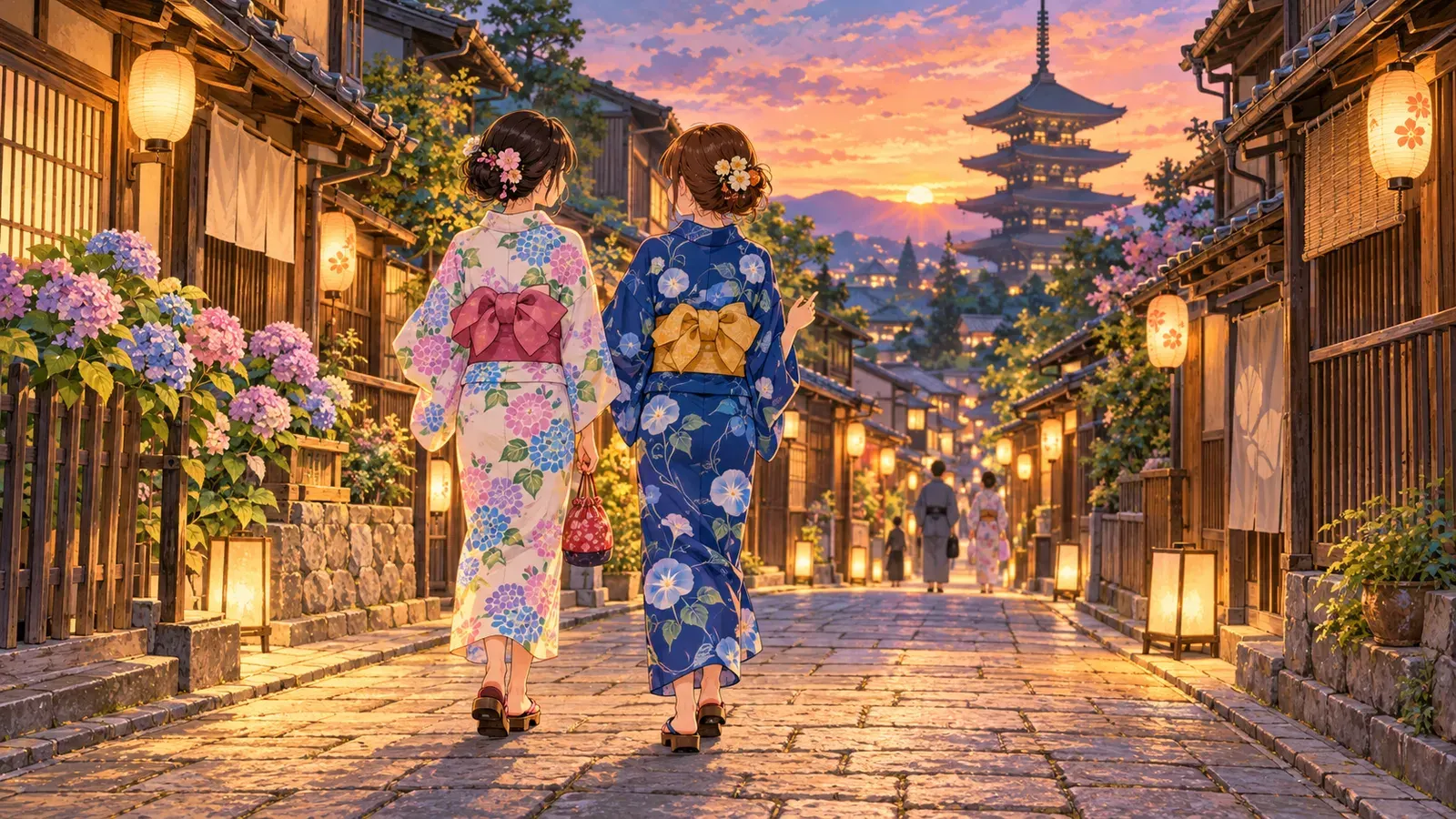
The word kimono simply means "a thing to wear." In the past, most Japanese people wore kimono every day. Western clothes slowly became common after the 1870s, and especially after World War II. Today, most people wear Western clothes, but the kimono is still loved as Japan's traditional dress. You can see it at weddings, graduations, tea ceremonies, and New Year visits to shrines.
「きもの」という言葉は、ただ「着るもの」という意味です。昔は、ほとんどの日本人が毎日着物を着ていました。洋服は1870年代以降に少しずつ広まり、とくに第二次世界大戦後にふつうのものになりました。今ではほとんどの人が洋服を着ていますが、着物は今でも日本の伝統的な服として愛されています。結婚式、卒業式、茶会、お正月の初詣などで見ることができます。
A kimono is made from long, straight pieces of cloth. It has wide sleeves and wraps around the body. It is held in place with a wide belt called an obi. Tying an obi well is not easy. Many people go to special teachers or shops to get help putting on a formal kimono. It can take thirty minutes or more!
着物は、長くまっすぐな布を組み合わせて作られています。袖は広く、体に巻きつけるように着ます。帯という幅の広いベルトでとめます。帯を上手に結ぶのはかんたんではありません。正式な着物を着るときは、専門の先生や店に行って手伝ってもらう人が多いです。30分以上かかることもあるのです!
There is one very important rule. Always put the left side over the right side. You can remember it this way: your right hand should be able to slip easily into the front of your kimono. The other way, right over left, is used only for dead people at funerals. So this small mistake is a big one!
とても大切な決まりが一つあります。必ず左側を右側の上に重ねること。こう覚えるといいでしょう。右手が着物のえりもとに、すっと差しこめれば正しい着方です。逆に右を上にする着方は、お葬式で亡くなった人にだけ使います。だから、この小さなまちがいは、大きなまちがいなのです!
There are many kinds of kimono. Young unmarried women wear furisode, with very long sleeves that almost touch the floor. Many wear them at the Coming of Age ceremony, when they become adults. Married women wear tomesode, with shorter sleeves, at weddings. Men's kimono are usually darker in color, and for formal events, men wear a hakama, wide pleated pants, over them.
着物には、たくさんの種類があります。若い未婚の女性は、床につきそうなほど袖の長い振袖を着ます。大人になったことを祝う成人式に、振袖を着る人がたくさんいます。結婚している女性は、結婚式で袖の短い留袖を着ます。男性の着物はたいてい色が暗めです。正式な場では、着物の上に袴をはきます。袴とは、ひだのある幅の広いズボンです。
Formal kimono are made of silk and can be very expensive. A beautiful furisode can cost as much as a car! Because of this, many families pass a kimono down from mother to daughter, or they rent one for the day.
正式な着物は絹でできていて、とても高価なことがあります。美しい振袖は車一台と同じくらいの値段がすることもあります! そのため、母から娘へと着物を受けついだり、一日だけ借りたりする家族も多いのです。
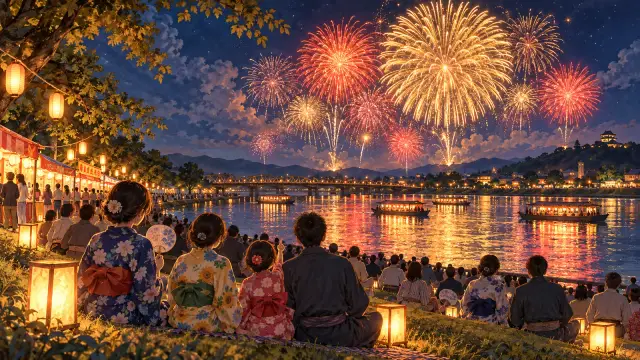
The yukata is the kimono's casual summer cousin. It is made of light cotton, so it is cool and easy to wash. "Yu" means "hot water," and long ago a yukata was something people wore after a bath. Today, people wear colorful yukata to summer festivals and fireworks shows. Putting on a yukata is much easier than putting on a kimono, and many young people learn to do it themselves.
浴衣は、いわば着物の気軽な夏版です。軽い木綿でできているので、すずしくて洗うのもかんたんです。「ゆ」は「お湯」という意味で、昔、浴衣はお風呂あがりに着るものでした。今では、夏祭りや花火大会に色あざやかな浴衣を着ていきます。浴衣を着るのは着物よりずっとかんたんで、自分で着られるように習う若い人もたくさんいます。
If you stay at a ryokan, a traditional Japanese inn, you will usually find a yukata in your room. You can wear it in the inn, to dinner, and even to walk around a hot spring town. Remember: left over right!
日本の伝統的な宿である旅館に泊まると、たいてい部屋に浴衣が用意されています。宿の中や夕食のとき、さらには温泉街を散歩するときにも着ていけます。忘れないで、左が上ですよ!
With kimono and yukata, people wear traditional shoes. Geta are wooden sandals that make a nice "karan-koron" sound on the street. Zori are flatter and more formal. With kimono, people wear white socks called tabi, which have a separate space for the big toe.
着物や浴衣には、伝統的なはきものを合わせます。下駄は木のサンダルで、道を歩くと「カランコロン」とよい音がします。草履はもっと平らで、より正式なはきものです。着物には足袋という白いくつ下をはきます。足袋は親指のところが分かれています。
In places like Kyoto and Asakusa in Tokyo, there are many kimono rental shops. For a few thousand yen, staff will dress you, and some will even do your hair. Then you can walk around old streets and temples for the day. Many Japanese people say they are happy to see visitors enjoying kimono, as long as they wear it with care and respect.
京都や東京の浅草などには、着物のレンタル店がたくさんあります。数千円で店の人が着せてくれますし、髪をセットしてくれる店まであります。そのまま一日、古い町なみやお寺を歩いて回れるのです。大切に、敬意をもって着てくれるなら、旅行者が着物を楽しむ姿を見るのはうれしい。そう話す日本人はたくさんいます。
How to explain it in English: "Kimono is Japan's traditional clothing, and today we wear it for special events like weddings. A yukata is a light cotton kimono for summer festivals. When you wear one, always put the left side over the right side."
英語で説明してみよう:「着物は日本の伝統的な衣服で、今では結婚式などの特別な行事で着ます。浴衣は夏祭りで着る軽い木綿の着物です。着るときは、必ず左側を右側の上に重ねてください。」
 ▶
 ▶