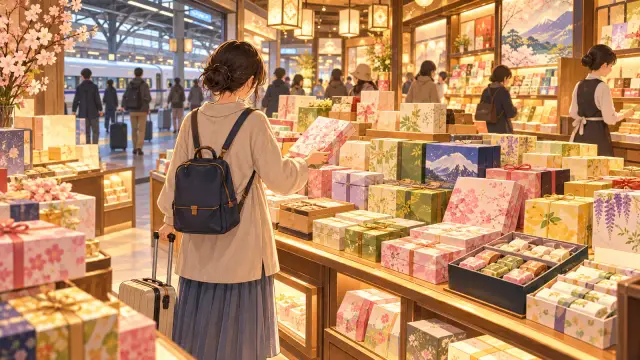
At almost every shrine and temple in Japan, there is a small counter with colorful little bags. They are made of beautiful cloth, and they have a string for hanging. These are omamori, or lucky charms. Near the same counter, you will often find a box of paper fortunes called omikuji.
日本のほとんどの神社やお寺には、色とりどりの小さな袋が並んだ小さな窓口があります。袋はきれいな布でできていて、つるすためのひもがついています。これがお守りです。同じ窓口の近くには、運勢を書いた紙、おみくじの箱が置いてあることもよくあります。
"Mamoru" means "to protect," so omamori protect you. Each one has a different job. There are omamori for good health, safe driving, success in study, finding love, and having a baby safely. Students often hang an exam charm on their school bags. Drivers hang one in their cars.
お守りの「守り」は「守る」という意味です。その名のとおり、持つ人を守ってくれます。お守りには、それぞれ別の役目があります。健康、交通安全、学業成就、恋愛成就、安産などのお守りがあります。学生は、合格祈願のお守りを通学かばんにつけていることがよくあります。運転する人は、車の中につるします。
Inside the little bag, there is a piece of paper or wood with a prayer on it. But you should never open the bag! People believe that the power will go away if you look inside.
小さな袋の中には、祈りの言葉が書かれた紙や木の札が入っています。でも、袋は決して開けてはいけません! 中を見ると力がなくなってしまうと信じられているのです。
People usually keep an omamori for about one year. Then they take it back to a shrine or temple. There, it is burned with thanks in a special ceremony. It is not good to throw it away in the trash. Then they get a new one for the new year.
お守りは、ふつう1年ほど持っておきます。そのあと、神社やお寺に返しに行きます。返したお守りは、感謝をこめて、特別な儀式で燃やしてもらいます。ごみ箱に捨てるのはよくありません。そして、新しい年のために新しいお守りを受けるのです。
Omikuji are a little like a game. You pay a small amount of money, usually one or two hundred yen. Then you shake a box until a stick comes out, or you simply pick a folded paper. Your paper tells your luck. The best is daikichi, "great luck." There are several kinds of good luck, like kichi, "good luck," and shokichi, "small luck." Near the bottom is kyo, "bad luck."
おみくじは、ちょっとゲームのようなものです。少しのお金(たいてい100円か200円)を納め、棒が出てくるまで箱を振るか、折りたたまれた紙を一枚引きます。その紙に、あなたの運勢が書いてあります。いちばんいいのは大吉。よい運には、ほかにも吉や小吉などがあります。下のほうにあるのが凶、つまり悪い運です。
The paper also gives advice about many parts of life: study, work, travel, health, love, and even lost things. For example, it might say, "Your lost thing will be found, but it will take time." Many people read it very carefully.
おみくじには、勉強、仕事、旅行、健康、恋愛、さらには失くし物など、生活のさまざまなことについてのアドバイスも書かれています。たとえば「失せ物、出る。ただし時間がかかる」などと書いてあったりします。とても念入りに読む人がたくさんいます。
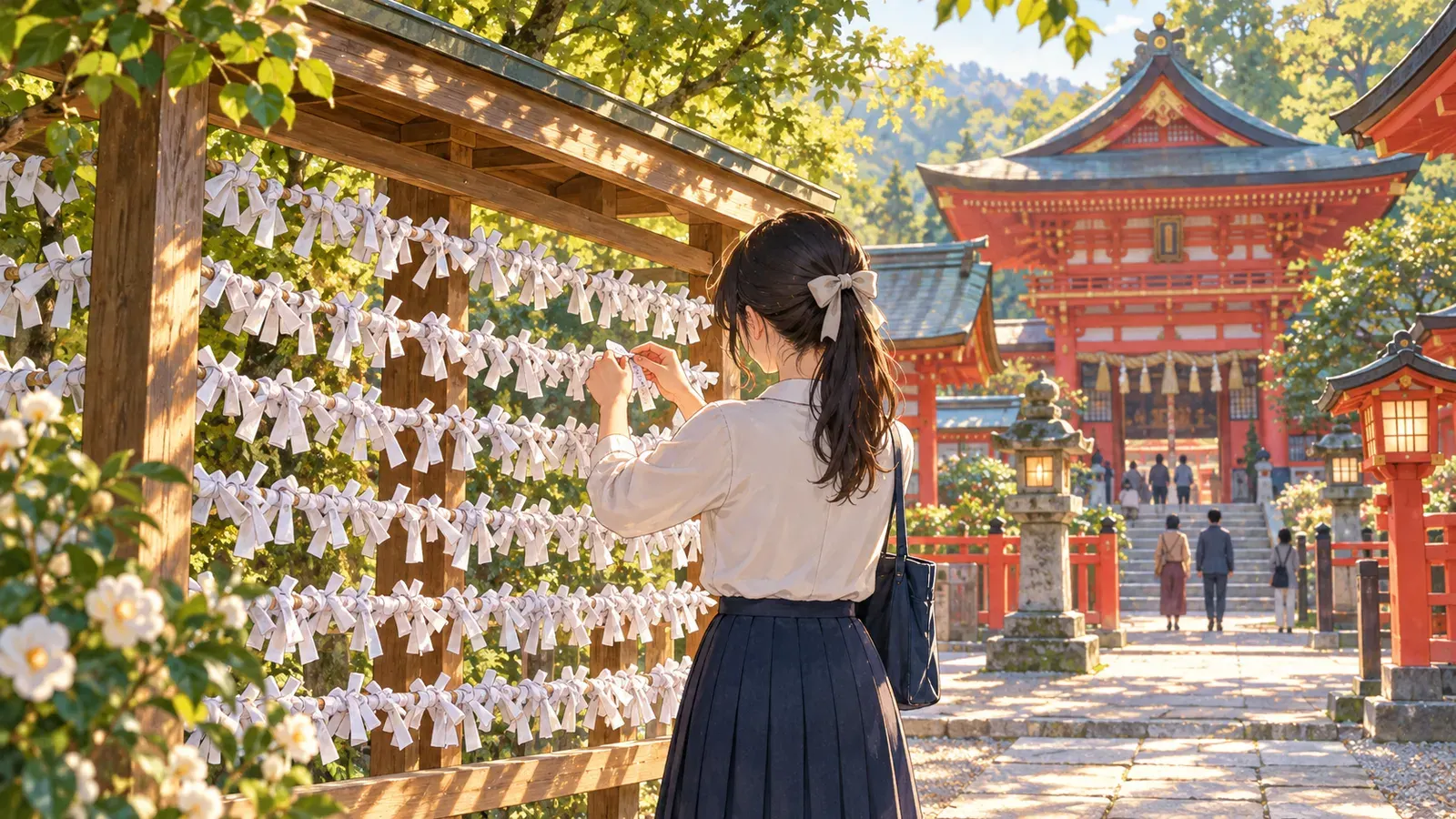
What if you get bad luck? Don't worry! People tie the paper to a special rack or a tree branch at the shrine. In this way, they leave the bad luck behind. If they get good luck, many people take it home and keep it. Some shrines even have omikuji in English.
悪い運が出たらどうしましょう? 心配いりません! 神社のおみくじを結ぶ所や木の枝に、紙を結びつけるのです。こうして悪い運を置いていきます。よい運が出たら、家に持ち帰って取っておく人が多いです。英語のおみくじを置いている神社まであります。
How to explain it in English: "Omamori are lucky charms from shrines and temples. Each one protects you in a different way, like for health or exams. Omikuji are paper fortunes, and if you get bad luck, you can tie the paper at the shrine and leave it behind."
英語で説明してみよう:「お守りは、神社やお寺で手に入る、幸運を呼ぶ品です。健康や試験など、お守りごとに守ってくれるものが違います。おみくじは紙に書かれた運勢で、悪い運が出たら神社に紙を結んで置いていくことができます。」