Japan is a beautiful country, but it also has many natural disasters. There are earthquakes, typhoons, heavy rain, and sometimes tsunami. Because of this, Japanese people learn from a young age how to stay safe. Here are some things every visitor should know.
日本は美しい国ですが、自然災害の多い国でもあります。地震、台風、大雨、そしてときには津波も起こります。そのため日本の人々は、小さいころから身を守る方法を学びます。日本を訪れる人なら知っておきたいことを、いくつか紹介しましょう。
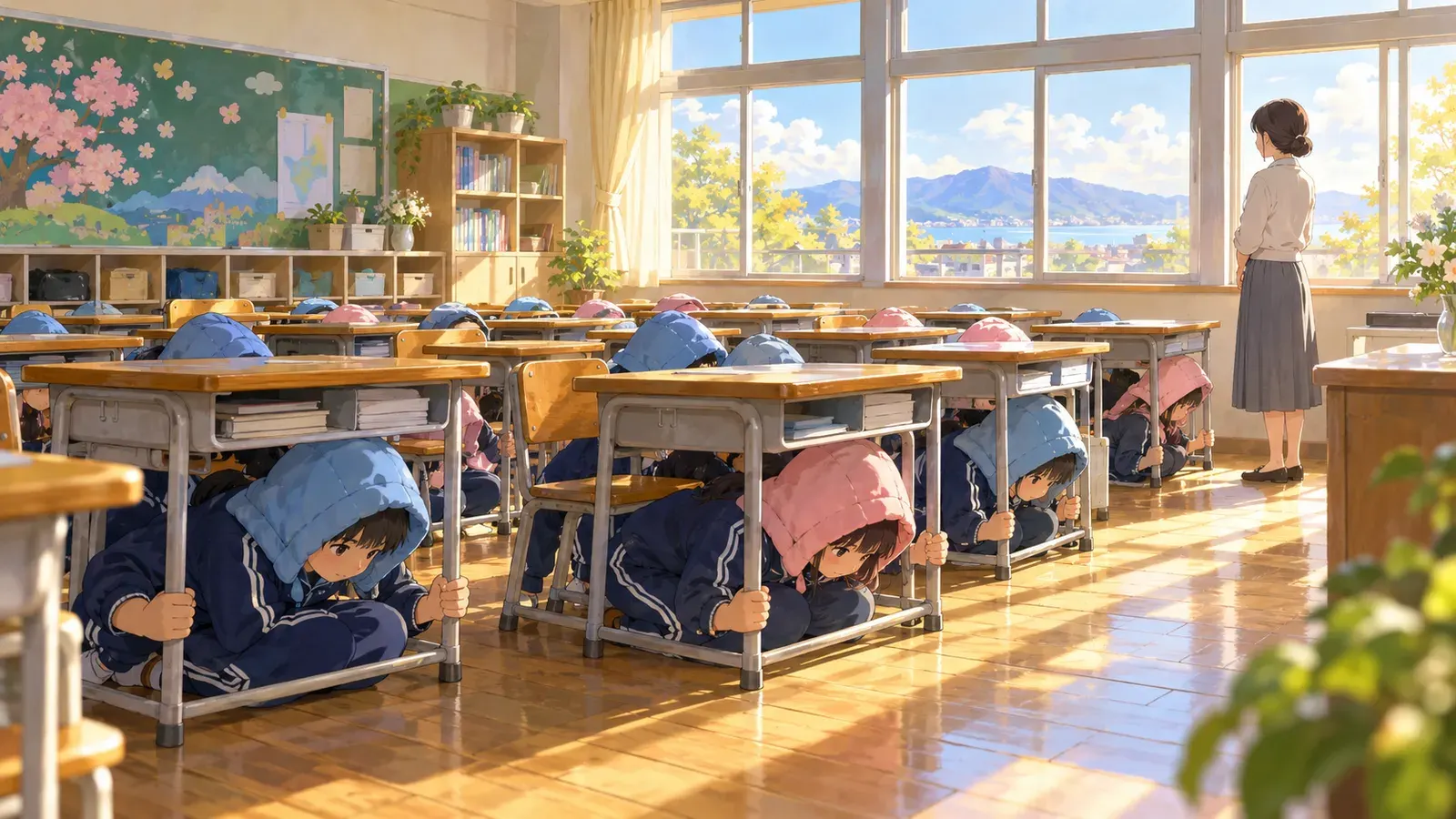
Japanese schools have disaster drills several times a year. When an alarm rings, students quickly get under their desks and hold on to the legs. When the shaking stops, they walk outside in lines. Children learn a short rule: "o-ka-shi-mo." It means: do not push, do not run, do not talk, and do not go back.
日本の学校では、年に何回か避難訓練があります。警報が鳴ると、生徒たちはすばやく机の下にもぐり、机の脚をしっかりつかみます。ゆれがおさまると、列になって外へ歩いて出ます。子どもたちは「おかしも」という短い決まりを覚えます。これは、おさない、かけない、しゃべらない、もどらない、という意味です。
September 1 is Disaster Prevention Day. On this day in 1923, a huge earthquake hit the Tokyo area. Today, many schools, towns, and companies hold big drills around this day.
9月1日は防災の日です。1923年のこの日、巨大な地震が東京周辺をおそいました。今では、多くの学校や町、会社がこの日の前後に大きな訓練を行います。
Many homes have an emergency bag near the door. Inside, there is water, food that keeps for a long time, a flashlight, a radio, a battery for a phone, medicine, and some cash. Experts say we should keep at least three days of water and food at home. A good rule is three liters of water for each person each day.
多くの家では、玄関の近くに非常持ち出し袋を置いています。中には、水、長持ちする食べ物、懐中電灯、ラジオ、スマートフォンのバッテリー、薬、そして少しの現金が入っています。専門家によると、家には少なくとも3日分の水と食料をそなえておくべきだそうです。水は一人1日3リットルが目安です。
When a big earthquake is coming, phones and TVs may give an early warning. The warning often comes only a few seconds before the shaking. But even a few seconds is enough time to get under a table or move away from windows.
大きな地震が来る直前に、スマートフォンやテレビが緊急地震速報を出すことがあります。速報が届くのは、ゆれのほんの数秒前ということも多いです。それでも数秒あれば、テーブルの下にもぐったり、窓からはなれたりできます。
If you are near the ocean and you feel a strong earthquake, do not wait. Go to high ground right away, because a tsunami may come. Look for signs that show the way to an evacuation area. Many signs have pictures and English.
海の近くで強い地震を感じたら、待ってはいけません。津波が来るかもしれないので、すぐに高い所へ逃げてください。避難場所への道を示す標識をさがしましょう。多くの標識には絵と英語がついています。
In every town, there are evacuation places, usually schools or parks. If your home is not safe, you can go there. Towns also make hazard maps. These maps show which areas may flood or have landslides.
どの町にも避難場所があります。たいていは学校や公園です。家にいるのが危ないときは、そこへ行けます。町はハザードマップも作っています。どこが水につかりやすいか、どこで土砂崩れが起きるおそれがあるかを示した地図です。
For visitors, there are apps that send disaster warnings in English and other languages. It is a good idea to install one before your trip.
旅行者のために、英語やほかの言葉で災害の警報を送ってくれるアプリがあります。旅行の前にインストールしておくとよいでしょう。
How to explain it in English: "Japan has many earthquakes, so we practice disaster drills at school. If you feel strong shaking, get under a table and protect your head. If you are near the sea, go to high ground right away."
英語で説明してみよう:「日本は地震が多いので、学校で避難訓練をします。強いゆれを感じたら、テーブルの下にもぐって頭を守ってください。海の近くにいたら、すぐに高い所へ逃げてください。」
 ▶