
カノン
Canon in D
パッヘルベル・c. 1680–1706
同じ8つの音が28回!なのに聴くたび胸がいっぱいになる曲。
カノンとジーグ ニ長調 より「カノン」のページへ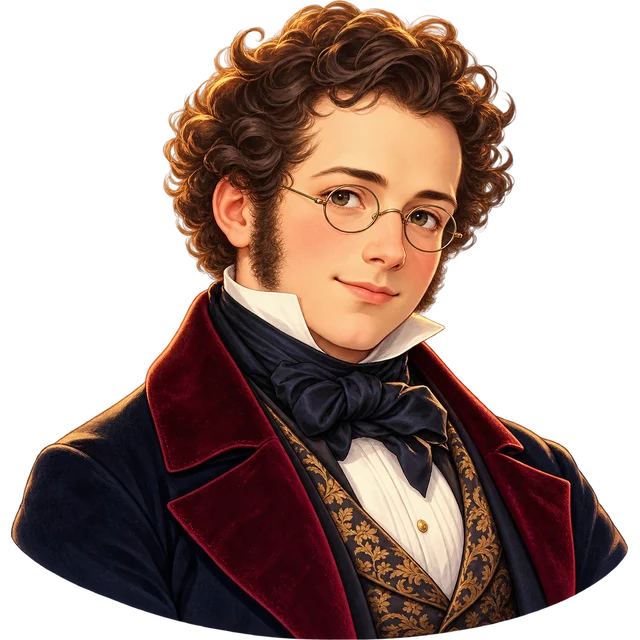
Symphony · D. 485 · 1816
フランツ・シューベルト(1797–1828)
19歳のシューベルトが書いた、モーツァルトのように軽やかな交響曲。A light, sunny symphony by a 19-year-old, full of Mozart's spirit.
PUBLIC DOMAIN RECORDING
PD / CC0 無料でダウンロードOK
 別の演奏で聴く 1:Peabody Symphony Orchestra
ANOTHER RECORDING 1
PD / CC0WATCH ON YOUTUBE
 Schubert: Symphony No. 5 / Haitink - Berliner Philharmoniker
Berliner Philharmoniker(YouTube) YouTube で開く ↗
Schubert's Symphony No.5
Royal Philharmonic Orchestra(YouTube) YouTube で開く ↗
左の音源は権利が切れた録音なのでダウンロードできます。右の動画は YouTube の公式の埋め込みで見るもので、ダウンロードはできません(動画の権利は各チャンネルにあります)。
 もっと名演を観る YouTube で何百万回も再生された人気の演奏
Schubert: 5. Sinfonie ∙ hr-Sinfonieorchester ∙ Andrés Orozco-Estrada
hr-Sinfonieorchester – Frankfurt Radio Symphony(YouTube) YouTube で開く ↗
Schubert / Symphony No. 5 in B-flat major, D. 485 (Mackerras)
scrymgeour34(YouTube) YouTube で開く ↗

ホー!この曲にはトランペットもティンパニも出てこないんだよ。
 この曲のおはなし The Story
1816年、19歳のシューベルトが書いた交響曲です。明るい変ロ長調で、全体はおよそ30分ほど。大きな音でおどかすような場面はほとんどなく、すみきった青空のようにさわやかな音楽が続きます。シューベルトの交響曲の中でも、とくに親しみやすく、よく演奏される1曲です。Schubert wrote this symphony in 1816, when he was 19. It is in the bright key of B-flat major and lasts about half an hour. There are almost no loud, frightening moments. Instead, the music stays fresh and clear, like a blue sky. It is one of his friendliest and most often played symphonies.
このころのシューベルトは、歌や交響曲を次々に書いていました。1816年6月の日記にはモーツァルトをたたえる言葉が残っていて、この曲にもその影響がはっきり聞こえます。楽器はフルート1本、オーボエ・ファゴット・ホルン各2本と弦楽器だけ。クラリネット、トランペット、ティンパニは使われていません。Around this time, Schubert was writing songs and symphonies one after another. In his diary from June 1816, he wrote words of deep praise for Mozart, and you can clearly hear Mozart's influence in this piece. The orchestra is small: one flute, two oboes, two bassoons, two horns and strings. There are no clarinets, trumpets or timpani.
この曲は、シューベルトの家族や仲間から生まれたアマチュアのオーケストラのために書かれ、まずは仲間うちで演奏されたと言われています。おおやけの演奏会で演奏されたのは彼の死後で、楽譜の出版はさらにおそく、19世紀の終わり近くになってからでした。今では世界中のオーケストラが演奏しています。It was written for an amateur orchestra that grew out of Schubert's family and friends, and it is said to have been played first in that private circle. It was not heard at a public concert until after his death, and it was not published until near the end of the 19th century. Today orchestras all over the world perform it.
Schubert wrote this symphony at age 19. The music is bright and happy. It sounds a little like Mozart. Schubert loved Mozart very much. There are no trumpets or timpani drums in it.シューベルトは19歳でこの交響曲を書きました。音楽は明るく楽しいです。少しモーツァルトに似ています。シューベルトはモーツァルトが大好きでした。この曲にはトランペットも太鼓(ティンパニ)もありません。
 聴きどころ Listening Guide
 えっ!?ネタ Surprising Facts
 タップすると答えが開きます
この時代の交響曲は、ゆっくりした長い序奏で始まることがよくありました。ところがこの曲は、木管楽器のやさしい和音がほんの4小節鳴っただけで、すぐにヴァイオリンが主役のメロディを歌い出します。カーテンがさっと開くような、気持ちのよい始まり方です。
Many symphonies of that time begin with a long, slow introduction. This one has just four bars of soft woodwind chords before the violins start the main melody. It is like a curtain that opens quickly and lightly.
第3楽章のメヌエットはト短調で、同じト短調で書かれたモーツァルトの交響曲第40番のメヌエットによく似ていると、よく指摘されます。若いシューベルトがどれほどモーツァルトにあこがれていたかがわかる、ほほえましいポイントです。
The third movement, a minuet in G minor, is often compared to the minuet of Mozart's Symphony No. 40, which is in the same key. It is a charming sign of how much young Schubert admired Mozart.
シューベルトが生きているあいだ、この交響曲の楽譜は出版されませんでした。出版されたのは1880年代、作曲から70年近くたってからです。シューベルトの交響曲の多くは、こうして長いあいだ知られないまま眠っていたのです。
The score was not published in Schubert's lifetime. It finally appeared in the 1880s, almost seventy years after he wrote it. Many of his symphonies slept unknown like this for a long time.
シューベルトの家では、父がチェロ、兄たちがヴァイオリン、フランツがヴィオラを弾いて、弦楽四重奏を楽しんでいました。やがて仲間が加わってアマチュアのオーケストラになり、この交響曲はそのために書かれたと言われています。
In the Schubert home, the family played string quartets: his father on cello, his brothers on violin and Franz on viola. Later, friends joined them to form an amateur orchestra, and this symphony is said to have been written for that group.
ENGLISH × MASTERPIECE
 pitch は「音の高さ」。音程がぴったり、から「非の打ちどころがない」の意味に。
 この曲で覚える英単語 Words
 クイズに挑戦 Quiz
 この録音について(著作権・出典) Credits
MORE MASTERPIECES
パッヘルベル・c. 1680–1706
同じ8つの音が28回!なのに聴くたび胸がいっぱいになる曲。
カノンとジーグ ニ長調 より「カノン」のページへパッヘルベル・c. 1680–1706
あの「カノン」には、はずむ相棒がいた!知られざる後半戦。
カノンとジーグ ニ長調 より「ジーグ」のページへシャルパンティエ・c. 1688–1698
パンパカパーン!ヨーロッパのテレビの幕開けを飾ってきた、ごうかな前奏曲。
テ・デウム ニ長調のページへクラーク・c. 1700
結婚式の大定番。でも作曲者は長いあいだ取りちがえられていた!
トランペット・ヴォランタリー(デンマーク王子の行進)のページへ
バッハ・c. 1703–1707 (?)
音楽の授業でおなじみ!4つの声が同じテーマで追いかけっこ。
小フーガ ト短調のページへバッハ・c. 1707–1710 (?)
キラキラの駆け上がりで幕開け!若きバッハのはなやかな鍵盤ショー。
トッカータ ニ長調のページへ
ヴィヴァルディ・published 1711
2本のヴァイオリンが火花を散らす!バッハも編曲した熱い協奏曲。
協奏曲集『調和の霊感』第8番 イ短調(2つのヴァイオリンのための協奏曲)のページへバッハ・1713
2本のリコーダーがやさしく鳴る、のどかな牧場の歌。
カンタータ第208番より「羊は安らかに草を食み」のページへ MP3