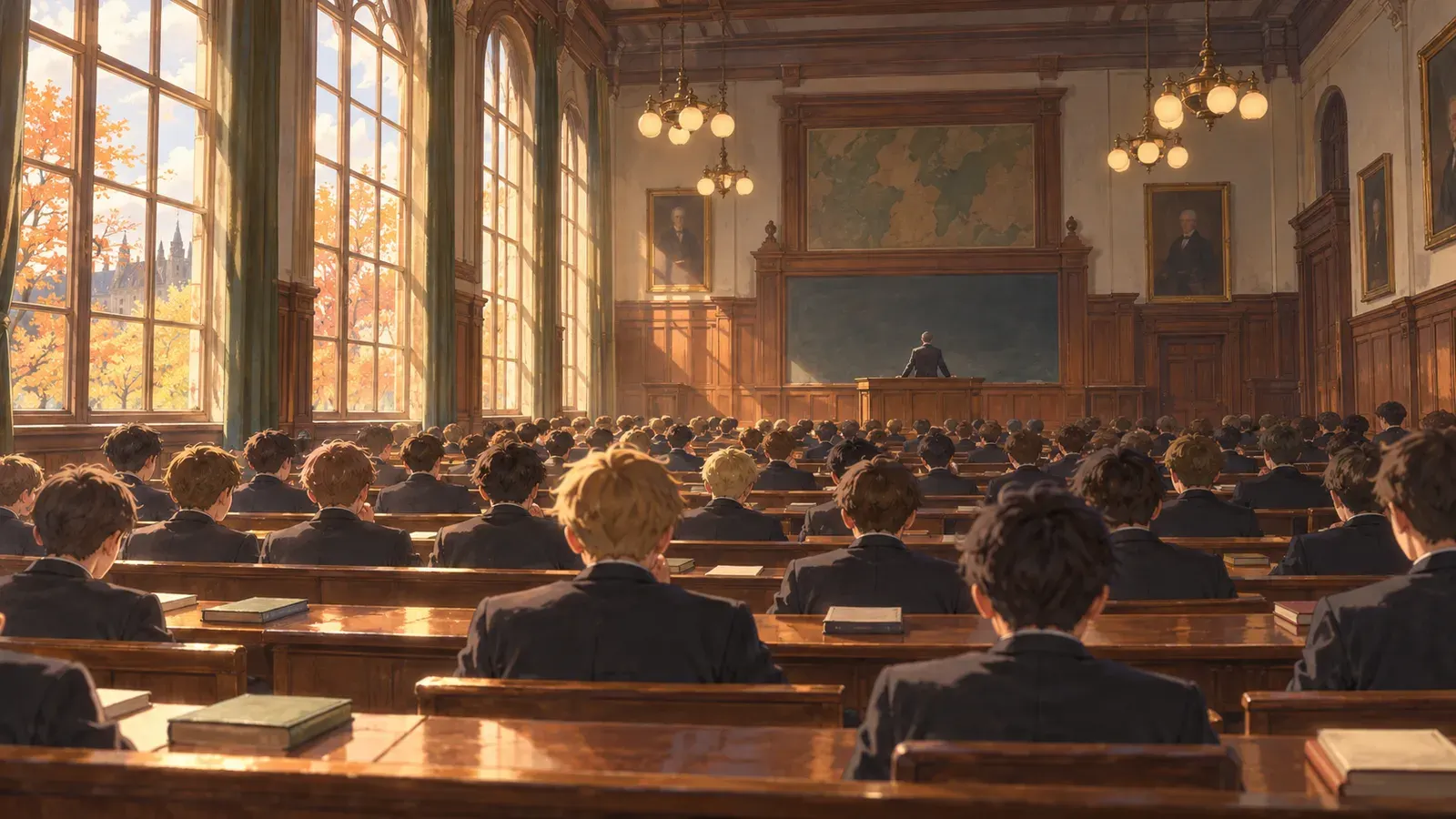
This is the first time I have ever come inside Gakushuin. You asked me to speak here in the spring, but I could not, so I promised to come later. Then I fell ill. Even after I got better, I kept putting off thinking about what to say. Two or three days ago, instead of preparing, I spent my time painting silly little pictures. So please be patient with me. I am not well prepared.
私は今日初めて、この学習院というところの中に入りました。この春、講演をしてほしいというご依頼をいただいたのですが、そのときは都合がつかず、またのちほど参りますとお約束しておきました。ところが、そのうち病気にかかってしまいました。治ってからも、何を話そうかと考えるのをずるずると先へ延ばしていました。二、三日前には、準備をする代わりに、たわいのない絵などを描いて過ごしてしまいました。ですから、どうかご辛抱願います。準備はまるで足りていないのです。
You hear lectures from excellent teachers every day. So why do you want to hear me? There is an old comic story. Two great lords went hunting at Meguro, got very hungry, and ate grilled saury, a cheap fish, at a farmer's house. It was so delicious that later one lord served saury to the other at his mansion. But the cook had pulled out every bone and soaked it in sweet sauce, and it tasted of nothing. The two lords looked at each other and said, "Saury is best at Meguro." I think you want to hear me for the same reason. I am a strange fish from Meguro.
みなさんは毎日、立派な先生方の講義を聞いていらっしゃいます。それなのに、なぜ私の話など聞きたいのでしょう。昔からこんな落語があります。二人のお大名が目黒へ鷹狩りに出かけ、大変おなかがすいて、百姓家で安い魚のサンマを焼いてもらって食べました。それがあまりにおいしかったので、のちに一人のお大名が、自分の屋敷でもう一人にサンマをごちそうしました。ところが料理人が骨を一本残らず抜いて、甘いたれに漬けてしまったので、まるで味がしません。二人は顔を見合わせて、「サンマは目黒に限る」と言ったというのです。みなさんが私の話を聞きたがるのも、同じわけだろうと思います。私は、目黒の珍しいサンマなのです。
In fact, I once tried to become a teacher at this very school. A friend recommended me, and I was so sure I would get the job that I ordered a morning coat, because I was told that teachers here had to wear one. But another man got the job, and I was left with only the coat. If I had been hired and were still teaching here, you would not be so curious about me today.
実は私は、昔この学校の教師になろうとしたことがあります。知人が推薦してくれたので、すっかり採用されるつもりになって、ここの先生はモーニングを着なければならないと聞き、さっそくモーニングをあつらえてしまいました。ところが別の人が採用されて、私の手もとにはモーニングだけが残りました。もしあのとき採用されて、今もここで教えていたなら、みなさんはこれほど私を珍しがりはしなかったでしょう。
Let me tell you what happened to me after that, because it is the most important part of my talk. I taught at a teachers' college in Tokyo, then at a middle school in Matsuyama, and then at a high school in Kumamoto. Then the government suddenly asked me to go to England to study. At first I wanted to refuse, because I had no clear purpose. But I went. And just as I had feared, there was nothing for me to do.
それから後の私のことを、少しお話ししようと思います。今日の講演で一番大事な部分だからです。私は東京の高等師範学校で教え、それから松山の中学校、そして熊本の高等学校で教えました。すると政府から、急にイギリスへ留学しないかという話がありました。はっきりした目的もないので、はじめは断ろうと思いました。けれども、結局行きました。そして、心配していたとおり、何もすることがなかったのです。
To explain why, I must tell you about myself before that. At the university I studied English literature for three years. But I never understood what literature was. In class, we read poems aloud and were scolded for missing articles or saying words wrongly. In exams, we were asked when Wordsworth was born and when he died, or how many Shakespeare folios there were. Can this really be literature? I searched the library on my own, but I was like a blind man peeping over a fence. I could find nothing to hold on to.
そのわけをお話しするには、それまでの私のことをお話ししなければなりません。私は大学で、三年間英文学を学びました。けれども、文学とは何なのか、とうとうわかりませんでした。授業では声に出して詩を読まされたり、冠詞が抜けていると叱られたり、発音が違うと怒られたりしました。試験には、ワーズワースは何年に生まれて何年に死んだか、シェークスピアのフォリオは何種類あるか、といった問題ばかりが出ました。果たして、これが文学でしょうか。自分の力で調べようと図書館に入りましたが、目の見えない者が垣根の向こうをのぞくようなもので、どこにも手がかりが見つかりませんでした。
So I went out into the world without knowing what I was doing, and became a teacher, or rather, I was made into one. I got through each day somehow, but inside I was always empty, and I felt something vague and unpleasant hiding everywhere. I had no interest in teaching. I was always half standing, ready to jump to my true work, but I could not find what that work was.
そんなあやふやなまま、私は世の中へ出て、教師になりました。いや、教師にされてしまったのです。その日その日はなんとか無事にすみましたが、心の中はいつも空っぽで、どこへ行っても、何かぼんやりとした不愉快なものがひそんでいるように感じました。教えることには少しも興味が持てません。いつも中腰で、隙があったら自分の本当の仕事へ飛び移ろうとしていたのですが、その本当の仕事がどこにあるのか、見つからないのです。
I had been born into this world, so I had to do something. But I had no idea what. I was like a man shut up in a thick fog, unable to move. I did not wish for a ray of sunlight to come to me from somewhere. I wanted a searchlight of my own, to see clearly ahead, even along one narrow line. But whichever way I looked, everything was blurred. I felt like a man stuck inside a bag. If only I had a single sharp gimlet, I thought, I could break through somewhere. But no one gave me one, and I could not find one myself.
この世に生まれた以上、何かしなければなりません。けれども、何をしていいのか、まるで見当がつきませんでした。私はちょうど、濃い霧の中に閉じこめられた人のように、立ちすくんでしまったのです。どこからか一筋の日の光がさしてこないか、と願うよりも、自分のサーチライトで、たった一筋でいいから先まではっきり見たい、という気がしました。ところが、どちらを向いてもぼんやりしているのです。袋の中に詰めこまれて、出られない人のような気持ちでした。この手に一本の錐さえあれば、どこか一か所突き破ってみせるのに、と思いました。けれども、誰もその錐をくれませんでしたし、自分で見つけることもできなかったのです。
I carried this uneasiness from the university to Matsuyama, from Matsuyama to Kumamoto, and finally all the way to London. In London I tried hard. But whatever books I read, I could not get out of the bag. I sat in my small room in my lodging house and thought. It was all useless. I no longer even knew why I was reading.
私はこの不安を抱いたまま大学を出て、同じ不安を連れて松山から熊本へ移り、とうとうロンドンまで渡りました。ロンドンでは、できるかぎり努力しました。けれども、どんな本を読んでも、袋の中から出ることはできません。私は下宿の小さな部屋で考えました。何もかも、無駄に思えました。何のために本を読んでいるのか、自分でもわからなくなってしまったのです。
Then, for the first time, I understood. The only way to save myself was to build, by my own power and from the very bottom, my own idea of what literature is. Until then I had been living by other people's standards. I had drifted here and there like a floating weed with no roots.
このとき私は初めて悟りました。自分を救う道は、文学とは何かという自分なりの考えを、自分の力で、根本から作りあげるよりほかにないのだと。それまでの私は、まったく他人本位でした。根のない浮き草のように、そこらをふらふらとただよっていたのです。
By "living by other people's standards," I mean imitation. It is like having someone else drink your wine, hearing their opinion of it, and then insisting that their opinion is right, whether you agree or not. In those days, whatever a Westerner said, people followed blindly. If a Western critic praised a book, people repeated the praise without thinking about it. I was one of them myself. But even when people praised me, I was uneasy inside. I was showing off in borrowed clothes, like a bird wearing peacock feathers.
ここで他人本位というのは、人真似のことです。自分の酒を人に飲んでもらって、その品評を聞き、それを、納得がいこうがいくまいが、無理やり正しいと決めてしまうようなものです。そのころは、西洋人の言うことなら何でもかでも、むやみに従ったものです。西洋の批評家がある本を褒めれば、みんな何も考えずにその褒め言葉をくり返しました。かくいう私自身が、そうだったのです。けれども、いくら人に褒められても、心の中は不安でした。借り着をして威張っているのですから。クジャクの羽を身につけて威張っている鳥のようなものです。
Suppose a Westerner says that a poem is excellent. That is his opinion. It may help me, but if I do not feel the same, I have no right to pass off his opinion as my own. I am an independent Japanese, not a servant of the English. And as a matter of simple honesty, I must not bend my own view.
たとえば、ある西洋人が、この詩は素晴らしいと言ったとします。それは、その西洋人の意見です。私の参考にはなるかもしれません。けれども、私がそう思えなければ、それを自分の意見のように受け売りしてはならないのです。私は独立した一人の日本人であって、イギリス人の召し使いではありません。それに、正直という徳から見ても、私は自分の意見を曲げてはならないのです。
Of course, I was a student of English literature, so it made me nervous when my views were different from those of English critics. I had to think about where such differences come from. Customs, feelings, habits, and the character of a nation must all be part of the reason. Many scholars confuse literature with science. They think that what pleases one nation must please every other. That is a mistake. Even if the differences cannot be removed, they can be explained. And even that explanation could give a little light to the world of Japanese literature.
もっとも、私は英文学を専門にしていましたから、本場の批評家の考えと自分の考えが違うと、どうも気が引けます。そこで、こうした違いがどこから来るのかを考えなければならなくなりました。風俗、人情、習慣、さかのぼっては国民の性格が、みなその原因になっているに違いありません。ところが多くの学者は、文学と科学をごっちゃにして、ある国民に喜ばれるものは、ほかのどの国民にも喜ばれるはずだと思い込んでいます。それが間違いなのです。たとえこの違いをなくすことはできなくても、説明することはできるはずです。そして、その説明だけでも、日本の文学の世界に一筋の光を投げかけることができるはずです。
To find solid ground of my own to stand on, I began reading books that had nothing to do with literature. In a word, I had found the idea of standing on my own feet. In Japanese I called it jiko-hon'i: taking myself, not others, as the center. With these four characters in my hand, I became very strong. "Who are they to tell me?" I thought. It was this idea that told me, who had been lost, "Stand here. Go this way."
私は自分の足場を固めるために、文学とはまったく関係のない本を読みはじめました。ひと言で言えば、「自己本位」という四文字を、ようやく考えついたのです。他人ではなく、自分を中心に据えるということです。この四文字をつかんでから、私は大変強くなりました。「彼らに何がわかる」という気概がわいてきました。それまで途方に暮れていた私に、「ここに立って、この道をこう行け」と教えてくれたのは、実にこの考えだったのです。
At that moment, my uneasiness disappeared completely. I looked at gloomy London with a light heart. It was as if, after years of suffering, my pickaxe had at last struck a vein of ore with a clang. Or, to say it again, it was as if a man shut up in fog had suddenly been shown, in one direction, the road he should take.
そのとき、私の不安はすっかり消えました。私は晴れやかな気持ちで、陰気なロンドンを眺めました。たとえて言えば、長年苦しんだ末に、ようやく自分のつるはしが、がちりと鉱脈に突き当たったような気がしたのです。もう一度言い換えれば、それまで霧の中に閉じこめられていた人の前に、ある方角だけ、進むべき道がはっきりと見えてきたようなものでした。
I came home with that idea, but at once I was busy earning a living. I taught at a high school and at the university, and at a private school too, because I needed money. I suffered from a nervous illness. And then I had to write stories for magazines. My great plan was never finished. But the belief I gained then, that I am the master and others are the guests, has stayed with me and grown stronger every year. It has given me great confidence and peace of mind.
私はその考えを持って日本に帰りましたが、帰るとすぐに、生活のために走り回らなければなりませんでした。高等学校でも大学でも教えました。お金が足りないので、私立学校でも教えました。そのうえ、神経衰弱にかかりました。そして、雑誌に小説を書かなければならないことになりました。私の大きな計画は、とうとう完成しませんでした。けれども、そのときつかんだ考え、つまり自分が主で他人は客だという信念は、今も私の中に生きていて、年ごとに強くなっています。それが私に、大きな自信と安心を与えてくれたのです。
I have told you all this only because I think it may be useful to you. Soon you will leave school and go out into the world. Many of you may have the same kind of suffering I had. If you already have a road that you have opened yourselves, good. If you are happy following an old road, I do not say that is wrong, as long as you feel confident and at peace. But if not, you must keep going until you strike something with your own pickaxe. If you do not, you will spend your whole life uneasy, half standing, wandering about in the world.
こんな話をしたのは、みなさんの参考になるかもしれないと思ったからにほかなりません。みなさんはまもなく学校を出て、世の中へ出ていかれます。私と同じような苦しみを味わう人も、きっと多いことでしょう。すでに自分の力で切り開いた道を持っている人は、それで結構です。古い道をたどって、それで満足している人も、自信と安心があるのなら、悪いとは決して申しません。けれども、もしそうでないのなら、どうしても、自分のつるはしで何かを掘りあてるところまで進んでいかなければいけません。そうしなければ、一生不愉快なまま、中腰で、世の中をうろうろしなければならないからです。
"Ah, here is my road! At last I have struck it!" When you can shout these words from the bottom of your heart, then for the first time your heart will be at peace. A confidence that will not easily break will rise up with that shout. If any of you are suffering in the fog, I hope you will keep going, whatever it costs you, until you reach that place. I do not say this for the sake of the nation, or for your families. I say it for your own happiness. I myself could not get out of that fog until I was over thirty.
「ああ、ここにおれの進むべき道があった! ようやく掘りあてた!」――こういう叫びを心の底から上げられたとき、みなさんは初めて心を安んじることができるでしょう。簡単には揺らがない自信が、その叫びとともに、力強くわき上がってくるはずです。もし霧の中で苦しんでいる人がいるなら、どんな犠牲を払っても、そこまで行ってほしいと思います。国家のためでも、ご家族のためでもありません。みなさん自身の幸福のために言うのです。私自身、三十を過ぎるまで、その霧から抜け出せなかったのですから。
Now let me move to the second part of my talk. Many of you here come from families of high position. When you go out into the world, you will have more power and more money than poor people have. Power is a tool for pushing your own individuality onto other people's heads. Money is a tool for tempting other people to become like you. That is why they are so dangerous.
さて、ここからは話の後半に移りたいと思います。ここにおられるみなさんの多くは、社会的に地位の高い家のご出身です。世の中に出れば、貧しい人よりも多くの権力と、多くの金力を持つことになるでしょう。権力とは、自分の個性を他人の頭の上に押しつける道具です。金力とは、他人を誘惑して、自分のように変えてしまう道具です。だからこそ、大変危険なのです。
Let me give an example. I know two brothers. The younger one likes to stay at home and read. The older one loves fishing. The older brother thinks his brother is gloomy because he does not fish, so he forces him to go fishing. The younger brother hates it, but he goes, catches some unpleasant fish, and comes home unhappy. Did his character change? Not at all. He came to hate fishing even more. Fishing fits the older brother perfectly, but that is his individuality, not his brother's. This is what happens when someone uses power to force their own tastes on another person.
一つ例をあげましょう。私の知っている、ある兄弟の話です。弟は家にこもって本を読むのが好きで、兄は釣りが大好きです。兄は、弟が陰気なのは釣りをしないからだと思い込んで、無理やり釣りに連れ出します。弟はいやでたまらないのですが、ついていって、気味の悪い魚を釣って、いやいや帰ってきます。それで弟の性質が変わったでしょうか。少しも変わりません。ますます釣りが嫌いになっただけです。釣りは兄の性質にはぴったり合っているのでしょう。けれども、それは兄の個性であって、弟の個性ではありません。権力を使って、自分の好みを人に押しつけると、こういうことになるのです。
So this is what I believe. First, you must keep going until you find work that fits you perfectly, where your individuality can grow. Otherwise you will be unhappy all your life. But if society allows you to respect your own individuality, then it is only natural that you should also respect the individuality of others. It is wrong to say, "I face right, so it is outrageous that he faces left." As long as I enjoy freedom from others, I must give others the same freedom.
そこで、私はこう考えています。第一に、みなさんは、自分の個性が伸ばせるような、自分にぴったり合った仕事を見つけるまで、進んでいかなければなりません。そうでなければ、一生不幸です。けれども、自分の個性を大切にすることを社会が認めてくれるのなら、自分もまた他人の個性を認め、尊重するのが当然でしょう。自分は右を向いているから、あいつが左を向いているのはけしからん、というのは間違っています。自分が他人から自由を与えられているかぎり、自分も他人に同じだけの自由を与えなければならないのです。
In fact, there is no power in this world that comes without duty. I am standing up here and asking you to listen quietly for an hour or two. So I have a duty to say something worth listening to. A teacher who has the right to scold students also has the duty to teach them well. Money is the same. Money can turn into anything: a house, books, pleasures, and even the means to buy a person's soul. Is that not frightening? So people with money must understand what their money will do, and use it with responsibility.
そもそも、義務の伴わない権力など、この世にあるはずがありません。私は今、こうして高いところに立って、みなさんに一時間か二時間、静かに話を聞いていただいています。それなら私には、聞くに値することを話す義務があるはずです。生徒を叱る権利を持つ先生は、生徒をしっかり教える義務も持っています。金力も同じことです。お金は何にでも姿を変えます。家にも、本にも、遊びにも変わり、人の魂を買う手段にさえなるのです。恐ろしいではありませんか。ですから、お金を持つ人は、そのお金がどんな結果を生むかをよくわきまえ、責任を持って使わなければならないのです。
Let me sum up. First, if you want to develop your own individuality, you must also respect the individuality of others. Second, if you want to use your power, you must understand the duty that comes with it. Third, if you want to use your money, you must take seriously the responsibility that goes with it. In other words, only people who have trained their character have the right to develop their individuality, to use power, and to use money.
まとめてみましょう。第一に、自分の個性を伸ばそうと思うなら、同時に他人の個性も尊重しなければなりません。第二に、自分の権力を使おうと思うなら、それに伴う義務をわきまえなければなりません。第三に、自分の金力を使おうと思うなら、それに伴う責任を重んじなければなりません。言い換えれば、人格を磨いた人でなければ、個性を伸ばす資格も、権力を使う資格も、金力を使う資格もない、ということになります。
England is a country that loves freedom very much. And yet no country is more orderly. To be honest, I do not like England. But it is a fact. The English love their own freedom, and from childhood they are taught to respect the freedom of others. Behind their freedom, there is always the idea of duty. Nelson's famous words, "England expects that every man will do his duty," were not meant for one day only. Freedom without a sense of duty is not true freedom. In this sense, I am not afraid to say that I am an individualist.
イギリスという国は、大変自由を重んじる国です。それでいて、イギリスほど秩序の整った国はありません。正直に言うと、私はイギリスが好きではありません。けれども、それが事実です。イギリス人は自分の自由を愛すると同時に、他人の自由を尊重するように、子どものころから教えられているのです。ですから、彼らの自由の裏には、必ず義務という考えがあります。「イギリスは各人がその義務を果たすことを期待する」というネルソンの有名な言葉は、決してその日一日限りのものではないのです。義務の心を伴わない自由は、本当の自由ではありません。こういう意味でなら、私は個人主義者だと、はばかりなく言うつもりです。
Please do not misunderstand me. My individualism is not selfishness. It means respecting the existence of others as well as my own. It means not forming groups and parties and following power or money blindly, but deciding for yourself what is right and wrong. That is why a kind of loneliness is hidden in it. If you go your own way and do not stop others from going theirs, then at times people must go separately. That is lonely. Sticks tied together in a bundle feel strong, but a single stick stands alone.
どうか誤解しないでください。私の個人主義は、わがままではありません。自分の存在を尊重すると同時に、他人の存在も尊重する、ということです。徒党を組み、団体を作って、権力や金力のために盲目的に動くのではなく、何が正しく何が間違っているかを、自分で見極めるということです。ですから、そこには一種の寂しさもひそんでいます。自分は自分の行くべき道を行き、他人の道は邪魔しない。そうなると、ときには人がばらばらにならなければなりません。そこが寂しいのです。薪も、束になっていれば心強いのですが、一本だけでは心細いものです。
Some people say individualism is the opposite of nationalism and will destroy the nation. That is nonsense. In fact, we are nationalists, and internationalists, and individualists all at the same time. When the nation is in danger, anyone of good character will naturally think of the nation, even if it limits their freedom. When the country is at peace, individual freedom naturally grows. A tofu seller does not sell tofu for the sake of the nation. He sells it to make a living. Yet in the end, he gives society something it needs. To pretend that everything we do, even eating our meals and washing our faces, is for the nation is a lie. It is like running around town in firefighting gear before any fire has started.
個人主義は国家主義の反対で、国を滅ぼすものだと言う人もいます。そんなばかなことはありません。実際、私たちは国家主義者でもあり、世界主義者でもあり、同時に個人主義者でもあるのです。国が危うくなれば、人格のある人なら、たとえ自分の自由が狭められても、自然と国のことを考えるようになります。国が平和なときには、個人の自由が自然と広がってきます。豆腐屋が豆腐を売るのは、国のためではありません。自分の暮らしを立てるためです。けれども、結果として、社会に必要なものを届けているのです。ご飯を食べるのも、顔を洗うのも、何もかも国のためにしているようなふりをするのは、嘘です。それは、火事も起こらないうちから火事装束を身につけて、町じゅうを駆け回るようなものです。
I have spoken to you about the need for individualism, because each of you will live your own life, and I think it may help you after you go out into the world. If anything I have said is unclear, do not just guess. Please come to my house. I will explain as well as I can, anytime. Thank you for listening for so long.
私は今日、これからそれぞれの人生を歩まれるみなさんに、なぜ個人主義が必要なのかをお話ししました。世の中に出たあと、いくらかでも参考になるだろうと思ったからです。もし私の話にわかりにくいところがあったら、いい加減に決めてしまわないで、どうか私の家までおいでください。いつでも、できるかぎり説明いたします。長い間、ご清聴ありがとうございました。