Sojourner Truth was born into slavery around 1797 in the state of New York. Her name at birth was Isabella. Her first language was Dutch, because the family that owned her spoke Dutch. As a child, she was sold several times, and she was often treated cruelly.
ソジャーナ・トゥルースは、1797年ごろ、ニューヨーク州で奴隷として生まれました。生まれたときの名前はイザベラ。最初に覚えた言葉はオランダ語でした。持ち主の一家がオランダ語を話していたからです。子どものころは何度も売られ、ひどい扱いを受けることもたびたびでした。
The state of New York planned to end slavery in 1827. Isabella's owner promised to free her a year early, but then he broke his promise. So in 1826, she walked away to freedom, carrying her baby daughter in her arms. Soon after, she learned that her young son had been sold illegally to a man in Alabama. She went to court and won him back. She was one of the first Black women in America to win such a case against a white man.
ニューヨーク州では、1827年に奴隷制が廃止される予定でした。イザベラの持ち主は、1年早く自由にすると約束しましたが、その約束を破りました。そこで1826年、イザベラは赤ちゃんの娘を腕に抱え、歩いて逃げ出して自由の身になりました。まもなく、幼い息子がアラバマ州の男に違法に売られたことを知ります。イザベラは裁判を起こし、息子を取り戻しました。白人の男性を相手にこうした裁判で勝った黒人女性として、アメリカで最初期の一人でした。
In 1843, she chose a new name for herself: Sojourner Truth. A sojourner is a traveler who stays in a place only for a short time. She decided to travel around the country and speak the truth about slavery and about her faith. She could not read or write, but she was a powerful speaker. She was very tall, and she had a deep, strong voice.
1843年、イザベラは自分に新しい名前をつけました。ソジャーナ・トゥルースです。ソジャーナとは、一つの場所に短いあいだだけとどまる旅人のことです。国中を旅して、奴隷制について、そして自分の信仰について、真実を語ろうと決めたのです。読み書きはできませんでしたが、力強い話し手でした。とても背が高く、低く力強い声をしていました。
In May 1851, she went to a Women's Rights Convention in Akron, Ohio. Most of the speakers were white women. Some men in the audience laughed at the idea that women should have equal rights. They argued that women were weaker than men and needed men's help and protection.
1851年5月、ソジャーナはオハイオ州アクロンで開かれた女性の権利大会に出かけました。演説者のほとんどは白人の女性でした。聴衆の男性の中には、女性も平等な権利を持つべきだという考えを笑う者がいました。女は男より弱く、男に助けられ守られる必要があるのだ、と言うのです。
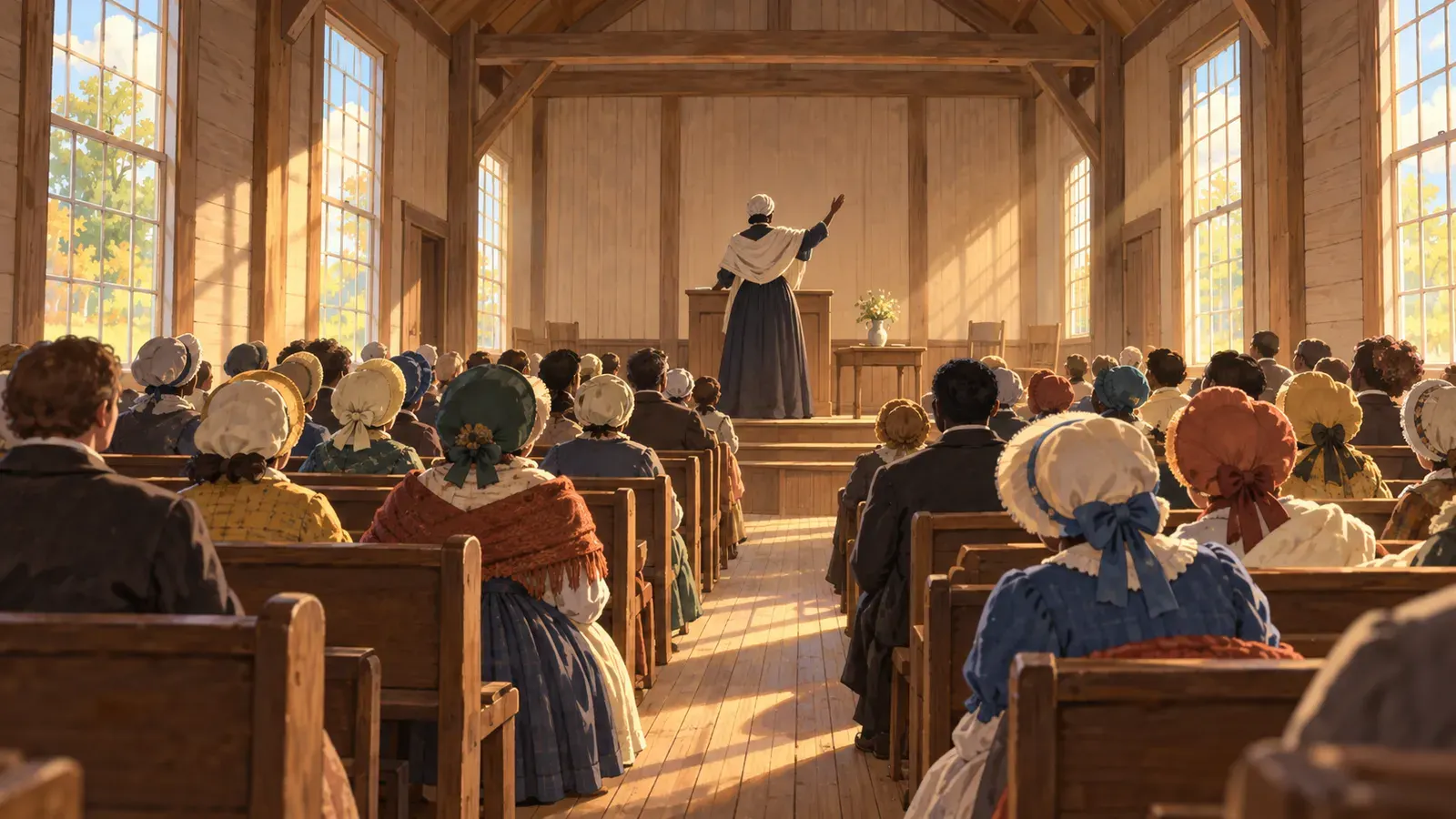
Sojourner Truth stood up. She answered them by talking about her own life. She said that she had worked as hard as any man, plowing fields and carrying heavy loads. According to a newspaper report from that time, she said: "I have as much muscle as any man, and can do as much work as any man."
ソジャーナ・トゥルースは立ち上がりました。そして、自分の人生を語ることで男たちに答えました。私はどんな男にも負けないほど働いてきた。畑を耕し、重い荷物を運んできた、と。当時の新聞記事によれば、ソジャーナはこう言いました。「私にはどんな男にも負けない筋肉がある。どんな男にも負けないほど働ける」。
She also spoke about being both Black and a woman. Her speech showed that the fight against slavery and the fight for women's rights belonged together. People who suffered from both kinds of unfairness, she seemed to say, deserved to be heard.
ソジャーナはまた、黒人であり女性でもあるという自分の立場についても語りました。その演説は、奴隷制との戦いと女性の権利のための戦いが、切り離せないものだと示しました。その二重の不公平に苦しんできた人々の声こそ、聞かれるべきだ。ソジャーナはそう言っているようでした。
Today, many people know this speech by the title "Ain't I a Woman?" But here, the story becomes more complicated. That famous question does not appear in the newspaper report from 1851. It appeared in a version written down twelve years later, in 1863, by a woman named Frances Gage. Gage's version was more dramatic. It also made Truth speak with a Southern accent, although she had grown up in New York and spoke Dutch first.
今では、多くの人がこの演説を「私は女ではないのですか?」という題名で知っています。けれども、ここから話はややこしくなります。この有名な問いかけは、1851年の新聞記事には出てこないのです。それが登場するのは、12年後の1863年に、フランシス・ゲージという女性が書き残した文章です。ゲージの書いた演説は、もっと劇的なものでした。しかも、ソジャーナに南部なまりでしゃべらせていました。実際のソジャーナはニューヨークで育ち、最初はオランダ語を話していたのに、です。
Many historians now believe that Gage's version is not what Truth actually said, at least not word for word. Still, the famous question captures the spirit of her message. A Black woman who had suffered and worked so hard deserved the same respect and rights as anyone else.
今では多くの歴史家が、ゲージの書いたものはソジャーナが実際に言ったことではない、少なくとも一言一句そのままではない、と考えています。それでも、あの有名な問いかけは、ソジャーナが伝えたかったことをよく表しています。あれほど苦しみ、あれほど懸命に働いてきた黒人女性は、ほかのだれとも同じように尊重され、同じ権利を持つべきだ、ということです。
Sojourner Truth kept speaking for the rest of her life. During the Civil War, she helped Black soldiers and people who had escaped slavery, and in 1864 she met President Abraham Lincoln. She died in 1883. In 2009, a sculpture of her was placed in the US Capitol. She was the first Black woman to be honored there in this way.
ソジャーナ・トゥルースは、生涯語り続けました。南北戦争のあいだは、黒人兵士や、奴隷の身から逃れてきた人々を助けました。1864年には、エイブラハム・リンカーン大統領にも会っています。亡くなったのは1883年です。2009年、ソジャーナの像がアメリカ連邦議会議事堂に置かれました。黒人女性がそこでこうした形でたたえられたのは、初めてのことでした。
Her story teaches us two lessons. One is about courage: she spoke up in a room where many people did not want to listen to her. The other is about history: when we read a famous speech, we should always ask who wrote it down, and when.
ソジャーナの物語は、二つのことを教えてくれます。一つは勇気です。耳を貸そうとしない人が大勢いる場で、ソジャーナは声を上げました。もう一つは歴史の読み方です。有名な演説を読むときは、それをだれが、いつ書き記したのかを、いつも問わなければなりません。
 ▶