In 2007, a young senator from Illinois named Barack Obama decided to run for president of the United States. Few people thought he could win. He was not very well known, and no African American had ever been elected president. His father was from Kenya, and his mother was from Kansas.
2007年、イリノイ州選出の若い上院議員、バラク・オバマが、アメリカ大統領選挙への立候補を決めました。勝てると思う人はほとんどいませんでした。それほど名前を知られていませんでしたし、アフリカ系アメリカ人が大統領に選ばれたことは、それまで一度もなかったからです。父親はケニア出身、母親はカンザス州出身でした。
In early January 2008, Obama won the first contest of the campaign, in the state of Iowa. Suddenly, he was the star of the race. The next contest was in New Hampshire. The polls said that he would win there too.
2008年1月のはじめ、オバマは、選挙戦の初戦となったアイオワ州で勝ちました。一夜にして、選挙戦の主役です。次の戦いはニューハンプシャー州。世論調査では、ここでもオバマが勝つと予想されていました。
But on January 8, 2008, the results surprised everyone. Hillary Clinton won New Hampshire, and Obama lost. That night, he had to speak to his disappointed supporters in the city of Nashua.
ところが2008年1月8日、結果は誰もが驚くものでした。ヒラリー・クリントンがニューハンプシャーで勝ち、オバマは負けたのです。その夜、オバマはナシュアの町で、肩を落とした支持者たちを前に話をしなければなりませんでした。
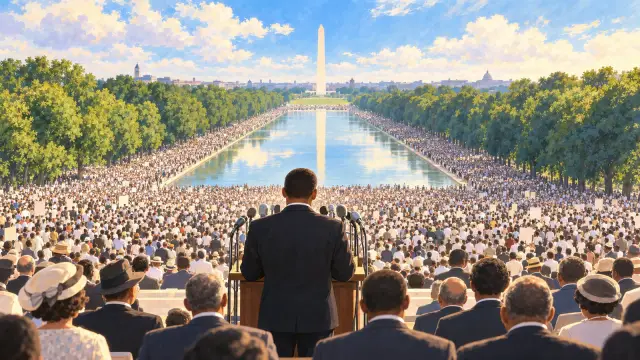
Many politicians would have given a short, sad speech. Obama did the opposite. He congratulated Clinton, and then he turned the defeat into a message of hope. He spoke about American history: about people who crossed oceans to start new lives, about workers who fought for fair treatment, about women who fought for the right to vote, and about those who marched for civil rights.
普通の政治家なら、短い、沈んだ調子のスピーチをしたことでしょう。オバマはその逆でした。まずクリントンを祝福し、それから敗北を希望のメッセージに変えたのです。オバマはアメリカの歴史を語りました。新しい人生を始めるために海を渡った人々。公正な扱いを求めて戦った労働者たち。投票する権利のために戦った女性たち。そして、公民権を求めて行進した人々。
Each time, he said, people were told that they could not do it. And each time, ordinary people answered with three simple words: "Yes we can." He repeated the phrase again and again, and the crowd began to chant it back to him.
そのたびに人々は、そんなことはできないと言われてきた、とオバマは言いました。そしてそのたびに、普通の人々は三つの短い言葉で答えてきたのです。「イエス・ウィ・キャン(私たちにはできる)」。オバマがこの言葉を何度も何度も繰り返すと、観衆も声をそろえて返し始めました。
The phrase was not completely new. Decades before, the labor leader Dolores Huerta and the farm workers' movement had used a Spanish slogan with the same meaning. Obama's campaign gave the old idea new life.
この言葉は、まったく新しいものではありません。何十年も前に、労働運動の指導者ドロレス・ウエルタと農場労働者たちの運動が、同じ意味のスペイン語のスローガンを使っていました。オバマの選挙運動は、その古い言葉に新しい命を吹き込んだのです。
A few weeks later, a well-known musician made a music video using Obama's words, with many famous singers and actors. It was watched millions of times online, and the phrase spread around the world.
数週間後、有名なミュージシャンが、オバマの言葉を使ったミュージックビデオを作りました。有名な歌手や俳優が大勢参加しています。ビデオはインターネットで何百万回も再生され、この言葉は世界中に広まりました。
The race against Clinton was long and hard, but Obama finally won his party's nomination. On November 4, 2008, he was elected the forty-fourth president of the United States, the first African American to hold the office.
クリントンとの争いは長く厳しいものでしたが、オバマはついに党の候補者指名を勝ち取りました。2008年11月4日、オバマは第44代アメリカ合衆国大統領に選ばれました。アフリカ系アメリカ人として初めての大統領です。
That night, in Grant Park in Chicago, he spoke to a huge crowd. He told the story of Ann Nixon Cooper, a one-hundred-and-six-year-old woman who had voted that day. She was born at a time when women could not vote, and when Black Americans faced terrible discrimination. In her long life, she had seen enormous change. And once again, the crowd answered with the same three words.
その夜、シカゴのグラント・パークで、オバマは大観衆を前に演説しました。そこで語ったのは、アン・ニクソン・クーパーという女性の話です。106歳のクーパーさんは、その日、投票を済ませていました。クーパーさんが生まれたのは、女性に投票権がなく、黒人がひどい差別に苦しんでいた時代です。長い人生の中で、とてつもない変化を見てきたのです。そしてまた、観衆はあの三つの言葉で答えました。
Not everyone agreed with Obama's ideas, and his presidency had both successes and failures, like every presidency. But his New Hampshire speech showed one way to answer failure: not by giving up, but by turning a loss into a reason to keep going. It is a lesson anyone can use, in sports, at school, or while learning a new language.
オバマの考えに、だれもが賛成したわけではありません。どの大統領もそうであるように、その任期には成功も失敗もありました。それでも、ニューハンプシャーでのスピーチは、失敗への一つの答え方を示しました。あきらめるのではなく、負けを前に進み続ける理由に変える、という答え方です。スポーツでも、学校でも、新しい言語を学ぶときでも、だれにでも生かせる教訓です。
 ▶