Charlie Chaplin was one of the most famous film stars in the world. In his silent movies, he often played the Little Tramp, a poor man with a small mustache, a round black hat, baggy pants, and a walking stick. People in every country laughed at his films. Because they had no spoken words, everyone could understand them.
チャールズ・チャップリンは、世界でもっとも有名な映画スターの一人でした。無声映画では、よく「小さな放浪者」を演じました。小さな口ひげに丸い黒の帽子、だぶだぶのズボンにステッキという、貧しい男です。どの国の人も、チャップリンの映画を見て笑いました。せりふがないので、だれにでもわかったのです。
In the 1930s, Adolf Hitler came to power in Germany. Chaplin noticed something strange. Hitler also had a small mustache. And the two men had been born in the same week in April 1889, only four days apart.
1930年代、ドイツでアドルフ・ヒトラーが権力を握りました。チャップリンは、奇妙なことに気づきます。ヒトラーも小さな口ひげを生やしていたのです。しかも二人は、1889年4月の同じ週に、わずか4日違いで生まれていました。
Chaplin decided to make a comedy that would make fun of Hitler and his ideas. It was a risky plan. Some people warned him that the film could cause trouble, and that it might not be shown in some countries.
チャップリンは、ヒトラーとその思想を笑いものにする喜劇を作ろうと決めました。危険な計画です。この映画は面倒を引き起こすかもしれない、上映できない国もあるかもしれない、と忠告する人もいました。
The film was called The Great Dictator. Chaplin played two roles. One was Adenoid Hynkel, a silly but cruel dictator of an imaginary country called Tomainia. The other was a kind, gentle Jewish barber who looked exactly like Hynkel. Filming began in September 1939, the same month that World War Two began in Europe.
映画の題名は『独裁者』。チャップリンは二つの役を演じました。一つは、トメイニアという架空の国の独裁者アデノイド・ヒンケル。まぬけで、しかも残酷な男です。もう一つは、ヒンケルにうり二つの、心やさしいユダヤ人の床屋でした。撮影は1939年9月に始まりました。ヨーロッパで第二次世界大戦が始まったのと同じ月です。
It was also Chaplin's first real talking film. For years, he had refused to make the Little Tramp speak. But for this film, he felt that he had something important to say.
これはチャップリンにとって、初めての本格的なトーキー(音声つき映画)でもありました。それまで何年も、小さな放浪者にしゃべらせることを拒んできたのです。けれどもこの映画には、どうしても言いたい大切なことがありました。
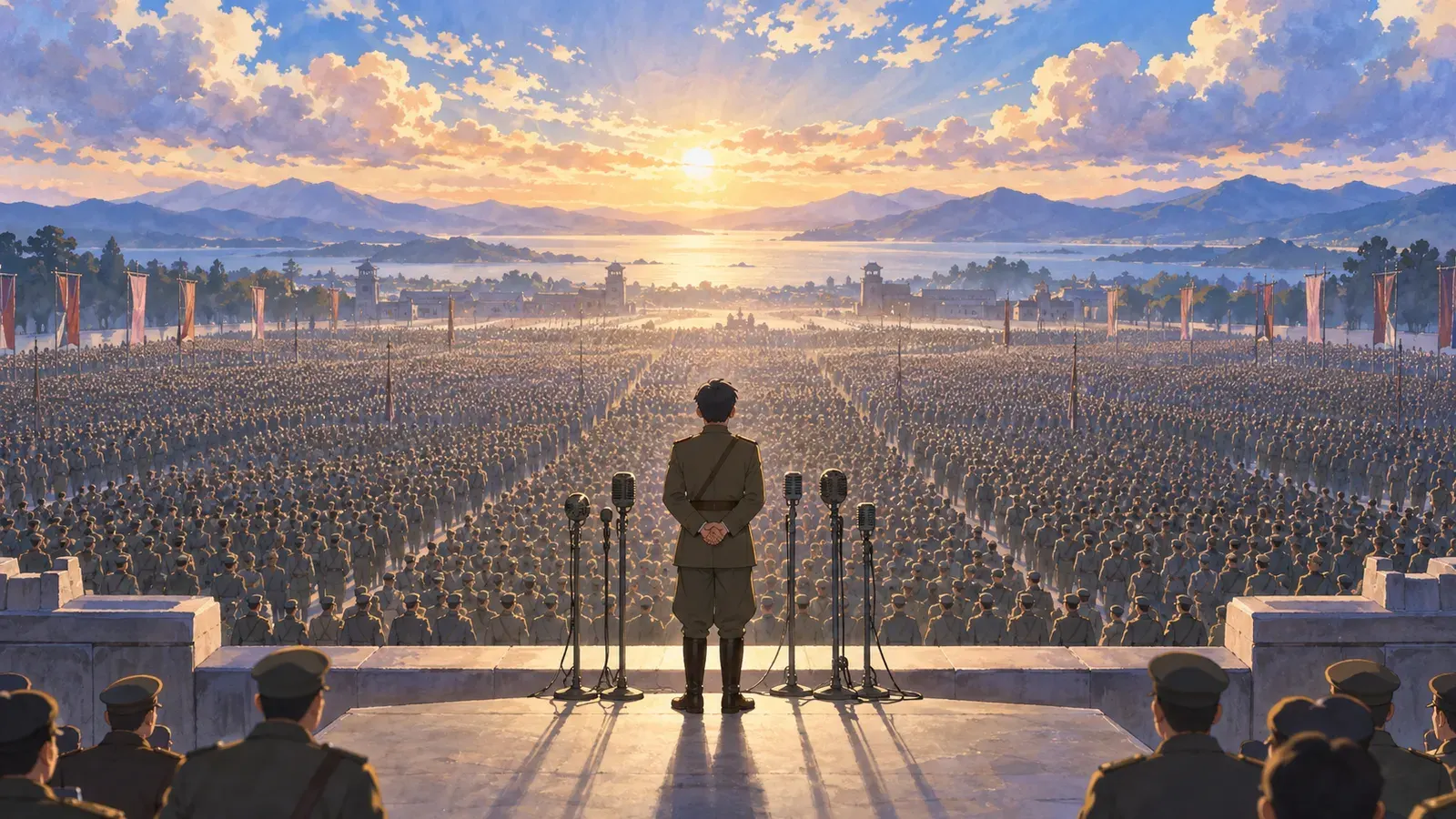
At the end of the story, the barber is mistaken for the dictator. He is pushed onto a high stage to speak to a huge army, and to the whole nation by radio. Everyone expects a speech full of war and hate.
物語の最後、床屋は独裁者と間違えられます。そして高い演壇に押し上げられ、大軍隊を前に、さらにラジオで国じゅうに向けて、演説することになってしまいます。だれもが、戦争と憎しみに満ちた演説を予想していました。
At first, the barber is too nervous to speak. Then he begins. In this moment, Chaplin seems to step out of the story and speak directly to the audience. For about six minutes, he looks into the camera and talks about peace, kindness, and freedom. He says that new machines and fast travel should bring people closer and make life better, not crueler. He tells soldiers not to give their lives for leaders who treat them like machines. He asks everyone to use science and progress for the happiness of all people.
はじめ、床屋は緊張のあまり声が出ません。やがて、話し始めます。この瞬間、チャップリンは物語の外へ出て、観客に直接語りかけているように見えます。6分ほどのあいだ、カメラを見すえ、平和と思いやりと自由について語るのです。新しい機械や速い乗り物は、人と人を近づけ、暮らしをよくするためのものだ。人をもっと残酷にするためのものではない。兵士たちには、自分たちを機械のように扱う指導者のために命を投げ出すな、と語りかけます。そして、科学と進歩をすべての人の幸せのために使おう、と呼びかけるのです。
Many critics in 1940 thought the speech was too long and too serious for a comedy. But audiences loved the film, and it became one of Chaplin's biggest successes.
1940年の公開当時、多くの批評家は、この演説は喜劇にしては長すぎるし、まじめすぎると考えました。けれども、この映画は観客に愛され、チャップリン最大のヒット作の一つになりました。
Years later, Chaplin wrote in his autobiography that if he had known about the true horrors of the Nazi concentration camps, he could not have made the film. He could not have made jokes about such terrible evil.
何年もあとに、チャップリンは自伝にこう書いています。ナチスの強制収容所の本当の恐ろしさを知っていたら、あの映画は作れなかっただろう。あれほどの悪を、笑いの種にすることはできなかっただろう、と。
Today, the final speech from The Great Dictator is shared online again and again, especially in difficult times. Its message is simple and still powerful: people are not machines, and kindness is stronger than hate.
今でも、『独裁者』の最後の演説は、インターネットで繰り返し共有されています。世の中が苦しいときほど、よく共有されるのです。そのメッセージは単純で、今も力強いものです。人間は機械ではない。そして、思いやりは憎しみよりも強い。
 ▶