José Mujica was the president of Uruguay, a small country in South America, from 2010 to 2015. But he did not live like most presidents.
ホセ・ムヒカは、2010年から2015年まで、南米の小さな国ウルグアイの大統領でした。けれども、その暮らしぶりは、普通の大統領とはまるで違っていました。
He did not live in the large house for the president. He lived on a small farm with his wife. They grew flowers there. He drove an old blue Volkswagen Beetle. He gave most of his salary to people in need. People around the world called him "the poorest president in the world."
ムヒカは、大統領のための大きな公邸には住みませんでした。妻と二人で小さな農場に暮らし、そこで花を育てていたのです。乗っていたのは、古い青色のフォルクスワーゲン・ビートル。給料のほとんどは、困っている人たちに寄付していました。世界中の人々は、ムヒカを「世界でいちばん貧しい大統領」と呼びました。
Mujica had a hard past. When he was young, he joined an armed group. The group fought against the government. The police shot him several times. He spent about thirteen years in prison, and life there was often terrible.
ムヒカには苦しい過去がありました。若いころ、政府と戦う武装グループに加わったのです。警察に何度も撃たれました。刑務所で過ごした年月は、およそ13年。そこでの暮らしは、しばしば過酷なものでした。
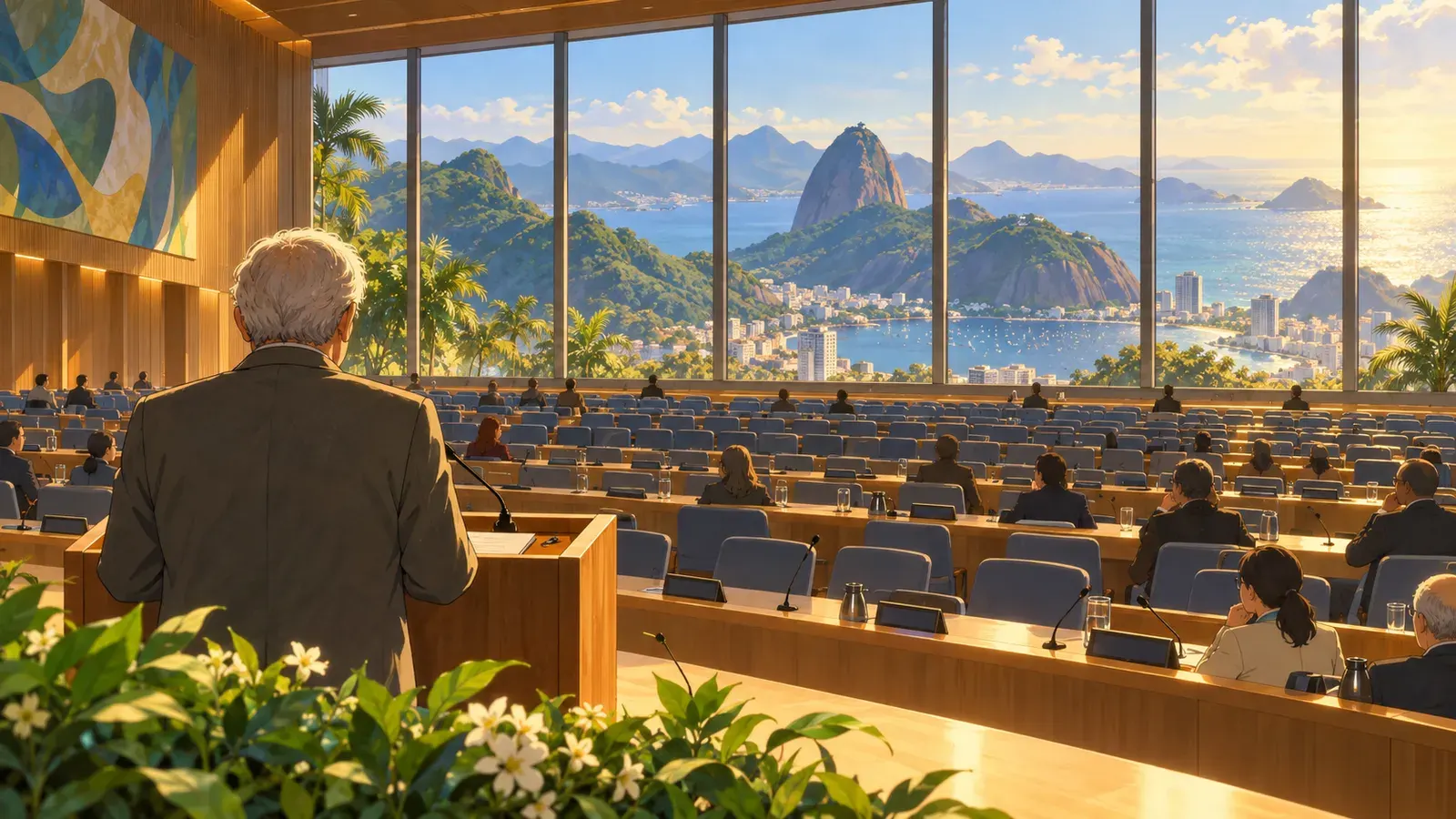
In June 2012, leaders from around the world met in Rio de Janeiro, Brazil. It was a big United Nations meeting, and its name was Rio+20. They talked about how to protect the Earth and how to help poor countries develop. Mujica spoke late in the meeting. People say the hall was not full. At first, few people paid much attention.
2012年6月、ブラジルのリオデジャネイロに、世界中のリーダーが集まりました。「リオ+20」という国連の大きな会議です。話し合われたのは、地球をどう守るか、そして貧しい国の発展をどう助けるか、ということでした。ムヒカの演説は、会議の終わりのほうでした。会場は満員ではなかったといいます。はじめは、耳をかたむける人もあまりいませんでした。
But his speech was different from the others. He did not only talk about new plans and numbers. He asked a deeper question. Are we living to be happy, or are we living to buy more things?
けれども、ムヒカのスピーチは、ほかの人の演説とは違っていました。新しい計画や数字の話だけではありません。もっと深い問いを投げかけたのです。私たちは幸せになるために生きているのか。それとも、もっと物を買うために生きているのか。
He said that modern society pushes us to work more and more. We work hard because we want to buy more and more. But life is short. If we spend all our time working to pay for things, when will we have time for friends, for family, and for love? He reminded the audience of an old idea. A person is not poor because he has little. He is poor when he always wants more.
現代の社会は、私たちをもっともっと働くように追い立てる、とムヒカは言いました。もっともっと物を買いたいから、懸命に働くのです。しかし、人生は短い。物の代金を払うために働くことに時間をすべて使ってしまったら、友人や家族と過ごし、人を愛する時間は、いつ持てるというのでしょう。そしてムヒカは、昔から伝わる考えを聴衆に思い起こさせました。貧しい人とは、少ししか持っていない人ではない。いつも、もっと欲しがる人のことだ。
At first, the speech did not get much attention. But later, it spread on the internet. In Japan, it was made into a picture book, and many people read it. When Mujica visited Japan in 2016, he was welcomed warmly.
はじめ、このスピーチはあまり注目されませんでした。けれども、のちにインターネットで広まりました。日本では絵本になり、多くの人に読まれました。2016年にムヒカが来日したときには、温かい歓迎を受けました。
Some people say his ideas are too simple to work in the real economy. But many others feel that his words remind them of what truly matters in life.
ムヒカの考えは単純すぎて、現実の経済では通用しない、と言う人もいます。けれども、人生で本当に大切なものを思い出させてくれる言葉だ、と感じる人もたくさんいるのです。
 ▶