Booker T. Washington was born into slavery in Virginia and grew up, after the Civil War, in the salt-mining town of Malden, West Virginia. As a boy he worked in a salt furnace and later in a coal mine, and he studied at night whenever he could. One day in the coal mine, he overheard two miners talking about a great school for Black students in Virginia called the Hampton Institute. Poor students, they said, could work there to pay for part of their room and food. From that moment, he was determined to go there.
ブッカー・T・ワシントンは、バージニア州で奴隷として生まれました。南北戦争のあとは、ウェストバージニア州の塩の町モールデンで育ちました。少年時代は塩の工場で、のちには炭鉱で働き、時間があれば夜に勉強しました。ある日、炭鉱で、二人の鉱夫の話がふと耳に入りました。バージニア州に、ハンプトン学院という、黒人学生のためのすばらしい学校があるというのです。貧しい学生でも、そこで働けば、部屋代や食費の一部をまかなえるというのです。その瞬間から、ブッカーはそこへ行こうと心に決めました。
Before he left, however, he received a different kind of education. He took a job as a houseboy for Mrs. Viola Ruffner, the wife of the man who owned the salt furnace and the mine. She had a reputation for being extremely strict. Most of the boys who worked for her quit after two or three weeks. Booker was almost afraid to meet her.
けれども、旅立つ前に、ブッカーは別の種類の教育を受けることになりました。塩の工場と炭鉱の持ち主の妻、ヴァイオラ・ラフナー夫人の家で、下働きの少年として雇われたのです。夫人は、ひどく厳しい人だと評判でした。夫人のもとで働いた少年たちは、たいてい二、三週間でやめてしまいました。ブッカーは、夫人に会うのがこわいくらいでした。
But he soon began to understand her. She wanted everything kept clean. She wanted work done promptly and in good order. Above all, she wanted complete honesty. Nothing could be careless or half finished; every door and every fence had to be kept in repair.
けれども、ブッカーにはまもなく、夫人の考えがわかってきました。夫人は、何もかもが清潔に保たれていることを望みました。仕事は手早く、きちんとした手順で片づけることを望みました。そして何よりも、完全な正直さを求めました。いいかげんなことも、やりかけのままのことも許されません。戸も柵も、一つ残らず、いつも修理しておかなければならなかったのです。
Booker stayed with her for about a year and a half. Years later, he wrote that the lessons he learned in her house were as valuable as any education he received anywhere. Even as a famous man, he said, he could never see bits of paper scattered on a street or a button missing from someone's clothes without wanting to fix it. At the time, he could not know how soon those lessons would be tested.
ブッカーは、一年半ほど夫人のもとで働きました。何年もあとに、ブッカーはこう書いています。夫人の家で学んだことは、ほかのどこで受けたどんな教育にも負けないほど価値があった。有名になってからも、道に紙くずが散らばっていたり、人の服のボタンが取れていたりすると、直したくてたまらなくなった、と。このときのブッカーには、その教えがこんなに早く試されることになるとは、知るよしもありませんでした。
In the autumn of 1872, he set out for Hampton. He had very little money, a small cheap bag of clothes, and only a vague idea of where Hampton was or how much the trip would cost. His mother, who was in poor health, gave him only half-hearted permission; she feared that he was starting on a wild-goose chase. Older people in the neighborhood, who had spent most of their lives in slavery, gave him a nickel, a quarter or a handkerchief. They had hardly expected to live long enough to see one of their own young people go away to a boarding school.
1872年の秋、ブッカーはハンプトンへ向けて出発しました。お金はほとんどなく、持ち物は、服を入れた小さな安物のかばん一つだけ。ハンプトンがどこにあるのか、旅にいくらかかるのかも、ぼんやりとしかわかっていませんでした。体の弱っていた母親は、しぶしぶ許してくれただけでした。あてのない旅に出ようとしているのではないかと、心配していたのです。人生のほとんどを奴隷として過ごしてきた近所のお年寄りたちは、5セント玉や25セント玉、あるいはハンカチをくれました。自分たちの仲間の若者が寄宿学校へ旅立つ日まで生きていられるとは、思ってもいなかったのです。
The distance was about five hundred miles. Trains did not go the whole way, so he traveled partly by stagecoach. Before long, he realized that he did not have enough money for the fare.
道のりは約500マイル(約800キロ)。鉄道は全線が通じていなかったので、途中は駅馬車に乗りました。まもなくブッカーは、運賃にするお金が足りないことに気づきました。
One cold night in the mountains, the coach stopped at a small hotel. The man at the desk refused to give him food or a bed, without even asking whether he had any money. It was the first time Booker clearly understood what the color of his skin could mean. He kept warm by walking around all night. His heart was so set on reaching Hampton, he later wrote, that he had no time to feel bitter toward the hotel keeper.
山の中の、ある寒い夜のこと。馬車は小さな宿屋に止まりました。受付の男は、お金を持っているかとたずねもせずに、ブッカーに食事も寝床も出そうとしませんでした。自分の肌の色が何を意味しうるのか、ブッカーがはっきりと思い知ったのは、このときが初めてでした。ブッカーは一晩じゅう歩き回って、寒さをしのぎました。ハンプトンにたどり着くことで頭がいっぱいだったので、宿屋の主人をうらむひまもなかった、とのちに書いています。
By walking and begging rides in wagons and trains, he finally reached Richmond, about eighty miles from Hampton, late at night. He was tired, hungry and dirty, and he had no money left at all. He walked the streets past food stands piled high with fried chicken and apple pies, but he could not buy even one. Finally, after midnight, too tired to walk any farther, he came to a place where the wooden sidewalk was raised high above the ground. When no one was looking, he crawled under it and slept on the earth, with his bag of clothes as a pillow. All night, he could hear footsteps passing over his head.
歩いたり、荷馬車や汽車に乗せてくれと頼んだりしながら、ブッカーはようやくリッチモンドにたどり着きました。ハンプトンまで、あと約80マイルの町です。着いたのは夜おそくでした。疲れはて、おなかをすかせ、体はよごれ、お金は一セントも残っていません。通りには、フライドチキンやアップルパイを山のように積んだ屋台が並んでいましたが、一つも買えませんでした。真夜中を過ぎ、もう一歩も歩けないほど疲れたころ、木の歩道が地面から高く持ち上げてある場所に来ました。ブッカーはだれも見ていないすきに、その下にもぐりこみました。そして、服の入ったかばんを枕にして、土の上で眠りました。一晩じゅう、頭の上を行き来する足音が聞こえていました。
In the morning, he noticed a ship nearby that was unloading pig iron. He asked the captain if he could help unload it to earn money for food. The captain, who seemed kind, agreed. Booker worked long enough to buy breakfast, which he remembered as perhaps the best breakfast he ever ate.
朝になると、近くで船が銑鉄をおろしているのが目に入りました。ブッカーは船長に、食べ物を買うお金をかせぎたいので、荷おろしを手伝わせてほしいと頼みました。親切そうな船長は、承知してくれました。ブッカーは朝食が買えるだけ働きました。ことによると、人生でいちばんおいしい朝食だったかもしれない、とブッカーはふり返っています。
The captain was pleased with his work and let him continue for several days. To save money, Booker kept sleeping under the same sidewalk. Many years later, the Black citizens of Richmond held a large reception in his honor not far from that very spot. He admitted that his mind was more on the sidewalk than on the speeches.
船長はブッカーの働きぶりが気に入り、その後も数日間、働かせてくれました。お金を節約するため、ブッカーはあの歩道の下で寝続けました。何年もたってから、リッチモンドの黒人市民たちが、まさにその場所の近くで、ブッカーのために盛大な歓迎会を開いてくれました。そのとき、スピーチよりもあの歩道のことばかり考えていた、とブッカーは打ち明けています。
When he had saved enough, he thanked the captain and continued his journey. He arrived at Hampton with exactly fifty cents left to begin his education. The large three-story brick school building seemed to him the most beautiful building he had ever seen. He felt that a new kind of life had begun, and he promised himself that no obstacle would stop him from doing his very best.
十分なお金がたまると、ブッカーは船長にお礼を言って、旅を続けました。ハンプトンに着いたとき、教育を始めるために残っていたお金は、ちょうど50セントでした。れんが造りの三階建ての大きな校舎は、それまでに見たどの建物よりも美しく見えました。新しい人生が始まったのだ、とブッカーは感じました。そして、どんな障害があっても、全力をつくすことをやめないと、自分に誓いました。
But there was a problem. After so long without proper food, a bath or a change of clothes, he looked like a tramp. When he asked the head teacher, Miss Mary F. Mackie, to admit him to a class, he could see that she had doubts. For some time she neither refused him nor accepted him. Booker stayed nearby, trying in every way he could to show that he deserved a chance.
ところが、困ったことがありました。長いあいだ、まともな食事もとらず、風呂にも入らず、着がえもしていなかったので、ブッカーは浮浪者のような姿だったのです。主任教師のメアリー・F・マッキー先生に、クラスに入れてほしいと頼んだとき、先生が迷っているのがブッカーにはわかりました。先生は、しばらくのあいだ、断りもしなければ、受け入れもしませんでした。ブッカーはそばを離れず、自分にはチャンスをもらう値打ちがあることを、あらゆる方法で示そうとしました。
Meanwhile, he watched her admit other students. He felt deep in his heart that he could do as well as they could, if only he could show what was in him.
そのあいだにも、先生はほかの学生たちを次々に入学させていきました。自分の中にあるものを見せることさえできれば、あの人たちに負けないくらいやれるはずだ。ブッカーは、心の底からそう感じていました。
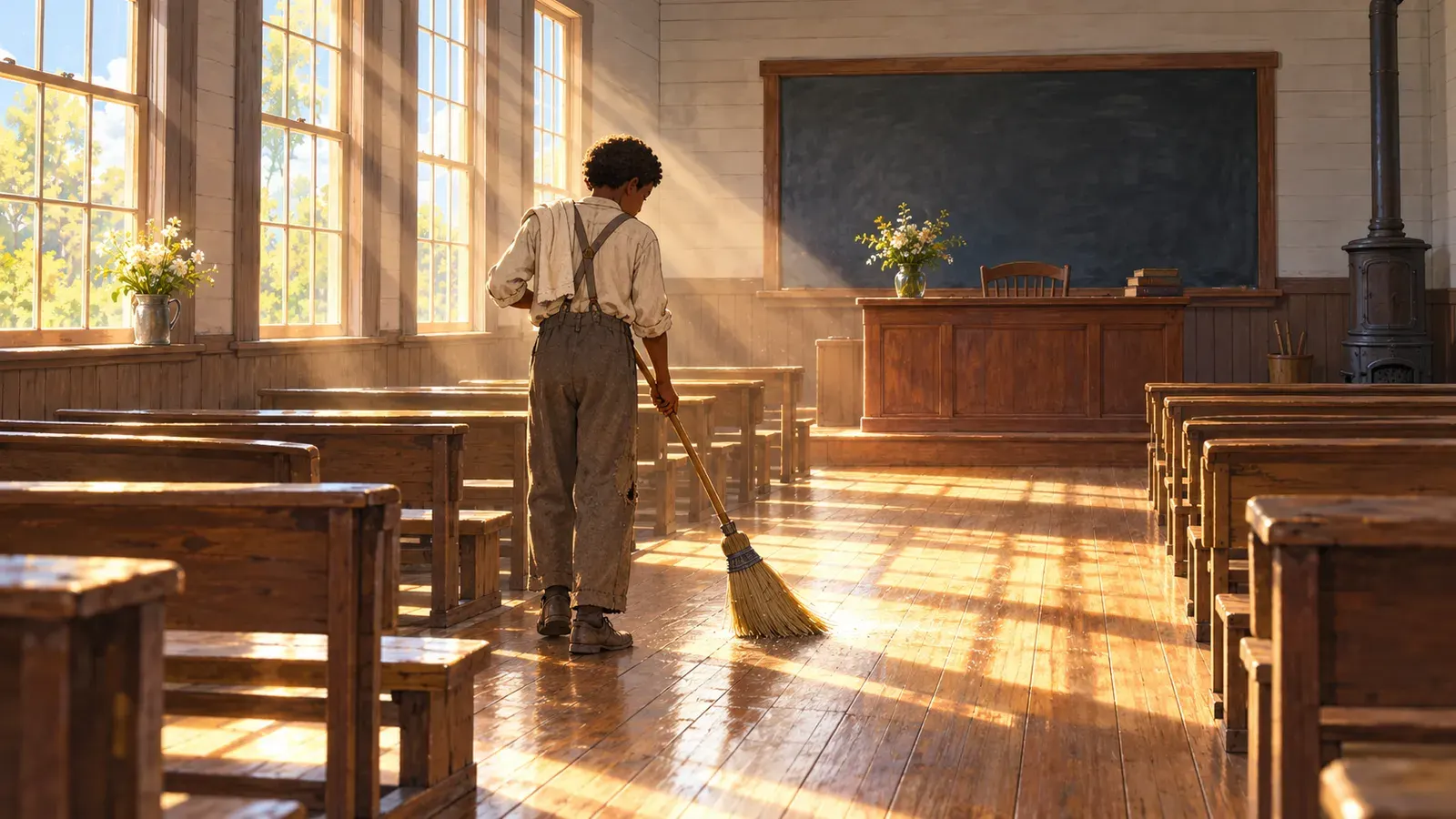
After some hours had passed, she said to him, "The adjoining recitation-room needs sweeping. Take the broom and sweep it."
何時間かたってから、先生はブッカーに言いました。「となりの教室を掃除しなければなりません。ほうきを持って、掃いてちょうだい」。
Booker knew immediately that this was his chance. And thanks to Mrs. Ruffner, he knew exactly how to clean. He swept the room three times. Then he took a dusting cloth and dusted it four times.
ブッカーはすぐに、これこそ自分のチャンスだとわかりました。しかも、ラフナー夫人のおかげで、掃除のしかたなら完ぺきに心得ていました。ブッカーは、教室を三回掃きました。それからぞうきんを手に取り、四回ふきました。
He went over all the woodwork around the walls, every bench, table and desk. He moved every piece of furniture and cleaned every closet and corner. He felt that, in large part, his whole future depended on the impression he made with that room.
壁ぞいの木の部分も、ベンチも、テーブルも、机も、残らずふきました。家具は一つ残らず動かし、物置もすみずみまできれいにしました。自分の将来の大部分が、この教室でどんな印象を与えるかにかかっている。ブッカーはそう感じていたのです。
When he reported that he had finished, Miss Mackie went into the room. She knew just where to look for dirt. She inspected the floor and the closets. Then she took out her handkerchief and rubbed it over the woodwork, the table and the benches. She could not find a single speck of dust anywhere. Then she said quietly, "I guess you will do to enter this institution."
終わりましたと報告すると、マッキー先生は教室に入っていきました。先生は、ほこりがどこにたまるのか、よく知っていました。床を調べ、物置を調べました。それからハンカチを取り出して、木の部分やテーブルやベンチをこすってみました。どこにも、ちり一つ見つかりません。先生は静かに言いました。「この学校に入ってもよさそうですね」。
Booker felt like one of the happiest people on earth. The sweeping of that room, he wrote, was his college examination. No young man ever passed an entrance examination for Harvard or Yale with more real satisfaction. He passed many examinations later in life, but he always felt that this was the best one he ever passed.
ブッカーは、世界でいちばん幸せな人間の一人になったような気がしました。あの教室の掃除こそが、私の大学入学試験だった、とブッカーは書いています。ハーバードやイェールの入学試験に受かった若者でも、これほど心から満ち足りた人はいないだろう。その後の人生で、数多くの試験に合格したが、今までで最高の試験はやはりあれだった、とブッカーはいつも感じていたのです。
His hard work did not stop there. Miss Mackie offered him a job as a janitor, which allowed him to work off most of the cost of his room and food. The work was hard. He often had to stay up late to finish it and get up at four o'clock in the morning to build the fires, and still find time to study. Less than ten years later, he was chosen to lead a new school in Tuskegee, Alabama, which grew into a great institution that educated thousands of students.
ブッカーの努力は、そこで終わりませんでした。マッキー先生が用務員の仕事を与えてくれたので、部屋代と食費のほとんどを働いてまかなえるようになりました。仕事はきついものでした。仕事を終わらせるために夜おそくまで起きていることも、ストーブに火を入れるために朝4時に起きることもよくありました。それでも、勉強の時間はつくり出しました。それから10年もたたないうちに、ブッカーはアラバマ州タスキーギに新しくできる学校の責任者に選ばれました。その学校は、何千人もの学生を育てる、りっぱな学校へと成長しました。
What made the difference on that day at Hampton? It was not luck. It was a skill he had practiced in Mrs. Ruffner's house, when no one important was watching and the work seemed small. Washington's story suggests that every ordinary task is a kind of training. We rarely know which one will turn out to be our entrance examination.
ハンプトンでのあの日、明暗を分けたのは何だったのでしょうか。運ではありません。ラフナー夫人の家でみがいてきた技術です。だれに認められるわけでもない、取るに足らないように思える仕事の中で、身につけたものでした。ワシントンの物語は、ありふれた仕事の一つ一つが、一種の訓練なのだと教えてくれます。どの仕事が自分にとっての入学試験になるのか、前もってわかることは、めったにないのです。
Try this today. Choose one small, ordinary job, such as cleaning your desk, washing a dish, or writing your name and the date neatly on a worksheet. Do it not just well enough, but as if your future depended on it. Sweep it three times and dust it four times, so to speak. Notice how it feels to do a small thing completely.
今日、やってみましょう。机の片づけ、皿洗い、プリントに名前と日付をていねいに書くことなど、小さなふだんの仕事を一つ選びます。それを「まあまあ」ではなく、自分の将来がかかっているつもりでやってみるのです。いわば、三回掃いて、四回ふくのです。小さなことを完全にやりとげると、どんな気持ちになるか、感じてみてください。