At the hazard of wearying you this tale of vehement emotions must be prefaced by a discourse on geometry.
退屈させてしまうかもしれないが、この激しい感情の物語を始める前に、まず幾何学の話をしておかなければならない。
Nature moves in circles; Art in straight lines. The natural is rounded; the artificial is made up of angles. A man lost in the snow wanders, in spite of himself, in perfect circles; the city man's feet, denaturalized by rectangular streets and floors, carry him ever away from himself.
自然は円を描いて動き、人の手で作ったものは直線を描いて動く。自然のものは丸く、人工のものは角でできている。雪の中で道に迷った人は、自分ではそのつもりがないのに、きれいな円を描いてぐるぐる歩きまわる。ところが都会の人間の足は、四角い街路や床のせいで、自然らしさを失っている。だから、まっすぐ進むばかりで、本来の自分からどんどん遠ざかっていくのだ。
The round eyes of childhood typify innocence; the narrowed line of the flirt's optic proves the invasion of art. The horizontal mouth is the mark of determined cunning; who has not read Nature's most spontaneous lyric in lips rounded for the candid kiss?
子どものまんまるな目は、無邪気さのしるしである。男をもてあそぶ女が目を細めて流し目を送ると、目は細い線になる。人工が入りこんだ証拠だ。一文字に結んだ口は、何かをたくらむ、したたかさのしるしである。一方、まっすぐな心で口づけしようと丸めた唇。そこに、自然が思わず口ずさんだ詩を読みとらない人がいるだろうか?
Beauty is Nature in perfection; circularity is its chief attribute. Behold the full moon, the enchanting golf ball, the domes of splendid temples, the huckleberry pie, the wedding ring, the circus ring, the ring for the waiter, and the "round" of drinks.
美とは、完璧な形になった自然である。そして美の何よりの特徴は、丸いことだ。見るがいい。満月を、心をそそるゴルフボールを、壮麗な寺院の丸屋根を、コケモモのパイを、結婚指輪を、サーカスの丸い舞台を、給仕を呼ぶベルのリンという音を、そして仲間うちを順々にひと回りする酒のおごりを。
On the other hand, straight lines show that Nature has been deflected. Imagine Venus's girdle transformed into a "straight front"!
それにひきかえ、直線は、自然がねじ曲げられたしるしである。女神ヴィーナスのしなやかな帯が、胸からまっすぐに締めつけるコルセットに変わったところを想像してみるといい!
When we begin to move in straight lines and turn sharp corners our natures begin to change. The consequence is that Nature, being more adaptive than Art, tries to conform to its sterner regulations. The result is often a rather curious product—for instance: A prize chrysanthemum, wood alcohol whiskey, a Republican Missouri, cauliflower au gratin, and a New Yorker.
人がまっすぐな線の上を動き、角をきっちり曲がるようになると、その人の本性が変わりはじめる。自然は人工よりも順応しやすいので、人工の厳しい決まりに自分を合わせようとするのだ。その結果、かなり奇妙なものができあがることが多い。たとえば、品評会で賞を取る菊、工業用アルコールで作ったウイスキー、民主党の地盤なのに共和党が勝ったミズーリ州、カリフラワーのグラタン、そしてニューヨーカーである。
Nature is lost quickest in a big city. The cause is geometrical, not moral. The straight lines of its streets and architecture, the rectangularity of its laws and social customs, the undeviating pavements, the hard, severe, depressing, uncompromising rules of all its ways—even of its recreation and sports—coldly exhibit a sneering defiance of the curved line of Nature.
自然がいちばん早く失われるのは大都会である。原因は幾何学にあるのであって、道徳の問題ではない。通りも建物も直線でできている。法律も世間のしきたりも四角四面だ。舗道はまっすぐ延びて、少しも曲がらない。何をするにも、遊びや楽しみでさえ、かたくて厳しい、気のめいるような、融通のきかない決まりがある。そういうものが、自然の描く曲線を冷ややかにあざ笑い、挑みかかっているのだ。
Wherefore, it may be said that the big city has demonstrated the problem of squaring the circle. And it may be added that this mathematical introduction precedes an account of the fate of a Kentucky feud that was imported to the city that has a habit of making its importations conform to its angles.
だから、大都会は「円を四角にする」という昔からの難問を、実際に解いてみせたと言えるかもしれない。さて、この数学の前置きのあとに語るのは、ケンタッキー州のある血の抗争がどうなったかという話である。その抗争は、都会へと持ちこまれた。そして都会には、持ちこまれたものを何でも自分の角に合わせて作りかえてしまう癖があるのだ。
The feud began in the Cumberland Mountains between the Folwell and the Harkness families. The first victim of the homespun vendetta was a 'possum dog belonging to Bill Harkness. The Harkness family evened up this dire loss by laying out the chief of the Folwell clan. The Folwells were prompt at repartee. They oiled up their squirrel rifles and made it feasible for Bill Harkness to follow his dog to a land where the 'possums come down when treed without the stroke of an ax.
抗争が始まったのは、カンバーランド山地だった。フォルウェル家とハークネス家のあいだの争いである。この、いかにも山国らしい血の仇討ちの、最初の犠牲者は、ビル・ハークネスの飼っていたオポッサム狩りの犬だった。ハークネス家は、この痛ましい損失の仕返しに、フォルウェル一族の長を棺桶に寝かせた。フォルウェル家もすかさずやり返した。リス撃ち銃に油をさして、ビル・ハークネスを犬のあとからあの世へ送ってやったのである。そこは、木の上に追いつめたオポッサムが、斧で木を切り倒さなくても自分から降りてくるという、猟師の天国だった。
The feud flourished for forty years. Harknesses were shot at the plough, through their lamp-lit cabin windows, coming from camp-meeting, asleep, in duello, sober and otherwise, singly and in family groups, prepared and unprepared. Folwells had the branches of their family tree lopped off in similar ways, as the traditions of their country prescribed and authorized.
抗争は四十年も続き、ますます盛んになった。ハークネス家の者たちは撃たれた。畑を耕しているところを撃たれ、ランプのともった丸太小屋の窓ごしに撃たれ、野外の祈りの集まりから帰る途中で撃たれ、眠っているところを撃たれ、決闘で撃たれた。しらふのときも酔っているときも、ひとりのときも家族そろっているときも、身構えているときも油断しているときも撃たれた。フォルウェル家の家系図も、同じようなやり方で、枝を次々と切り落とされた。それが、この土地の昔からの決まりであり、認められたやり方だったのだ。
By and by the pruning left but a single member of each family. And then Cal Harkness, probably reasoning that further pursuance of the controversy would give a too decided personal flavour to the feud, suddenly disappeared from the relieved Cumberlands, baulking the avenging hand of Sam, the ultimate opposing Folwell.
こうして枝を切り落としていくうちに、とうとうどちらの家にも、ひとりずつしか残らなくなった。するとキャル・ハークネスが、ある日突然、カンバーランド山地から姿を消した。これ以上続けては、家どうしの抗争というより、個人的な喧嘩の色合いが強くなりすぎる、とでも考えたのだろう。山の人々はほっとした。最後に残ったフォルウェル家の男、サムの仇討ちの手は、こうして空を切ったのである。
A year afterward Sam Folwell learned that his hereditary, unsuppressed enemy was living in New York City. Sam turned over the big iron wash-pot in the yard, scraped off some of the soot, which he mixed with lard and shined his boots with the compound. He put on his store clothes of butternut dyed black, a white shirt and collar, and packed a carpet-sack with Spartan lingerie. He took his squirrel rifle from its hooks, but put it back again with a sigh. However ethical and plausible the habit might be in the Cumberlands, perhaps New York would not swallow his pose of hunting squirrels among the skyscrapers along Broadway. An ancient but reliable Colt's revolver that he resurrected from a bureau drawer seemed to proclaim itself the pink of weapons for metropolitan adventure and vengeance. This and a hunting-knife in a leather sheath, Sam packed in the carpet-sack. As he started, muleback, for the lowland railroad station the last Folwell turned in his saddle and looked grimly at the little cluster of white-pine slabs in the clump of cedars that marked the Folwell burying-ground.
一年後、サム・フォルウェルは、まだ決着のついていない先祖代々の敵が、ニューヨークに住んでいることを知った。サムは庭の大きな鉄の洗濯釜をひっくり返して、こびりついた煤を少しこすり取った。それをラードと混ぜ、そのクリームでブーツを磨いた。それから、店で買った一張羅を着た。もとはクルミの皮で茶色に染めた服を、黒く染めなおしたものである。白いシャツを着てカラーをつけ、手提げ袋に必要最低限の下着を詰めた。リス撃ち銃を壁の掛け釘からはずしたが、ため息をついて、また掛けなおした。カンバーランドでは、リスを撃ちに行くと言って銃を持ち歩くのは、まったく当たり前で、もっともらしい言いわけになる。だがニューヨークでは、ブロードウェイの摩天楼のあいだでリス狩りをするなどと言っても、たぶん誰も信じてくれないだろう。そこで、たんすの引き出しから古いコルトの拳銃を掘り出した。古いが頼りになる銃で、大都会での冒険と仇討ちには、これこそ最高の武器だと名乗り出ているように見えた。サムはこの拳銃と、革の鞘に入った狩猟用ナイフを手提げ袋に詰めた。ラバに乗って、ふもとの鉄道の駅へ出発するとき、フォルウェル家の最後の男は鞍の上で振り返った。杉の木立の中に、白松の板切れが小さく固まって立っている。フォルウェル家の墓地の墓標である。サムは、険しい顔でそれを見つめた。
Sam Folwell arrived in New York in the night. Still moving and living in the free circles of nature, he did not perceive the formidable, pitiless, restless, fierce angles of the great city waiting in the dark to close about the rotundity of his heart and brain and mould him to the form of its millions of re-shaped victims. A cabby picked him out of the whirl, as Sam himself had often picked a nut from a bed of wind-tossed autumn leaves, and whisked him away to a hotel commensurate to his boots and carpet-sack.
サム・フォルウェルは夜にニューヨークに着いた。サムはまだ、自然の自由な円の中で動き、生きていた。だから気づかなかったのだ。大都会の、恐ろしく、情け容赦なく、休むことを知らない荒々しい角が、暗闇の中で待ちかまえていることに。その角は、サムの丸い心と頭をぎゅっと締めつけ、作りかえようとしていた。この町で形を変えられてしまった何百万という犠牲者たちと、同じ型にはめこもうとしていたのである。風に吹き散らされた秋の落ち葉の中から、サムがよく木の実を拾い上げたように、ひとりの御者が、人の渦の中からサムを拾い上げた。そして、そのブーツと手提げ袋に見合ったホテルへ、さっと運んでいった。
On the next morning the last of the Folwells made his sortie into the city that sheltered the last Harkness. The Colt was thrust beneath his coat and secured by a narrow leather belt; the hunting-knife hung between his shoulder-blades, with the haft an inch below his coat collar. He knew this much—that Cal Harkness drove an express wagon somewhere in that town, and that he, Sam Folwell, had come to kill him. And as he stepped upon the sidewalk the red came into his eye and the feud-hate into his heart.
次の朝、フォルウェル家の最後の男は、ハークネス家の最後の男がひそむこの町へ打って出た。コルトは上着の下に突っこみ、細い革のベルトで留めた。狩猟用ナイフは、背中の肩甲骨のあいだに吊るし、柄が上着の襟のすぐ下にくるようにした。サムにわかっていたのは、二つのことだけだった。キャル・ハークネスがこの町のどこかで運送屋の荷馬車を走らせていること。そして、自分、サム・フォルウェルは、そいつを殺しに来たのだということ。歩道に一歩踏み出すと、サムの目は血走り、心には抗争の憎しみがみなぎった。
The clamor of the central avenues drew him thitherward. He had half expected to see Cal coming down the street in his shirt-sleeves, with a jug and a whip in his hand, just as he would have seen him in Frankfort or Laurel City. But an hour went by and Cal did not appear. Perhaps he was waiting in ambush, to shoot him from a door or a window. Sam kept a sharp eye on doors and windows for a while.
にぎやかな大通りの騒がしさに引かれて、サムはそちらへ向かった。故郷のフランクフォートやローレル・シティでなら、キャルはシャツ姿で、片手に酒の壺、片手に鞭を持って通りをやって来るだろう。ここでもそんなふうにばったり出くわすのではないかと、サムはなかば期待していた。だが一時間たっても、キャルは現れなかった。もしかしたら待ち伏せしていて、戸口か窓から撃ってくるつもりかもしれない。サムはしばらくのあいだ、戸口や窓に鋭く目を光らせていた。
About noon the city tired of playing with its mouse and suddenly squeezed him with its straight lines.
正午ごろ、都会は、猫がネズミをいたぶるようにサムをもてあそぶのに飽きた。そして突然、その直線でサムをぎゅっと締めつけた。
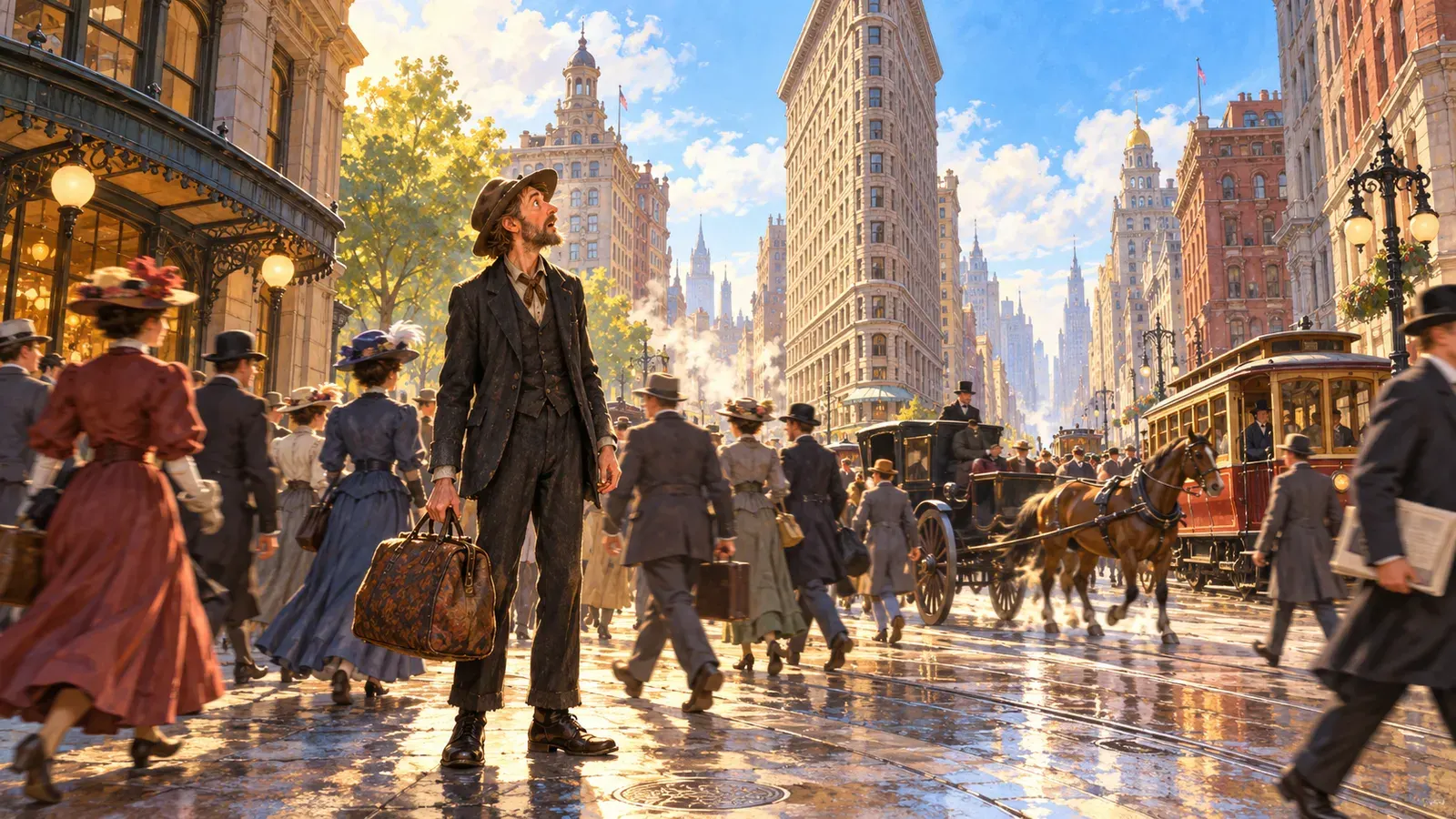
Sam Folwell stood where two great, rectangular arteries of the city cross. He looked four ways, and saw the world hurled from its orbit and reduced by spirit level and tape to an edged and cornered plane. All life moved on tracks, in grooves, according to system, within boundaries, by rote. The root of life was the cube root; the measure of existence was square measure. People streamed by in straight rows; the horrible din and crash stupefied him.
サム・フォルウェルは、町の二本の大きな通りが直角に交わる交差点に立っていた。四方を見まわすと、世界が本来の丸い軌道から放り出され、水準器と巻尺で平らにならされて、縁と角だらけの平面に変えられていた。あらゆるものがレールの上を、溝の中を動いていた。決まった仕組みに従い、決まった枠の中で、機械のように動いていた。命の根っこは「立方根」で、存在をはかる物差しは「平方」だった。人々はまっすぐな列になって流れていく。恐ろしいほどの騒音と轟音に、サムはぼうぜんとした。
Sam leaned against the sharp corner of a stone building. Those faces passed him by thousands, and none of them were turned toward him. A sudden foolish fear that he had died and was a spirit, and that they could not see him, seized him. And then the city smote him with loneliness.
サムは石造りの建物の、とがった角に寄りかかった。何千という顔が目の前を通り過ぎていったが、ひとつとしてサムのほうを向く顔はなかった。自分はもう死んで幽霊になっていて、だから誰にも見えないのではないか。そんなばかげた恐怖に、サムは急にとりつかれた。そして都会は、サムを孤独で打ちのめした。
A fat man dropped out of the stream and stood a few feet distant, waiting for his car. Sam crept to his side and shouted above the tumult into his ear:
ひとりの太った男が人の流れから抜け出して、少し離れたところに立ち、電車を待った。サムはそのそばへにじり寄り、騒音に負けない大声で、男の耳もとにどなった。
"The Rankinses' hogs weighed more'n ourn a whole passel, but the mast in thar neighborhood was a fine chance better than what it was down—"
「ランキンさんとこの豚は、うちのよりだいぶ目方があったけんど、あっちのほうのどんぐりは、こっちよりずっと出来がよかったでな……」
The fat man moved away unostentatiously, and bought roasted chestnuts to cover his alarm.
太った男は目立たないようにそっと離れていった。そして、びっくりしたのをごまかすように、焼き栗を買った。
Sam felt the need of a drop of mountain dew. Across the street men passed in and out through swinging doors. Brief glimpses could be had of a glistening bar and its bedeckings. The feudist crossed and essayed to enter. Again had Art eliminated the familiar circle. Sam's hand found no door-knob—it slid, in vain, over a rectangular brass plate and polished oak with nothing even so large as a pin's head upon which his fingers might close.
サムは、山の露、つまり山で造る密造ウイスキーを一杯ひっかけたくなった。通りの向こうでは、男たちが、前後に揺れる扉を押して出たり入ったりしていた。ちらりと中がのぞくたびに、ぴかぴか光るカウンターと、きらびやかな飾りが見えた。抗争の男は通りを渡り、中へ入ろうとした。ところが、ここでも人工が、なじみの円を取り除いていた。サムの手は、丸いドアの取っ手を見つけられなかったのだ。手は長方形の真鍮の板と、磨き上げた樫の扉の上を、むなしくすべるばかりだった。指でつかめるものは、ピンの頭ほどのものさえなかった。
Abashed, reddened, heartbroken, he walked away from the bootless door and sat upon a step. A locust club tickled him in the ribs.
恥ずかしさに顔を赤くし、すっかり気落ちして、サムはその開かない扉から離れ、石段に腰をおろした。すると、木の警棒がサムのあばらをつついた。
"Take a walk for yourself," said the policeman. "You've been loafing around here long enough."
「さっさと歩きな」と警官は言った。「ずいぶん長いこと、このへんをうろうろしてるじゃないか」
At the next corner a shrill whistle sounded in Sam's ear. He wheeled around and saw a black-browed villain scowling at him over peanuts heaped on a steaming machine. He started across the street. An immense engine, running without mules, with the voice of a bull and the smell of a smoky lamp, whizzed past, grazing his knee. A cab-driver bumped him with a hub and explained to him that kind words were invented to be used on other occasions. A motorman clanged his bell wildly and, for once in his life, corroborated a cab-driver. A large lady in a changeable silk waist dug an elbow into his back, and a newsy pensively pelted him with banana rinds, murmuring, "I hates to do it—but if anybody seen me let it pass!"
次の角で、サムの耳もとで甲高い笛が鳴った。くるりと振り向くと、眉の黒い悪党のような男が、こちらをにらんでいた。湯気を立てる機械の上に、ピーナッツが山と積んであり、男はその向こうにいた。サムは通りを渡りはじめた。ラバもいないのに走る巨大な機械が、雄牛のようなうなり声をあげ、煙を出すランプのような匂いをさせて、サムの膝をかすめてびゅんと走り去った。辻馬車の御者が、車輪の真ん中の出っぱりでサムをどんとこづいた。そして、優しい言葉なんてものはこんなときに使うためにあるんじゃねえ、とサムに教えてくれた。電車の運転手が、狂ったようにベルを鳴らした。ふだんは仲の悪い辻馬車の御者と、生まれて初めて意見が合ったのである。光の加減で色の変わる絹のブラウスを着た大柄な婦人が、サムの背中に肘を食いこませた。新聞売りの少年が、何か考えこむような顔で、サムにバナナの皮を投げつけた。「こんなことしたかないんだけどさ。でも、黙って見逃したとこを誰かに見られたら、格好がつかないからね!」
Cal Harkness, his day's work over and his express wagon stabled, turned the sharp edge of the building that, by the cheek of architects, is modelled upon a safety razor. Out of the mass of hurrying people his eye picked up, three yards away, the surviving bloody and implacable foe of his kith and kin.
そのころ、キャル・ハークネスは一日の仕事を終え、運送用の荷馬車を馬小屋にしまったところだった。キャルは、ある建物のとがった角を曲がってきた。建築家たちが厚かましくも、安全カミソリの形をまねて建てたビルである。急ぎ足の人の群れの中に、キャルの目は三メートルほど先の人影をとらえた。自分の一族を血祭りにあげてきた、執念深い仇敵の生き残りだった。
He stopped short and wavered for a moment, being unarmed and sharply surprised. But the keen mountaineer's eye of Sam Folwell had picked him out.
キャルはぴたりと立ち止まり、一瞬、たじろいだ。丸腰だったうえに、ひどく驚いたのである。だが、サム・フォルウェルの鋭い山の男の目も、すでにキャルを見つけていた。
There was a sudden spring, a ripple in the stream of passers-by and the sound of Sam's voice crying:
いきなり、サムが飛びかかった。通行人の流れにさざ波が立ち、サムの叫ぶ声が聞こえた。
"Howdy, Cal! I'm durned glad to see ye."
「よう、キャル! おめえに会えて、こんなにうれしいことはねえぞ」
And in the angles of Broadway, Fifth Avenue and Twenty-third Street the Cumberland feudists shook hands.
そして、ブロードウェイと五番街と二十三丁目が角をつき合わせるその場所で、カンバーランドの仇敵どうしは、固い握手を交わしたのだった。