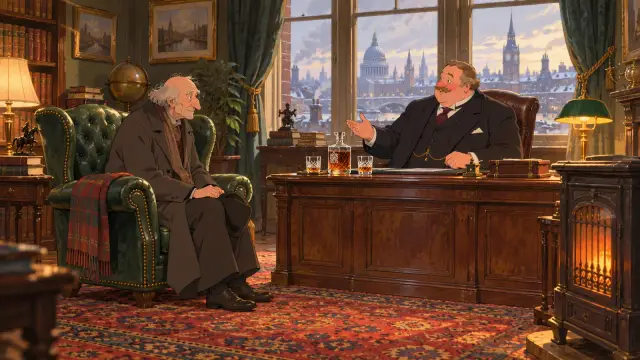
First Mrs. Parker would show you the double parlours. You would not dare to interrupt her description of their advantages and of the merits of the gentleman who had occupied them for eight years. Then you would manage to stammer forth the confession that you were neither a doctor nor a dentist. Mrs. Parker's manner of receiving the admission was such that you could never afterward entertain the same feeling toward your parents, who had neglected to train you up in one of the professions that fitted Mrs. Parker's parlours.
まずパーカー夫人は、一階の表側にある二間続きの部屋を見せてくれるだろう。部屋がどんなに便利か、そこに八年住んでいた紳士がどんなにりっぱな人だったか。夫人の説明をさえぎる勇気は、あなたにはないはずだ。やがてあなたは、自分は医者でも歯医者でもないと、どうにかつっかえながら白状する。それを聞いたときのパーカー夫人の態度ときたら、ない。あなたはそれ以来、両親を前と同じ気持ちで見られなくなるだろう。パーカー夫人の表の部屋にふさわしい職業に就けるよう、あなたを育ててくれなかった両親を。
Next you ascended one flight of stairs and looked at the second-floor-back at $8. Convinced by her second-floor manner that it was worth the $12 that Mr. Toosenberry always paid for it until he left to take charge of his brother's orange plantation in Florida near Palm Beach, where Mrs. McIntyre always spent the winters that had the double front room with private bath, you managed to babble that you wanted something still cheaper.
次にあなたは階段を一つのぼって、二階の裏側にある八ドルの部屋を見る。夫人は、二階の部屋にふさわしい態度でこう話す。この部屋には、トゥーゼンベリーさんがずっと十二ドル払っていた。トゥーゼンベリーさんは、フロリダのパーム・ビーチの近くにある兄のオレンジ農園をまかされて、出ていった。パーム・ビーチといえば、浴室つきの表の二間続きを借りていたマッキンタイアさんの奥さまが、毎年冬を過ごしていた土地だ。そう聞かされるうちに、あなたも、この部屋は十二ドルの値打ちがあると思えてくる。それでもあなたは、もっと安い部屋がいいのだと、どうにかもごもごと言う。
If you survived Mrs. Parker's scorn, you were taken to look at Mr. Skidder's large hall room on the third floor. Mr. Skidder's room was not vacant. He wrote plays and smoked cigarettes in it all day long. But every room-hunter was made to visit his room to admire the lambrequins. After each visit, Mr. Skidder, from the fright caused by possible eviction, would pay something on his rent.
パーカー夫人の軽蔑に耐えぬいたら、次は三階にあるスキダー氏の広い部屋を見に連れていかれる。スキダー氏の部屋は空いていない。氏はその部屋で、一日じゅう戯曲を書き、たばこを吸っている。それでも、部屋を探しに来た人は誰でも、この部屋に案内され、窓の垂れ飾りをほめさせられる。そのたびにスキダー氏は、追い出されるのではないかとおびえて、たまった家賃をいくらか払うのだった。
Then—oh, then—if you still stood on one foot, with your hot hand clutching the three moist dollars in your pocket, and hoarsely proclaimed your hideous and culpable poverty, nevermore would Mrs. Parker be cicerone of yours. She would honk loudly the word "Clara," she would show you her back, and march downstairs. Then Clara, the coloured maid, would escort you up the carpeted ladder that served for the fourth flight, and show you the Skylight Room. It occupied 7×8 feet of floor space at the middle of the hall. On each side of it was a dark lumber closet or storeroom.
それから、ああ、それから。あなたがまだもじもじと片足で立ったまま、ポケットの中の汗ばんだ三ドルを熱い手で握りしめ、かすれ声で、恥ずかしく罪深い貧しさを打ち明けたとしよう。そうなれば、パーカー夫人は二度とあなたの案内などしてくれない。夫人は「クララ」と大声でがなりたてると、くるりと背中を向けて、すたすたと階段を下りていってしまう。すると黒人のメイドのクララが、四階へ上がる絨毯敷きのはしごのような階段へとあなたを連れていき、天窓の部屋を見せてくれる。部屋は廊下の真ん中にあって、広さは七フィートに八フィート(およそ二メートル四方)しかない。両側には、暗いがらくた置き場、つまり物置があった。
In it was an iron cot, a washstand and a chair. A shelf was the dresser. Its four bare walls seemed to close in upon you like the sides of a coffin. Your hand crept to your throat, you gasped, you looked up as from a well—and breathed once more. Through the glass of the little skylight you saw a square of blue infinity.
中には、鉄の簡易ベッドと洗面台と椅子が一つずつ。棚が一つあって、それが化粧台のかわりだった。むき出しの四方の壁が、棺桶の板のように迫ってくる。あなたは思わずのどに手をやり、あえぐ。井戸の底から見上げるように上を見て、やっと息をつく。小さな天窓のガラスの向こうに、どこまでも続く青空が、四角く切りとられて見えたのだ。
"Two dollars, suh," Clara would say in her half-contemptuous, half-Tuskegeenial tones.
「二ドルでございやす」と、クララは言うだろう。半分は見下したような、半分は黒人学校タスキーギ学院仕込みの愛想のよさで。
One day Miss Leeson came hunting for a room. She carried a typewriter made to be lugged around by a much larger lady. She was a very little girl, with eyes and hair that had kept on growing after she had stopped and that always looked as if they were saying: "Goodness me! Why didn't you keep up with us?"
ある日、ミス・リースンが部屋を探しにやってきた。抱えているタイプライターは、もっとずっと大柄な女性が運ぶような大きなものだった。本人はとても小柄な娘だった。体が育つのをやめたあとも、目と髪だけは育ち続けたかのようだった。その大きな目とたっぷりした髪は、いつも「あらまあ、どうしてわたしたちについてこなかったの?」と体に言っているように見えた。
Mrs. Parker showed her the double parlours. "In this closet," she said, "one could keep a skeleton or anaesthetic or coal—"
パーカー夫人は、一階の二間続きの部屋を見せた。「この押し入れには」と夫人は言った。「骸骨でも、麻酔薬でも、石炭でもしまっておけますのよ――」
"But I am neither a doctor nor a dentist," said Miss Leeson, with a shiver.
「でも、わたしは医者でも歯医者でもありませんの」ミス・リースンは身をすくめて言った。
Mrs. Parker gave her the incredulous, pitying, sneering, icy stare that she kept for those who failed to qualify as doctors or dentists, and led the way to the second floor back.
パーカー夫人はミス・リースンをじろりと見た。医者や歯医者になりそこねた者のためにとってある目つきである。まさかという疑いと、憐れみと、あざけりのまじった、氷のような目だった。それから先に立って、二階の裏の部屋へ案内した。
"Eight dollars?" said Miss Leeson. "Dear me! I'm not Hetty if I do look green. I'm just a poor little working girl. Show me something higher and lower."
「八ドル?」とミス・リースンは言った。「まあ! わたし、世間知らずに見えるかもしれませんけど、大金持ちのヘティ・グリーンじゃありませんのよ。ただの、貧しい、ちっぽけな働く娘なんです。もっと上の階の、もっと安いお部屋を見せてください」
Mr. Skidder jumped and strewed the floor with cigarette stubs at the rap on his door.
ドアをノックする音に、スキダー氏は飛びあがって、たばこの吸い殻を床にばらまいた。
"Excuse me, Mr. Skidder," said Mrs. Parker, with her demon's smile at his pale looks. "I didn't know you were in. I asked the lady to have a look at your lambrequins."
「ごめんなさいね、スキダーさん」パーカー夫人は、青ざめたスキダー氏に、悪魔のような笑みを向けた。「いらっしゃるとは知りませんでしたわ。こちらのお嬢さんに、お宅の垂れ飾りを見ていただこうと思いましたの」
"They're too lovely for anything," said Miss Leeson, smiling in exactly the way the angels do.
「なんてすてきなんでしょう」ミス・リースンは、天使そっくりの笑顔で言った。
After they had gone Mr. Skidder got very busy erasing the tall, black-haired heroine from his latest (unproduced) play and inserting a small, roguish one with heavy, bright hair and vivacious features.
二人が出ていくと、スキダー氏は大忙しになった。最新作の(まだ上演されていない)戯曲から、背の高い黒髪のヒロインを消してしまった。そして、豊かに輝く髪と生き生きとした顔だちの、小柄でいたずらっぽいヒロインを書き入れたのだ。
"Anna Held'll jump at it," said Mr. Skidder to himself, putting his feet up against the lambrequins and disappearing in a cloud of smoke like an aerial cuttlefish.
「アンナ・ヘルドなら飛びついてくるぞ」スキダー氏は人気女優の名をつぶやくと、垂れ飾りに足をのせた。そして、空飛ぶイカが墨を吐くように煙を吐き、その中に姿を消した。
Presently the tocsin call of "Clara!" sounded to the world the state of Miss Leeson's purse. A dark goblin seized her, mounted a Stygian stairway, thrust her into a vault with a glimmer of light in its top and muttered the menacing and cabalistic words "Two dollars!"
やがて「クララ!」という呼び声が、警鐘のように響いた。ミス・リースンの財布の中身が、それで世間に知れ渡った。黒い小鬼が彼女をつかまえ、地獄へ続くような暗い階段をのぼった。そして、てっぺんにかすかな明かりのある墓穴のような部屋に押しこむと、「二ドル!」と、不気味な呪文のような言葉をつぶやいた。
"I'll take it!" sighed Miss Leeson, sinking down upon the squeaky iron bed.
「借ります!」ミス・リースンはため息をつき、きしむ鉄のベッドにへたりこんだ。
Every day Miss Leeson went out to work. At night she brought home papers with handwriting on them and made copies with her typewriter. Sometimes she had no work at night, and then she would sit on the steps of the high stoop with the other roomers. Miss Leeson was not intended for a sky-light room when the plans were drawn for her creation. She was gay-hearted and full of tender, whimsical fancies. Once she let Mr. Skidder read to her three acts of his great (unpublished) comedy, "It's No Kid; or, The Heir of the Subway."
ミス・リースンは毎日働きに出かけた。夜になると、手書きの書類を持ち帰り、タイプライターで清書した。夜に仕事がないときは、ほかの下宿人たちと一緒に、玄関前の高い石段に座っていた。神さまがミス・リースンを作ろうと設計図を引いたとき、天窓の部屋に住ませるつもりはなかったはずだ。明るい心の持ち主で、やさしく、気まぐれな空想でいっぱいの娘だった。一度などは、スキダー氏の大作喜劇(まだ出版されていない)『冗談じゃない、または地下鉄の相続人』を、三幕分も読んで聞かせてもらったことさえあった。
There was rejoicing among the gentlemen roomers whenever Miss Leeson had time to sit on the steps for an hour or two. But Miss Longnecker, the tall blonde who taught in a public school and said, "Well, really!" to everything you said, sat on the top step and sniffed. And Miss Dorn, who shot at the moving ducks at Coney every Sunday and worked in a department store, sat on the bottom step and sniffed. Miss Leeson sat on the middle step and the men would quickly group around her.
ミス・リースンが一、二時間でも石段に座っていられる晩は、男の下宿人たちが大喜びした。だが、ミス・ロングネッカーは、いちばん上の段に座って、ふんと鼻を鳴らした。背の高い金髪の女で、公立学校の先生をしている。人が何を言っても「まあ、ほんとに!」と答える人だ。ミス・ドーンも、いちばん下の段に座って、ふんと鼻を鳴らした。デパートで働き、毎週日曜日にはコニー・アイランドの射的場で動くアヒルの的を撃っている女である。ミス・リースンは真ん中の段に座った。すると男たちが、たちまちそのまわりに集まってくるのだった。
Especially Mr. Skidder, who had cast her in his mind for the star part in a private, romantic (unspoken) drama in real life. And especially Mr. Hoover, who was forty-five, fat, flush and foolish. And especially very young Mr. Evans, who set up a hollow cough to induce her to ask him to leave off cigarettes. The men voted her "the funniest and jolliest ever," but the sniffs on the top step and the lower step were implacable.
とくにスキダー氏がそうだった。氏は心の中で、ミス・リースンを、現実の人生で演じるロマンチックな劇の主役に決めていた。その劇は誰にも打ち明けていなかったが。フーヴァー氏もそうだった。四十五歳で、太っていて、金回りがよく、まぬけな男である。それに、ずっと年下のエヴァンズ氏もそうだった。たばこをやめなさいと言ってほしくて、わざと苦しそうな咳をしてみせた。男たちは、ミス・リースンを「最高におもしろくて陽気な娘」だと、満場一致で認めた。だが、いちばん上の段といちばん下の段の鼻息は、ちっともやわらがなかった。
I pray you let the drama halt while Chorus stalks to the footlights and drops an epicedian tear upon the fatness of Mr. Hoover. Tune the pipes to the tragedy of tallow, the bane of bulk, the calamity of corpulence. Tried out, Falstaff might have rendered more romance to the ton than would have Romeo's rickety ribs to the ounce. A lover may sigh, but he must not puff. To the train of Momus are the fat men remanded. In vain beats the faithfullest heart above a 52-inch belt. Avaunt, Hoover! Hoover, forty-five, flush and foolish, might carry off Helen herself; Hoover, forty-five, flush, foolish and fat is meat for perdition. There was never a chance for you, Hoover.
ここでしばらく劇を止めて、合唱隊に舞台の前まで進み出てもらい、フーヴァー氏の太りすぎを悼む涙を一滴こぼしてもらいたい。さあ、笛を鳴らして歌おう。脂肪の悲劇を。図体の大きさがもたらす災いを。肥満という不幸を。ためしに目方を量ってみれば、太っちょのフォルスタッフのほうが、あばら骨の浮いたロミオよりも、ずっとたっぷりロマンスを持っていたかもしれない。それでも、恋する男はため息をついてもいいが、ぜいぜい息を切らしてはならないのだ。太った男は、笑いの神のお供の道化役に回される。五十二インチのベルトの上で、どんなに誠実な心臓が脈打っても、むだなのだ。去れ、フーヴァー! 四十五歳で、金回りがよく、まぬけなだけなら、絶世の美女ヘレネだってさらっていけたかもしれない。だが、四十五歳で、金回りがよく、まぬけで、そのうえ太っていたら、もう救いようがない。フーヴァー、きみには最初から見込みがなかったのだよ。
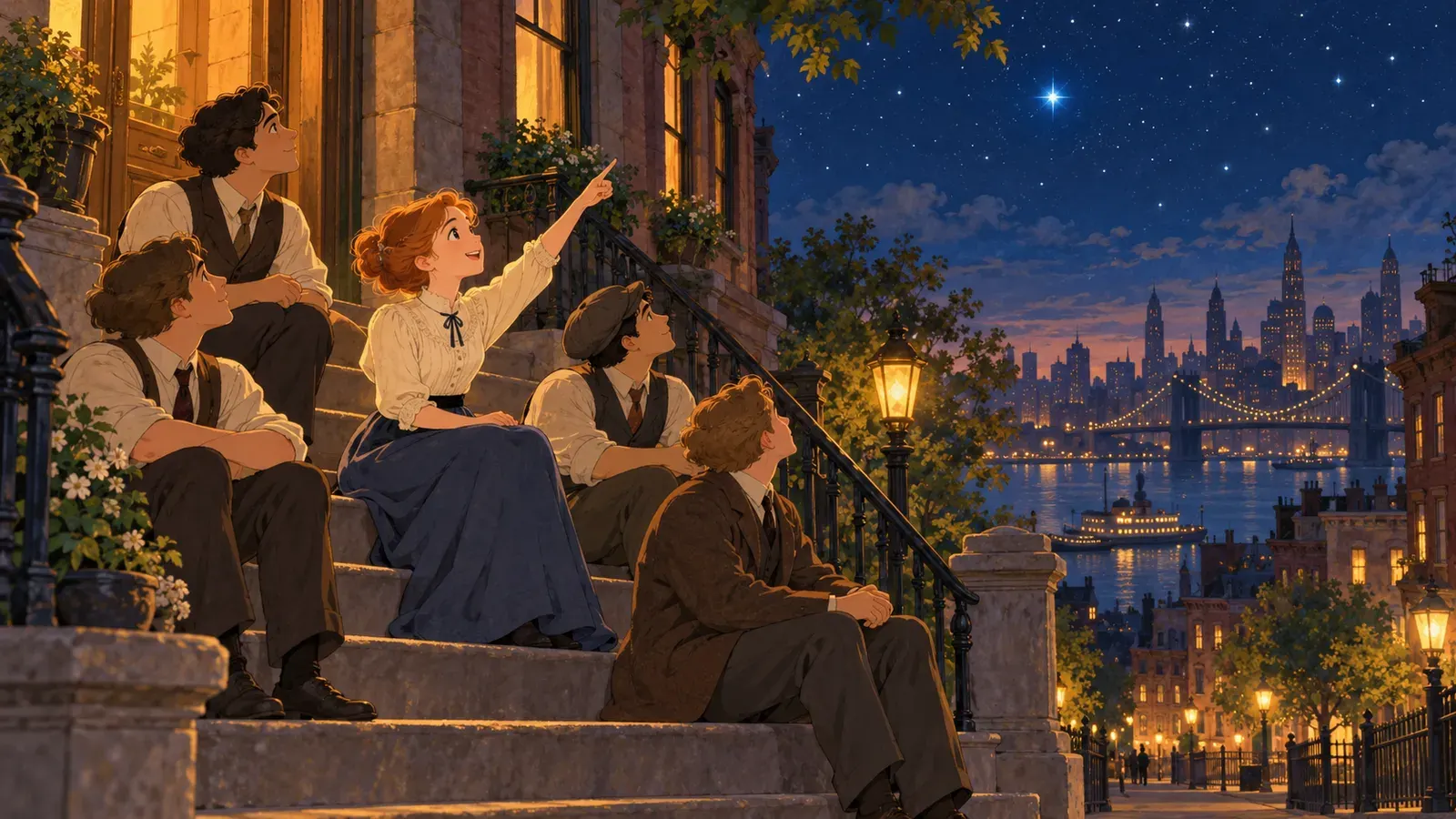
As Mrs. Parker's roomers sat thus one summer's evening, Miss Leeson looked up into the firmament and cried with her little gay laugh:
ある夏の夕方、パーカー夫人の下宿人たちが、こうして石段に座っていた。ミス・リースンは夜空を見上げると、陽気に小さく笑って叫んだ。
"Why, there's Billy Jackson! I can see him from down here, too."
「あら、ビリー・ジャクソンがいるわ! ここからでも見えるのね」
All looked up—some at the windows of skyscrapers, some casting about for an airship, Jackson-guided.
みんなが上を見上げた。高層ビルの窓を見る者もいれば、ジャクソンという男が操縦する飛行船でも飛んでいるのかと、あたりを探す者もいた。
"It's that star," explained Miss Leeson, pointing with a tiny finger. "Not the big one that twinkles—the steady blue one near it. I can see it every night through my skylight. I named it Billy Jackson."
「あの星よ」とミス・リースンは、小さな指でさして説明した。「またたいている大きな星じゃなくて、その近くで、じっと光っている青い星。毎晩、わたしの部屋の天窓から見えるの。わたし、あの星にビリー・ジャクソンって名前をつけたのよ」
"Well, really!" said Miss Longnecker. "I didn't know you were an astronomer, Miss Leeson."
「まあ、ほんとに!」とミス・ロングネッカーは言った。「あなたが天文学者だとは存じませんでしたわ、ミス・リースン」
"Oh, yes," said the small star gazer, "I know as much as any of them about the style of sleeves they're going to wear next fall in Mars."
「ええ、そうなの」小さな星の観測者は言った。「今度の秋に火星でどんな袖の型がはやるかなら、どんな天文学者にも負けないくらい知ってるわ」
"Well, really!" said Miss Longnecker. "The star you refer to is Gamma, of the constellation Cassiopeia. It is nearly of the second magnitude, and its meridian passage is—"
「まあ、ほんとに!」とミス・ロングネッカーは言った。「あなたがおっしゃっている星は、カシオペア座のガンマ星です。ほぼ二等星で、子午線を通過するのは――」
"Oh," said the very young Mr. Evans, "I think Billy Jackson is a much better name for it."
「いや」とずっと年下のエヴァンズ氏が言った。「ビリー・ジャクソンのほうが、ずっといい名前だと思うな」
"Same here," said Mr. Hoover, loudly breathing defiance to Miss Longnecker. "I think Miss Leeson has just as much right to name stars as any of those old astrologers had."
「同感だね」フーヴァー氏は、ミス・ロングネッカーに向かって、鼻息も荒く言い返した。「ミス・リースンにだって、昔の星占いの連中と同じくらい、星に名前をつける権利があると思うよ」
"Well, really!" said Miss Longnecker.
「まあ、ほんとに!」とミス・ロングネッカーは言った。
"I wonder whether it's a shooting star," remarked Miss Dorn. "I hit nine ducks and a rabbit out of ten in the gallery at Coney Sunday."
「流れ星(シューティング・スター)かしらね」とミス・ドーンが口をはさんだ。「わたし、日曜日にコニーの射的場で、十発撃って、アヒル九羽とウサギ一匹に当てたのよ」
"He doesn't show up very well from down here," said Miss Leeson. "You ought to see him from my room. You know you can see stars even in the daytime from the bottom of a well. At night my room is like the shaft of a coal mine, and it makes Billy Jackson look like the big diamond pin that Night fastens her kimono with."
「ここからだと、あまりよく見えないわね」とミス・リースンは言った。「わたしの部屋から見てほしいわ。井戸の底からなら昼間でも星が見えるって、聞いたことがあるでしょう? 夜になると、わたしの部屋は炭坑の縦穴みたいに真っ暗になるの。そうすると、ビリー・ジャクソンは、夜の女神が着物の前を留めている、大きなダイヤモンドのピンみたいに見えるのよ」
There came a time after that when Miss Leeson brought no formidable papers home to copy. And when she went out in the morning, instead of working, she went from office to office and let her heart melt away in the drip of cold refusals transmitted through insolent office boys. This went on.
それからしばらくすると、ミス・リースンは清書の書類を持ち帰らなくなった。朝出かけても、仕事に行くのではなかった。事務所から事務所へと、仕事を探して歩いたのだ。どこでも、横柄な使い走りの少年が、冷たい断りの返事を伝えてくる。そのたびに、心が少しずつしずくになって溶けていくようだった。そんな日が続いた。
There came an evening when she wearily climbed Mrs. Parker's stoop at the hour when she always returned from her dinner at the restaurant. But she had had no dinner.
ある夕方、ミス・リースンは疲れきって、パーカー夫人の家の石段をのぼった。いつもならレストランで夕食をすませて帰ってくる時刻だった。だが、この日は何も食べていなかった。
As she stepped into the hall Mr. Hoover met her and seized his chance. He asked her to marry him, and his fatness hovered above her like an avalanche. She dodged, and caught the balustrade. He tried for her hand, and she raised it and smote him weakly in the face. Step by step she went up, dragging herself by the railing. She passed Mr. Skidder's door as he was red-inking a stage direction for Myrtle Delorme (Miss Leeson) in his (unaccepted) comedy, to "pirouette across stage from L to the side of the Count." Up the carpeted ladder she crawled at last and opened the door of the skylight room.
玄関に入ると、フーヴァー氏が待ちかまえていて、ここぞとばかりに結婚を申しこんだ。その太った体が、雪崩のように彼女の上にのしかかってきた。ミス・リースンは身をかわして、手すりにつかまった。フーヴァー氏が手を取ろうとすると、彼女はその手を振りあげて、力なくその顔を打った。そして手すりにすがり、体を引きずるようにして、一段ずつのぼっていった。スキダー氏の部屋の前を通ったとき、氏はちょうど、まだどこにも採用されていない喜劇のト書きを、赤インクで書き入れているところだった。ヒロインのマートル・デローム、つまりミス・リースンが、「舞台の左手から伯爵のそばまで、くるりと回りながら横切る」というト書きである。とうとうミス・リースンは、絨毯敷きのはしごをはうようにしてのぼり、天窓の部屋のドアを開けた。
She was too weak to light the lamp or to undress. She fell upon the iron cot, her fragile body scarcely hollowing the worn springs. And in that Erebus of the skylight room, she slowly raised her heavy eyelids, and smiled.
ランプをともす力も、服を脱ぐ力も残っていなかった。鉄のベッドに倒れこむと、そのかぼそい体では、すり切れたスプリングもほとんど沈まなかった。地獄の底のように暗い天窓の部屋で、ミス・リースンはゆっくりと重いまぶたを上げ、微笑んだ。
For Billy Jackson was shining down on her, calm and bright and constant through the skylight. There was no world about her. She was sunk in a pit of blackness, with but that small square of pallid light framing the star that she had so whimsically and oh, so ineffectually named. Miss Longnecker must be right; it was Gamma, of the constellation Cassiopeia, and not Billy Jackson. And yet she could not let it be Gamma.
ビリー・ジャクソンが、天窓から見下ろしていたのだ。静かに、明るく、いつもと変わらずに。まわりの世界は消えていた。ミス・リースンは真っ暗な穴の底に沈んでいた。見えるのはただ、青白い光の小さな四角と、その中の星だけだった。たわむれに名前をつけた星。名前をつけたところで、どうにもならなかった星。きっとミス・ロングネッカーの言うとおりなのだろう。あれはカシオペア座のガンマ星で、ビリー・ジャクソンではないのだ。それでも、あの星をガンマ星にしてしまうことは、どうしてもできなかった。
As she lay on her back she tried twice to raise her arm. The third time she got two thin fingers to her lips and blew a kiss out of the black pit to Billy Jackson. Her arm fell back limply.
あおむけに寝たまま、ミス・リースンは二度、腕を上げようとした。三度目に、やっと細い指を二本くちびるにあて、暗い穴の底からビリー・ジャクソンに投げキスを送った。腕はぐったりと落ちた。
"Good-bye, Billy," she murmured faintly. "You're millions of miles away and you won't even twinkle once. But you kept where I could see you most of the time up there when there wasn't anything else but darkness to look at, didn't you? . . . Millions of miles . . . Good-bye, Billy Jackson."
「さようなら、ビリー」とミス・リースンはかすかにつぶやいた。「あなたは何百万マイルも遠くにいて、一度もまたたいてくれないのね。でも、ほかに見えるものが暗闇しかなかったとき、あなたはたいてい、あそこの見えるところにいてくれたわね……何百万マイルも……さようなら、ビリー・ジャクソン」
Clara, the coloured maid, found the door locked at 10 the next day, and they forced it open. Vinegar, and the slapping of wrists and burnt feathers proving of no avail, some one ran to 'phone for an ambulance.
翌日の十時、黒人のメイドのクララが、ドアに鍵がかかっているのに気づいた。みんなでドアをこじ開けた。酢をかがせても、手首をたたいても、羽根を焦がしたにおいをかがせても、正気づかない。誰かが電話で救急車を呼びに走った。
In due time it backed up to the door with much gong-clanging, and the capable young medico, in his white linen coat, ready, active, confident, with his smooth face half debonair, half grim, danced up the steps.
やがて救急車が、けたたましく鐘を鳴らしながら、バックで戸口に着いた。白い麻の上着を着た、腕の立ちそうな若い医者が、身軽に階段を駆けあがってきた。きびきびとして、自信にあふれている。つるりとした顔は、半分は陽気そうで、半分はきびしそうだった。
"Ambulance call to 49," he said briefly. "What's the trouble?"
「四十九番地から救急の呼び出しです」と医者は短く言った。「どうしました?」
"Oh, yes, doctor," sniffed Mrs. Parker, as though her trouble that there should be trouble in the house was the greater. "I can't think what can be the matter with her. Nothing we could do would bring her to. It's a young woman, a Miss Elsie—yes, a Miss Elsie Leeson. Never before in my house—"
「ええ、そうなんですのよ、先生」パーカー夫人は鼻を鳴らした。家で面倒が起きたことのほうが、よほど面倒だと言わんばかりである。「あの人がどうしたのか、見当もつきませんの。何をしても正気づかないんです。若い娘さんで、ミス・エルシー、そう、ミス・エルシー・リースンという人です。わたくしの家でこんなことは、これまで一度も――」
"What room?" cried the doctor in a terrible voice, to which Mrs. Parker was a stranger.
「どの部屋です?」医者は、パーカー夫人が聞いたこともないような恐ろしい声で叫んだ。
"The skylight room. It—"
「天窓の部屋です。あの――」
Evidently the ambulance doctor was familiar with the location of skylight rooms. He was gone up the stairs, four at a time. Mrs. Parker followed slowly, as her dignity demanded.
この救急医は、天窓の部屋がどこにあるものか、よく知っているらしかった。階段を四段ずつ駆けあがって、たちまち姿を消した。パーカー夫人は、威厳をくずさぬよう、ゆっくりとあとを追った。
On the first landing she met him coming back bearing the astronomer in his arms. He stopped and let loose the practised scalpel of his tongue, not loudly. Gradually Mrs. Parker crumpled as a stiff garment that slips down from a nail. Ever afterward there remained crumples in her mind and body. Sometimes her curious roomers would ask her what the doctor said to her.
最初の踊り場で、夫人は医者と出くわした。医者は天文学者を腕に抱いて戻ってくるところだった。医者は立ち止まると、メスのように鋭い言葉を、静かな声で浴びせた。使い慣れた手さばきだった。パーカー夫人は、釘からずり落ちる糊のきいた服のように、だんだんくしゃくしゃにしぼんでいった。それからずっと、夫人の心にも体にも、そのしわが残った。ときどき、物見高い下宿人たちが、あの医者に何を言われたのかと尋ねた。
"Let that be," she would answer. "If I can get forgiveness for having heard it I will be satisfied."
「それは聞かないでちょうだい」と夫人は答えるのだった。「あれを聞いてしまったことを許していただけたら、それで十分よ」
The ambulance physician strode with his burden through the pack of hounds that follow the curiosity chase, and even they fell back along the sidewalk abashed, for his face was that of one who bears his own dead.
救急医は、彼女を抱いたまま、大またで通りに出た。そこには、物見高い野次馬が、獲物を追う猟犬の群れのように集まっていた。だが、その野次馬でさえ、気まずそうに歩道の端へあとずさった。医者の顔が、自分の身内の亡骸を運ぶ者の顔だったからだ。
They noticed that he did not lay down upon the bed prepared for it in the ambulance the form that he carried, and all that he said was: "Drive like h––––l, Wilson," to the driver.
人々は、医者が抱いている体を、救急車に用意された寝台に寝かせようとしないことに気づいた。医者が口にしたのは、御者に向かっての一言だけだった。「死にものぐるいで飛ばせ、ウィルソン」
That is all. Is it a story? In the next morning's paper I saw a little news item, and the last sentence of it may help you (as it helped me) to weld the incidents together.
これでおしまいである。これが物語と言えるだろうか? 翌朝の新聞で、わたしは小さな記事を見つけた。その最後の一文を読めば、ばらばらの出来事がつながるかもしれない。わたしにはそうだった。
It recounted the reception into Bellevue Hospital of a young woman who had been removed from No. 49 East –––– street, suffering from debility induced by starvation. It concluded with these words:
記事には、一人の若い女性がベルビュー病院に運びこまれたことが書いてあった。東××丁目四十九番地から運ばれてきた女性で、飢えのために衰弱していたという。記事は次の言葉で終わっていた。
"Dr. William Jackson, the ambulance physician who attended the case, says the patient will recover."
「この患者を担当した救急医ウィリアム・ジャクソン医師は、患者は回復するだろうと語っている」